
InspectAPedia® FREE Encyclopedia of Building & Environmental Construction, Diagnosis, Maintenance & Repair |
Question? Just ask us! InspectAPedia
|
 How to Clean up a Flooded Building
or Wet Basement
How to Clean up a Flooded Building
or Wet Basement
Flood Damage Repair Guide FEMA/ARC expanded Step 6
- POST a QUESTION or COMMENT about how to respond to building flooding, advice from FEMA, the American Red Cross, and other experts
Flooded building cleanup procedures: how to clean up a building that has been soaked by flooding, hurricane, fire extinguishment or other damage - step 6 - disaster recovery for buildings.
If your building has been wet, soaked, or flooded, this article explains how to set priorities of action, safety, and then clean up & remove the mud, debris, and water damaged materials from the building. we provide special information about avoiding or minimizing mold damage.
Adapted and expanded from Repairing your Flooded Home, American Red Cross & FEMA & from additional expert sources.[1] NOTICE: neither the ARC nor FEMA have yet approved the additions & expansions we have made to the original document.
InspectAPedia tolerates no conflicts of interest. We have no relationship with advertisers, products, or services discussed at this website.
Step 6: How to Clean Up a Flooded Building or a Wet Basement
 Cleanup and Repair after a building flood — Who does what?
Jobs an owner can usually handle
- Sorting contents to be repaired or discarded
- Drying the ceiling, walls, and floors - but
Watch out: if you cannot safely perform the necessary demolition work, or if you do not have access to an adequate number of fans, heaters, etc. to dry out the building rapidly enough to prevent further damage or mold growth, you will need help from a professional
[Click to enlarge any image]
- Drying and cleaning electrical circuits and boxes (if code allows)
- Removing minor debris such as branches and trash • Checking the gas or oil system
- Fixing leaky pipes
- Checking sewage disposal system for blockage or leaks
- Building and contents cleaning
- Checking sources of financial assistance
- Minor floodproofing projects such as building an earthen wall or raising appliances
Jobs that usually require services of a professional
- Structural repairs
- Restoring electrical service
- Wallboard taping and finishing
- Checking the water system to ensure that it is safe to drink. (That service is often free from the local health department.) • Major debris removal such as tree cutting
- Electrical and gas appliance and motor cleaning and repair
- Cleaning leather, furs, upholstered furniture, and expensive (removable) area carpets and rugs
- Major floodproofing projects such as moving or elevating a home
- Pest control:
Watch out: following Hurricane Sandy on the U.S. east coast in 2012, the New York Times reported a surge in rat infestation in some urban areas.
The hurricane drove rats further inland where they remained, surviving on a combination of greater levels of garbage left outside following storm cleanup and also on more normal levels and areas where edible waste was left unprotected. [14]
How to Protect the Building from Freeze or Frost Damage after a Flood, Storm, or other Disaster
If your house will be unheated for a few days, and the temperature will fall below freezing, you should winterize your water pipes so they will not freeze and break. A plumber can blow out the pipes to make sure they are empty.
For a complete guide to protecting a building from freeze damage see these articles
- FREEZE-PROOF A BUILDING - home
- HEAT TAPE USAGE GUIDE
- CLEANOUTS, PLUMBING DRAIN
- WINTERIZE - HEAT ON Procedure - you can use this procedure if the building heating system is safe and operational
- Thermostat Settings
- Turn Water Off ?
- Winterize Water Softener & Treatment Equip
- Find & Fix Water Pipe Freeze-Up Points
- Freeze Protect Drains
- WINTERIZE - HEAT OFF Procedure - you should use this procedure if the building has no electrical power or no safe, operational heating system
- WINTERIZE WATER SOFTENER - don't forget that some mechanical system components like water softeners or water heater tanks need to be drained to prevent freeze damage
Or you can take the following simplified [FEMA-ARC] steps to protect your water and sewer system from damage due to freezing temperatures:
- Shut off the main water valve. (It is usually found at the water meter.)
- Turn on all the faucets in the house, both the hot and the cold taps. Leave them on and let them run.
- Turn off the hot water heater. Open the faucet at the bottom of the water heater to drain it. You may want to connect a hose to the faucet so you can control where the water goes. Be careful; the water may be very hot.
- Flush the toilets to empty their water tanks and use a sponge or rag to be sure that the toilet tanks are completely empty.
- Wait for the lowest faucet on the house to stop running. (This will usually be a faucet in the basement.) Then check all faucets and toilets. If they have stopped running or are empty, your water system should be drained.
- Pour some propyleneglycol based antifreeze in all sink, tub, and floor drains and in the toilet bowls. (This type of antifreeze is available through recreational vehicle and mobile home dealers. Do not use regular automotive antifreeze.) These drains have traps that keep water in them.
- Turning Water Back On: You can turn the main valve back on after the building is heated. Do this before you start your repairs and inspect the building completely for leaks. That way, if there is a broken pipe, a water leak won’t cause much damage.
Watch out: be sure to inspect both water supply piping (look and listen for leaks, look for drips, wet spots from leaks in concealed piping) and drain piping, as both systems may have been damaged by the earthquake, flood, hurricane or other event. This means running water for at least five minutes into each drain and inspecting each fixture trap and drain for leakage.
For detailed help in how to restore a building's water systems to service, see these articles
- ARTESIAN WELL FREEZE PROTECTION
- CHEMICAL TOILET FREEZE PROTECTION
- DE-WINTERIZE a BUILDING
- DE-WINTERIZE WATER SOFTENER
Flood Damaged Building or Flooded Basement Cleaning Supplies Checklist
The Red Cross will often distribute cleanup kits after a disaster. These contain many useful items such as a broom, mop, bucket, and cleaning supplies.
In most cases, household cleaning products will doe the job if you use them correctly. Check the label on the products to see how much to use. Some products shouldn’t be used on certain materials; the label will tell you that. Apply cleaner and give it time to work before you mop or sponge it up. Follow directions and all safety precautions on the container.
This list of wet building cleanup supplies focuses on cleaning and restoring space to a usable condition; it does not include additional supplies you need to safely enter and work in a flooded building, such as lighting, personal protective clothing, etc.
- Brooms, mops, brushes, sponges
- Buckets, hose
- Rubber gloves
- Rags
- Cleaner
- Disinfectants
- Lubricating oil
- Trash bags [We recommend contractor trash bags or heavy duty 4 mil or 6 mil poly trash bags]
- Hair dryer
Clean Up Procedures for a Flooded Building or a Wet Basement
The walls, floors, closets, shelves, contents — every flooded part of your house — should be thoroughly washed and disinfected. Some projects, such as washing clothes, may have to wait until all the utilities are restored. Others may be best done by professionals. This section offers suggestions on the best way to clean flooded items.
Cleaning tips
Tackle one room at a time. A two bucket approach is most efficient: use one bucket for rinse water and the other for the cleaner. Rinse out your sponge, mop, or cleaning cloth in the rinse bucket. Wring it as dry as possible and keep it rolled up tight as you put it in the cleaner bucket. Let it unroll to absorb the cleaner. Using two buckets keeps most of the dirty rinse water out of your cleaning solution. Replace the rinse water frequently.
After cleaning a room or item, go over it again with a disinfectant to kill the germs and smell left by the floodwaters. You may also need to get rid of mildew, an unwelcome companion to moisture that shows as fuzzy splotches.
5-Step Procedure to Prevent Mold or Pathogen Cross Contamination During Building Contents Cleanup
[Addition by DF]
Design your cleaning procedure to assure that you do not inadvertently spread mold or pathogens from a flooded or damaged building or its contents onto other items that were comparatively clean.
Watch out for cross contamination. We [DF] inspected and tested a moldy basement cleanup procedure conducted by a professional cleaning service contracted by the National Park Service at an NPS site.
Our field tests discovered significant levels of mold contamination on the wiped "cleaned" hard-surfaced contents that were being brought out of the "cleaned" basement. A closer inspection and tests of the process discovered that the cleaners were using the same damp rags and bucket of cleaner to wipe both very dirty and moldy items and others that were practically clean. The result was a uniform spread of contamination on the surface of every item being brought out of the building.
An effective solution to the flood damage cross contamination problem was the use of a series or cascade of three cleaning stations:
- Initial Cleanup in-Place: Most-soiled items were cleaned at a first cleaning table in the building basement.
- Outside or clean-area screening of cleaned items: Items from step 1 above that had been visibly quite soiled were brought outside to a Step 2 cleaning work table or cleaning station for a second inspection and wiping using fresh buckets of cleaning solution; items
- Second-stage cleaning of wet / mold-contaminated items: Items from step 1 above that had appeared nearly clean and/or were hard-surfaced and easy to clean along with items that had passed through step 2 were brought to a Step 3 cleaning table for inspection and wiping using fresh buckets of cleaning solution; items.
- Move cleaned items to clean storage location: All cleaned items were moved to a clean temporary storage location - a rented trailer or a separate nearby building - where they could be stored clean and dry until the wet basement and flooded building could be completely cleaned and dried.
- Return cleaned, stored items: When the building was clean and dry the cleaned, salvaged contents could be safely returned.
Watch out: items that have been in storage as well as the storage area itself should be inspected for second-exposure to water or mold while in the storage area. In sum, if the storage area itself was not clean and dry, and if it did not remain-so during the storage interval, you risk returning mold-contaminated articles to their original home.
Similarly, if cleaning of previously wet or moldy items in teh steps 1-3 above was inadequate, mold growth can appear on the items while in storage.
Note: to speed the wet basements contents salvage procedure as well as to reduce cleaning costs, certain valuable papers, books or other items that could not be completely cleaned by wiping or laundering but that owners want to retain can be safely kept by drying the items completely and storing them in a tightly sealed plastic container to await further treatment.
Best Cleaning Procedure for Ceilings, Walls, Floors in a Wet Basement or Flooded Building
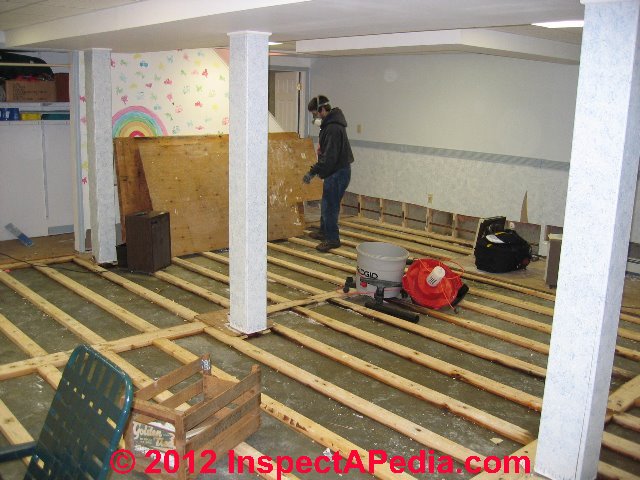
Start cleaning a wall at the bottom or where the worst damage was. If you did not have to remove the wallboard or plaster, you may find it the wallboard or plaster won’t come clean and you will want to replace it rather than clean it. If you have removed the wallboard or plaster, wash the studs and sills and disinfect them.
Watch out: in our experience [DF] when a building has been wet enough to allow water to enter even just the very bottom of a wall cavity, there is a high risk of harmful and costly mold contamination of both the interior wall cavity surfaces as well as wall insulation. Some materials (plaster, mineral wool or cellulose insulation) resist mold growth a bit more than others (drywall, fiberglass insulation, exposed wood surfaces).
- If the bottom of a wall has been wet by flooding or a wet floor in a basement or higher building areas, you should remove the wet wall covering material and any wet insulation.
- Demolition margins: continue to remove materials until you have achieved a least a two-foot clear clean margin of materials that have not been wet and are not visibly moldy n or stained by floodwaters. Examples:
- Look for visible mold or other contamination after mud, debris, and initial demolition have been completed. If mold growth is already apparent in the building see these articles:
MOLD ACTION GUIDE - WHAT TO DO ABOUT MOLD
MOLD APPEARANCE - WHAT MOLD LOOKS LIKE
MOLD CLEANERS - WHAT TO USE
MEDIA BLASTING for MOLD REMOVAL - effective for large, irregular surfaces that cannot be cleaned by wiping & scrubbing
Watch out: if there are areas of visible mold growth, the proper approach is to remove the mold by cleaning hard surfaces and to dispose materials (such as moldy drywall) that cannot be effectively cleaned. Don't rely on mold killers, sprays, or ozone treatments.
You do not ordinarily need to test the mold before removing it. But if you or others working in the building are at extra risk such as if there are asthmatic, elderly, or immune-compromised people present, they should not be in a moldy building.
Wear appropriate protective clothing, gloves, eye protection, respirator (HEPA) when cleaning large (more than 30 sq.ft.) of mold or more appropriately, hire a professional for large mold demolition or cleanup jobs. - If floor was wet enough to allow water to enter the very bottom of the wall cavity, remove the floor baseboard trim; if the drywall was kept an inch above the floor and the wall partition was not built atop carpeting, you may be able to leave drywall or plaster wall covering;
- Check for hidden wet, moldy, or contaminated areas. We recommend cutting a 2" x 4" exploration opening at the wall bottom, starting 1.5" above the floor level to clear the sill plate. If the wall cavity interior is dry and clean when you inspect the most-suspect wall area, you may be able to leave the remaining wall covering.
Watch out: do not rely on "mold scans" offered by some companies as a way to spot hidden moisture or mold in buildings without demolition or test cuts or holes. While thermography can detect temperature differences (that might reflect still-wet areas) in a building, it cannot detect previously-wet but now dry and moldy areas in building cavities. Details are at THERMAL IMAGING MOLD SCANS.  If the basement or other room higher in the building was flooded to several inches, remove the bottom 24" of wall covering and any insulation that has been wet.
Wet or previously flooded or wet building insulation can harbor pathogens or mold contamination even if it looks clean. Details are at INSULATION MOLD CONTAMINATION TEST.- If the basement or other room was flooded sufficiently to leave water marks up more than 1/4 of the wall height, we recommend that the entire wall covering be removed.
If the ceilings appear intact, not stains or sagging, it may be possible to retain the ceiling covering. If there is any doubt about water entry into the ceiling, make one or more inspection openings in the most-suspect areas as we described just above. - If the room was flooded to or close to the ceiling level, or if there are visible stains or sagging in the ceiling, the ceiling covering should be removed.
- Even if a room was flooded only to a few inches, if the building has sat wet for more than two days, there is high risk of sufficient moisture penetration into higher walls and ceilings that there is a risk of hidden mold contamination anywhere in the building, basement through attic spaces.
A complete inspection and appropriate test openings should be made to investigate these areas in order to identify the need for further demolition.
- Look for visible mold or other contamination after mud, debris, and initial demolition have been completed. If mold growth is already apparent in the building see these articles:
- Use fans and heaters if possible to speed the drying of the opened walls to reduce the chances of problematic mold growth.
- Use a sanitizer or fungicidal sealant after physical cleaning has been completed, as an optinal extra bullet-proofing to reduce the risk of future mold growth by sealing the exposed wood framing, floor, wall, or ceiling cavity surfaces.
See MOLD SANITIZER, SPRAY, BIOCIDE USE GUIDE for details.
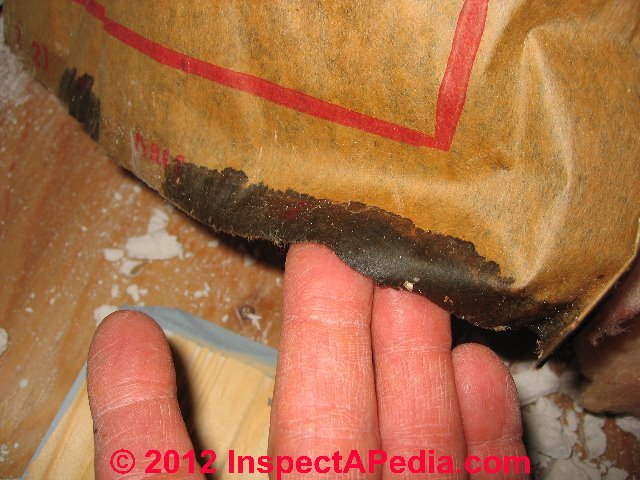
Really? Small-hole Water Extraction Methods
Watch out: do not rely on "water extraction services" offered by some cleaning and restoration services. Promises that a dehumidifier can "suck" water out of flooded walls, floor or ceiling cavities have not been supported in any of thousands of building inspections that we have conducted.
Similar "band-aid" attempts at wall cavity dry-out by cutting small holes in wall bottoms or in bottoms and tops to "blow" air through the cavity to dry it out have also failed. When we returned to inspect buildings "dried" by these approaches we virtually always have found significant mold contamination in the building cavity.
Watch out: do not rely on ozone generators to "disinfect" a building after flooding, mold contamination, or similar hazards. See OZONE MOLD / ODOR TREATMENT WARNINGS for details.
Watch out: it is a false economy to leave too much drywall, wall, floor or ceiling coverings in place, "taking a chance" that those cavities were not wet and do not harbor a mold problem. The risk is that later, after you have cleaned and restored the building you have to perform demoltion all over again to find and remove mold or pathogens from building cavities.
Cleaning Procedure for Windows in a Wet Basement or Flooded Building
If you taped your windows before the storm, clean the tape off as soon as possible. The sun will bake the adhesive into the glass. If glass cleaners don’t remove the adhesive, try tar remover, acetone, nail polish remover, or a razor blade. And next time, don’t bother taping the windows. You don’t get much protection for all that effort.
Cleaning Procedure for Carpets, Rugs, Furniture in a Wet Basement or Flooded Building
Don’t try to force open swollen wooden doors and drawers. Take off the back of the piece of furniture to let the air circulate. You will probably be able to open the drawers after they dry.
Solid wood furniture can usually be repaired and cleaned, but wood veneer often separates and warps.
Wood alcohol or turpentine applied with a cotton ball may remove white mildew spots on wood. Cream wood restorers with lanolin will help restore good wooden furniture parts.
Upholstered furniture soaks up contaminants from floodwaters and should be cleaned only by a professional.
This is also true of area rugs / carpets and bedding. Unless the piece is an antique or especially valuable, upholstered furniture soaked by floodwaters should probably be thrown out. Get a cost estimate from a professional to see if furniture is worth saving.
CAR SMELL - Mold DEODORIZING - advice for vehicles that have been flooded or are mold-contaminated
CARPET MOLD / ODOR TESTS for carpeting or rugs that have been wet and may be mold-contaminated
SALVAGE BUILDING CONTENTS - sorting & handling items that can or cannot be salvaged after flooding or sewage backup
SEWAGE CLEANUP PROCEDURES & STANDARDS for carpeting or area rugs that have been wet by plumbing drain leaks or sewage backups
Cleaning Procedures for Appliances Cook stove, Radio Refrigerator, TV, Washing Machine etc. in a Wet or Flooded Building
There’s an unexpected danger of shock with some electrical appliances such as TV sets and radios. Certain internal parts store electricity even when the appliance is unplugged. Check the back for a warning label. Appliances with such labels will need professional cleaning. But first, get a cost estimate to see if they are worth saving.
You’ll need appliances such as the washing machine, dryer, dishwasher, and vacuum cleaner to help clean your home and contents.
The motors or heating elements can usually be cleaned. If you can’t wait for a professional cleaning job, unplug, disassemble, and hose off the appliances thoroughly (with hot water, if possible). Then clean and disinfect them, but do not use detergents.
Clean and disinfect dishwashers, washing machines, and dryers only with water that has been declared safe for drinking. Make sure the sewer line is working before starting a dishwasher or washing machine.
You can speed up the drying process for motors and parts by using a blow dryer using a moisture displacement spray. Moisture displacement sprays, such as electronics parts cleaners or WD-40 lubricating and penetrating oil, are available at hardware or automotive parts stores. The sprays can also stop rust and corrosion until the appliance can be disassembled and cleaned. One word of caution: the spray is flammable. Read and follow label instructions and precautions.
If you are having trouble getting an electric motor to run, first see ELECTRIC MOTOR OVERLOAD RESET SWITCH and then see ELECTRIC MOTOR DIAGNOSTIC GUIDE.
Moving parts such as motors and pulleys will need oil or grease. Contacts and electrical switches can be cleaned with a moisture displacement spray or an aerosol contact cleaner available at electronics or auto parts stores. Allow a motor to run for 30 minutes with no load before you use it. For example, run the vacuum cleaner without connecting the belt.
Watch for stripped or damaged wire insulation. Be sure all appliances are properly grounded. This is most important if there was damage to the wiring from the flood or during cleaning. Appliances that must be grounded have a round third prong on their plugs. Review the information on your electrical system in Step 5.
Watch out: Refrigerators and freezers are more complicated. They may have foam insulation and sealed components that suffered little water damage. But those appliances hold food and may be built with insulation that picks up both mold contamination and sewage pathogens if the appliance was flooded; so they should be disposed of if their insulation cannot be easily replaced.
Best Cleaners to Use for Cleaning Flooded Buildings or Wet Basements or Building Contents
1st choice: Non-sudsing household cleaners
2nd choice: Laundry soap or detergent
Best Disinfectants to Use for Cleaning Flooded Buildings or Wet Basements or Building Contents
1st choice: Commercial disinfectants or sanitizers, such as the quaternary, phenolic, or pine oil based ones. (Check labels for the contents).
2nd choice: 1/4 cup (2 ounces) of laundry bleach for 1 gallon of water.
Also see
Mildew Removers to Use for Cleaning Flooded Buildings or Wet Basements or Building Contents
Technical note: mildew is a small subset of molds that grows only on living plants. If you see or smell what people may call "mildew" in buildings, it's not mildew, it's other molds, potentially more harmful. Details are at
MILDEW in BUILDINGS ?
MILDEW ERRORS, IT's MOLD
MILDEW REMOVAL & PREVENTION
1st choice: Commercial mildew removers or mildewcides
2nd choice: Washing soda or tri-sodium phosphate (available at grocery or paint stores). Use 5 tablespoons per gallon of water.
3rd choice: 1/4 cup (2 ounces) of laundry bleach for 1 gallon of water. See below on using bleach.
How to Use Bleach for cleaning Flooded Buildings or Wet Basements
Liquid chlorine bleach, such as Clorox or Purex bleach, can do a variety of flood clean up jobs. Make sure that 5.25% sodium hypochlorite is the only active ingredient. Bleach that has a scent added to improve its smell is available. Scented bleach is fine for cleanup jobs, but don’t use it to treat drinking water. Don’t use dry bleach or any bleach that does not contain chlorine.
Be careful of fumes and wear rubber gloves. Read the safety instructions on the label. Do not mix bleach with other household chemical products, especially ammonia or toilet bowl cleaner; the chemical reaction can create a poisonous gas. Do not use bleach on aluminum or linoleum.
Watch out: proper cleanup of mold mean removing the mold, not "killing it with bleach" which can leave harmful particles still in place. See MOLD CLEANUP with BLEACH and also MOLD KILLING GUIDE,
Appliances that have been flooded should be cleaned, disinfected, and checked by a professional, or replaced. If your repair person says an expensive appliance should be replaced, get the opinion in writing and discuss it with your insurance adjuster before you spend money for another one.
Procedure for Cleaning & Disinfecting Clothing and Linens From a Flooded Building or Wet Basement
Even if your washing machine did not get wet, do not use it until you know that the water is safe enough to drink and that your sewer line works. (Perhaps a friend or relative has a washing machine you can use until yours is clean and working.)
Before you wash clothes in the washing machine, run the machine through one full cycle. Be sure to use hot water and a disinfectant or sanitizer.
Take clothes and linens outdoors and shake out dried mud or dirt before you wash them. Hose off muddy items to remove all dirt before you put them in the washer. That way your drain won’t clog.
Check the labels on clothes and linens, and wash them in detergent and warm water if possible. Adding chlorine bleach to the wash cycle will remove most mildew and will sanitize the clothing, but bleach fades some fabrics and damages other fabrics. You can buy other sanitizers, such as pine oil cleaners, at the grocery store to sanitize fabrics that cannot be bleached.
If the label says “Dry Clean Only,” shake out loose dirt and take the item to a professional cleaner. Furs and leather items are usually worth the cost of professional cleaning. If you want to clean leather yourself, wash the mud off and dry the leather slowly away from heat or sunlight.
How to Clean & Salvage Kitchen Items from a Flooded Building
Throw out soft plastic and porous items that probably absorbed whatever the floodwaters carried in. Floodwaters are contaminated, so you may want to wash dishes by hand in a disinfectant. Air dry the disinfected dishes; do not use a dish towel.
Like the washing machine, the dishwasher should also be used only after you know your water is safe to drink and your sewer line works. Clean and disinfect it first. Then use a hot setting to wash your pots, pans, dishes, and utensils. (If you have an energy saving setting, do not use it.)
Salvage Advice for Food from a Flooded Building
Throw any food out that has been touched by floodwaters. Even food in tin cans should be discarded if the cans got wet during the flood because there is no way to be absolutely certain the food inside is safe. Do not keep food in bottles or jars with bottle caps or screw on lids—they do not keep out floodwaters.
The U.S. Department of Agriculture operates a food safety hot- line. Professional home economists can answer your questions about whether to keep or discard food. Call 1-800-535-4555 between 10:00 am and 4:00 pm, Eastern Time, Monday through Friday.
How to Clean & Salvage Papers, Photographs, and Books, Computer Discs from a Wet or Flooded Building or Basement
Valuable papers such as books, photographs, and stamp collections can be restored with a great deal of effort. They can be rinsed and frozen (in a frost-free freezer or commercial meat locker) until you have time to work on them. A slightly less effective alternative to preserving an item is to place items in a sealed container, such as a plastic bag, with moth crystals.
Papers should be dried quickly when they are thawed or unsealed (a blow dryer will do). Don’t try to force paper products apart, just keep drying them. Photocopy valuable papers and records soon because substances in the water may make them deteriorate.
Storing Moldy Books & Papers
To speed the salvage procedure as well as to reduce or defer cleaning costs, valuable papers, books or similar items that could not be completely and quickly cleaned simply by wiping but that owners want to retain can be safely kept by drying the items completely and storing them in a tightly sealed plastic container to await further treatment.
See BOOK / DOCUMENT MOLD & WATER DAMAGE RESTORATION for details. Also see FOXING STAINS on BOOKS & PAPERS
If a computer disk or tape has valuable information, rinse it in clear water and put it in a plastic bag in the refrigerator. Later, you can take it to a professional drying center and have the data transferred to a good disk or tape. Many companies that specialize in restoring computers and computer records after a disaster are members of the Disaster Recovery Institute. To find a member company near you, you can all the Institute at (314) 846-2007.
Cleaning The Yard After a Flood, Hurricane, or Storm
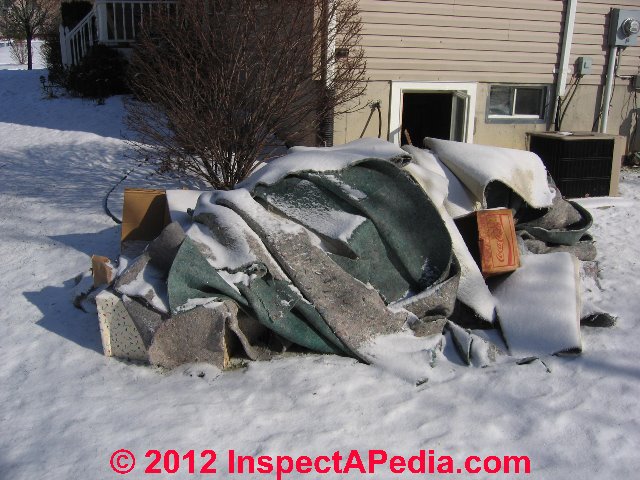
As you get rid of things from your home, don’t turn your yard into a dump. Food and garbage must be hauled away as soon as possible. Other discarded items should be removed as soon as your insurance adjuster has told you how to make sure their loss is covered. Other things you throw away should be removed as soon as your insurance adjuster says it’s okay.
Mosquitoes can carry many diseases, and a flood can create idea conditions for them to breed.
Drain or remove standing water that can become a breeding ground. Dump water out of barrels, old tires, and cans. Check that your gutters are clean and can drain. Ditches and drains also need to be cleaned so they can carry stormwater away from your home.
If you can’t get rid of standing water, use a commercial product that kills mosquito larvae but does not harm other animals. A slightly less effective method is to apply a thin film of cooking oil on the water. Repeat the application within a few days after a rain has disturbed the film.
How to Salvage the Lawn After Area Flooding
Lawns usually survive being underwater for up to four days. Salt water should be hosed off the lawn and shrubs. Some grasses are not damaged by saltwater flooding. Check with your local nursery, garden store, or Cooperative Extension Service. You may have to replace the lawn if there was mud thicker than one inch deep, erosion, or chemicals in the floodwaters.
You will probably see more detailed instructions on how to clean various contents in your local paper or hear them on the radio or TV. Many Cooperative Extension Service offices have more information, especially on animals, vegetables, landscape plants, and household items.
Check your telephone book under the name of your county. For example, if you live in Montgomery County, look under Montgomery County Cooperative Extension Service.
...
Continue reading at Step 7. Check on Financial Assistance - separate article - Voluntary agencies, businesses, insurance, and government disaster programs can help you through recovery.
Or see these
Recommended Articles
- FIRE & SMOKE ODOR REMOVAL - advice for fire and fire-extinguishment-water-damaged buildings and their contents
- FLOOD & DISASTER BUILDING DAMAGE REPAIR PROCEDURES - home
- Step 1. TAKE CARE OF YOURSELF FIRST
- Step 2. GIVE YOUR HOME FIRST AID
- Step 3. GET ORGANIZED
- Step 4. BUILDING DRY-OUT PROCEDURES
- SALVAGE BUILDING CONTENTS
- Step 5. RESTORE UTILITIES AFTER FLOODING
- MOLD CONTROL, FLOOD RESPONSE
- Step 6. FLOOD DAMAGED BUILDING CLEAN-UP
- Step 7. CHECK ON FINANCIAL ASSISTANCE
- Step 8. REBUILD & FLOODPROOF
- Step 9. FLOOD & STORM INSURANCE
- FLOOD-CAUSED MOLD PREVENTION
- FLOOD REPAIR CONTRACTORS
- WHEN TO STOP LOOKING FOR MOLD
- FLOOD & STORM DAMAGE REFERENCES for damage assessment & cleanup
- HURRICANE DAMAGED BUILDINGS
- SEWAGE CLEANUP PROCEDURES & STANDARDS
Suggested citation for this web page
Step 6. FLOOD DAMAGED BUILDING CLEAN-UP at InspectApedia.com - online encyclopedia of building & environmental inspection, testing, diagnosis, repair, & problem prevention advice.
Or see this
INDEX to RELATED ARTICLES: ARTICLE INDEX to BUILDING DAMAGE, DISASTER, REPAIRS
Or use the SEARCH BOX found below to Ask a Question or Search InspectApedia
Or see
INDEX to RELATED ARTICLES: ARTICLE INDEX to BUILDING STRUCTURES
Or use the SEARCH BOX found below to Ask a Question or Search InspectApedia
Ask a Question or Search InspectApedia
Questions & answers or comments about how to clean up, repair & restore a building following damage by earthquake, flooding, hurricane, fire, storm or other disaster.
Try the search box just below, or if you prefer, post a question or comment in the Comments box below and we will respond promptly.
Search the InspectApedia website
Note: appearance of your Comment below may be delayed: if your comment contains an image, photograph, web link, or text that looks to the software as if it might be a web link, your posting will appear after it has been approved by a moderator. Apologies for the delay.
Only one image can be added per comment but you can post as many comments, and therefore images, as you like.
You will not receive a notification when a response to your question has been posted.
Please bookmark this page to make it easy for you to check back for our response.
Our Comment Box is provided by Countable Web Productions countable.ca
Citations & References
In addition to any citations in the article above, a full list is available on request.
- [1] REPAIRING YOUR FLOODED HOME [PDF], American Red Cross & FEMA: Federal Emergency Management Agency, FEMA PO Box 2012, Jessup MD 20794-2012. Printed copies of this book are available from the American Red Cross, from your local Red Cross chapter, or by writing to the address above. Web search 10/4/2010, original source: http://www.redcross.org/www-files/Documents
/pdf/Preparedness/file_cont333_lang0_150.pdf - [2] The following are available free from:
Federal Emergency
Management Agency
Attn: Publications
P. O. Box 2012
Jessup, MD 20794-2012
- Design Manual for Retrofitting Flood-prone Residential Structures, FEMA-114. This detailed manual explains all the floodproofing options in language a homeowner can understand.
- Elevated Residential Structures, FEMA-54.
- Floodproofing Non-residential Structures, FEMA-102.
- Coastal Construction Manual, FEMA-55.
- Manufactured Home Installation in Flood Hazard Areas, FEMA 85.
- [3] The following are available for
free from:
U.S. Army Corps of Engineers
Attn: CECW-PF
20 Massachusetts Avenue, NW
Washington, D.C. 20314
- Introduction to Flood Proofing, John R. Sheaffer, 1967
- Flood-Proofing Regulations, U.S. Army Corps of Engineers, Pittsburgh District, 1990, 80 pages (Corps publication EP 1165 3 314).
- Flood Proofing Systems & Techniques, L.N. Flanagan, editor, 1984
- Flood Proofing Tests, Tests of Materials and Systems for Flood Proofing Structures, Corps of Engineers, National Flood Proofing Committee, August, 1988.
- Raising and Moving the Slab- On-Grade House, Corps of Engineers National Flood Proofing Committee, 1990.
- [4] The following publications are
available from the American Red
Cross. Contact your Red Cross
chapter for more information:
- Your Family Disaster Plan (ARC 4466)
- Su plan para el hogar en caso de desastres (ARC 4466S)
- Your Family Disaster Supplies Kit (ARC 4463)
- Su Equipo de suministros para la familia en caso de desastres (ARC 4463S)
- Safe Living in Your Manufactured Home (ARC 4465)
- Are You Ready for a Flood or Flash Flood? (ARC 4458)
- ¿Está preparado para una inundación or inundación súbita? (ARC 4458S)
- Are You Ready for a Hurricane? (ARC 4454)
- ¿Está preparado para un huracán? (ARC 4454S)
- [5] Clean up References Many Cooperative Extension Service offices have home economists and food and farm experts. Check your telephone book under the county name. For example, if you live in Pittsburg County, check under “Pittsburg County Cooperative Extension Service”.
- [6] Questions on cleaning or disinfecting of specific materials can be answered by manufacturers of cleaning products. Check the product labels for toll free telephone numbers.
- [7] References on technical aspects of floodproofing can be located through the Floodplain Management Resource Center, a free service provided by the Association of State Floodplain Managers. Call 303/492-6818
- [8] CMHC, Canadian Mortgage and Housing Corporation, "After the Flood — A Homeowner’s Checklist", retrieved 10/21/2012, original source http://www.cmhc-schl.gc.ca/en/co/maho/em/em_001.cfm [copy on file as After_The_Flood_CMHC.pdf]
- [9] Como Reparar su Hogar Inundado, American Red Cross and FEMA - PDF - espanol
- [10] Flood Cleanup - Avoiding Indoor Air Quality Problems,> US EPA Fact Sheet
- [11] Cleaning Up After a Flood, Texas Department of State Health Services.
- [12] US EPA - Mold Remediation in Schools and Commercial Building [ copy on file as /sickhouse/EPA_Mold_Remediation_in_Schools.pdf ] - US EPA
- "IgG Food Allergy Testing by ELISA/EIA, What do they really tell us?" Sheryl B. Miller, MT (ASCP), PhD, Clinical Laboratory Director, Bastyr University Natural Health Clinic - ELISA testing accuracy: Here is an example of Miller's critique of ELISA - www.betterhealthusa.com/public/282.cfm - Townsend Letter for Doctors and Patients
The critique included in that article raises compelling questions about IgG testing assays, which prompts our interest in actually screening for the presence of high levels of particles that could carry allergens - dog dander or cat dander in the case at hand.
- www.tldp.com/issue/174/IgG%20Food%20Allergy.html - contains similar criticism in another venue but interestingly by the same author, Sheryl Miller. Sheryl Miller, MT (ASCP), PhD, is an Immunologist and Associate Professor of Basic and Medical Sciences at Bastyr University in Bothell, Washington. She is also the Laboratory Director of the Bastyr Natural Health Clinic Laboratory. - Allergens: Testing for the level of exposure to animal allergens is discussed at http://www.animalhealthchannel.com/animalallergy/diagnosis.shtml (lab animal exposure study is interesting because it involves a higher exposure level in some cases
- Allergens: WebMD discusses allergy tests for humans at webmd.com/allergies/allergy-tests
- Atlas of Clinical Fungi, 2nd Ed., GS deHoog, J Guarro, J Gene, & MJ Figueras, Centraalbureau voor Schimmelcultures, Universitat Rovira I Virgili, 2000, ISBN 90-70351-43-9
- "Management of Powdery Mildew, Leveillula taurica, in Greenhouse Peppers," Ministry of Agriculture and Lands, British Columbia - Original source: www.agf.gov.bc.ca/cropprot/peppermildew.htm
- Fifth Kingdom, Bryce Kendrick, ISBN13: 9781585100224, - we recommend the CD-ROM version of this book. This 3rd/edition is a compact but comprehensive encyclopedia of all things mycological. Every aspect of the fungi, from aflatoxin to zppspores, with an accessible blend of verve and wit. The 24 chapters are filled with up-to-date information of classification, yeast, lichens, spore dispersal, allergies, ecology, genetics, plant pathology, predatory fungi, biological control, mutualistic symbioses with animals and plants, fungi as food, food spoilage and mycotoxins.
- Fungi, Identifying Filamentous, A Clinical Laboratory Handbook, Guy St-Germain, Richard Summerbell, Star Publishing, 1996, ISBN 0-89863-177-7 (English)
- US EPA: Mold Remediation in Schools and Commercial Building [ copy on file as /sickhouse/EPA_Mold_Remediation_in_Schools.pdf ] - US EPA
- Mycology, Fundamentals of Diagnostic, Fran Fisher, Norma B. Cook, W.B. Saunders Co. 1998, ISBN 0-7216-5006-6
- Kansas State University, department of plant pathology, extension plant pathology web page on wheat rust fungus: see http://www.oznet.ksu.edu/path-ext/factSheets/Wheat/Wheat%20Leaf%20Rust.asp
- A BRIEF GUIDE to MOLD, MOISTURE, and YOUR HOME, [PDF] U.S. Environmental Protection Agency US EPA - includes basic advice for building owners, occupants, and mold cleanup operations. See http://www.epa.gov/mold/moldguide.htm
- US EPA - Mold Remediation in Schools and Commercial Building [ copy on file as /sickhouse/EPA_Mold_Remediation_in_Schools.pdf ] - US EPA
- US EPA - UNA BREVA GUIA a MOHO / HONGO - en Espanol
- "IgG Food Allergy Testing by ELISA/EIA, What do they really tell us?" Sheryl B. Miller, MT (ASCP), PhD, Clinical Laboratory Director, Bastyr University Natural Health Clinic - ELISA testing accuracy: Here is an example of Miller's critique of ELISA - www.betterhealthusa.com/public/282.cfm - Townsend Letter for Doctors and Patients
The critique included in that article raises compelling questions about IgG testing assays, which prompts our interest in actually screening for the presence of high levels of particles that could carry allergens - dog dander or cat dander in the case at hand.
- www.tldp.com/issue/174/IgG%20Food%20Allergy.html - contains similar criticism in another venue but interestingly by the same author, Sheryl Miller. Sheryl Miller, MT (ASCP), PhD, is an Immunologist and Associate Professor of Basic and Medical Sciences at Bastyr University in Bothell, Washington. She is also the Laboratory Director of the Bastyr Natural Health Clinic Laboratory. - Allergens: Testing for the level of exposure to animal allergens is discussed at http://www.animalhealthchannel.com/animalallergy/diagnosis.shtml (lab animal exposure study is interesting because it involves a higher exposure level in some cases
- Allergens: WebMD discusses allergy tests for humans at webmd.com/allergies/allergy-tests
- Atlas of Clinical Fungi, 2nd Ed., GS deHoog, J Guarro, J Gene, & MJ Figueras, Centraalbureau voor Schimmelcultures, Universitat Rovira I Virgili, 2000, ISBN 90-70351-43-9
- A BRIEF GUIDE to MOLD, MOISTURE, and YOUR HOME, [PDF] U.S. Environmental Protection Agency US EPA - includes basic advice for building owners, occupants, and mold cleanup operations. See http://www.epa.gov/mold/moldguide.htm
- "Disease Prevention Program for Certain Vegetable Crops," David B. Langston, Jr., Extension Plant Pathologist - Vegetables, University of Georgia (PDF document) original source: www.reeis.usda.gov/web/crisprojectpages/209797.html
- Disease Prevention in Home Vegetable Gardens [PDF], Patricia Donald,Department of Plant Microbiology and Pathology,
Lewis Jett
Department of Horticulture, University of Missouri Extension - extension.missouri.edu/publications/DisplayPub.aspx?P=G6202 - "Management of Powdery Mildew, Leveillula taurica, in Greenhouse Peppers," Ministry of Agriculture and Lands, British Columbia - Original source: www.agf.gov.bc.ca/cropprot/peppermildew.htm
- Fifth Kingdom, Bryce Kendrick, ISBN13: 9781585100224, - we recommend the CD-ROM version of this book. This 3rd/edition is a compact but comprehensive encyclopedia of all things mycological. Every aspect of the fungi, from aflatoxin to zppspores, with an accessible blend of verve and wit. The 24 chapters are filled with up-to-date information of classification, yeast, lichens, spore dispersal, allergies, ecology, genetics, plant pathology, predatory fungi, biological control, mutualistic symbioses with animals and plants, fungi as food, food spoilage and mycotoxins.
- Fungi, Identifying Filamentous, A Clinical Laboratory Handbook, Guy St-Germain, Richard Summerbell, Star Publishing, 1996, ISBN 0-89863-177-7 (English)
- US EPA: Mold Remediation in Schools and Commercial Building [ copy on file as /sickhouse/EPA_Mold_Remediation_in_Schools.pdf ] - US EPA
- Mycology, Fundamentals of Diagnostic, Fran Fisher, Norma B. Cook, W.B. Saunders Co. 1998, ISBN 0-7216-5006-6
- In addition to citations & references found in this article, see the research citations given at the end of the related articles found at our suggested
CONTINUE READING or RECOMMENDED ARTICLES.
- Carson, Dunlop & Associates Ltd., 120 Carlton Street Suite 407, Toronto ON M5A 4K2. Tel: (416) 964-9415 1-800-268-7070 Email: info@carsondunlop.com. Alan Carson is a past president of ASHI, the American Society of Home Inspectors.
Thanks to Alan Carson and Bob Dunlop, for permission for InspectAPedia to use text excerpts from The HOME REFERENCE BOOK - the Encyclopedia of Homes and to use illustrations from The ILLUSTRATED HOME .
Carson Dunlop Associates provides extensive home inspection education and report writing material. In gratitude we provide links to tsome Carson Dunlop Associates products and services.
 | HOME | ABOUT | ASK a QUESTION | CONTACT | CONTENT USE POLICY | DESCRIPTION | POLICIES | PRIVACY | |
| © 2024 - 1985 Publisher InspectApedia.com - Daniel Friedman | |||||||||