
InspectAPedia® FREE Encyclopedia of Building & Environmental Construction, Diagnosis, Maintenance & Repair |
Question? Just ask us! InspectAPedia
|
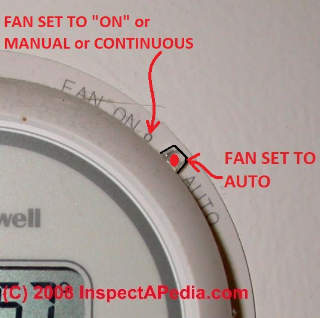 Continuous HVAC Blower Fan Operation for Optimum Indoor Air Quality
- POST a QUESTION or COMMENT about whether or not to run the heating or air conditioning blower fan continuously
Continuous blower unit fan operation guide:
This article explains how and why to set your air conditioning or heating system blower fan to continuous operation in order to improve indoor air quality by increased and continuous indoor air filtration.
We also describe use of the manual FAN-ON switch present on some fan limit controls (or thermostats) and we discuss how to add an inexpensive manual FAN ON/OFF switch to an existing fan limit controller.
(Naturally if there is an IAQ problem source in the building it is essential to also find and correct that condition. This website answers almost any question you might ask about air filters for heating or air conditioning systems.
InspectAPedia tolerates no conflicts of interest. We have no relationship with advertisers, products, or services discussed at this website.
Continuous Blower Fan Operation: Why Run an Air Conditioner or Heating Blower Fan Continuously?
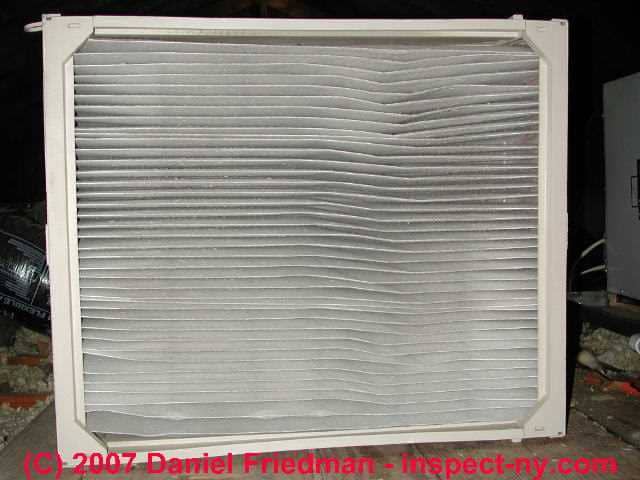 For maximum indoor air qality (IAQ) improvement in buildings: for a new blower installation
we selected a fan unit which had both the capability of delivering adequate CFM of air flow and a blower fan motor duty cycle which
permits continuous operation if we wish to run the system that way.
For maximum indoor air qality (IAQ) improvement in buildings: for a new blower installation
we selected a fan unit which had both the capability of delivering adequate CFM of air flow and a blower fan motor duty cycle which
permits continuous operation if we wish to run the system that way.
[Click to enlarge any image]
Article Contents
Reasons for Keeping the Blower Fan Unit On
Running the blower continuously at low speed resulted in continual air scrubbing in the building. When the heating or cooling needs of the building require, the fan shifts automatically to high speed. Here are the details:
There are reasons to leave the fan in the ON position on a heating or cooling system, but we do not recommend that you do this without first asking for advice from your heating and service technician.
If your air conditioner or heating system fan blower unit was designed to permit the fan to run all of the time that's great and you can consider the benefits of continuous fan operation we list just below.
But if your fan motor was not intended for continuous duty and you run the fan that way, you may find the motor fails prematurely.
Here are some possible advantages of continuous blower fan operation
- Improved air filtration, lower indoor dust levels - this is particularly true if you have a good air filter system installed. In our forensic lab when we installed a new gas furnace we asked the installer to include a multi speed fan (the fan chooses the needed speed automatically), a fan rated for continuous duty cycle, and we specified that the air filter system include HEPA filtration as well as an electrostatic air cleaner.
We also included a cheap disposable filter at the air returns.
This fan plus filter design permitted us to run the blower fan continuously in our lab, regardless of whether or not the heat was running (we don't need central air).
We measured airborne dust levels in the building before and after installation of the new system and found that indoor dust levels improved by at least one order of magnitude.
This system was enormously more effective than the dust filtration capacity of any free-standing "air cleaner" found on the popular consumer product market.
That's because a warm air central heating system or central air conditioning system blower and duct work move many more cubic feet of air per minute through the filter system than a free-standing room "air cleaner" or "air purifier" can handle. - Increased building comfort: especially if a multi-speed or variable speed fan motor is included in the system design, the continuous movement of air in the building avoids sudden hot or cold blasts when heating or air conditioning turns on; indoor air temperatures tend to be more even.
Here are some disadvantages of continuous air conditioner or heating system blower fan operation
- Energy use: A downside of continuous blower fan operation is higher electrical costs. On the other hand, if we needed to reduce building dust and allergen levels and/or increase comfort levels, this approach might avoid wasting money on other attempts at air cleaning that are expensive and less effective.
More careful study is needed to really evaluate the claim that continuous blower fan operation uses more overall energy. In some cases there may be a net energy savings, depending on how hard the heating or cooling system has to work to satisfy the thermostat (and occupants) during "on" cycles. - Equipment life: if the blower motor is not rated for continuous duty operation, it may need replacement sooner when continuous fan operation is used. In this case be sure the new blower is rated for continuous duty.
How to Put the Air Conditioner or Heat Pump Blower Fan into Continuous-On Operation
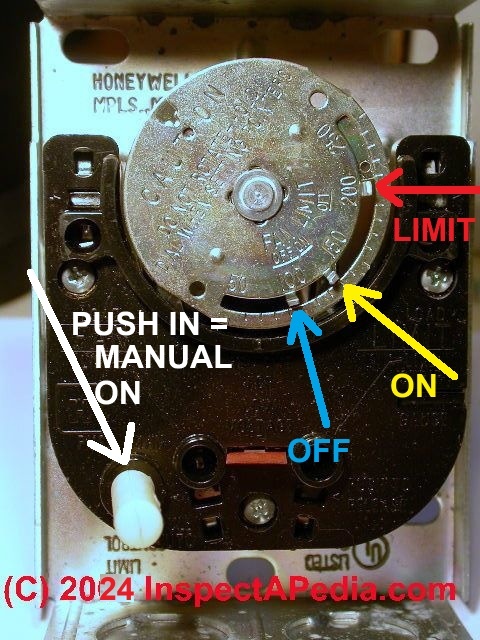
Most heating or cooling systems have one or perhaps two methods for turning the blower fan to continuous "on": at the room wall themostat and (for heating systems) at the fan limit switch - a safety control found inside the heating appliance.
- The room thermostat may include a "Fan On" position - though not all versions of this control have this switch. Not all room thermostats include this switch - but most do - see our page top photo. For help finding the furnace fan control switch on your room thermostat
see FAN ON AUTO MAN Thermostat Switch.
Try moving the thermostat fan control to ON or MAN - this should turn the fan in the air handler for continuous operation. - The fan limit switch located in the air handler's blower compartment or near the oil or gas burner for your furnace may include a "Manual Fan" Switch.
If your air handler unit provides both heating and cooling (that is not just air conditioning) then there will be a limit swtich installed inside the air handler blower compartment or burner compartment.
Look for the white push-pull switch such as the one shown in our photo at left. You will see this switch without having to remove the cover from the limit swith itself.
If your limit swith includes this fan switch, try
moving the fan switch from "Auto" to "Fan On". You should hear the blower fan turn on and continue running as long as the switch is in this position.
To find the manual furnace or air handler blower fan switch, see the articles, photos, and sketches in these articles
- FAN LIMIT SWITCH TROUBLESHOOTING and see
- FAN LIMIT SWITCH INSTALLATION & WIRING
- found in our article series about the FAN LIMIT SWITCH .
See the white knob at lower left in our fan limit switch photo at left. That's the manual fan-on switch on a limit control. As we note, not all limit controls include this switch. The cover has been removed from the switch in this picture.
Reader Comments, Questions & Answers About The Article Above
Below you will find questions and answers previously posted on this page at its page bottom reader comment box.
Reader Q&A - also see RECOMMENDED ARTICLES & FAQs
Question: How can I add a manual FAN-ON / FAN-OFF switch to my existing furnace air handler?
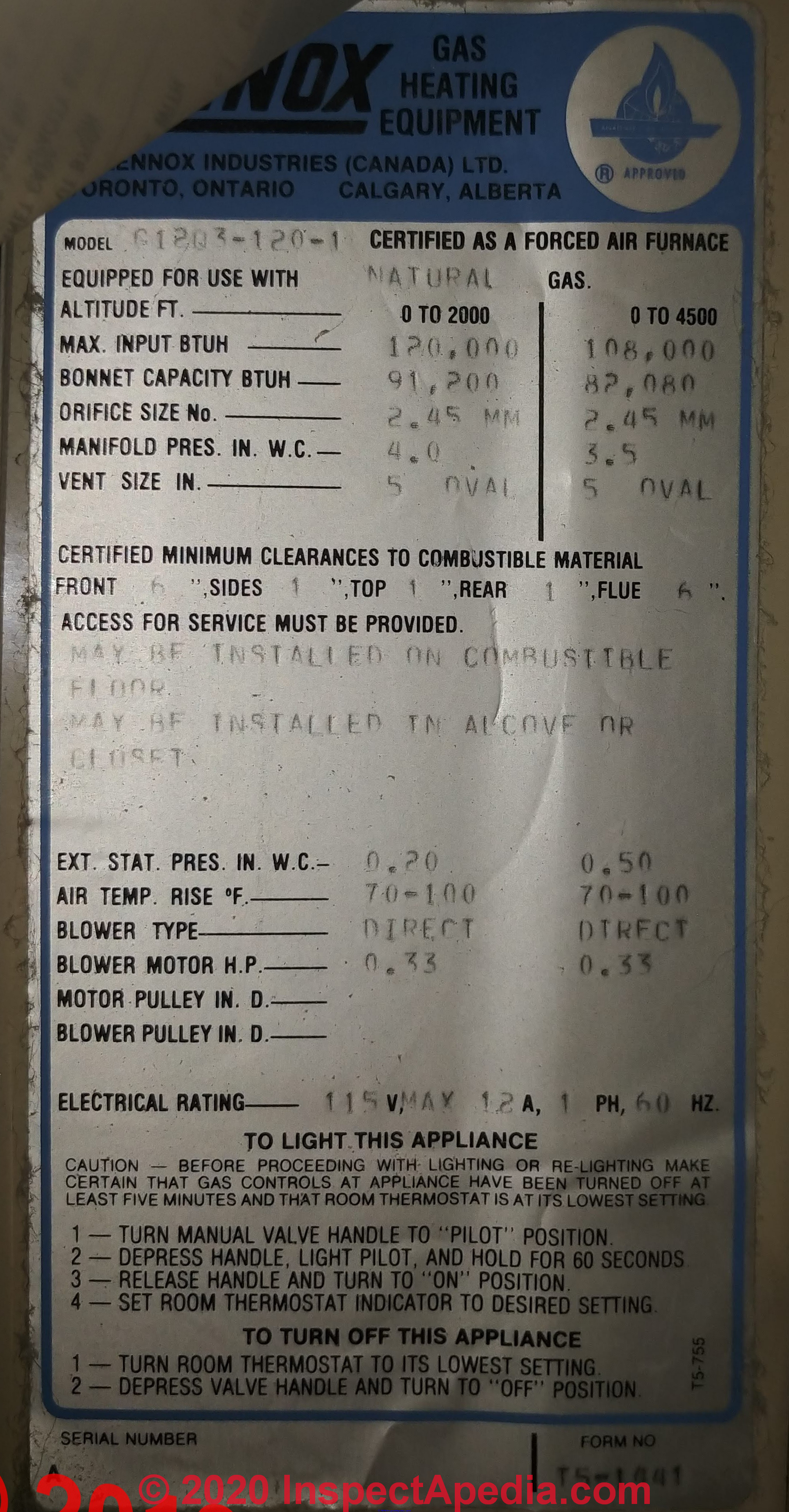
 Thank you for your website, it has been very helpful as a new homeowner. I have a Lennox G12Q3-120-1 furnace (ground floor) with only two wires (R, W) run to a Lennox mercury thermostat (second floor) for heat only.
I would like to add a manual fan control to use the furnace can to circulate air in the hot summer months. It is not feasible for me to run a new wire to the thermostat so I was thinking of adding a switch at the furnace itself.
Looking online, I found that people jumped the R and G terminals with a switch; however, I discovered that my furnace does not have a terminal strip.
[Click to enlarge any image]
I have a fan control relay and an unused white wire on the 24v side of the relay, which I believe is the fan control wire and would normally be connected to the G terminal on a thermostat if so equipped.
Also, I believe my blower motor has been wired for single speed operation as the red and black leads from it have been connected together, and this is consistent with how the furnace functions.
To manually control the fan, is it possible for me to wire a switch between the blue 24v wire from the transformer to the white fan control wire on the relay?
Here are some photos of the furnace internals:
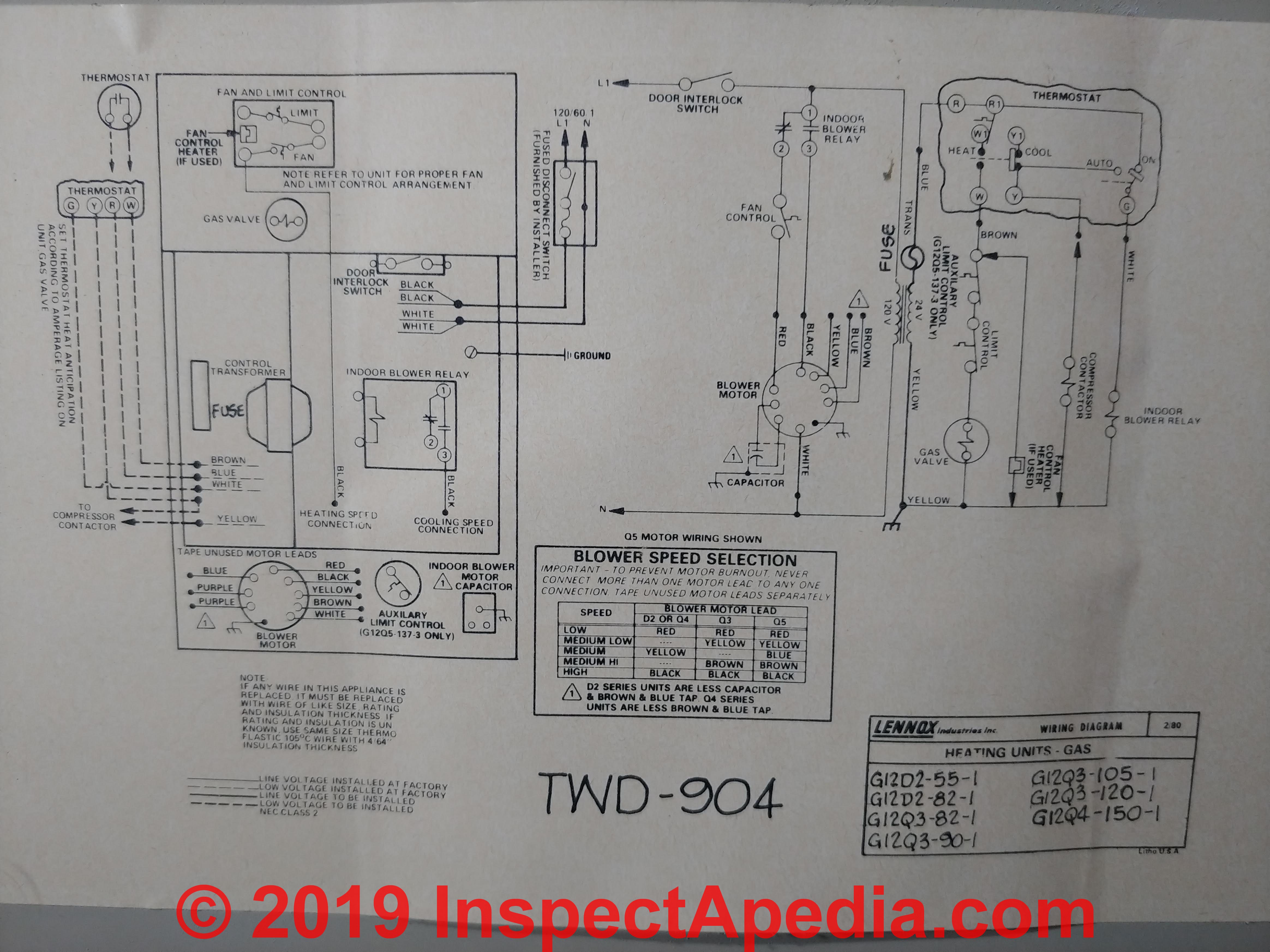
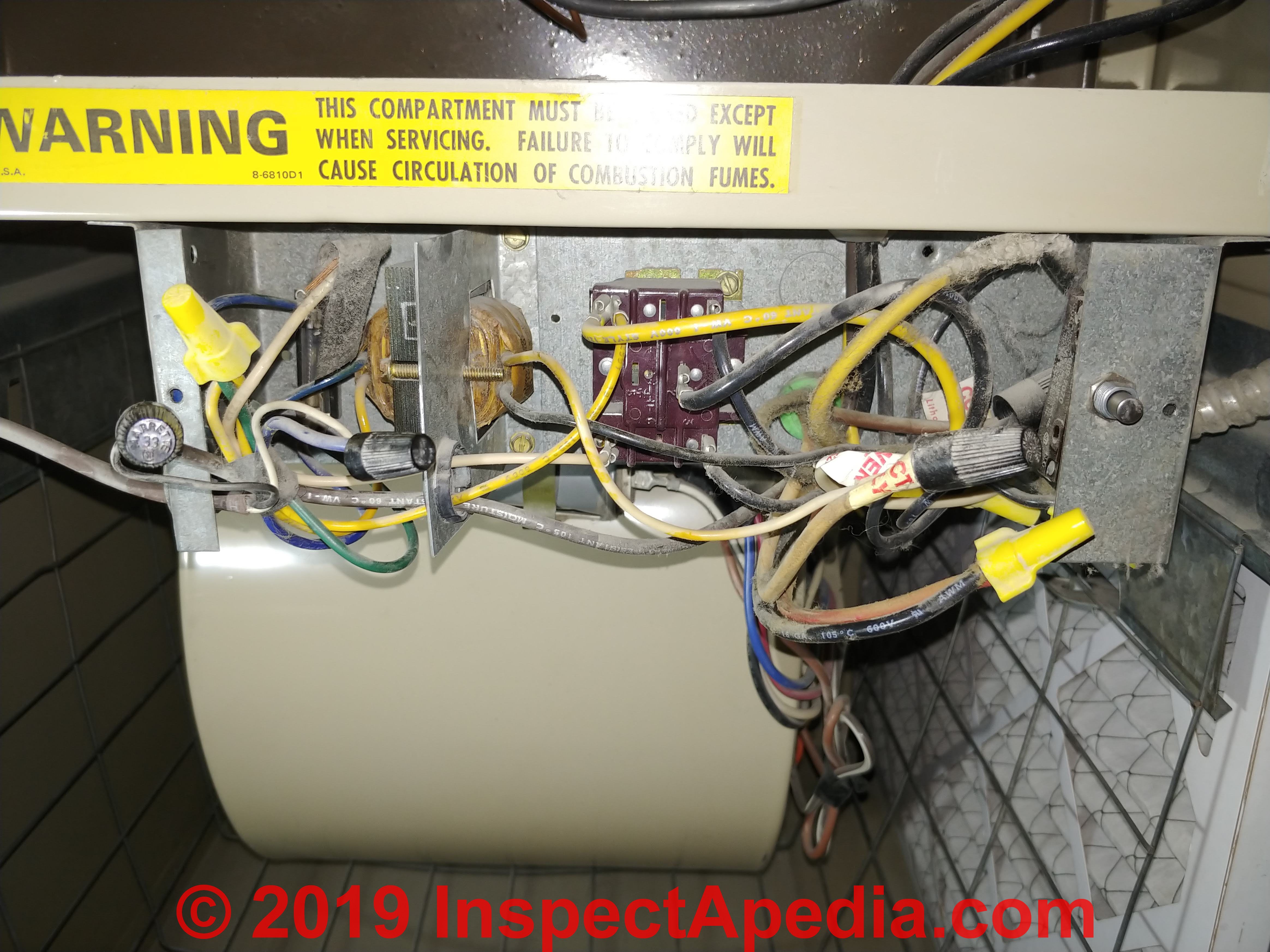
Please let me know if you need more information. Thank you for your time and help! - Anonymous by private email 2020/03/22
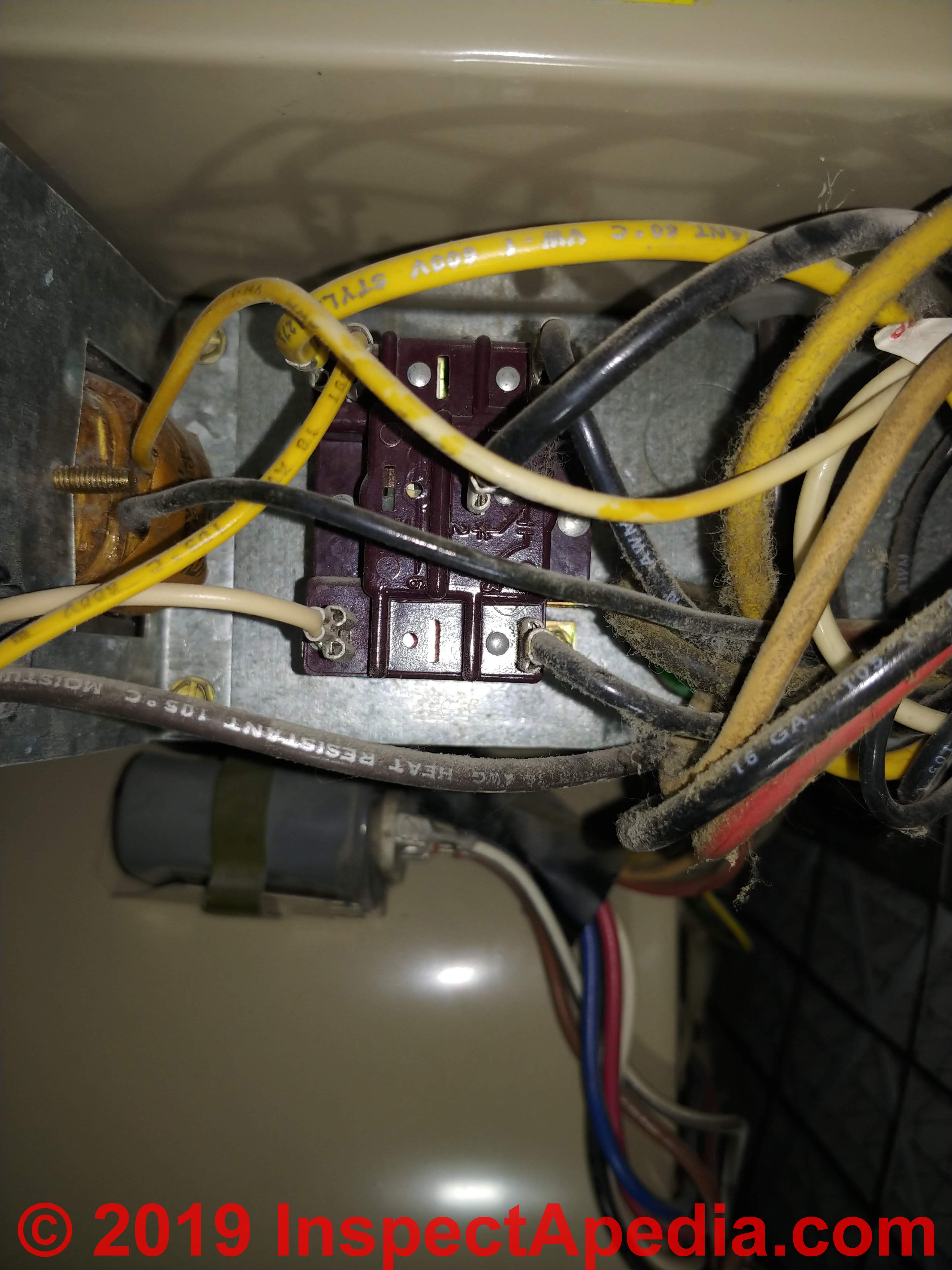
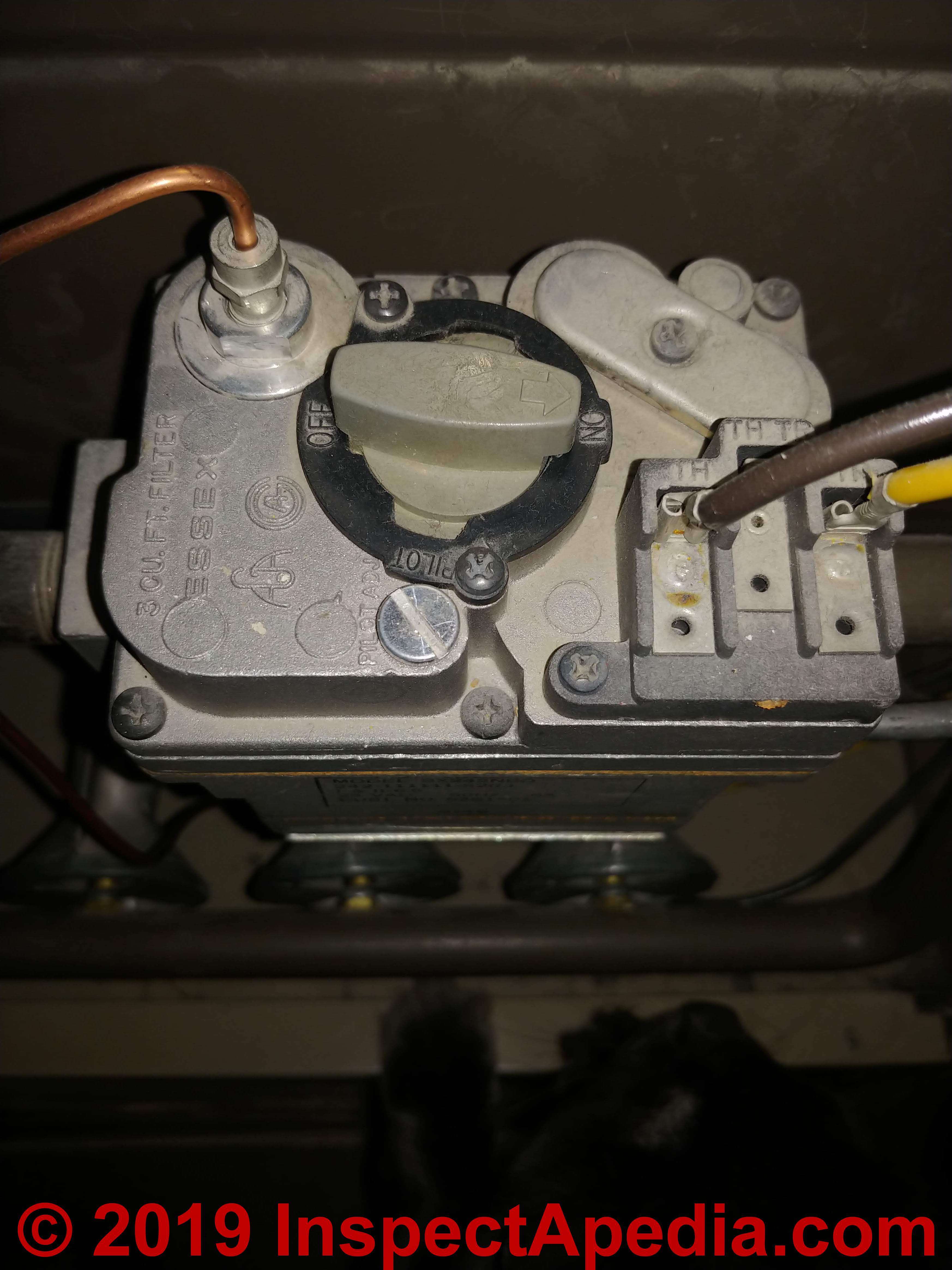
Reply: add an independent FAN ON/OFF Control switch for your air handler
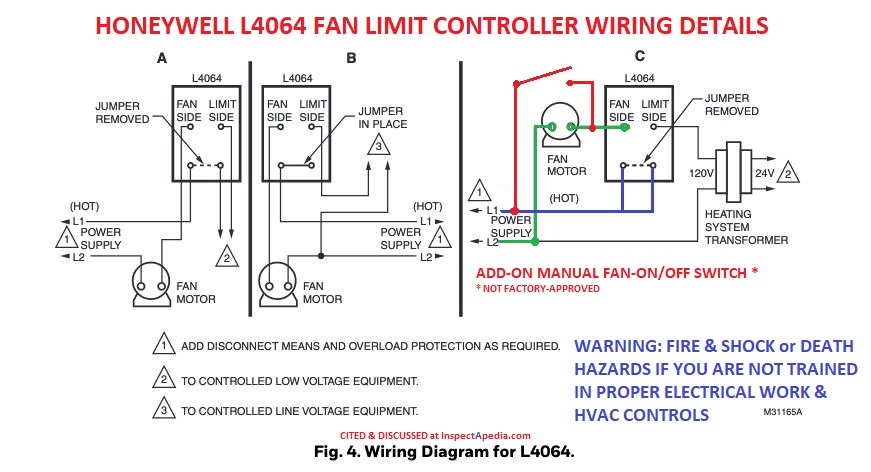
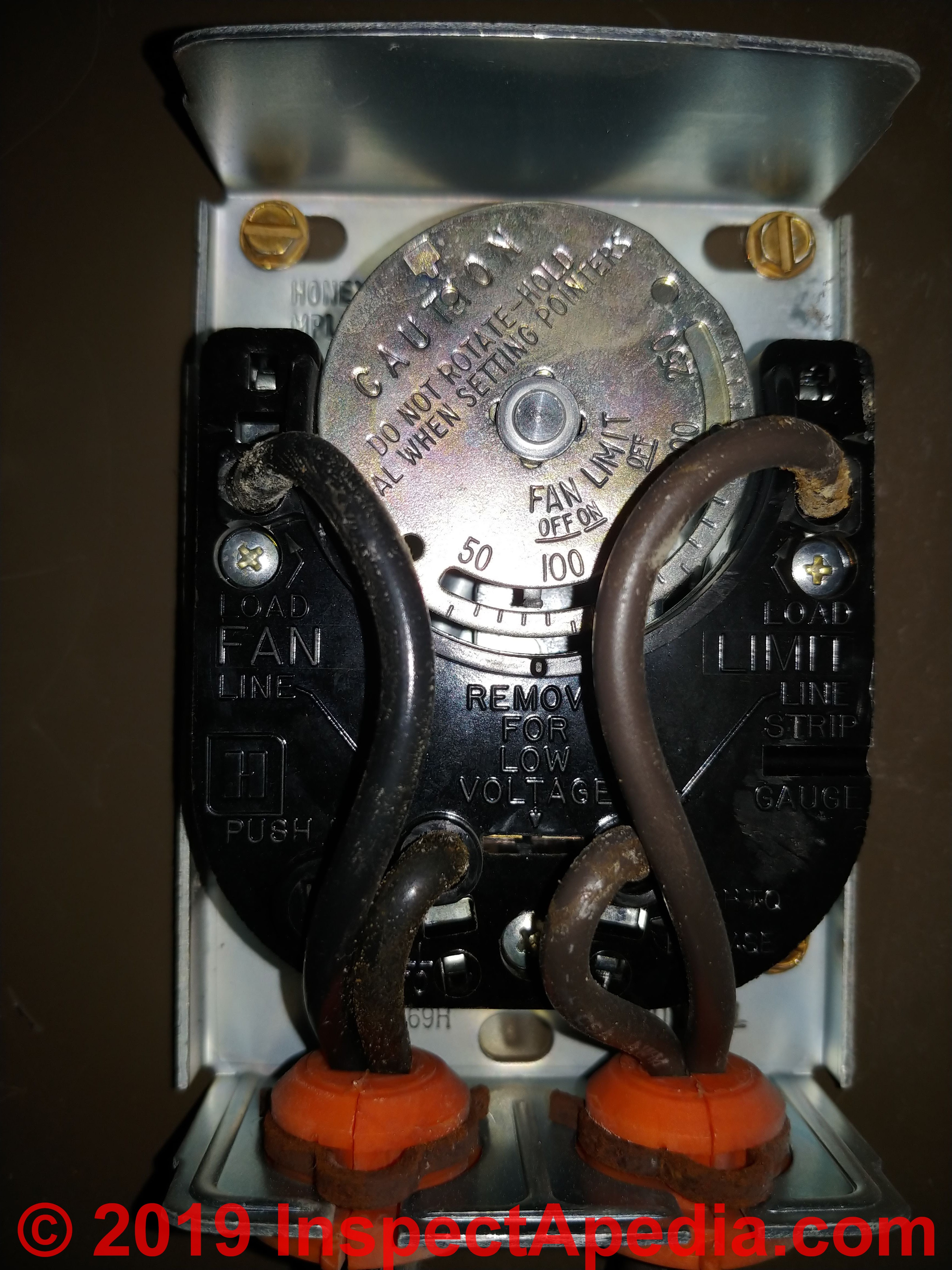
An EXAMPLE wiring modification to add a manual FAN-ON switch using the Honeywell L4064 Fan Limit controller is shown above - the red wires.
Watch out: this modification is NOT approved nor recommended by the manufacturer (Honeywell) nor by your furnace manufacturer. If you are not trained in proper and safe electrical wiring and HVAC controls, making a mistake can cause equipment damage, a building fire, or electrical shock or injury or death.
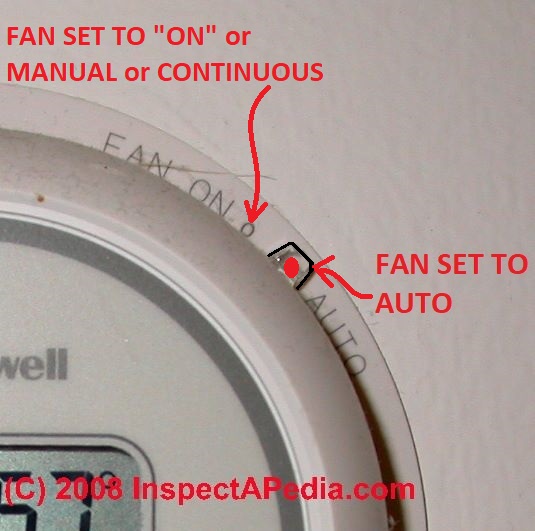
IF a fan control wire is available at your thermostat you could have simply replaced your simple thermostat with a model that includes a manual FAN-ON switch.
Our illustration above is also discussed
at FAN ON AUTO MAN THERMOSTAT SWITCH
But you cannot do that as you don't have the necessary control wires..
Similarly, a separate or external switch jumping R and G terminals can, if the R and G wires are connected to the fan control board at the air handler, be used to switch the fan ON and OFF manually.
But that approach will not work either in your case because you report that you have only two wires right at your thermostat: probably R and W that simply turn the furnace ON or OFF in response to room temperature.
Take a look at our articles on the furnace / air handler fan limit control switch starting at FAN LIMIT SWITCH https://inspectapedia.com/heat/Fan_Limit_Switch_Guide.php
Then consider:
1. Look for a manual FAN-ON switch at the fan limit control on your furnace.
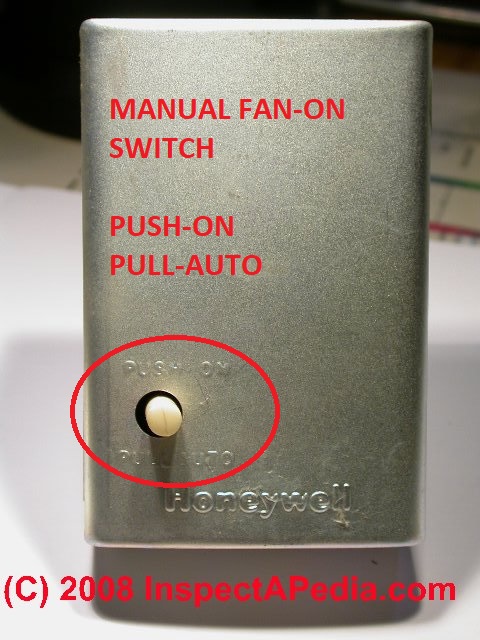
Some of those controls have a white pull-push switch that can turn the fan ON to run continuously.
That control is illustrated above and is also discussed in FAN RUNS ONLY ON FAN-ON / MAN
2. Review the fan limit control wiring for your specific furnace and limit controller.
Find the manual and more wiring and installation instructions for your heater (if you don't already have it) at
LENNOX G12 / G12E SERIES FURNACE INSTALLATION MANUAL [PDF] using one of 3 types of fan limit controls: Camstat, Cemco, or Honeywell.
or at
LENNOX HVAC MANUALS & PARTS GUIDES Lennox Industries Air Conditioners, Furnaces, Heat Pumps , Manuals, Guides
At FAN LIMIT SWITCH INSTALLATION & WIRING we describe how the control is wired and give links to installation manuals for all of the brands of fan limit controllers found on air handlers.
Finding yours will let you find the wires or connections that you might use to connect up an independent manual FAN-ON switch if your controller doesn't already offer that feature. (Or you could replace the control with a similar model that already includes the FAN-ON manual switch.
...
Continue reading at BLOWER FAN OPERATION & TESTING or select a topic from the closely-related articles below, or see the complete ARTICLE INDEX.
Or see BLOWER FAN CONTINUOUS OPERATION FAQs - questions and answers posted originally on this page
Or see these
Recommended Articles
- AIR HANDLER / BLOWER UNITS - home
- BLOWER FAN SPEED SETTINGS - how to set the air handler fan speed
- FAN AUTO ON CONTROLS
- FAN LIMIT SWITCH
- FAN ON AUTO MAN THERMOSTAT SWITCH
- FAN ON SWITCH ADDITION - how to add a manual FAN-ON switch at the air handler
- FAN RUNS ONLY ON FAN-ON / MAN
- FAN WONT STOP - LIMIT SWITCH
- FAN WONT STOP - THERMOSTAT SWITCH
Suggested citation for this web page
BLOWER FAN CONTINUOUS OPERATION at InspectApedia.com - online encyclopedia of building & environmental inspection, testing, diagnosis, repair, & problem prevention advice.
Or see this
INDEX to RELATED ARTICLES: ARTICLE INDEX to AIR CONDITIONING & HEAT PUMPS
Or use the SEARCH BOX found below to Ask a Question or Search InspectApedia
Ask a Question or Search InspectApedia
Try the search box just below, or if you prefer, post a question or comment in the Comments box below and we will respond promptly.
Search the InspectApedia website
Note: appearance of your Comment below may be delayed: if your comment contains an image, photograph, web link, or text that looks to the software as if it might be a web link, your posting will appear after it has been approved by a moderator. Apologies for the delay.
Only one image can be added per comment but you can post as many comments, and therefore images, as you like.
You will not receive a notification when a response to your question has been posted.
Please bookmark this page to make it easy for you to check back for our response.
Our Comment Box is provided by Countable Web Productions countable.ca
Citations & References
In addition to any citations in the article above, a full list is available on request.
- Thanks to Mark Cramer, Tampa Florida, for assistance in technical review of the "Critical Defects" section and for the photograph of the deteriorating gray Owens Corning flex duct in a hot attic. Mr. Cramer is a Florida home inspector and home inspection educator.
- Wikipedia Web: https://www.wikipedia.org/ provided background information about the definition of HEPA and airborne particle interception.
- Our recommended books about building & mechanical systems design, inspection, problem diagnosis, and repair, and about indoor environment and IAQ testing, diagnosis, and cleanup are at the InspectAPedia Bookstore. Also see our Book Reviews - InspectAPedia.
- In addition to citations & references found in this article, see the research citations given at the end of the related articles found at our suggested
CONTINUE READING or RECOMMENDED ARTICLES.
- Carson, Dunlop & Associates Ltd., 120 Carlton Street Suite 407, Toronto ON M5A 4K2. Tel: (416) 964-9415 1-800-268-7070 Email: info@carsondunlop.com. Alan Carson is a past president of ASHI, the American Society of Home Inspectors.
Thanks to Alan Carson and Bob Dunlop, for permission for InspectAPedia to use text excerpts from The HOME REFERENCE BOOK - the Encyclopedia of Homes and to use illustrations from The ILLUSTRATED HOME .
Carson Dunlop Associates provides extensive home inspection education and report writing material. In gratitude we provide links to tsome Carson Dunlop Associates products and services.
 | HOME | ABOUT | ASK a QUESTION | CONTACT | CONTENT USE POLICY | DESCRIPTION | POLICIES | PRIVACY | |
| © 2024 - 1985 Publisher InspectApedia.com - Daniel Friedman | |||||||||