InspectAPedia.com InspectAPedia®
Google
InspectAPedia
 

Free Encyclopedia of Building & Environmental Inspection, Testing, Diagnosis, Repair

Ask a Question or Search InspectAPedia

  • HOME
  • AIR CONDITIONING
  • DAMAGE ASSESSMENT
  • ELECTRICAL
  • EXTERIORS
  • HEATING
  • HOME INSPECTION
  • INTERIORS
  • PLUMBING
  • ROOFING
  • SEPTIC SYSTEMS
  • STRUCTURE
  • WATER SUPPLY
  • ENERGY SAVINGS
  • ENVIRONMENT
  • INDOOR AIR IAQ
  • INSULATION
  • MOLD INSPECT TEST REMOVE
  • NOISE
  • ODORS
  • SOLAR ENERGY
  • VENTILATION
  • EXPERTS DIRECTORY
  • CONTACT US


InspectAPedia ® Home

AIR CONDITIONING & HEAT PUMP SYSTEMS

A/C - HEAT PUMP CONTROLS & SWITCHES
AIR CONDITIONER COMPONENT PARTS
AIR CONDITIONER TYPES, ENERGY SOURCES
AIR FILTER EFFICIENCY
AIR FILTERS, FIBERGLASS PARTICLES
AIR FLOW MEASUREMENT CFM
APPLIANCE EFFICIENCY RATINGS

BLOWER DOORS & AIR INFILTRATION
BLOWER FAN CONTINUOUS OPERATION
BLOWER FAN OPERATION & TESTING
BOOKSTORE - Air Conditioning "How To" Books

CAPACITORS for HARD STARTING MOTORS
CAPILLARY TUBES
CLEANING & Legionella BACTERIA
CHINESE DRYWALL HAZARDS
CONDENSATION or SWEATING PIPES, TANKS

DEFINITION of Heating & Cooling Terms
DEW POINT CALCULATION for WALLS
DEW POINT TABLE - CONDENSATION POINT GUIDE
DIAGNOSE & FIX AIR CONDITIONER / HEAT PUMP
DIAGNOSE & FIX HEATING PROBLEMS-BOILER
DIAGNOSE & FIX HEATING PROBLEMS-FURNACE
DUCTS - Asbestos
DUCT INSULATION, Asbestos Paper
DUCT INSULATION for SOUNDPROOFING
DUCT SYSTEM NOISES
DUCTS, Asbestos Transite Pipe
DUST, HVAC CONTAMINATION STUDY

ELECTRIC MOTOR OVERLOAD RESET SWITCH
EVAPORATIVE COOLING SYSTEMS

FAN LIMIT SWITCH
FAN NOISES

GAS EXPOSURE EFFECTS, TOXIC
GAS DETECTION INSTRUMENTS

HEAT LOSS (or GAIN) in buildings
HEAT LOSS (or GAIN) INDICATORS
HEAT LOSS R U & K VALUE CALCULATION
HEAT PUMPS
HEATING SMALL LOADS

INSPECTION CHECKLIST - OUTDOOR UNIT
INSPECTION LIMITATIONS, A/C SYSTEMS

LEED GREEN BUILDING CERTIFICATION
LOST COOLING CAPACITY
LOW VOLTAGE TRANSFORMER TEST

MOTOR OVERLOAD RESET SWITCH
MOLD in AIR HANDLERS & DUCT WORK

OPERATING COST, AIR CONDITIONER
OPERATING DEFECTS, AIR CONDITIONING

REPAIR GUIDE, AIR CONDITIONERS / HEAT PUMPS
REPAIR & DIAGNOSTIC FAQs for A/C

SWAMP COOLERS

THERMOSTATS, HEATING / COOLING
THERMOSTATIC EXPANSION VALVES

WATER COOLED AIR CONDITIONERS
WINDOW / WALL AIR CONDITIONERS
WINDOW / WALL A/C SUPPORTS
More Information

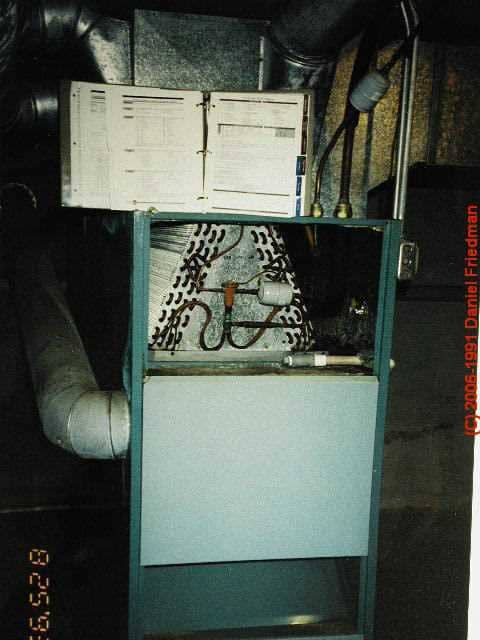
Photograph of older side-vent combination hot air furnace and central air conditioning system. The evaporator coil or A-coil is
visible in the top of the unit. Air Conditioning SEER: History of the DOE Air Conditioner and Heat Pump Efficiency Standard
     

  • Air Conditioning SEER - Definition of SEER - Seasonal Energy Efficiency Ratings explained
    • New DOE standard and history of air conditioning system ratings and refrigerants
  • HEAT PUMP COP - separate article
  • HEATING COST FUEL & BTU Cost Table - separate article
  • SEER RATINGS & OTHER DEFINITIONS - separate article
  • Questions & answers about the definition & interpretation of SEER ratings on air conditioners or heat pumps
  • References

Click to Show or Hide Related Topics

  • AIR CONDITIONING & HEAT PUMP SYSTEMS - home
  • A/C COMPONENTS
  • AIR FILTERS for HVAC SYSTEMS
  • AIR HANDLER / BLOWER UNITS
  • BACKUP HEAT for HEAT PUMPS
  • BTU CHART for AIR CONDITIONERS / HEAT PUMPS
  • CLEARANCE DISTANCE, HVAC
  • COMPRESSOR & CONDENSING COIL, A/C
  • CONDENSATE HANDLING, A/C
  • CONTROLS & SWITCHES, A/C - HEAT PUMP
  • CONDENSING COIL REPAIR REPLACE
  • COOL OFF HEAT THERMOSTAT SWITCH
  • COOLING CAPACITY, RATED
  • COOLING COIL or EVAPORATOR COIL
  • COOLING COIL CLEANING
  • DATA TAGS on AIR CONDITIONERS
  • DEHUMIDIFICATION PROBLEMS
  • DUCT SYSTEM & DUCT DEFECTS
  • DUCTLESS AIR CONDITIONERS & HEAT PUMPS
  • EDUCATION & CLASSES, HVAC SCHOOLS
  • ELECTRIC MOTOR DIAGNOSTIC GUIDE
  • EXPANSION VALVES, REFRIGERANT
  • FAN, AIR HANDLER BLOWER UNIT
  • FAN AUTO ON Thermostat Switch
  • FAN, COMPRESSOR/CONDENSER UNIT
  • FAN CONVECTOR HEATERS - HYDRONIC COILS
  • FROST BUILD-UP on AIR CONDITIONER COILS
  • GAUGE, REFRIGERATION PRESSURE TEST
  • HEAT PUMPS
  • HUMIDITY LEVEL TARGET
  • MANUALS & PARTS GUIDES - HVAC
  • MINI SPLIT AIR CONDITIONERS & HEAT PUMPS
  • NOISE AIR CONDITIONER / HEAT PUMP
  • ODORS in AIR HANDLERS & DUCT WORK
  • OPERATING TEMPERATURES
  • PORTABLE ROOM AIR CONDITIONERS
  • PRESSURE READINGS, REFRIGERANT
  • REFRIGERANTS & PIPING
  • REPAIR GUIDE - A/C or Heat Pumps
  • REPAIR TOPICS A/C & HEAT PUMPS
  • ROOFTOP A/C / HEAT PUMP
  • SEER RATINGS & OTHER DEFINITIONS
  • SPLIT SYSTEM Ductless Air Conditioners
  • SWAMP COOLERS
  • THERMOSTATS, HEATING / COOLING
  • THERMOSTATIC EXPANSION VALVES
  • WALL CONVECTORS Heating / Cooling
  • WINDOW / WALL AIR CONDITIONERS
InspectAPedia tolerates no conflicts of interest. We have no relationship with advertisers, products, or services discussed at this website.

This article defines and explains the SEER energy efficiency rating found on air conditioners, heat pumps, and other mechanical systems. SEER stands for "Seasonal Energy Efficiency Ratio. This is a measure of the energy efficiency of the air conditioning system. SEER ratings permit consumers to compare operating costs of various cooling systems and products.

Green links show where you are. © Copyright 2013 InspectAPedia.com, All Rights Reserved. Author Daniel Friedman.

New DOE Air Conditioner and Heat Pump Efficiency Standard to Take Effect January 1, 2006

SEER = [Total Cooling Output Over the Cooling Season] / [Total Electrical Energy Input Over the Cooling Season]

Older air conditioning systems are likely to have a lower SEER (perhaps 5 or 6) than a newer more efficient system (perhaps SEER=10). But beyond comparing SEER ratings, a look at the building insulation, air leakage, and the layout, insulation, and adequacy of the air conditioning duct system are likely to have a very large, usually determining effect, on the operating cost of air conditioning systems in buildings.

Details about SEER and other important air conditioner system measurements, terms, and definitions can be read at SEER RATINGS & OTHER DEFINITIONS. Readers should also see APPLIANCE EFFICIENCY RATINGS.

US EPA: All heating and air conditioning equipment is supplied with a manufacture's rating of the energy efficiency. The current minimum standard for air conditioners and heat pumps is a 10 Seasonal Energy Efficiency Rating (SEER).

This has been the standard for many years, and equipment with this rating represents the vast majority of residential air conditioning installed in the United States. Starting January 1st of 2006 the Department of Energy has ruled that any new equipment installed must meet a new minimum efficiency of 13 SEER.

According to DOE studies the change from a 10 SEER to 13 SEER represents a 30% increase in air conditioning or heat pump energy efficiency. This is good news for your electric bill!

However, to achieve this new standard requires changes to the equipment. Generally speaking the new efficiency standard is going to be achieved in two ways. The first change is going to be in compressors. New technology compressors run quiet and provide excellent efficiency and durability. The second way to increase the equipment's efficiency is to increase the size of the evaporator and condenser coils in the system. The new compressors and larger coils will mean an increase in the cost of the equipment.

Another factor in the cost of installation is size of the line set in the equipment. In many cases involving a retrofit, the old size line set may be inadequate for the larger coils and refrigerant charge of new equipment. Finally, another factor involving the cost of the installation could be the thermostat. Many new systems come with diagnostic control boards. A new digital thermostat can take advantage of the diagnostics and cut down on maintenance calls or diagnostic time. This means savings for the consumer and peace of mind to know their equipment is running properly.

As more manufactures change from production of 10 SEER equipment to 13 SEER equipment the consumer should see some savings in the price, but the overall cost of all heat and air equipment will rise beginning this year. The price of metal continues to impact the cost of equipment and as stated in the paragraph above, the 13 SEER equipment is normally larger than the comparable 10 SEER equipment (i.e. more metal in manufacturing).

So, in conclusion there is going to be a trade off facing builders, homeowners and heat and air contractors in the near future. The technology to save 30% on energy consumption will be the standard as mandated by the Department of Energy. But, to achieve that energy savings will impact the up front cost of installation. If you have any questions on the standard you can give us a call or type in "13 SEER" on the search section of the DOE's web site at www.doe.gov.

Its not just the equipment compatibility, and getting the best efficiency, but also the need to take into effect the changeover from R-22 refrigerant to R-410a. Right now [January 2007-Ed.] you have a choice. January of 2010 (just 3 years away), the manufacturers have been mandated to stop making all R-22 equipment, and reduce importing and production of R-22 refrigerant.

As far as the efficiency and refrigerant changes, check out the DOE and EPA web sites. What You Should Know about Refrigerants When Purchasing or Repairing a Residential A/C System or Heat Pump DISCLAIMER: EPA seeks to promote energy efficiency and the safe use of ozone- friendly substances, and does not endorse any particular company or its products.

Background: Ban on Production and Imports of Ozone-Depleting Refrigerants

In 1987 the Montreal Protocol, an international environmental agreement, established requirements that began the worldwide phase out of ozone-depleting CFCs (chlorofluorocarbons). These requirements were later modified, leading to the phase out in 1996 of CFC production in all developed nations. In addition, a 1992 amendment to the Montreal Protocol established a schedule for the phase out of HCFCs (hydrochlorofluorocarbons). HCFCs are substantially less damaging to the ozone layer than CFCs, but still contain ozone-destroying chlorine. The Montreal Protocol as amended is carried out in the U.S. through Title VI of the Clean Air Act, which is implemented by EPA.

An HCFC known as R-22 has been the refrigerant of choice for residential heat pump and air-conditioning systems for more than four decades. Unfortunately for the environment, releases of R-22 that result from system leaks contribute to ozone depletion. In addition, the manufacture of R-22 results in a by-product that contributes significantly to global warming.

As the manufacture of R-22 is phased out over the coming years as part of the agreement to end production of HCFCs, manufacturers of residential air conditioning systems are beginning to offer equipment that uses ozone-friendly refrigerants. Many homeowners may be misinformed about how much longer R-22 will be available to service their central A/C systems and heat pumps. This fact sheet provides information about the transition away from R-22, the future availability of R-22, and the new refrigerants that are replacing R-22. This document also assists consumers in deciding what to consider when purchasing a new A/C system or heat pump, or when having an existing system repaired.

Phase out Schedule for HCFCs Including R-22

Under the terms of the Montreal Protocol, the U.S. agreed to meet certain obligations by specific dates that will affect the residential heat pump and air-conditioning industry:

January 1, 2004:

In accordance with the terms of the Montreal Protocol, the amount of all HCFCs that can be produced nationwide must be reduced by 35% by 2004. In order to achieve this goal, the U.S. is ceasing production of HCFC-141b, the most ozone-damaging of this class of chemicals, on January 1, 2003. This production ban will greatly reduce nationwide use of HCFCs as a group, making it likely that the 2004 deadline will have a minimal effect on R-22 supplies.

January 1, 2010:

After 2010, chemical manufacturers may still produce R-22 to service existing equipment, but not for use in new equipment. As a result, heating, ventilation and air-conditioning (HVAC) system manufacturers will only be able to use pre-existing supplies of R-22 to produce new air conditioners and heat pumps. These existing supplies would include R-22 recovered from existing equipment and recycled.

January 1, 2020: Use of existing refrigerant, including refrigerant that has been recovered and recycled, will be allowed beyond 2020 to service existing systems, but chemical manufacturers will no longer be able to produce R-22 to service existing air conditioners and heat pumps. For more information about this phase out, see fact sheets about the HCFC Phase out Schedule and Frequently Asked Questions on the HCFC Phase out

What Does the R-22 Phase out Mean for Consumers?

Availability of R-22

The Clean Air Act does not allow any refrigerant to be vented into the atmosphere during installation, service, or retirement of equipment. Therefore, R-22 must be recovered and recycled (for reuse in the same system), reclaimed (reprocessed to the same purity levels as new R-22), or destroyed. After 2020, the servicing of R-22-based systems will rely on recycled refrigerants. It is expected that reclamation and recycling will ensure that existing supplies of R-22 will last longer and be available to service a greater number of systems. As noted above, chemical manufacturers will be able to produce R-22 for use in new A/C equipment until 2010, and they can continue production of R-22 until 2020 for use in servicing that equipment. Given this schedule, the transition away from R-22 to the use of ozone-friendly refrigerants should be smooth. For the next 20 years or more, R-22 should continue to be available for all systems that require R-22 for servicing.

Cost of R-22

While consumers should be aware that prices of R-22 may increase as supplies dwindle over the next 20 or 30 years, EPA believes that consumers are not likely to be subjected to major price increases within a short time period. Although there is no guarantee that service costs of R-22 will not increase, the lengthy phase out period for R-22 means that market conditions should not be greatly affected by the volatility and resulting refrigerant price hikes that have characterized the phase out of R-12, the refrigerant used in automotive air-conditioning systems.

Alternatives to R-22 in Residential Air Conditioning - R410A HFC characteristics as an air conditioning refrigerant

As R-22 is gradually phased out, non-ozone-depleting alternative refrigerants are being introduced. Under the Clean Air Act, EPA reviews alternatives to ozone-depleting substances like R-22 in order to evaluate their effects on human health and the environment. EPA has reviewed several of these alternatives to R-22 and has compiled a list of substitutes that EPA has determined are acceptable.

One of these substitutes is R-410A, a blend of hydrofluorocarbons (HFCs), substances that do not contribute to depletion of the ozone layer, but, like R-22, contribute to global warming. R-410A is manufactured and sold under various trade names, including GENETRON AZ-20(R), SUVA 410A(R), and Puron(R). Additional refrigerants on the list of acceptable substitutes include R-134a and R-407C. These two refrigerants are not yet available for residential applications in the U.S., but are commonly found in residential A/C systems and heat pumps in Europe. E PA will continue to review new non-ozone-depleting refrigerants as they are developed.

Servicing existing air conditioning units which use R-22 refrigerant

Existing units using R-22 can continue to be serviced with R-22. There is no EPA requirement to change or convert R-22 units for use with a non-ozone-depleting substitute refrigerant. In addition, the new substitute refrigerants cannot be used without making some changes to system components. As a result, service technicians who repair leaks to the system will continue to charge R-22 into the system as part of that repair.

Installing new air conditioning units

The transition away from ozone-depleting R-22 to systems that rely on replacement refrigerants like R-410A has required redesign of heat pump and air conditioning systems. New systems incorporate compressors and other components specifically designed for use with specific replacement refrigerants. With these significant product and production process changes, testing and training must also change. Consumers should be aware that dealers of systems that use substitute refrigerants should be schooled in installation and service techniques required for use of that substitute refrigerant.

A Common Sense Approach To Servicing Your Air Conditioning System

Along with prohibiting the production of ozone-depleting refrigerants, the Clean Air Act also mandates the use of common sense in handling refrigerants. By containing and using refrigerants responsibly -- that is, by recovering, recycling, and reclaiming, and by reducing leaks -- their ozone depletion and global warming consequences are minimized.

The US Federal Clean Air Act outlines specific refrigerant containment and management practices for HVAC manufacturers, distributors, dealers and technicians. Properly installed home comfort systems rarely develop refrigerant leaks, and with proper servicing, a system using R-22, R-410A or another refrigerant will minimize its impact on the environment. While EPA does not mandate repairing or replacing small systems because of leaks, system leaks can not only harm the environment, but also result in increased maintenance costs.

One important thing a homeowner can do for the environment, regardless of the refrigerant used, is to select a reputable dealer that employs service technicians who are EPA-certified to handle refrigerants. Technicians often call this certification "Section 608 certification," referring to the part of the Clean Air Act that requires minimizing releases of ozone-depleting chemicals from HVAC equipment.

A Common Sense Approach To Purchasing New Air Conditioning Systems

Another important thing a homeowner can do for the environment is to purchase a highly energy-efficient system. Energy-efficient systems result in cost savings for the homeowner. Today's best air conditioners use much less energy to produce the same amount of cooling as air conditioners made in the mid-1970s.

Even if your air conditioner is only 10 years old, you may save significantly on your cooling energy costs by replacing it with a newer, more efficient model. Products with EPA's Energy Star(R) label can save homeowners 10% to 40% on their heating and cooling bills every year. These products are made by most major manufacturers and have the same features as standard products but also incorporate energy saving technology. Both R-22 and R-410A systems may have the Energy Star(R) label. Equipment that displays the Energy Star(R) label must have a minimum seasonal energy efficiency ratio (SEER). The higher the SEER specification, the more efficient the equipment.

You should consider energy efficiency, along with performance, reliability and cost, in making your decision. And don't forget that when purchasing a new system, you can also speed the transition away from ozone-depleting R-22 by choosing a system that uses ozone-friendly refrigerants.

Why have the U.S. and other countries agreed to stop the production of CFC and HCFC refrigerants?

CFCs and HCFCs deplete the ozone layer, which acts as a blanket in the stratosphere that protects us from harmful UV radiation. This radiation has been linked to skin cancer, which is now one of the fastest growing forms of cancer. In the U.S., one person dies of skin cancer every hour.

Remember that ozone is "good up high, bad nearby:" even though it protects us when it is in the stratosphere, ozone at ground level can be harmful to breathe and is a prime ingredient in smog. Many man-made sources such as tailpipe emissions from cars contribute to ground-level ozone.


Frequently Asked Questions (FAQs)

...

Ask a Question or Search InspectApedia

Use the search box below to ask a question or to search the InspectApedia.com website.

Ask a Question or Enter Search Terms in the InspectApedia search box just below.

Technical Reviewers & References

Related Topics, found near the top of this page suggest articles closely related to this one.

  • Modern Refrigeration and Air Conditioning, A. D. Althouse, C.H. Turnquist, A. Bracciano, Goodheart-Willcox Co., 1982
  • Principles of Refrigeration, R. Warren Marsh, C. Thomas Olivo, Delmar Publishers, 1979
  • "Air Conditioning & Refrigeration I & II", BOCES Education, Warren Hilliard (instructor), Poughkeepsie, New York, May - July 1982, [classroom notes from air conditioning and refrigeration maintenance and repair course attended by the website author]
  • Refrigeration and Air Conditioning Technology, 5th Ed., William C. Whitman, William M. Johnson, John Tomczyk, Cengage Learning, 2005, ISBN 1401837654, 9781401837655 1324 pages
  • NewAir Conditioning SEER - New DOE Air Conditioner and Heat Pump Efficiency Standard
  • ...

Books & Articles on Building & Environmental Inspection, Testing, Diagnosis, & Repair

  • Our recommended books about building & mechanical systems design, inspection, problem diagnosis, and repair, and about indoor environment and IAQ testing, diagnosis, and cleanup are at the InspectAPedia Bookstore. Also see our Book Reviews - InspectAPedia.
  • Home Reference Book - Carson DunlopThe Home Reference Book - the Encyclopedia of Homes, Carson Dunlop & Associates, Toronto, Ontario, 25th Ed., 2012, is a bound volume of more than 450 illustrated pages that assist home inspectors and home owners in the inspection and detection of problems on buildings. The text is intended as a reference guide to help building owners operate and maintain their home effectively. Field inspection worksheets are included at the back of the volume. Special Offer: For a 10% discount on any number of copies of the Home Reference Book purchased as a single order. Enter INSPECTAHRB in the order payment page "Promo/Redemption" space. InspectAPedia.com editor Daniel Friedman is a contributing author.

    Or choose the The Home Reference eBook for PCs, Macs, Kindle, iPad, iPhone, or Android Smart Phones. Special Offer: For a 5% discount on any number of copies of the Home Reference eBook purchased as a single order. Enter INSPECTAEHRB in the order payment page "Promo/Redemption" space.

  • GO TO Carson Dunlop's Home Study Course Information - How to Become a Home Inspector: Carson Dunlop's nationally recognized Home Study Course, selected by ASHI the American Society of Home Inspectors and other professionals and associations. This website author is a contributor to this course.
  • GO TO Carson Dunlop's Home Study Course Information - How to Become a Home Inspector: Carson Dunlop's nationally recognized Home Study Course, selected by ASHI the American Society of Home Inspectors and other professionals and associations. This website author is a contributor to this course.
  • GO TO Carson Dunlop's Home Study Course Information - How to Become a Home Inspector: Carson Dunlop's nationally recognized Home Study Course, selected by ASHI the American Society of Home Inspectors and other professionals and associations. This website author is a contributor to this course.
    Building inspection education & report writing systems from Carson, Dunlop & Associates Ltd
  • Carson Dunlop, Associates, Toronto, have provided us with (and we recommend) Carson Dunlop Weldon & Associates' Technical Reference Guide to manufacturer's model and serial number information for heating and cooling equipment
    Special Offer
    : Carson Dunlop Associates offers InspectAPedia readers in the U.S.A. a 5% discount on any number of copies of the Technical Reference Guide purchased as a single order. Just enter INSPECTATRG in the order payment page "Promo/Redemption" space.

  • Complete List of Air Conditioning & Heat Pump Design, Inspection, Repair Books at the InspectAPedia Bookstore.
  • Asbestos HVAC Ducts and Flues field identification photos and guide
  • Fiberglass: Indoor Air Quality Investigations: Fiberglass in Indoor Air, HVAC ducts, and Building Insulation
  • ...

  • HOME ABOUT CONTACT COPYING DESCRIPTION POLICIES PRINTING PRIVACY © 2013 Copyright InspectAPedia.com