
InspectAPedia® FREE Encyclopedia of Building & Environmental Construction, Diagnosis, Maintenance & Repair |
Question? Just ask us! InspectAPedia
|
 Federal Pacific Electric (FPE) Panel Fire & Failure Photos
involving FPE Stab-Lok® Equipment
- POST a QUESTION or COMMENT about whether or not the FPE Stab-Lok® hazard is "real" or "theoretical" - just look at the field reports here
Field reports & photos of FPE Stab-Lok® panel or breaker incidents & Field photographs of FPE Stab-Lok® equipment failures.
This document provides field reports and photographs of Federal Pacific FPE Stab-Lok® equipment fires, overheating, trip-failures, burn ups and other dangerous failures.
Replacement FPE Stab-Lok® circuit breakers are unlikely to reduce the failure risk of this equipment. We recommend that residential FPE Stab-Lok® electrical panels be replaced entirely or the entire panel bus assembly be replaced, regardless of FPE model number or FPE year of manufacture. We do not sell circuit breakers nor any other products.
InspectAPedia tolerates no conflicts of interest. We have no relationship with advertisers, products, or services discussed at this website.
Photo-Documented Field Reports of FPE Incidents and FPE Stab-Lok® & Federal Pioneer Breaker or Panel Failures - Photographs
 Three thousand FPE type breakers tested to date (2019):
the statistical certainty of conclusions drawn from the data is very high.
These breakers have a significantly-high rate of failure to perform safely. Details are
at CIRCUIT BREAKER FAILURE RATES and
also at FPE INVESTIGATION CPSC
[Click to enlarge any image]
2019/07/28 FPE panel fire, Grand Island NY occurring on 2019/07/19
 Our house is a single story ranch located in Grand Island, NY, Built in 1971. The [FPE] electrical panel and breakers are original to the house.
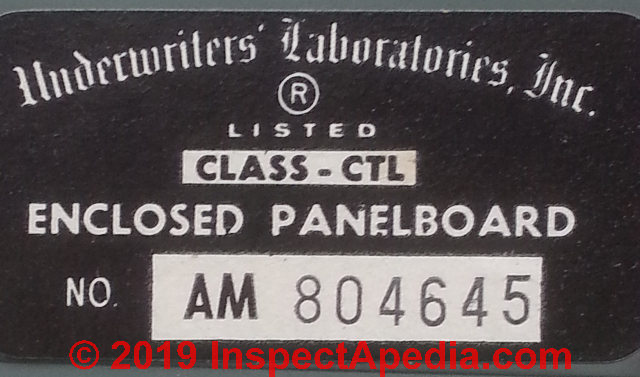
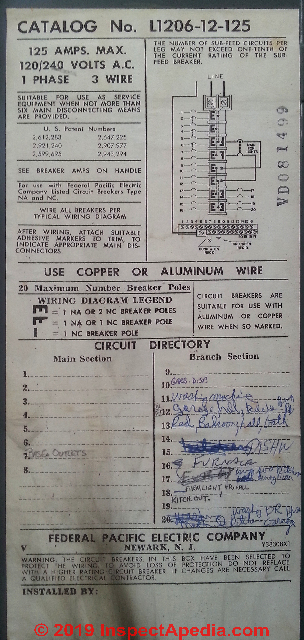
FPE Catalog No. L1206-12-125 125A 120/240VAC 1 Phase 3 Wire FPE Panel
No one was home during the day and as a result there would have been minimum electrical consumption prior to the outage.
I can confirm the events that occurred to us are accurate and totally consistent with the safety warnings and articles that I’ve uncovered this week, which date as far back to the early 1980’s.
[Click to enlarge any image]
As of today’s date, I still have not disposed of the damaged box and breakers.
Last Friday afternoon, 7/19/19, we had some threatening weather move through our area which included very dark clouds, winds, some rain and temperatures in the high 80’s.
(While lightning and heavy rain was forecast for our area, I can’t confirm that it played any role in the following events)
When I arrived home from work that day I immediately noticed that the power was out in our home. While I normally don’t report an outage to my power company, my utility bill just happened to be sitting on the corner of the kitchen counter. So I called and reported the outage to their automated system.
As I continued through the house and into the basement to check on the welfare of our animals, out of the corner of my eye I caught sight of a blinking light from our computer modem. This struck me as very strange, as the rest of the house was without electricity. Upon further inspection, I found the adjacent computer and television had power as well.
I proceeded over to our breaker panel and while initially nothing seemed out of the ordinary, I did notice that the main [FPE] breakers had tripped.
 As my finger slightly nudged the main breakers, the panel began to spark and pop and then began to glow to an increasingly brighter red . Within a few split seconds the panel burst into flames, which quickly rose higher towards the ceiling.
Fortunately the fire subsided on its’ own fairly quickly and began dying out before I could even fully comprehend what had just happened. (A period of less than 30 seconds)
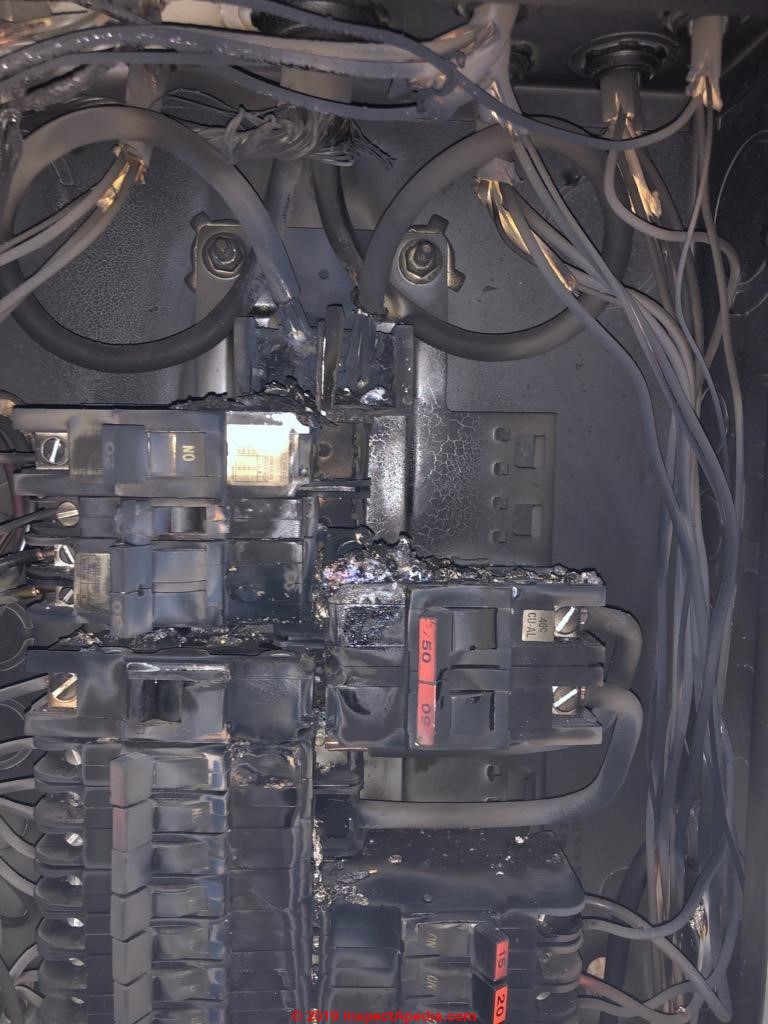
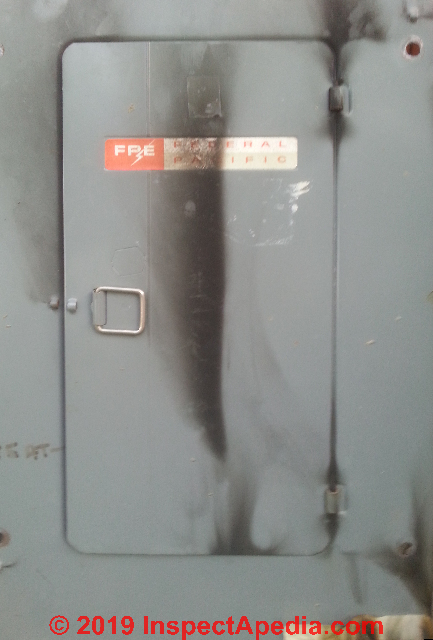
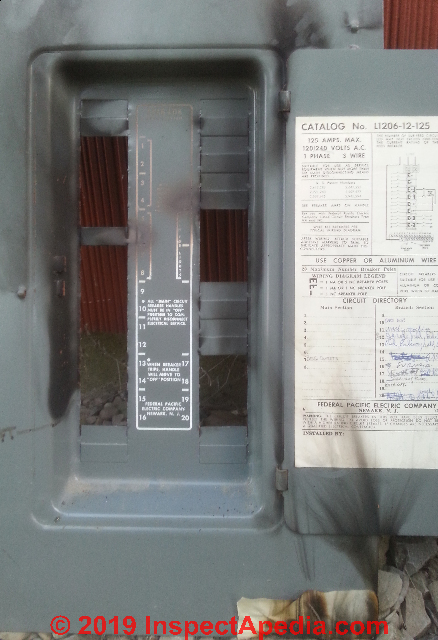
Photos: provided by the reader, include a smoked burned FPE panel and breakers. The panel label schematic indicates that this was a "split-bus" electrical panel with a MAIN FOR LIGHTS shown in positions 6 & 7. That breaker powered the lighting circuits in the lower section of the electrical panel, positions # 9-20.
At OTHER FPE DEFECTS we cite work by Douglas Hansen noting safety concerns with this split-bus electrical panel design as well as other FPE design issues besides the principal safety hazard: circuit breakers that fail to trip when they should. .
[Click to enlarge any image]
After gathering my thoughts, I was immediately able to get a hold of a local reputable electrician who said he could arrive within 15 minutes.
A few minutes later the emergency crew from the utility company arrived on the scene.
The electrician then arrived as the utility crew was disconnecting the meter and de-energizing the house. We then all went back downstairs to re-access the situation.
The panel box was fried. And other than some scorched wires and building insulation above the panel, the damage was fairly minimal.
The panel had been mounted against a concrete wall and there luckily there was nothing directly above it (except what I later learned was the main gas line) that could immediately catch fire.
In the last seven days I’ve spoken with utility crews, electricians, and insurance adjusters who have all agreed on several things, but especially the fact that I was extremely lucky.
First, I was lucky in not being shocked when I attempted to reset the breaker.
Second, that the entire house didn’t burn to the ground given the nature of the events and the proximity of the overhead main gas line and adjacent gas hot water heater.
Third, was the quick response of the utility crew and electrician to help stabilize the situation. These individuals have also since enlightened me to the past history of these panels and breakers.
And as I have further researched their potential dangers online this week, I was totally flabbergasted that I had this threat in my home for nearly 31 years and did not have a hint of the potential consequences.
It also amazed me to learn that the given the vast number of these panels still in service after all these years, most homeowners like myself are unaware of the potential risk.
And even after that personal experience it is still difficult to comprehend is just how quickly a fire of this nature can ignite and spread.
But what has really angered me since is some of the comments that I have read in response to the safety reports and articles. Some have suggested that if you haven’t had prior issues with these panels and/or breakers that you should be safe. While others have contended that they can be actually repaired.
I can personally attest that nothing is further from the truth and in my opinion to suggest otherwise is reckless and dangerous.
Reader follow-up remarks:
I can see how many of these cases go unreported. In my situation it was over and done with so quickly that there was no reason to report it to police or fire. ( although a gentleman on the repair crew is a member of our volunteer fire co. So I'm sure the event was not completely un-noticed)
I also wonder with what kind of regularity the insurance companies are sharing accident information. My insurance adjuster was even more in the dark about the history of FPE than I was. - Anon. by private email 2019/07/29
2019-02-25 by (mod) - Reader-submitted FPE panel fire photo - without comment
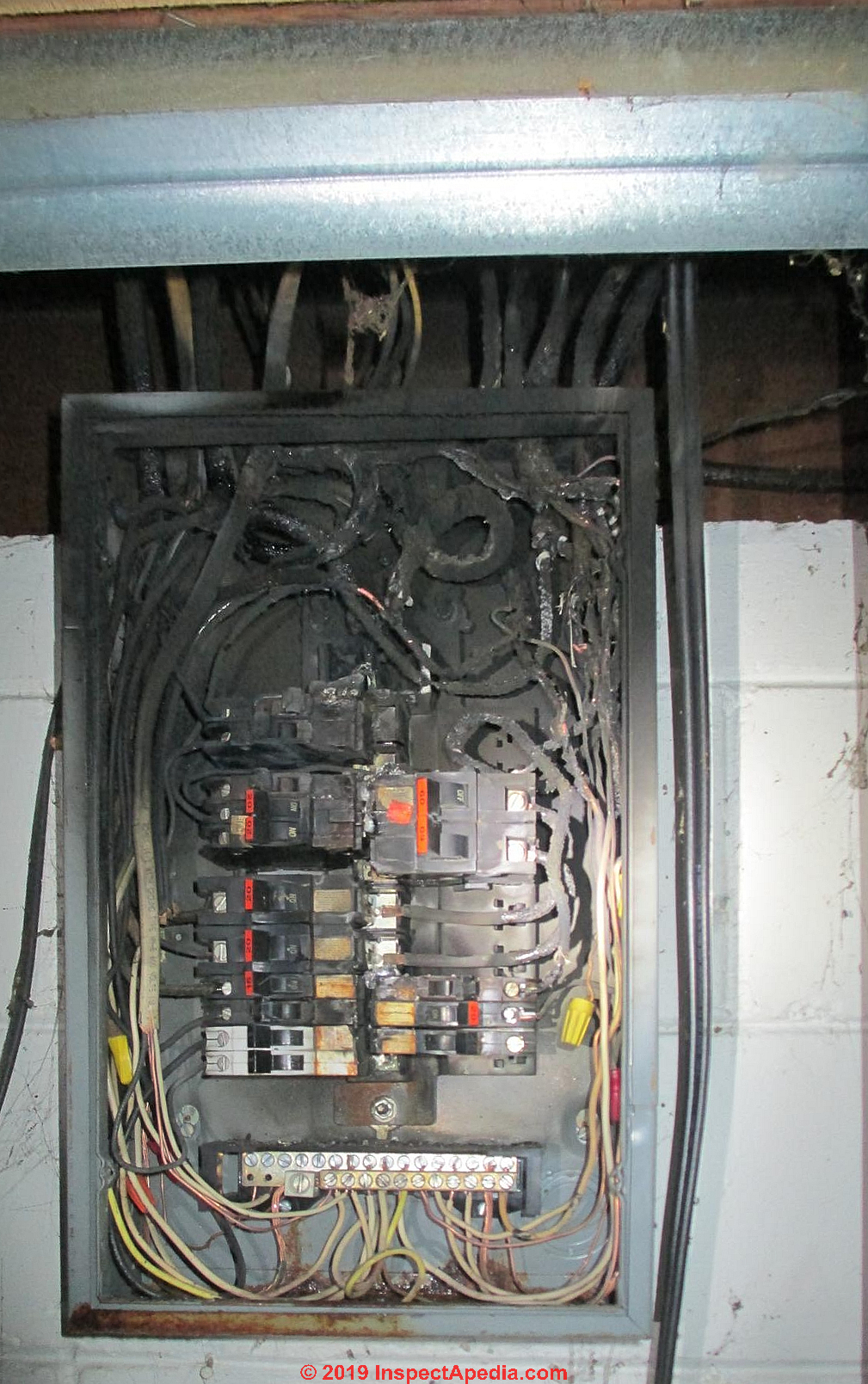 Thank you for the field photo of an FPE electrical panel fire, PD. Any details you can add would be helpful: country, city, building age, fire department comments. FPE electrical panel fire, PD. Any details you can add would be helpful: country, city, building age, fire department comments.
Readers must keep in mind that even when an electrical panel is involved in a fire or is badly burned as is PD's photo below, from the photo alone we cannot make a sure statement about the actual cause of a fire.
For example in the photo below there is evidence of rust and corrosion that can cause a circuit breaker to fail to trip when it ought.
Without more details about the fire involving the panel shown below, more-expert forensic examination of the electrical panel and the origin of the building fire would be necessary.
On 2019-02-25 by PD - FPE Panel Fire Photo
FPE Panel Fire. [PD's photo is posted above on this page]
Article Contents
- FPE FAILURE FIRE PHOTOS
- FPE FAILURE FIRE PHOTO FAQs
- FPE Overheat Field Report: FPE breaker fails to trip, meltdown (photo at left)
- FPE Fire Field Report: FPE breaker results in Ohio fire, December 1999
- FPE Overheat, Photos, Landlord Action Letter Jan 2006 Field Report
- Federal No-Trip: FPE equipment that failed to trip
- Federal No-Trip2: FPE equipment that failed to trip
- Federal No-Trip3: FPE equipment case blowout, wire burn up
- Federal No-Trip4: FPE F-bus arc-melt 10/2005
- Federal No-Trips: Large Collection of Anecdotal FPE Field Failure Reports (separate document) Email from Electricians, Home Inspectors, Building Owners, Others - U.S. and Canada
- Electrical fire causes burn injuries to building occupant, Federal Pacific Electric Panel No-Trip suspected 09/16/2009
- Field reports wanted: Readers who have FPE field failure cases (or other electrical product failures) to report (failure to trip, overheating, fires, falls out of panel, panel bus meltdowns, case side explosions, etc.) or cases of proper FPE panel and breaker operation to report, and other professionals or inspectors who can contribute text descriptions, photographs or actual failed equipment are invited to CONTACT the author.
See ELECTRICAL PANEL / BREAKER INCIDENTS, HOW TO REPORT - FPE FAILURE FIELD REPORTS - separate article tracks history of reports of FPE failures, incidents, fires & events in the U.S. & Canada
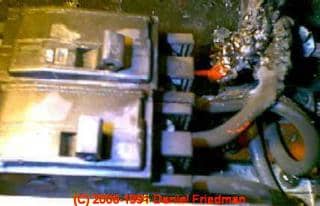
FPE Overheat Field Report: FPE breaker fails to trip, meltdown
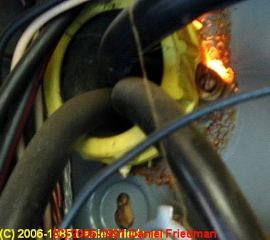
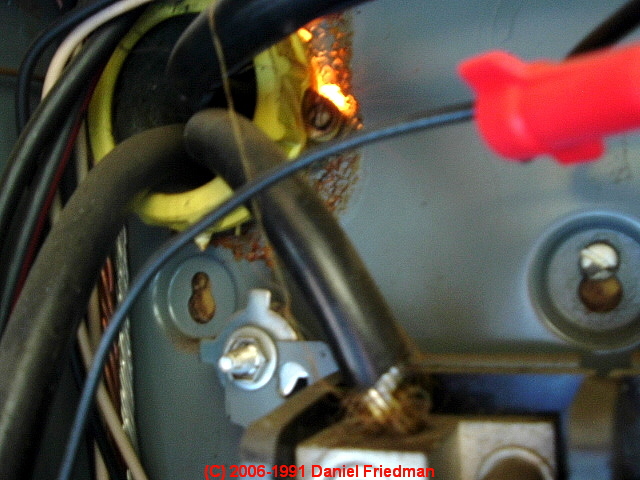
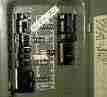
Federal Pacific panel bad neutral bar connection. I went out on a service call because the cable guy said there was power on the grounding system at his junction point to the house. I heard a sizzling noise when I pulled off the panel cover and traced it to the grounding locknut arcing.
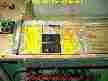
The neutral was shot so the current was using every path possible and the grounding locknut was not connected real well. I got a couple great digital shots - yes the orange glow on the middle picture is arcing! -- J.S. to DJF by email 8/28/2005
Photographs of source of overheating, glowing electric panel, and FPE equipment that failed to trip
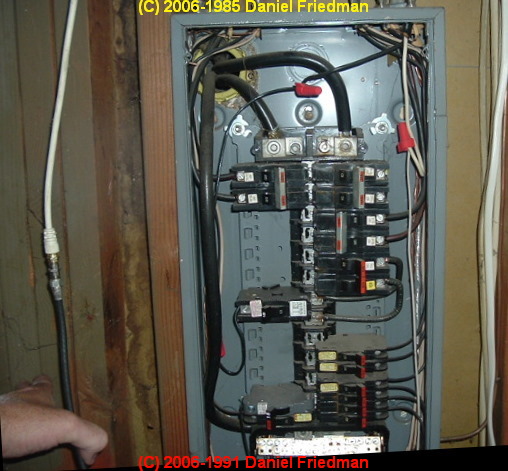
Bad neutral connection, 1 - panel overview (above)
Bad neutral connection, 2 - glowing electrical panel!
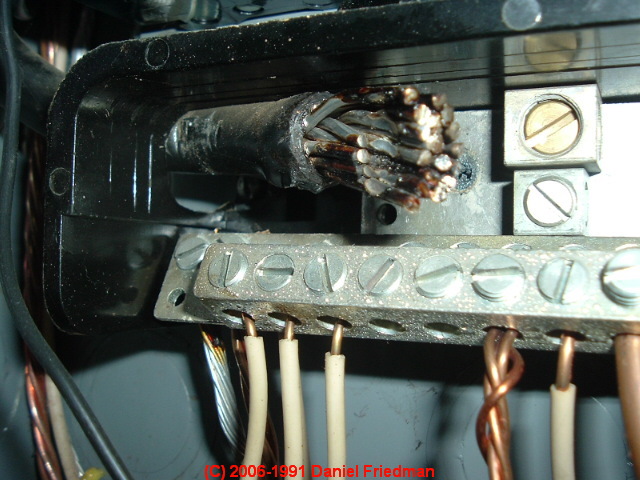
Bad neutral connection, 3 - bad neutral wire (above right)
FPE Fire Field Report: Electrical Wiring blamed in Pennsylvania Fire, 1980, reported April 2010
Homeowner Anna Lunz reported to D Friedman that her homeowner's insurance from Mutual Benefit Insurance, a Pennsylvania insurer, had just been cancelled (April 2010) following the observation by the insurance company's inspector that the home was served by an FPE Stab-Lok® electrical panel.
In discussing this concern (we recommended immediate installation of smoke detectors and replacement of the electrical panel as soon as possible), Ms. Lunz reported that in 1980 this modular home suffered a major fire, including loss of two thirds of the front of the home, due to an electrical fire that began in a dining room ceiling light fixture.
The fire began while the home was unoccupied - the family were out skiing. According to the owner, electrical wiring for the ceiling light circuit was found to have fused (apparently a dead short) without having tripped the FPE Stab-Lok® circuit breaker in the home's electrical panel.
Lunz added her personal observation that following the fire, workers and neighbors inspecting the home believed that the electrical power had been shut down by switching "off" the main circuit breaker in the FPE Stab-Lok® electrical panel. According to Lunz, when an inspector attempted to examine the electrical panel,
"... he just touched the turned-off electrical panel with a screwdriver when we all observed a huge bright flash of light."
While the loss from the 1980 fire, whose origin was attributed to an electrical failure, was mostly covered by the owner's fire insurance policy, when the same electrical panel, still in the home, was observed in 2010 the insurance company declined coverage - presumably until the electrical panel was replaced. -- D Friedman, by telephone with Anna Lunz, 4/6/2010
FPE Fire Field Report: FPE breaker results in Ohio fire, December 1999
Last week I was working on an electric furnace which is in a mobile home. This home has a 200 amp FPE entrance panel in it, with a 100 amp breaker for the furnace. As it turned out, the breaker was weak and would not hold. The customer called around and to my surprise was able to find a 100 amp FPE breaker at a home improvement/lumber yard in the next town. They went and bought it and I installed it.
All 4 banks of heaters were at 21 amps while running and the blower was at 6 amps for a total amp draw of 90 amps.
This morning they called in and said the fire dept. just left. I went over and found that something had caused a short on the terminal block for the electric entering the furnace and the new breaker in the panel never tripped.
Thankfully he was up and heard the noise and was able to turn off the main breaker and extinguish the fire before any structural damage occurred or worse.
The main electrical panel is a FPE panel with FPE breakers. This is in a mobile home that has an electric furnace in it. Now, the short occurred before the two breakers in the furnace (service shut-off breakers that are another brand) but should have been protected by the 100amp FPE breaker which was feeding the electric to the furnace.
The service shut-off breakers, at least the one, seems to have functioning properly. The short inside the furnace actually melted a hole in the bottom of the box and a piece of a screw fell across a connection below and tripped the one breaker. However, the FPE 100amp breaker in the panel NEVER tripped. -- T to DJF by email 12/28/99
FPE Overheat, Photos, Landlord Action Letter Jan 2006 Field Report
The following text is from a tenant's letter to his landlord, documenting the FPE Stab-Lok® hazard with text and photos of the actual panel in the subject apartment.
This letter, which documents the general FPE Stab-Lok® hazard and also specific evidence found in the apartment panel, was successful in convincing the property owner of the need for prompt action. G.G. Seattle, WA, to D.F. 1/24/2006 [Edits by DJF to shorten text, preserve anonymity, and to generalize the "FPE Stab-Lok® Electric Panel/Circuit Breaker landlord action notice letter".]
[Moving into my new apartment] I spotted a 30-amp breaker in the electrical panel marked as bedroom lights.
Lighting circuits and outlets generally are 20-amp and wired with 12-gauge wiring.
It was
over-fused which is a fire hazard.
I googled Federal Pacific Electric (FPE) the maker of the panel to find if a [replacement circuit] breaker
was available.
See details at FEDERAL PACIFIC FPE HAZARDS
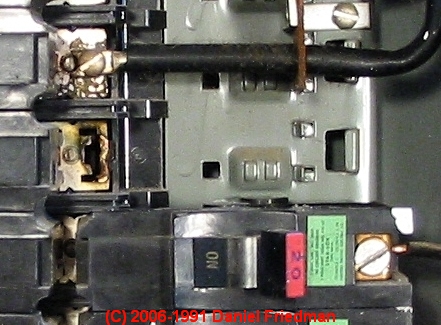
I also noticed that the panel was missing three breaker punchouts leaving holes in the panel in which fingers could easily fit. I removed the panel cover and discovered a meltdown of a circuit breaker had previously occurred.
Federal Pacific Electric panels and circuit breakers have a very high failure rate. Their breakers can stick in the on position and not disconnect the circuit.
This has probably happened in my electrical panel once before, explaining the 30-amp replacement breaker and the fact that it was relocated within the panel. Also the 240-volt breakers which are ganged together have no main disconnect breaker. FPE's ganged breakers can fail on one side but the other side can prevent breaker disconnect.
A 240-volt [main circuit] breaker [which fails to trip will allow] all of the amperage from the power pole, 1,000-amps or more, into the panel.
There is nothing (no disconnect) between the panel and the pole to stop this and there is no way for a person to shut off anything manually.
It will burn until it runs out of fuel and, or the wires from the pole melt and finally disconnect. This is like having 200 toasters going in the panel at once.
The Consumer Product Safety Commission found the circuit breakers defective and failed to pass their tests and have a
high failure rate. FPE passed UL certification originally but later was found guilty of fraud in Superior Court in New
Jersey in a class action lawsuit for rigging the certification tests.
The parent company Reliance Electric stopped
manufacturing the product after they purchased Federal Pacific.
Reliance stated "FPE's success was due substantially if not
entirely to a pattern of materially deceptive and improper practices in the manufacturing testing and sale" of its
circuit breakers. I found none of the other electrical manufacturers having these problems with their
panels or circuit breakers.
We need to address this electrical panel issue in immediate future. The problem is that if the circuit breakers aren't required to trip everything appears fine. If they need to trip to protect the house it may very well not do the job.
It is not possible to tell from looking at the equipment that it is working properly. It is possible your house insurance may not want to pay for a fire or death related to a known electrical problem.
- The FPE Stab-Lok® electrical panel needs to be [completely] replaced. Replacement panels aren't expensive.
- Replacing the breakers won't solve this problem
- The electrical panels elsewhere in the building also need to be replaced downstairs if they are the same type of FPE equipment
- We need to act immediately before we have a major problem
I'm guessing that whoever inspected the property before your purchase failed to notice the problem. The seller or person doing the engineering inspection maybe liable for failing to disclose this defect to you before you purchased the property. T
he previous owner was inside the panel to move, remove and replace the breaker to get the bedroom lights going again after the breaker was destroyed [so certainly this condition was known to the seller and should have been obvious to the home inspector].
I have included more information about this problem. This problem won't go away unless we act on it.
My background is networking, wiring, technical writing, and I'm a radio amateur, I've replaced the electrical panel in my home and know the NEC code fairly well. I'm not an electrician but I can spot problems readily. Thanks for your consideration of this summary.
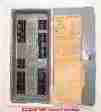 Photo #1. 1552 panel with cover On
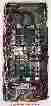 Photo #2. inside of the box and the overcrowded wires
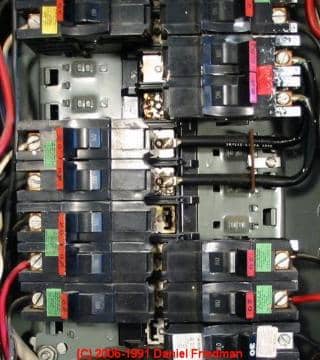 Photo #3. 1540 area around the melted Stab-Lok® connector and the over fused 30amp breaker
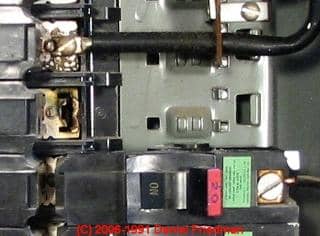 Photo #4. 1540 close up of the burnt Stab-Lok® connector this is 1540 enlarged
 Photo #5. 1557 missing breaker punchouts in panel
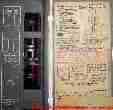 Photo #6. 1558 close up of the FPE Stab-Lok® panel label inside panel cover door
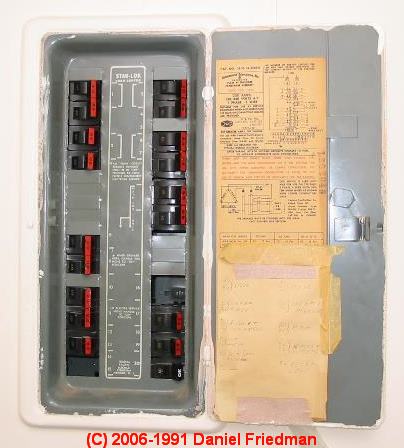 Photo #1. 1552 panel with cover
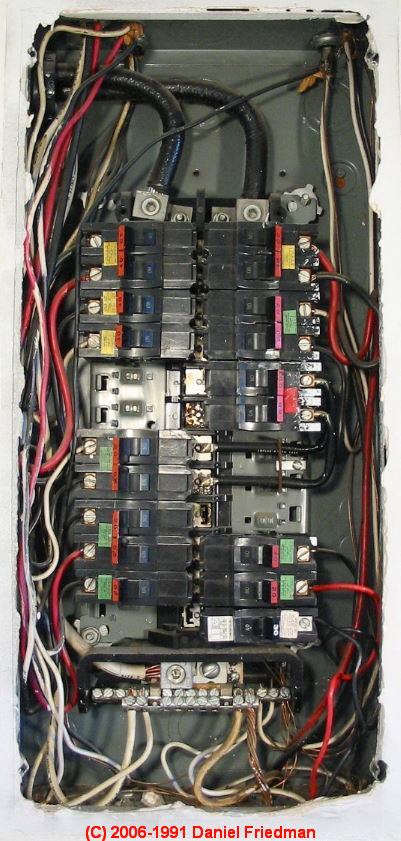 Photo #2. inside of the box and the overcrowded wires
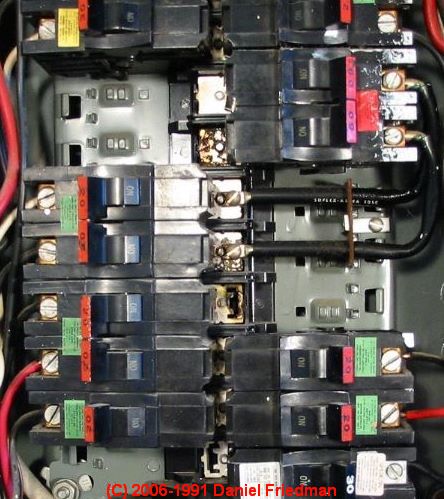 Photo #3. 1540 area around the melted Stab-Lok® connector and the over fused 30amp breaker
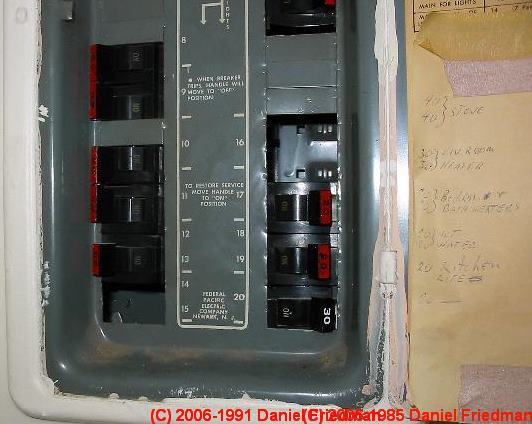 Photo #5. 1557 missing breaker punchouts
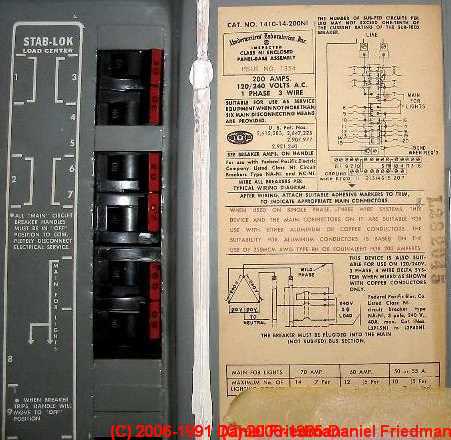 Photo #6. 1558 close up of the FPE Stab-Lok® panel label
Photo #1 shows the panel in place. Photo#2, with the cover removed, shows the panel is packed with wires which is unsafe (overcrowding).
Photo#3: a previous burned out Stab-Lok® connector visible when the panel cover is removed.
This would only happen if the breaker didn't make a good connection to the stab lok connection or the breaker didn't trip. Also notice that the breaker in slot #20 (lower right) is a 30 amp circuit breaker and the wire coming from it is 12 gauge. This is overfusing of the wiring a potential fire hazard.
Photo #4 is blown up a bit to show the bus melting [arcing and overheating] from a previous breaker failure.
Photo #5: three breaker punchouts missing from the panel. I'm guessing that the circuit that was in slot #16 which arced out was moved to slot #20. I can't imagine why the punch out for breaker 14/15 was missing as well.
As a summary, the box already tried to melt down once and it was over fused as well. In addition the testing for UL Labs certification was obtained fraudulently [FPE] were convicted in NJ by the Superior Court and even Reliance Electric, Federal Pacific Electric's (FPE) parent company admitted that FPE had rigged the testing to get UL certification.
I understand the over-current problem and am running on as low a wattage as I can. So as long as I don't need over-current protection I'll be fine. Of course if I never required over-current protection I wouldn't need circuit breakers in the first place.
[[Editors's note: the following is a direct quote which may be offensive to some people. It is included
here in demonstration of not only the severity of the consumer hazard but the depth of consumer frustration with
government and legal authorities in this matter--DJF]
Hey why don't you send the FPE lawyer over to my place and I can mash his face right into the electrical panel while it's arcing
I guess all you get out of liars is more lies.
These attorneys are just making it really bad for all of us. Japan has 5 times more engineers than the US does. The US has 7 times more lawyers than Japan does however and this may explain quite a bit.
Federal No-Trip1: FPE equipment that failed to trip
Photographs of source of short circuit also depicted.
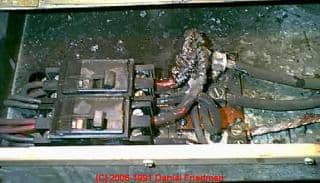 Heater Breaker Burnup
 FPE 100-A Circuit Breaker "protecting" heater circuit: FPE 2-pole 100A breaker failed to trip on overcurrent in heater panel
 Federal Pacific Panel Identification
 Heater Circuit Breaker Panel-source of overcurrent
 Heater Circuit Breaker Burnup on feeder wires: breaker in main panel failed to protect this circuit
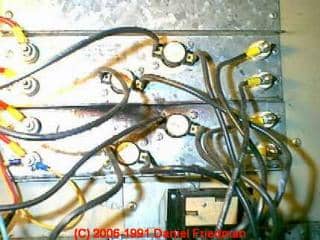 Heater Control Panel short circuit
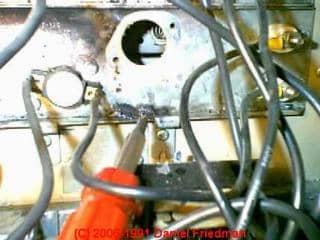 Heater Control Panel burned-through
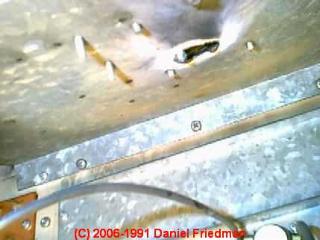 Heater Control Panel burned-through, other side
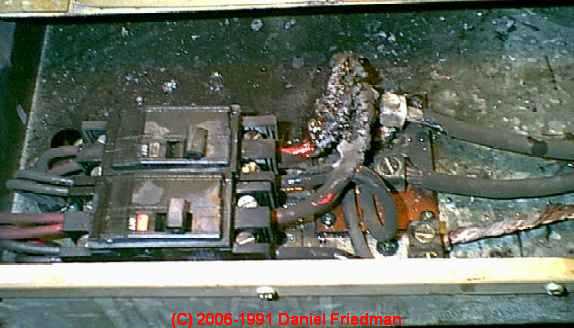 Heater Breaker Burnup
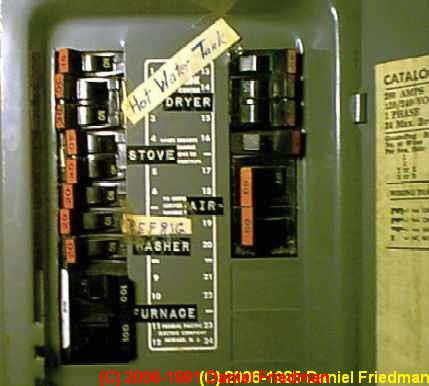 FPE 100-A Circuit Breaker "protecting" heater circuit:
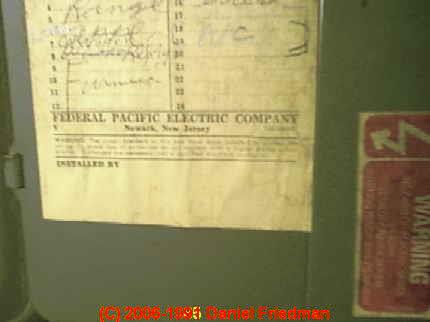 Federal Pacific Panel Identification
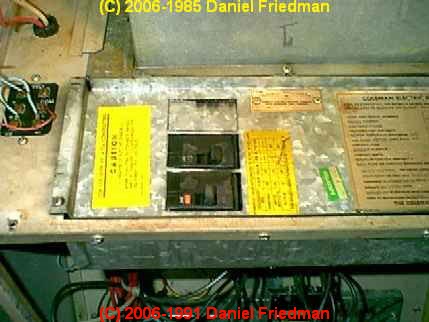 Heater Circuit Breaker Panel-source of overcurrent
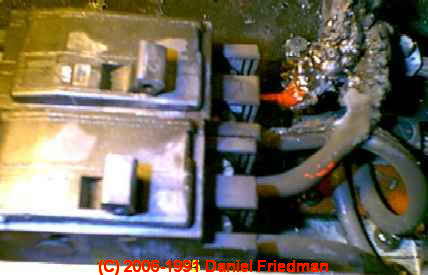 Heater Circuit Breaker Burnup on feeder wires:
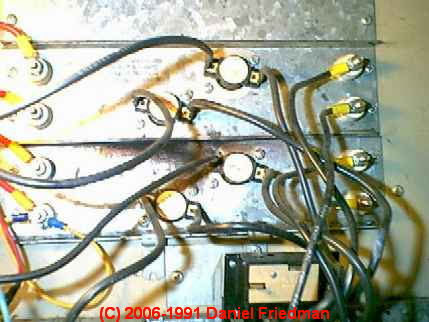 Heater Control Panel
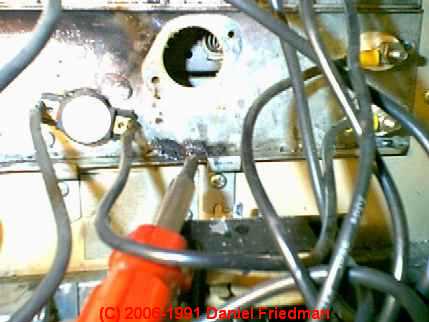 Heater Control Panel
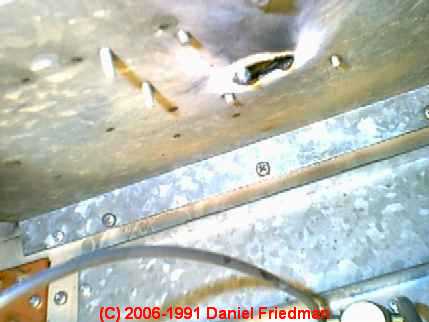 Heater Control Panel
Federal No-Trip2: FPE equipment that failed to trip
Contributed by Mark Cramer, ASHI inspector, educator, Tampa, FL.
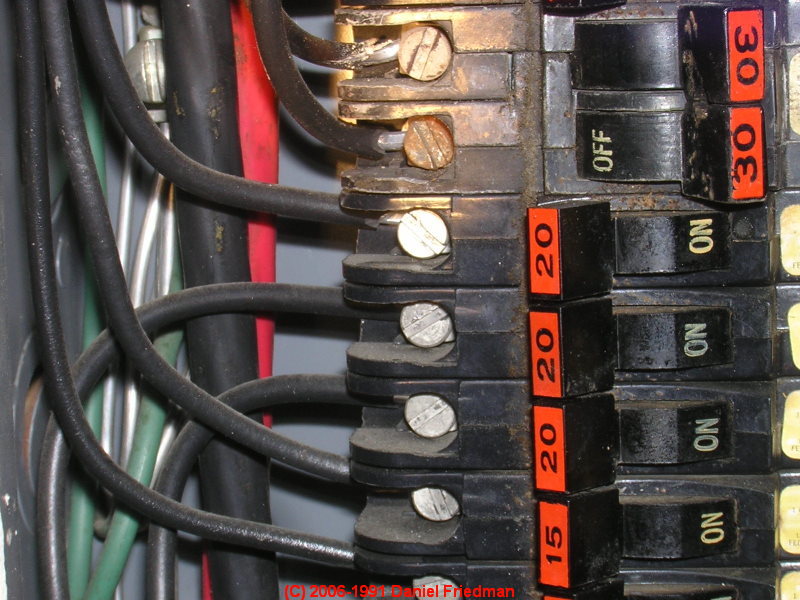 Overheated FPE circuit breaker failed to trip
Federal No-Trip 3 Fire: FPE equipment case blowout, wire burn up
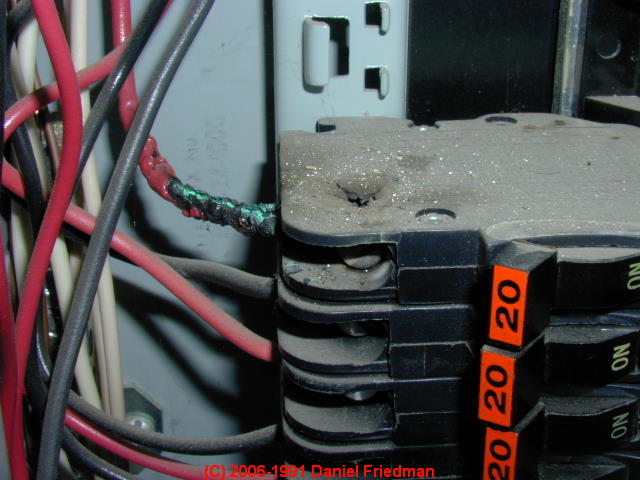
Contributed by Roger Hankey, ASHI inspector, educator, Minnesota. " The load on this circuit was a medium sized refrigerator./freezer and a counter top (est 1000w) microwave.
As you can see the breaker was still ON.
Hankey and Brown [Web page] home inspectors, Eden Prairie, MN, technical contribution by Roger Hankey, prior chairman, Standards Committee, American Society of Home Inspectors - ASHI. 952 829-0044 - hankeyandbrown.com 11/06, 07/07.
[Follow up from J.A. - Looks more like a termination overheating problem than a circuit breaker problem. Looks like copper wire (green corrosion products).
The wire leading away from the terminal does not show any signs of overheating - it is localized at the terminal. Also, the refrigerator & a microwave would not likely trip the breaker or overload the wiring. -- Aronstein]
FPE circuit breaker case blowout wire burn up
Federal No-Trip Fire 4: FPE F-bus arc-melt 10/2005
Contributed by Douglas Hansen, ASHI inspector, educator, California.
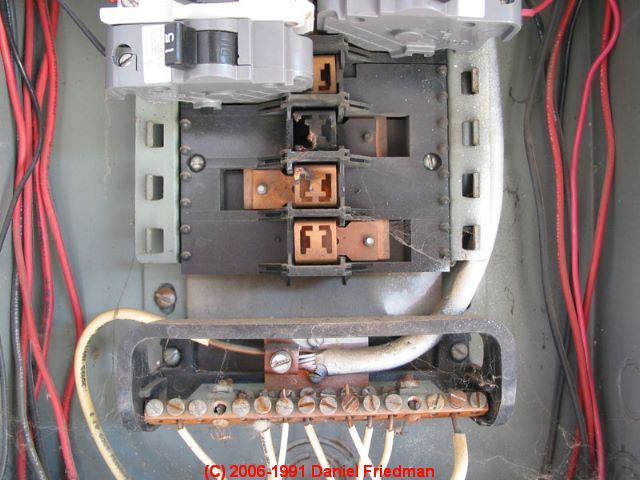 FPE F-bus burn up arcing failure
Federal Pacific Electric Stab-Lok® - Electrically Caused Fire, Occupant Suffers Burns - 2009
Contributed by a professional, indentification anonymous (litigation):
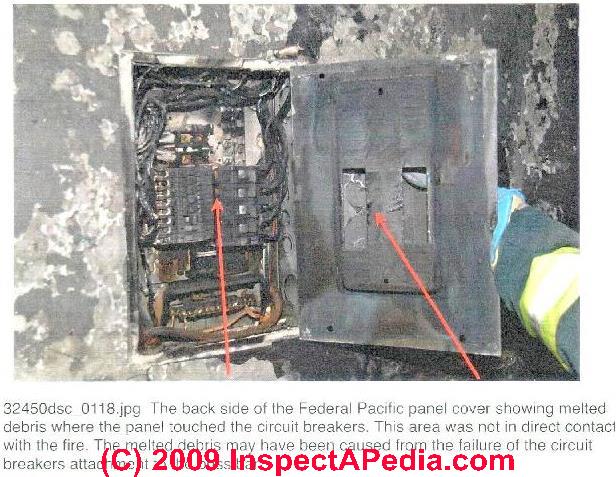
Our Client suffered burn injuries as a result of an electrically caused fire. There was a Federal Pacific electrical sub panel installed in the wall of her apartment.
The city of Fremont Electrical Inspector confirmed that there was arcing taking place in the sub-pane land that the arcing was connected to the breaker that tripped (although he did not confirm definitively that the tripped circuit breaker fed the outlet from which the electric blanket was receiving power.)
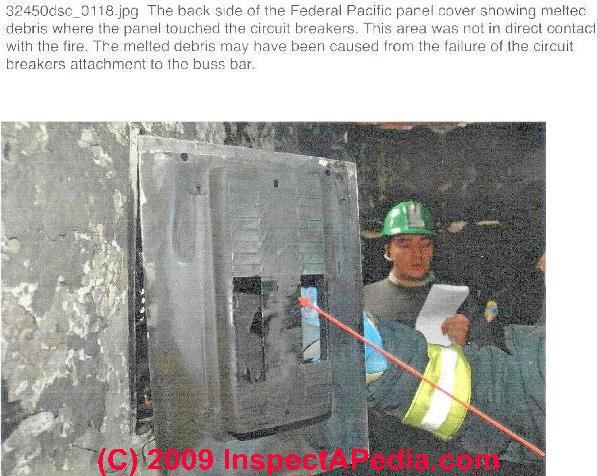
He indicated it was possible that the circuit lead to the electrical blanket caused an overload and this would also cause excessive heat which could have ignited the bed cover material before tripping the breaker. Attached is a photograph of the panel.
We have retained an electrical expert who has furnished a report.
If you would want other information or photos for your research on FPE failures please let us know. [We have requested copies of the report and sharper photos -- DF.]
2011: FPE - Related House Fire Reported
Cooper Electric, serving Cincinnati OH and Northern Kentucky report a 2011 fire from which we excerpt:
On August 16, approximately 9:00 p.m., the Wyoming Fire - EMS was dispatched to a structure fi re on Chisholm Trail.
The fire originated in an attached, two car garage and quickly spread to the roof of the structure. Wyoming Fire Lt. Peter Hauser, who lived four houses from the scene, struck a second alarm on his arrival less than one minute from the initial dispach.
Engines 97, 297, Ladder 97, Squad 97, and Rescue 97 were dispatched on the fi rst alarm bringing 20 Wyoming firefighters and medics to the scene.
Retrieved 4/8/2013 original source http://cooper-electric.net/residential/federal-pacific-circuit-breaker-panels/
2013: FPE-failure leads to serious injury to two electricians
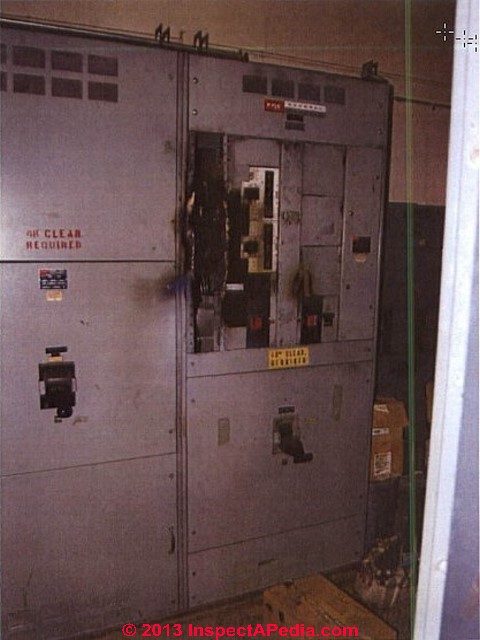
August 14, 2013: we received a report of a false-off failure of an FPE (Federal Pacific Electric) main circuit breaker that led to serious injury to two electrians.
A photograph of the FPE panel where the incident occurred is included at left, provided by OSHA.
Details of this incident are not [yet] reported here because of pending litigation.
However we were informed that after a main (FPE) breake was switched to the "off" position and thus power was believed to have been turned off within the electrical panel (of a commercial installation) the electricians were injured by an electrical arc explosion.
2016 Fatal Fire in Louisiana Attributed to FPE Stab-Lok Failure
By private email 2016/06/29 we received a report of a house fire fatality in Louisiana in which the fire was attributed to an FPE Federal Pacific Electric Panel. Details have been witheld pending possible legal actions. Details confirming the fire cause have not been received. - Ed.
Readers of this article should also
see FEDERAL NO-TRIPS: Anecdotal FPE Failure Reports (separate document) Email from Electricians, Home Inspectors, Building Owners, Others - U.S. and Canada,
and FPE Stab-Lok® HAZARDS & REPAIRS WEBSITE - the main FPE Hazard Website.
To report an electrical problem with this equipment see REPORT YOUR FAILURE.
Readers who need to know the history of US CPSC testing and to read the government research that also confirmed failures of FPE Stab-Lok® equipment (though no product recall was issued) should see "FPE Stab-Lok® Panel Failure Research, Public documents" the ARTICLE INDEX given below.
Reader Comments, Questions & Answers About The Article Above
Below you will find questions and answers previously posted on this page at its page bottom reader comment box.
Reader Q&A - also see RECOMMENDED ARTICLES & FAQs
On 2021-04-09 - by (mod) -
@Dave, thank you for the helpful comment
On 2021-04-09 by Dave
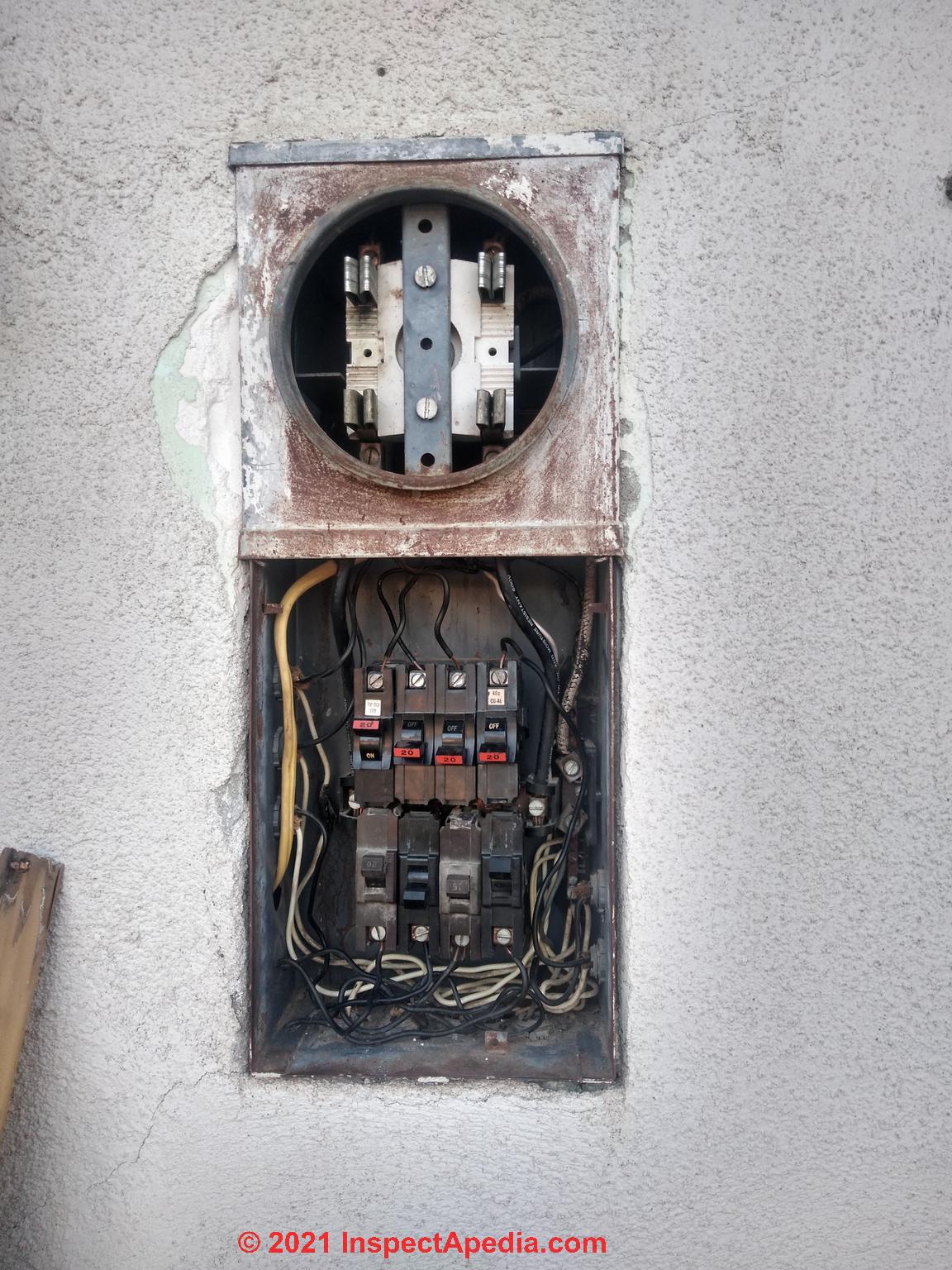
@Javier, Yes that meter combo is FPE and needs to BE REPLACED ASAP ITS A FIRE HAZARD. It doesnt even have a main breaker it needs to go by by.
On 2021-04-09 by Dave
@Lisa, That burned up panel is a 100 amp main breaker SQUARE D QO PANEL that had ALUMINUM BUSS BARS IN IT. Aluminum is garbage
On 2019-12-24 by (mod) - Lisa's burned-up electrial panel looks like Square-D?
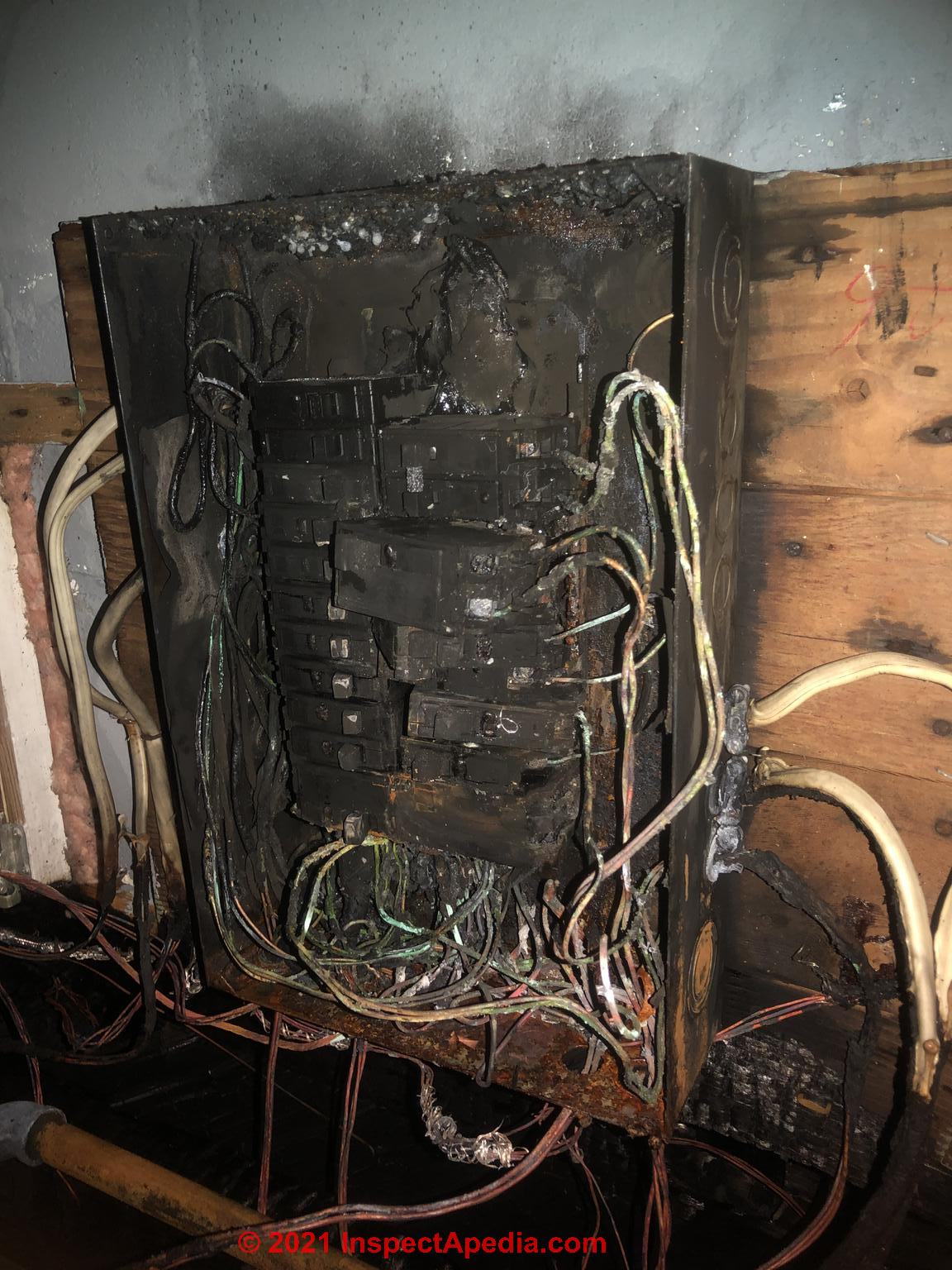
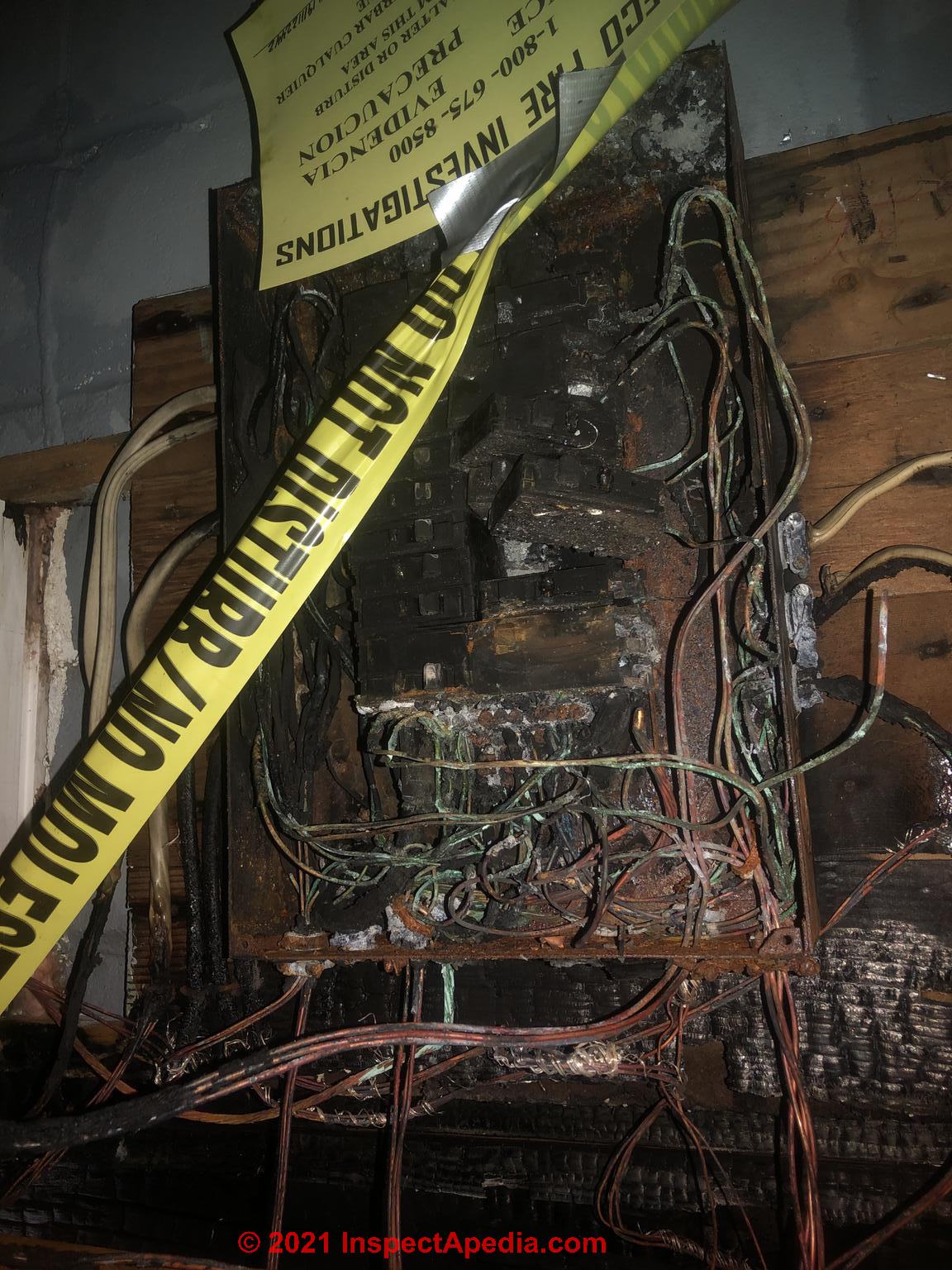
Our expert, Dr. Jess Aronstein comments that the breakers most resemble Square D Q-line but there is not enough detail to make a determination.
Lisa
I can't see enough of the bus bar into which the circuit breakers connect, but in your photo I do see the outer edge of a steel clip-bar that looks like it may NOT be an FPE panel. \
Typically the FPE breakers stab into an E-shaped or F-shaped connecting bus at their "live" end and have individual breaker clips that serve as an outer connector at the other end - we're taking a closer look.
On 2019-12-23 by Lisa
Is this a Federal Pacific panel? Any help appreciated.
On 2019-12-23 by Lisa
I am in need of finding out if this panel is A Federal Pacific? We had a fire in our rental home. Can’t find name on panel. Thanks in advance
On 2019-09-06 - by (mod) -
Apologies but I don't understand the question
But Watch out: if that's an FPE Meter base and Main Electrical panel - as it appears to be - it is a fire hazard and should be replaced.
On 2019-09-06 by Javier
Is a to old fP main panel I need to know if complete is?
On 2019-02-25 - by (mod) -
Thank you for the field photo of an FPE electrical panel fire, PD. Any details you can add would be helpful: country, city, building age, fire department comments.
On 2019-02-25 by PD
FPE Panel Fire.
 IMAGE LOST by older version of Clark Van Oyen’s Comments Box code - now fixed. Please re-post the image if you can. Sorry. Mod.
On 2014-02-27 - by (mod) -
Anon, in the article links just above at "More Reading"
click on and print these two articles
FPE Stab-Lok® : FIRES WAITING TO HAPPEN
FPE Stab-Lok® Hazard Summary Page for Reproduction
If you need a more scholarly report of independent research confirming the hazard you may want to print
FPE Stab-Lok® TECHNICAL REPORT
the panels are a latent fire hazard and should be replaced. Not just the circuit breakers, the entire panel.
On 2014-02-27 by Anonymous
My apartment complex has the FPE breakers, how safe are they and what should I do ?
I told management about the report I saw on WCPO news ( Cincinnati, Ohio}
...
Continue reading at FPE FAILURE FIELD REPORTS or select a topic from the closely-related articles below, or see the complete ARTICLE INDEX.
Or see FPE FAILURE FIRE PHOTO FAQs - questions, answers, comments posted originally on this page
Or see
- CIRCUIT BREAKER FAILURE RATES - independent test results for several widely-used brands of circuit breakers
- FPE FAILURE FIELD REPORTS
- FPE FAILURE FIRE PHOTOS
- FPE Stab-Lok® : FIRES WAITING TO HAPPEN
Suggested citation for this web page
FPE FAILURE FIRE PHOTOS at InspectApedia.com - online encyclopedia of building & environmental inspection, testing, diagnosis, repair, & problem prevention advice.
Or see this
INDEX to RELATED ARTICLES: ARTICLE INDEX to FPE STAB-LOK BREAKERS & PANELS
Or use the SEARCH BOX found below to Ask a Question or Search InspectApedia
Ask a Question or Search InspectApedia
Try the search box just below, or if you prefer, post a question or comment in the Comments box below and we will respond promptly.
Search the InspectApedia website
Note: appearance of your Comment below may be delayed: if your comment contains an image, photograph, web link, or text that looks to the software as if it might be a web link, your posting will appear after it has been approved by a moderator. Apologies for the delay.
Only one image can be added per comment but you can post as many comments, and therefore images, as you like.
You will not receive a notification when a response to your question has been posted.
Please bookmark this page to make it easy for you to check back for our response.
Our Comment Box is provided by Countable Web Productions countable.ca
Citations & References
In addition to any citations in the article above, a full list is available on request.
- Note: as we didn't add this reviewers list until 2007, this list of technical reviewers is incomplete; we have received comments and suggestions regarding this topic, edits and remarks included, from engineers and management from the US CPSC, electricians (many listed at our page on field reports of FPE failures), home inspectors, licensed electricians, and electrical engineers, and even a few attorneys and real estate agents, since 1986. Technical review, critique, content suggestions, questions, or clarifications are invited and where a contributor wishes, credit and links will be provided to that source. Contact us to provide feedback.
- Dr. Jess Aronstein, electrical engineer, Poughkeepsie, NY, forensic engineering services, independent laboratory testing for various agencies protune@aol.com (independent electrical panel testing, including FPE Stab-Lok® panels, to April 2010)
- David Carrier, electrical engineer, 53 Henmond Blvd., Poughkeepsie, NY 12603 845-430-7527 davidwcarrier@earthlink.net (independent electrical panel testing, including FPE Stab-Lok® panels, beginning 2010)
- Alan Carson, Carson Dunlop, Associates, Toronto, Ontario. Mr. Carson is a home inspection professional, educator, researcher, writer, and a principal of Carson Dunlop Associates, a Toronto home inspection and education firm. Mr. Carson is a past president of ASHI, the American Society of Home Inspectors
- Mark Cramer Inspection Services Mark Cramer, Tampa Florida, Mr. Cramer is a past president of ASHI, the American Society of Home Inspectors and is a Florida home inspector and home inspection educator. (727) 595-4211 mark@BestTampaInspector.com 11/06
- Carl Grasso, Esq., Herzfeld & Rubin, New York, NY. Mr. Grasso is an attorney who managed a plaintiff's class action litigation against Federal Pacific Electric in New Jersey.
- William King, US CPSC Director of Electrical Engineering (Ret).
- Allan Tabor - 09/16/2009 contribution of FPE field report of electrical fire and burned building occupant
- In addition to citations & references found in this article, see the research citations given at the end of the related articles found at our suggested
CONTINUE READING or RECOMMENDED ARTICLES.
- Carson, Dunlop & Associates Ltd., 120 Carlton Street Suite 407, Toronto ON M5A 4K2. Tel: (416) 964-9415 1-800-268-7070 Email: info@carsondunlop.com. Alan Carson is a past president of ASHI, the American Society of Home Inspectors.
Thanks to Alan Carson and Bob Dunlop, for permission for InspectAPedia to use text excerpts from The HOME REFERENCE BOOK - the Encyclopedia of Homes and to use illustrations from The ILLUSTRATED HOME .
Carson Dunlop Associates provides extensive home inspection education and report writing material. In gratitude we provide links to tsome Carson Dunlop Associates products and services.
 | HOME | ABOUT | ASK a QUESTION | CONTACT | CONTENT USE POLICY | DESCRIPTION | POLICIES | PRIVACY | |
| © 2024 - 1985 Publisher InspectApedia.com - Daniel Friedman | |||||||||