
InspectAPedia® FREE Encyclopedia of Building & Environmental Construction, Diagnosis, Maintenance & Repair |
Question? Just ask us! InspectAPedia
|
 Lead Hazards in Buildings,
Dust, Paint, Water & Other Sources
General Advice, Lead Testing Procedures, Lead Poisoning Illnesses
- POST a QUESTION or COMMENT about lead poisoning hazards in and around buildings
Lead poisoning hazard sources around buildings:
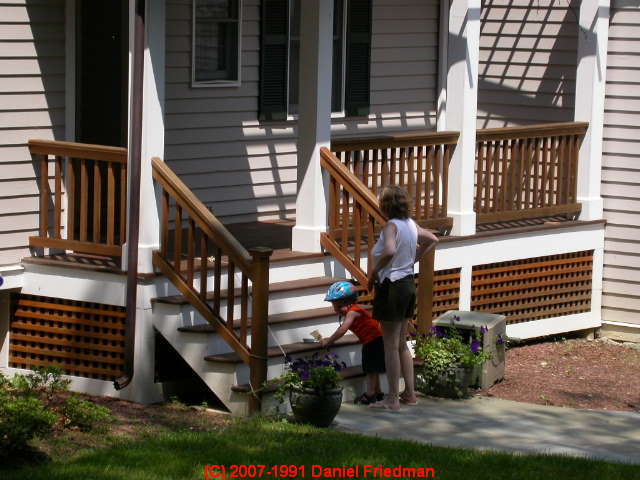
Lead in the environment is a health hazard, particularly to children. While lead levels in children in the U.S. have dropped, this environmental contaminant continues to be a concern. This article provides an overview of and links to more in-depth articles about the common lead sources, risks, and steps to take.
This series of articles describes the sources of lead in the environment (air, water, soil, food, buildings, paint, toys, jeweler, pottery, other products) and the levels and effects of lead in humans and in other animals.
InspectAPedia tolerates no conflicts of interest. We have no relationship with advertisers, products, or services discussed at this website.
What is the Exposure Limit for Lead levels in blood?
 This website includes articles detailing how to find, test for, recognize, and reduce lead hazards in buildings and in our environment.
There is no safe threshold for lead levels in blood for developing children. Any amount is considered a hazard, particularly to children. [Paraphrasing Ref. #2 below.]
Article Contents
How Does Lead Enter the Human Body?
Lead enters the body by ingestion (eating paint chips or for toddlers, lead dust off of building surfaces, or drinking water with high lead levels), or by breathing lead contaminated dust such as during building renovations and paint stripping.
Researchers have studied lead in building dust and house dust extensively. For example, Fergusson (1984 and later) and with Kim et als. (1993) report that lead is not alone among heavy metals, reporting on concentrations and sources of cadmium, copper, lead and zinc in house dust in New Zealand.
What are the Sources of Lead in buildings & of Lead in People's Bodies
 While many articles and laws have identified on lead-based paint as an important lead hazard source in buildings, there are other sources of lead in the environment that affect people and the crops or animals they consume.
The New York State Department of Health points out that "...The most common cause of lead poisoning is dust and chips from old paint. However, some non-paint sources, though less common, can cause severe cases of lead poisoning." and goes on to list the following common sources of lead in and around buildings: paint, dust, soil, drinking water, air, Folk medicines, some floor tiles & floor coatings or polishes, ayurvedics, and cosmetics, Children's jewelry and toys, Workplace and hobbies, Lead-glazed ceramics, china, leaded crystal, pewter, Imported candies or foods, Imported food in cans, Firearms with lead bullets, Mini-blinds, Other common sources of lead (car batteries, radiators, some inks, etc.), Consumer Products. [29]
Below we provide added details about these and other lead contaminant sources.
- Airborne lead-containing soil & dust or lead emissions at highways and fields along highways -
see LEAD in AIR, EMISSIONS STANDARDS as well as lead-containing soils around buildings due to stripping of lead paint.
The New York Times reported in 2011 that airborne lead-containing dust as well as volatile and particulate lead emissions in smoke or exhaust may be deposited at high levels around and near battery recycling centers, particularly at facilities such as those in Mexico that receive batteries from the U.S. and that are not adequately regulated. [1] - Asbestos-containing floor tiles main contain lead in pigments used in the tile manufacturing procedure.
See LEAD in FLOORING PRODUCTS & POLISHES where we discuss possible use of lead in floor tiles and the detection of lead in vinyl-asbestos flooring using a hand-held XRF test device. - Ceramic floor tiles or other ceramic tiles may contain lead in glaze and pigments as do some older ceramic ware such as platters and dishes. An example of a lead-containing plate from Mexico is given
at LEAD TEST KIT for HOME USE - LEAD POISONING ENVIRO-SCARE: what is the environmental and home resale impact of lead paint or other lead in buildings
- Lead based paint used indoors and outdoors.
Lead paint on indoor surfaces becomes a lead hazard, especially to children, in the form of lead dust (raising & lowering lead-painted window sashes), direct contact by sticky little fingers, renovation and remodeling activities[8], and in buildings in poor condition, PICA - the eating of lead paint chips or peelings.
See details at LEAD BASED PAINT [Web page]
and in LEAD CONTAMINATION HAZARDS in the HOME [Web page] US CPSC Publication 426
Also see LEAD PAINT REMOVAL TROUBLES [Web page] for a case report of improper handling of dust and debris during lead paint removal. - Lead-containing jewelry, pottery, and toys -
Details are at Lead Toys, Jewelry in this article
See LEAD TEST KIT for HOME USE for a simple test kit for lead on building surfaces, pottery, toys, etc.
For potential health hazards associated with exposure to artists materials for those working with ceramics, such as clays, glazing compounds, and pigments,
see Arts & Crafts materials, hazards & toxicity [Web page] - Airborne lead particles due to use of leaded gasoline in vehicles or other gasoline-driven motors and equipment -
see LEAD in AIR, EMISSIONS STANDARDS.
While the prohibition of use of leaded gasoline has reduced the addition of lead to the environment from these sources, soil and dust may already be contaminated in some areas. - Lead in drinking water from lead plumbing or from the water supply itself. Lead in water is introduced below in this article
at LEAD PLUMBING SOURCES - LEAD IN WATER
For details on how to test for and remove lead from drinking water, including advice about test procedures to avoid missing or over-stating a lead in water problem,
see LEAD PIPES in BUILDINGS
and
see LEAD in WATER, ACTION LEVELS
and
see LEAD IN DRINKING WATER, HOW to REDUCE - Call your local health department or water supplier to find out about testing your water.
You cannot see, smell, or taste lead, and boiling your water will not get rid of lead. If you think your plumbing might have lead in it:
- Drinking Water Lead Contamination --
Your home might have plumbing with lead or lead solder. Also
see LEAD PIPES in BUILDINGSUse only cold water for drinking and cooking.
You can reduce though not completely eliminate the lead level in water delivered through lead pipes: run water for 15 to 30 seconds before drinking it, especially if you have not used your water for a few hours.
- The job as a source of lead poisoning --
If you work with lead, you could bring it home on your hands or clothes. Shower and change clothes before coming home. Launder your clothes separately from the rest of your family's. - Food and liquids stored in lead crystal or lead-glazed pottery or porcelain.
- Lead smelters or other industries that release lead into the air.
- Hobbies that use lead, such as making pottery or stained glass, or refinishing furniture.
- Folk remedies that contain lead, such as "greta" and "azarcon" used to treat an upset stomach.
Lead in Garden Hoses Used for Drinking Water
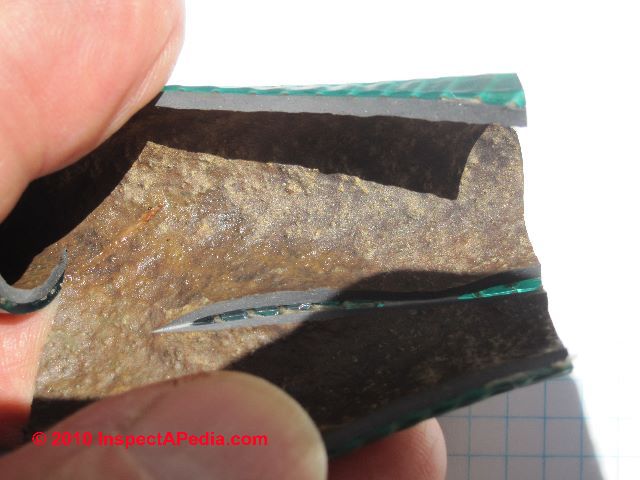
- Is there lead in your garden hose? People may be inclined to drink water from a garden hose for several reasons: it's available, you're hot, outdoors, thirsty, or you are priming a well pump
See WELL PUMP PRIMING PROCEDURE
for making an emergency water hook-up
See DRINKING WATER EMERGENCY SOURCES
to a neighbor's house because your water supply has been lost
See WATER PRESSURE PUMP REPAIR GUIDE) - Watch out: don't assume that the interior of a garden hose is sanitary
or that water run through an ordinary garden hose is safe to drink.
Also some garden hoses contain lead - do not drink water from a garden hose unless you know that yours is not a lead-containing hose. If you are purchasing a new garden hose, check the label. - Some garden hose product labels indicate that the hose is safe for drinking.
Others may indicate that the hose should not be used for drinking. Unfortunately still other hoses are simply not labeled - we won't know about any chemical or lead hazards from drinking from such a hose without testing. - The lead hazard in a garden hose,
as with possible lead hazards from lead plumbing or lead-solder-based copper pipe connections, depends on several variables including how long water has been resting inside the hose (longer absorbs more lead if lead is present), on the chemistry of your water supply (more aggressive may leach out more lead), and of course on the lead levels in the source: hose, pipe, or somewhere else. - If you are in any doubt about the cleanliness of a garden hose
being used for well pump priming or for an emergency water supply connection between buildings, sanitizing the hose or the plumbing system after it has been used.
What is the level of Risk from Lead Toys, Lead-containing Jewelry, & Other Sources of Lead?
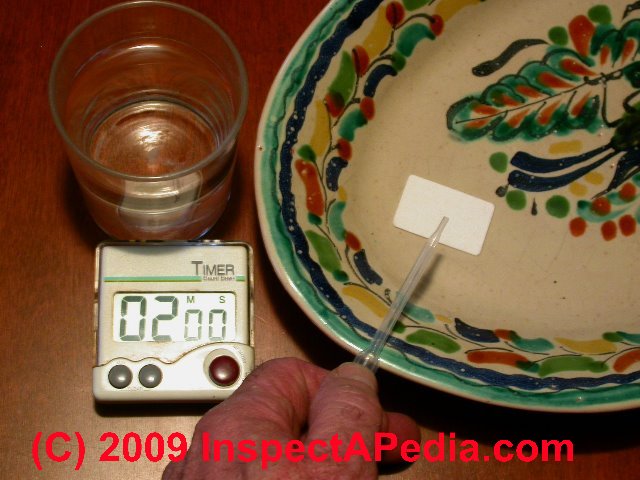
- Pottery, Ceramic, Porcelain, China. Some pottery products used lead in the glazing including dishes and cups - don't use these for food or drink.
- Toys containing lead in metal (my old toy soldiers and cars) and toys painted with lead-based paint - see references below from the toy industry on lead in toys.
- Jewelry containing lead or lead paste -- see references below for the CPSC SOP
- Alternative medicine products sold within some cultural groups: litargirio - per the Brody article [Ref.4].
- Unusual foods: salty fried grasshoppers from Mexico - per the Brody article (Ref.3).
- Lead contamination on streets and in street water runoff, a residue from prior use of leaded gasoline
- also see U.S. CPSC Document 426
- US CPSC, STANDARD OPERATING PROCEDURE FOR DETERMINING LEAD (PB) AND ITS AVAILABILITY IN CHILDREN'S METAL JEWELRY [PDF] US CPSC, 2/3/2005
A Summary of Lead Based Paint Hazards from the US CPSC & the US EPA
Since lead paint was banned in 1978, and since lead was a very common additive in paints (for whiteness and flexibility), it's a reasonable guess that any older home built before (or perhaps slightly after) 1978 that has painted surfaces has some lead paint present -- unless all of the old paint was removed.
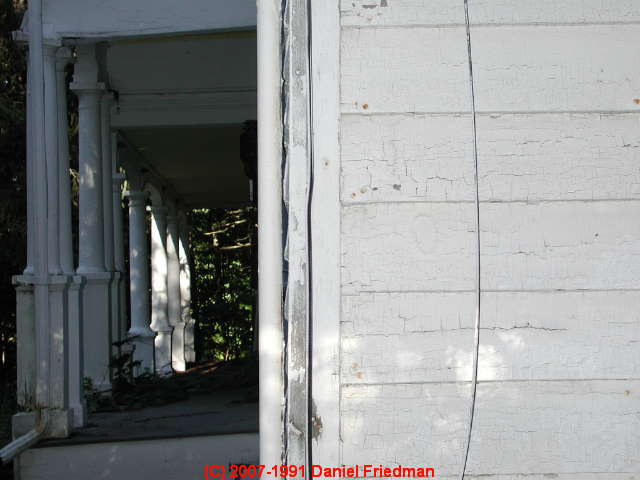 Painting over lead-containing painted surfaces
is not a fix as lead can leach through new coatings or be released during renovations. According to the Brody article [Ref. 4], the
National Safety Council says that leaded paint con be found in
Painting over lead-containing painted surfaces
is not a fix as lead can leach through new coatings or be released during renovations. According to the Brody article [Ref. 4], the
National Safety Council says that leaded paint con be found in
- homes built before 1940 - in about two thirds of these buildings
- homes built between 1940 and 1960 - in about half of these homes
- homes built between 1960 and 1978 - in a smaller number of these homes.
Watch out: OPINION - DJF: Although lead-based paint was no longer sold after 1978, that does not mean that someone may not have had older lead-based paint and used it after 1978. So don't rule out the possibility of lead in paint in or on buildings painted at least for a few years after 1978.
The principal hazards from lead-based paint indoors include
- peeling paint chips and children who eat them - PICA
- building demolition or renovation work
that contaminates the interior with lead-containing dust from paint removal or demolition - sliding casement lead-painted window sashes
up and down, which may produce lead-containing dust on the window sill where it is picked up and ingested by toddlers whose stick fingers grasp the sill and then go into their mouth
Lead-based paint outdoors
is a potential hazard as well. Renovations and paint stripping or sanding make a lot of lead paint dust or lead paint chips which may not only form an immediate hazard to people present, but may also contaminate the soil and form a hazard later for children who play there. Soil tests for lead are available.
A List of Choices of Methods for Lead Paint Surveys
- X- Ray Florescence (XRF)
for lead paint surveys: Lead paint surveys for buildings are provided by people who have both training and special equipment for this purpose using X- Ray Florescence (XRF). A professional uses a (very costly) X-ray inferometer which permits sampling of building surfaces by bouncing x-rays through the surface.
This equipment can detect lead based paint which has been painted-over, and is quite accurate. Standards may vary by state but for example in Maryland, paint with more than 0.7 milligrams per square centimeter of surface area sampled is considered to be lead paint. - Chauncey Sage, LEHA, Hudson Valley NY[9]
A building survey for lead paint
may cost about as much as a professional home inspection. OPINION: any old house that has old paint on it almost certainly has lead paint present. I would not order a "presence/absence" lead paint test. But in some circumstances it may be useful to order a "lead abatement" survey which surveys the building interior and exterior, identifies the location of lead paint, and makes recommendations by specific area: leave alone, paint-over, or remove.|
Also see LEAD in FLOORING PRODUCTS & POLISHES for a discussion of the use of XRF to test for lead in vinyl-asbestos floor tiles in an older home. - Chemical Swab spot tests
for lead paint identification are available using sodium sulfide or other chemicals. OPINION: chemical swabs that some home inspectors use for "lead testing" are junk science and are so unreliable that they should not be used. We are informed that chemical tests for lead in paint give both false positives and false negatives. - Laboratory analysis of paint scrapings:
functional and accurate if proper lab procedures are used; however be sure that paint chips or scrapings are individually packaged and identified, and that the samples collected accurately represent important possible areas of lead reservoirs on the building being tested. - Forensic microscopy
for lead paint identification: special procedures can identify lead paint from very small quantities using micro chemical techniques pioneered by Chamot and Mason.
While we have duplicated this process in our forensic laboratory, it is unlikely to be cost-justified for building surveys and is probably better reserved for specialized building forensic cases. - Watch out for environmental testing and cleanup that are not performed by qualified experts. Details & examples of what can go wrong are
at ASBESTOS REMOVAL, Amateur, Incomplete
and ASBESTOS REMOVAL CERTIFICATIONS.
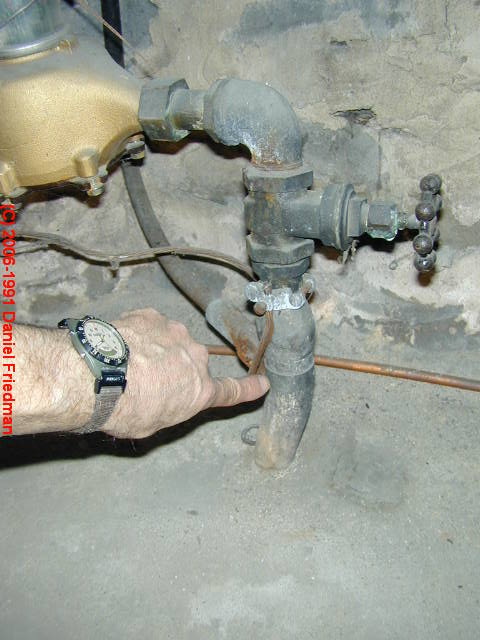
What is the Level of Risk from Lead Plumbing & Lead in Water?
Lead may be in water from the actual water supply well (unusual) or may enter water from lead water supply mains or entry laterals from the street, or
from lead-solder used for copper pipe connections.
Sources of lead in water
The degree to which water picks up lead from these sources varies quite a bit, and depends on the amount of actual lead surface to which the water is being exposed and the contact time of water to lead.
So water that sits in a lead water entry main overnight has a pretty high lead content while water that enters a building after the lines have been flushed usually has a very low lead content.
Corrosivity of water affects lead levels
The chemistry of the water and disinfectants added to it can affect the corrosivity level of water. More corrosive or "aggressive" water picks up more of whatever metals it contacts. Since there are easy things you can do to reduce the amount of lead in drinking water a treatment system is not the only choice for reducing this hazard.
See LEAD IN DRINKING WATER, HOW to REDUCE and for more details on lead in water, also see LEAD in WATER, ACTION LEVELS
Research: Lead Poisoning Hazards
- Brody, Jane, Dally No Longer, Get the Lead Out, The New York Times," 17 January 2006 p. F6.- original source: select.nytimes.com/gst/abstract.html?res=F40915F73F5B0C748DDDA80894DE404482 This is a good article for summarizing the lead issue.
- Klitzman, Susan, Mark Goldberg, Ed Olmstead, and S. O’Brien. HEALTH HAZARDS TO CONSTRUCTION WORKERS DURING THE DEMOLITION OF TWO TENEMENT BUILDING [PDF] (1994) Center to Protect Workers' Rights, 1994.
Excerpt:
This report presents results of the industrial hygiene and safety evaluations and health assessment of lead exposure. Although the buildings were demolished as part of two projects, both will be discussed in this single report. The buildings were similar in construction and were demolished by one contractor using similar methods. - Kim, Nicholas, and Jack Fergusson. "Concentrations and sources of cadmium, copper, lead and zinc in house dust in Christchurch, New Zealand." Science of the Total Environment 138.1 (1993): 1-21.
- Fergusson, Jack E., and Nicholas D. Kim. "Trace elements in street and house dusts: sources and speciation." Science of the Total Environment 100 (1991): 125-150.
- Fergusson, Jack E., and Robyn J. Schroeder. "Lead in house dust of Christchurch, New Zealand: sampling, levels and sources." Science of the total environment 46.1 (1985): 61-72.
- Fergusson, J. E., and D. E. Ryan. "The elemental composition of street dust from large and small urban areas related to city type, source and particle size." Science of the total environment 34.1 (1984): 101-116.
- Jones-Otazo, Heather A., John P. Clarke, Miriam L. Diamond, Josephine A. Archbold, Glenn Ferguson, Tom Harner, G. Mark Richardson, John Jake Ryan, and Bryony Wilford. "Is house dust the missing exposure pathway for PBDEs? An analysis of the urban fate and human exposure to PBDEs." Environmental science & technology 39, no. 14 (2005): 5121-5130.
- [1] "Lead From Old U.S. Batteries Sent to Mexico Raises Risks", The New York Times, Elizabeth Rosenthal,8 December 2011, web search 12/9/11, original source: nytimes.com/2011/12/09/science/earth /recycled-battery-lead-puts-mexicans-in-danger.html?_r=1&hpw
- [2] US CPSC HOW TO PROTECT YOUR FAMILY FROM LEAD IN THE HOME [PDF] US CPSC Document #426 with additional information and annotations
- [3] "Displaced Gypsies at Risk from Lead in Kosovo Camps," Nicholas Wood, New York Times, 5 February 2006 p5.
- Clark, Sharon C., AIA, & Doublas C. Hicks, APPROPRIATE METHODS FOR REDUCING LEAD-PAINT HAZARDS IN HISTORIC HOUSING [PDF] Preservation Brief No. 37, U.S. National Park Service, original source home1.nps.gov/tps/how-to-preserve/briefs/37-lead-paint-hazards.htm
- [4] US EPA, Report on the National Survey of Lead-Based Paint in Housing [Web page] Executive Summary - U.S. EPA, April, 1995 (EPA 747-R-95-003). An Executive Summary of this report is provided in this web page below.
The Full report is at this (large) PDF FILE - [5] Using X-ray fluorescence for analysis of lead in paint and applicability of other agencies lead levels OSHA, 03/01/1999 - this is an important document because OSHA does not accept XRF for analysis of lead exposure in the workplace.
"The lead-in-construction standard was intended to apply to any detectable concentration of lead in paint, as even small concentrations of lead can result in unacceptable employee exposures depending upon on the method of removal and other workplace conditions.
Since these conditions can vary greatly, the lead-in-construction standard was written to require exposure monitoring or the use of historical or objective data to ensure that employee exposures do not exceed the action level. Historical data may be applied to all construction tasks involving lead.
Objective data was intended to apply to all tasks other than those listed under paragraph (d)(2) of the standard."OSHA does not consider X-ray fluorescence (XRF) to be an acceptable method of analysis. As stated in your letter, XRF analyzers are generally considered accurate when concentrations of lead in paint exceed 1 mg/cm3.
For the purposes of occupational health, these levels are considered substantial and may easily present an exposure hazard. Without having conducted monitoring, or without the benefit of historical or objective data, the employer has no assurance of the employee's exposure. ""Other regulatory agencies, such as Housing and Urban Development, the Environmental Protection Agency, and the Consumer Products Safety Commission (CPSC) have designated levels of lead in paint below which they consider the paint to be non-lead containing. The missions of these agencies differ from OSHA's, and for that reason, OSHA cannot recognize these levels as safe under workplace situations"
We recommend reviewing this position letter from OSHA. -- DF
- [6] MARYLAND LEAD POISONING PREVENTION ASSET AND GAP ANALYSIS REPORT [PDF] (2020) retrieved 2023/12/15 original source: mde.maryland.gov/
Excerpt: The damage of lead exposure to the developing brain is lifelong and irreparable. While progress has been made in reducing childhood lead poisoning in Maryland since the passage of the Maryland Reduction of Lead Risk in Housing Law, 1,825 children under age 6 were tested and found to have elevated blood lead levels in 2018.1
Low-income communities and communities of color in Maryland are particularly vulnerable to lead exposure, and the lifelong health effects associated with it, as they are likelier to live in communities with older housing stock and often lack access to lead poisoning prevention resources.
Primary prevention through removal of lead hazards in a child’s environment before exposure is the only completely effective way to mitigate lead’s impact. - [8] LEAD EXPOSURE ASSOCIATED WITH RENOVATION AND REMODELING ACTIVITIES, ENVIRONMENTAL FIELD SAMPLING STUDY, Volume I, Technical Support [PDF] U.S. Environmental Protection Agency, EPA 747-R-96-007, May 1997 web search 5/10/12, original source: epa.gov/lead/pubs/r96-007.pdf [copy on file as /Lead_Renovation_Exposure_EPAr96-007.pdf ] -
Executive Summary:
The Residential Lead-Based Paint Hazard Reduction Act (Title X) required the U.S. Environmental Protection Agency (EPA) to conduct a study of lead exposure resulting from renovation and remodeling (R&R) activities (the R&R study).
The information obtained from the study is to be used primarily to help determine which groups of people require training, certification, or educational materials because of the potential lead exposure associated with R&R activities they perform.
This report presents the results of one of the principal data collection efforts in the R&R study: the Environmental Field Sampling Study (EFSS). The EFSS, through the collection of environmental measurements, assessed the amount of disturbance and potential exposure to lead that resulted from selected R&R activities. T
he monitored activities included both specific R&R activities, such as carpet removal and window replacement, as well as miscellaneous generic activities such as drilling, sawing, or surface preparation (sanding, paint scraping, etc.).
Environmental samples collected in the EFSS included over 90 personal air samples taken within the breathing zone of R&R workers as they performed specific R&R activities, and over 500 samples of dust that settled on building surfaces within a specified period following completion of an activity.
Worker exposure was assessed using the airborne lead levels from each worker's breathing zone, as measured by a task-length average (TLA) exposure. A worker's TLA represents average airborne exposure for the worker during conduct of the activity.
The average TLAs were high during the conduct of many of the R&R activities, exceeding the OSHA permissible exposure limit of 50 μg/m for four of the R&R activities.
The Average TLAs were greater than 100 μg/m3 for paint removal, interior demolition, and sawing, and greater than 49 μg/m3 for interior surface preparation and central heating system maintenance/repair.
Exposures resulting from drilling, carpet removal, window replacement, and exterior surface preparation were considerably lower (below 20 μg/m3). The TLA exposure for each activity (as estimated in the EFSS) can be combined with worker profile information (available from outside sources) to characterize worker exposure.
Potential exposure to building occupants was assessed using the dust samples collected by vacuum techniques from stainless steel dustfall collectors placed at specified distances from the activity.
Lead loadings from these samples were measured as indicators of the amount of lead disturbed by an R&R activity and available for exposure to occupants. With the exception of carpet removal and drilling into plaster, all activities monitored in the EFSS deposited significant amounts of lead, ranging from 328 μg/ft2 for sawing lead-painted plaster to 42,900 μg/ft2 for paint removal.
Paint removal, demolition, sawing, and disturbing central heating system ductwork were more likely to cause airborne lead to scatter and settle over a widespread area, while window replacement and drilling confined the disturbed lead to a smaller area.
While simple broom and shop-vacuum cleanup substantially reduced the total amount of lead available to occupants, cleanup efficiency declined as the distance from the activity increased. In addition, the average amount of lead following cleanup often remained above 100 μg/ft2, the current EPA guidance level for floors.
The estimates of lead amounts within settled dust presented in this report can be linked with information on types and durations of activities, types of work practices and cleanup activities, and human health effects to provide a more complete characterization of occupant exposure associated with R&R activities. - [9] Chauncey Sage, Lead Inspector, Hudson Valley NY, http://www.leadinspectionsny.com, Tel: 845-497-7465
Certified Lead Paint Inspector & Risk Assessor Fully Insured US EPA Certified Member LEHA The Lead and Environmental Hazard Association Using the LPA-1 XRF Spectrum Analyzer, Capable of accurate readings in 2-4 seconds, NO SCRAPING PAINT OFF WOODWORK OR WALLS. Serving Orange, Rockland, Ulster, Sullivan, Westchester, Dutchess, Putnam, Greene and Columbia Counties in New York (NY) - [29] NYS DOH SOURCES of LEAD In and Around the Home [PDF] New York State Health Department, website retrieved 2/19/2013, original source: http://www.health.ny.gov/environmental/lead/sources.htm [copy on file as Lead_Sources_NYS_DOH.pdf]
- US CPSC, SOP for FOR DETERMINING LEAD (PB) AND AND ITS AVAILABILITY IN CHILDREN'S METAL JEWELRY [PDF] (2005)
- US CPSC, Must all accessible substrates be tested for total lead and soluble heavy elements, as specified in ASTM F963-17? in "Toy Safety Business Guidance & Small Entity Compliance Guide" - retrieved 2023/12/15, original source: cpsc.gov/Business--Manufacturing/Business-Education/Toy-Safety-Business-Guidance-and-Small-Entity-Compliance-Guide#T6
- Toy Industry Policy on Lead in Toys [dead link 2023/12/05 vinyltoys.com/docs/hm/icti_lead [dot] html ] , International Council of Toy Industries, October 8, 1997
"The voluntary standard established in the United States under ASTM F-963 and the European standard under EN-71 for soluble lead in toys (lead which may migrate from the toy and be ingested by the child) is 90 parts-per-million. At that level, any intentional use of lead in paints or other surface coatings containing lead would immediately put the toy over the permitted limit."
"Under federal law, the US Consumer Product Safety Commission (CPSC) enforces a standard for total lead of 600 ppm.
Recently, the CPSC refused to lower the lead limit in paint and other similar surface coating materials to 100 ppm after finding that most paints sold in the United States were already at or below that level and, therefore, these materials did not present an unreasonable risk of injury warranting further government regulation."
...
Continue reading at LEAD POISONING SYMPTOMS or select a topic from the closely-related articles below, or see the complete ARTICLE INDEX.
Or see these
Recommended Articles
- LEAD POISONING HAZARDS GUIDE - home
- LEAD in AIR, EMISSIONS STANDARDS
- LEAD BASED PAINT-USES in BUILDINGS
- LEAD in the BODY
- LEAD CONTAMINATION HAZARDS in the HOME
- WHAT TO DO ABOUT LEAD in the HOME
- LEAD CONTAMINATION in WATER, HOW to TEST
- LEAD IN DRINKING WATER, HOW to REDUCE
- LEAD EXPOSURE HAZARDS INDOORS
- LEAD in FLOORING PRODUCTS & POLISHES
- LEAD HAZARDS & FEAR: ENVIRO-SCARE
- LEAD HAZARDS in REMODELING
- LEAD INFORMATION, US GOVERNMENT
- LEAD PIPES in BUILDINGS
- LEAD POISONING EMERGENCY HELP NUMBERS
- LEAD POISONING SYMPTOMS
- LEAD ROOFING & FLASHING
- LEAD TESTS for the FAMILY
- LEAD TESTS for the HOME
- LEAD TEST KIT for HOME USE
Suggested citation for this web page
LEAD POISONING HAZARDS GUIDE at InspectApedia.com - online encyclopedia of building & environmental inspection, testing, diagnosis, repair, & problem prevention advice.
Or see this
INDEX to RELATED ARTICLES: ARTICLE INDEX to BUILDING ENVIRONMENT
Or use the SEARCH BOX found below to Ask a Question or Search InspectApedia
Ask a Question or Search InspectApedia
Questions & answers or comments about lead poisoning hazards in and around buildings.
Try the search box just below, or if you prefer, post a question or comment in the Comments box below and we will respond promptly.
Search the InspectApedia website
Note: appearance of your Comment below may be delayed: if your comment contains an image, photograph, web link, or text that looks to the software as if it might be a web link, your posting will appear after it has been approved by a moderator. Apologies for the delay.
Only one image can be added per comment but you can post as many comments, and therefore images, as you like.
You will not receive a notification when a response to your question has been posted.
Please bookmark this page to make it easy for you to check back for our response.
Our Comment Box is provided by Countable Web Productions countable.ca
Citations & References
In addition to any citations in the article above, a full list is available on request.
- In addition to citations & references found in this article, see the research citations given at the end of the related articles found at our suggested
CONTINUE READING or RECOMMENDED ARTICLES.
- Carson, Dunlop & Associates Ltd., 120 Carlton Street Suite 407, Toronto ON M5A 4K2. Tel: (416) 964-9415 1-800-268-7070 Email: info@carsondunlop.com. Alan Carson is a past president of ASHI, the American Society of Home Inspectors.
Thanks to Alan Carson and Bob Dunlop, for permission for InspectAPedia to use text excerpts from The HOME REFERENCE BOOK - the Encyclopedia of Homes and to use illustrations from The ILLUSTRATED HOME .
Carson Dunlop Associates provides extensive home inspection education and report writing material. In gratitude we provide links to tsome Carson Dunlop Associates products and services.
 | HOME | ABOUT | ASK a QUESTION | CONTACT | CONTENT USE POLICY | DESCRIPTION | POLICIES | PRIVACY | |
| © 2024 - 1985 Publisher InspectApedia.com - Daniel Friedman | |||||||||