
InspectAPedia® FREE Encyclopedia of Building & Environmental Construction, Diagnosis, Maintenance & Repair |
Question? Just ask us! InspectAPedia
|
 Faulty Plastic Heating Vent Pipe Recall Safety Notice
Safety recall on Plastic Plexvent & Ultravent
- POST a QUESTION or COMMENT about plastic heater vent safety & HTPV recalls
CPSC & Plastic Heating Vent Manufacturers Announce Recall program to replace HTPV on home heating systems.
Included is a list of participating heating system manufacturers that involves:
Armstrong Air Conditioning, Bard Manufacturing,Burnham, Center Point Energy/Houston Industries, Arkla, Dunkirk, Evcon, Heat Controller, International Comfort, Lennox ,Nordyne, Peerless, Pennco, Plexco, Raypak, Rheem, Slant/Fin, Trane, Trianco-Heatmaker, Utica, Vaillant, Weil-McLain, Westcast, and York brands.
InspectAPedia tolerates no conflicts of interest. We have no relationship with advertisers, products, or services discussed at this website.
US CPSC High Temperature Plastic Vent Heating Vent Recall Update - 2009
| FOR IMMEDIATE RELEASE January 15, 2009 Release #09-099 |
Manufacturers’ Recall Hotline: (800) 758-3688 |
A related recall has been modified [Links to US CPSC] as well.
CPSC, Manufacturers Announce Changes to 1998 Recall Program to Replace Dangerous Home Heating Vent Pipes
Remedy Changes for Registrations after May 1, 2009
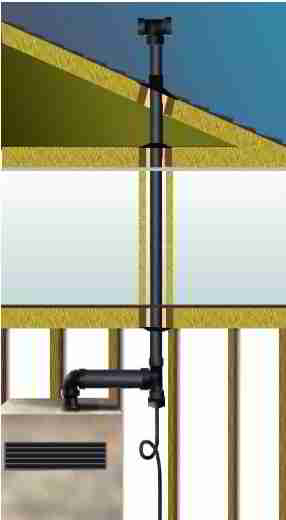
 WASHINGTON, D.C. - The U.S. Consumer Product Safety Commission (CPSC) and various home heating furnace, boiler, and high-temperature plastic vent (HTPV) manufacturers are urging home owners who have not yet responded to the previously-announced 1998 recall, [at US CPSC] to do so immediately.
After May 1, 2009, the remedy consumers receive under the existing program, which has been operating continuously for almost 11 years, will change.
[Click to enlarge any image]
The recall, first announced in February 1998, included about 250,000 Plexvent and Ultravent HTPV pipe systems attached to gas or propane furnaces and boilers in homes. The HTPV pipes can crack or separate at the joints and leak deadly carbon monoxide (CO) gas. The following table includes the different remedies available to consumers with qualifying heating systems vented with two leading brands of HTPV pipe – Plexvent and Ultravent.
| Plexvent owners | Ultravent owners | |
|---|---|---|
| Valid claims initiated on or before May 1, 2009, with remediation completed and required documentation submitted by October 1, 2009 | Will receive a new, professionally-installed venting system free of charge or a rebate up to $400 towards purchase of a new, high-efficiency appliance from the same manufacturer that does not require HTPV | Will receive a new, professionally-installed venting system for about $250 or a rebate of $250 towards purchase of a new, high-efficiency appliance from the same manufacturer that does not require HTPV |
| Valid claims initiated after May 1, 2009 | A rebate up to $400 toward either an HTPV replacement system, or a new, high-efficiency appliance from the same manufacturer that does not require HTPV | A rebate up to $250 toward either an HTPV replacement system, or a new, high-efficiency appliance from the same manufacturer that does not require HTPV |
Consumers who register after May 1, 2009 and who choose to repair their systems will be responsible for up-front payment of parts, labor and permits, and will be responsible for arranging to have the work performed.
How to Identify Recalled High Temperature Plastic Heating Vents
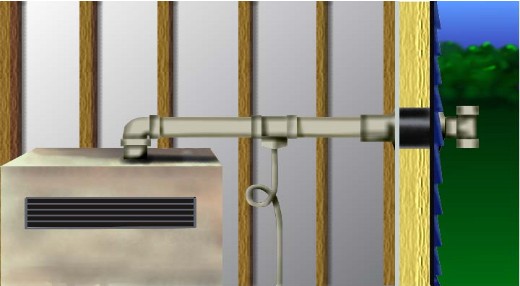
 Consumers should determine whether they have a recalled HTPV pipe system by checking the vent pipes attached to their natural gas or propane furnace or boiler.
Vent pipes subject to this recall can be identified as follows:
- HTPV material: the HTPV vent pipes are plastic;
- HTPV color: the HTPV vent pipes are colored gray or black;
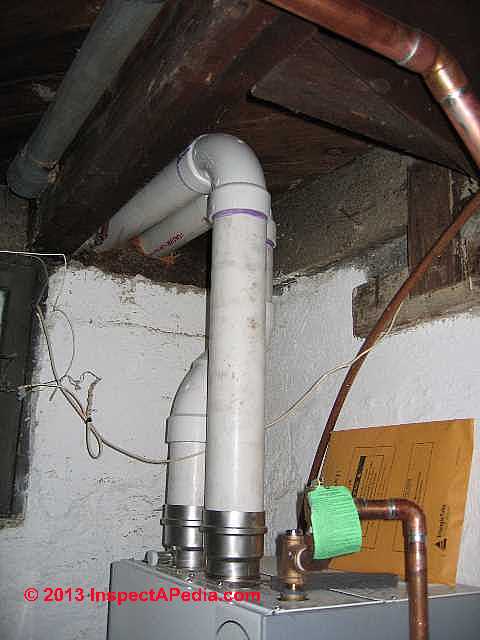
Take a look at our HTPV pipes atop a high-efficiency heating boiler installed in Minneapolis MN in 2009. These pipes are white - so these are not the piping of concern in the CPSC warning. - HTPV lableing: "Plexvent," "Plexvent II" or "Ultravent" is stamped on the vent pipe or printed on stickers placed on pieces used to connect the vent pipes; and
- HTPV location: t he vent pipes are located on furnaces (and the pipes go through the sidewalls of structures) or on boilers.
Other plastic vent pipes, such as white PVC shown in our photo at above-left are not included in the recall.
Contact Information for High Temperature Plastic Heating Vents that are Recalled
After checking the vent pipes, consumers should call (800) 758-3688 between 8 a.m. and 7 p.m. ET Monday through Friday to sign up for HTPV pipe system replacement. The following manufacturers are participating in this program:
- Armstrong Air Conditioning Inc.
- Bard Manufacturing Co.
- Burnham Corp.
- Center Point Energy/Houston Industries (Arkla)
- Dunkirk Radiator Corp.
- Evcon Industries Inc.
- Heat Controller Inc.
- International Comfort Prod. Corp. (USA)
- Lennox Industries Inc.
- Nordyne Inc. Peerless Heater Co.
- Pennco Inc
- Plexco Inc.
- Raypak Inc.
Rheem Manufacturing Co. - Slant/Fin Corp.
- The Trane Co.
- Trianco-Heatmaker Inc.
- Utica Boilers Inc.
- Vaillant Corp.
- Weil-McLain
- Westcast Inc.
- York International Corp.
CPSC reminds all consumers to have fuel-burning appliances professionally inspected each year to check for cracks or separations in the vents that could allow CO to leak into the home. In addition, CPSC recommends that every home should have at least one CO alarm.
CPSC is still interested in receiving incident or injury reports that are either directly related to this product recall or involve a different hazard with the same product.
Please tell us about it by visiting https://www.cpsc.gov/cgibin/incident.aspx
The U.S. Consumer Product Safety Commission is charged with protecting the public from unreasonable risks of serious injury or death from thousands of types of consumer products under the agency's jurisdiction. The CPSC is committed to protecting consumers and families from products that pose a fire, electrical, chemical, or mechanical hazard.
The CPSC's work to ensure the safety of consumer products - such as toys, cribs, power tools, cigarette lighters, and household chemicals - contributed significantly to the decline in the rate of deaths and injuries associated with consumer products over the past 30 years.
To report a dangerous product or a product-related injury, call CPSC's Hotline at (800) 638-2772 or CPSC's teletypewriter at (301) 595-7054. To join a CPSC e-mail subscription list, please go
to https://www.cpsc.gov/cpsclist.aspx.
Consumers can obtain recall and general safety information by logging on to CPSC's Web site at www.cpsc.gov.
US CPSC High Temperature Plastic Vent Heating Vent Recall Update - 2009
In a landmark action announced February 24, 1998 virtually the entire furnace and boiler industry together with the manufacturers of high-temperature plastic vent (HTPV) pipes have joined with the U.S. Consumer Product Safety Commission (CPSC) to announce a recall program.
This program will replace, free of charge, an estimated 250,000 HTPV pipe systems attached to gas or propane furnaces or boilers in consumers' homes.
The HTPV pipes could crack or separate at the joints and leak carbon monoxide (CO), presenting a deadly threat to consumers.
To determine whether they have HTPV pipe systems that are subject to this program, consumers should first check the vent pipes attached to their natural gas or propane furnaces or boilers.
Vent pipes subject to this recall program can be identified as follows: the vent pipes are plastic;
- the vent pipes are colored gray or black;
- the vent pipes have the names
- 'Plexvent', 'Plexvent II', or 'Ultravent' stamped on the vent pipe or
- printed on stickers placed on pieces used to connect the vent pipes
- together.
Consumers should now check the location of these vent pipes.
For furnaces, only HTPV systems that have vent pipes that go through the sidewalls of structures (horizontal systems) are subject to this program.
For boilers, all HTPV systems are subject to this program.
Other plastic vent pipes, such as white PVC or CPVC, are not involved in this program.
After checking the vent pipes, consumers should call the special toll-free number (800) 758-3688, available between 7 a.m. and 11 p.m. EST seven days a week, to verify that their HTPV pipe systems are subject to this recall program. Consumers with eligible systems will receive new, professionally installed venting systems free of charge.
Additionally, consumers who already have replaced their HTPV pipe systems may be eligible for reimbursement for some or all of the replacement costs.
The program came about as a result of mediation among 27 participants manufacturers of HTPV pipes and manufacturers of natural gas or propane-fired boilers and mid-efficiency furnaces. This is the first time that CPSC has used a mediator to bring together all segments of an industry to implement a program for the benefit of consumers.
The following lists the manufacturers participating in this program.
- Armstrong Air Conditioning Inc.
- Bard Manufacturing Co.
- Burnham Corp.
- Consolidated Industries
- Crown Boiler Co.
- Dunkirk Radiator Corp.
- Evcon Industries Inc.
- Hart & Cooley Inc.
- Heat Controller Inc.
- International Comfort Products Corp. (USA)
- Lennox Industries Inc.
- Nordyne Inc.
- Pennco Inc.
- Plexco Inc.
- Raypak Inc.
- Rheem Manufacturing Co.
- Slant/Fin Corp.
- The Ducane Co. Inc.
- The Trane Co.
- Thermo Products Inc
- Trianco-Heatmaker Inc.
- Utica Boilers Inc.
- Vaillant Corp.
- Weil-McLain
- Westcast Inc.
- York International Corp.
Here is a printable version of the PLEXVENT RECALL NOTICE, US CPSC [PDF] retrieved 2019/07/25, original source: https://www.cpsc.gov/Recalls/1998/cpsc-manufacturers-announce-recall-program-to-replace-vent-pipes-on-home-heatin
Reader Comments, Questions & Answers About The Article Above
Below you will find questions and answers previously posted on this page at its page bottom reader comment box.
Reader Q&A - also see RECOMMENDED ARTICLES & FAQs
On 2019-07-25 - by (mod) -
Rheem & US CPSC do not respond to Plexvent recall help request- Robert
Thanks for the important safety post / complaint about the Plexvent sidewall venting - as you read above the CPSC announced a recall for this product.
Rheem is listed among the participants in the program.
The current U.S. federal government, CPSC, and president Trump appear to have significantly cut back on US CPSC support for product recalls and public safety around this sort of issue.
What's left? I would contact Rheem directly once again to ask for help.
Our article RHEEM WATER HEATERS & HEATER AGE at https://inspectapedia.com/plumbing/Rheem-Water-Heater-Age-Decoder.php includes contact information for Rheem
excepting:
Rheem Water Heaters, Rheem National Sales Dept., Rheem Sales Co. Inc. 1241 Carwood Ct Montgomery, Al. 36117 USA Tel: 1-800-535-9538 (Customer service, warranty, parts), Website: http://www.rheem.com/ Email: customerservice@rheem.com
Rheem technical support: 800-432-8373
I'm doubtful that the CPSC is going to do a thing about replacing any product that has been recalled. THe CPSC's job (varying by U.S. government administration policy) is to identify unsafe consumer products and where the agency deems appropriate, ask for a product recall - but the CPSC itself is not going to replace anything for you or your customer.
Here is the current CPSC contact information
- US CPSC Consumer Hotline and General Information
Phone: (800) 638-2772; TTY (800) 638-8270
Hours: Mon.-Fri. 8 a.m. to 5:30 p.m.; messages can be left anytime.
Fax: (301) 504-0124 and (301) 504-0025
On 2019-07-25 by Robert O'Connor
I have a customer (I'm a licensed master plumber as well as master HVACR Contractor in NJ) with a Rheem furnace that has Plexvent sidewall venting.
I've contacted Rheem. I've contacted CPSC to no avail. NO ONE RETURNS CALLS OR YOU SIT ON HOLD AND NOBODY PICKS UP!!!!!
Can you PLEASE help me & my customer out with this.
Furnace is Rheem Model number RGVG-05EAUER serial number CE1D302 F3292 0902. Plexvent was used and is leaking carbon monoxide into their home. I'm currently writing this while on hold for already over 50 minutes! When I called I was given automated message stating I'm FIRST in line. The customers Bill Zhao & Qin Zheng live at 22 Mitchell Ave., Roseland New Jersey 07068
My email is roconnor1@comcast.net My cell number is 201.937.2223.
I can't sit on hold and wait anymore. Can you PLEASE contact me and let me know what I (or my customer) can do to either receive the correct venting materials or maybe Rheem can come and replace this vent with approved materials.
Please make me aware of your decision and that of RHEEM as soon as practical
Thank you,
Robert O'Connor
On 2017-10-04 by bruce Johnson
Hi Is there a time limit to file a claim...I just bought a house and I think I have this pipe on my furnace...
...
Continue reading at PLASTIC VENTS GOODMAN HTPV Recall or select a topic from the closely-related articles below, or see the complete ARTICLE INDEX.
Or see these
Heating Safety Articles
- CHIMNEY INSPECTION DIAGNOSIS REPAIR.
- GAS DETECTION INSTRUMENTS
- HEAT EXCHANGER LEAK TEST
- SAFETY HAZARDS & INSPECTIONS
- SAFETY HAZARDS GUIDE - home
- SAFETY, HEATING INSPECTION
- SAFETY RECALLS Chimneys, Vents, Heaters
- TOXIC GAS EXPOSURE EFFECTS for more technical information Information about chimneys, flues, and venting safety is found
Suggested citation for this web page
PLASTIC PLEXVENT ULTRAVENT RECALL at InspectApedia.com - online encyclopedia of building & environmental inspection, testing, diagnosis, repair, & problem prevention advice.
Or see this
INDEX to RELATED ARTICLES: ARTICLE INDEX to HEATING SYSTEMS
Or use the SEARCH BOX found below to Ask a Question or Search InspectApedia
Ask a Question or Search InspectApedia
Try the search box just below, or if you prefer, post a question or comment in the Comments box below and we will respond promptly.
Search the InspectApedia website
Note: appearance of your Comment below may be delayed: if your comment contains an image, photograph, web link, or text that looks to the software as if it might be a web link, your posting will appear after it has been approved by a moderator. Apologies for the delay.
Only one image can be added per comment but you can post as many comments, and therefore images, as you like.
You will not receive a notification when a response to your question has been posted.
Please bookmark this page to make it easy for you to check back for our response.
Our Comment Box is provided by Countable Web Productions countable.ca
Citations & References
In addition to any citations in the article above, a full list is available on request.
- Domestic and Commercial Oil Burners, Charles H. Burkhardt, McGraw Hill Book Company, New York 3rd Ed 1969.
- National Fuel Gas Code (Z223.1) $16.00 and National Fuel Gas Code Handbook (Z223.2) $47.00 American Gas Association (A.G.A.), 1515 Wilson Boulevard, Arlington, VA 22209 also available from National Fire Protection Association, Batterymarch Park, Quincy, MA 02269. Fundamentals of Gas Appliance Venting and Ventilation, 1985, American Gas Association Laboratories, Engineering Services Department. American Gas Association, 1515 Wilson Boulevard, Arlington, VA 22209. Catalog #XHO585. Reprinted 1989.
- The Steam Book, 1984, Training and Education Department, Fluid Handling Division, ITT [probably out of print, possibly available from several home inspection supply companies] Fuel Oil and Oil Heat Magazine, October 1990, offers an update,
- Principles of Steam Heating, $13.25 includes postage. Fuel oil & Oil Heat Magazine, 389 Passaic Ave., Fairfield, NJ 07004.
- The Lost Art of Steam Heating, Dan Holohan, 516-579-3046 FAX
- Principles of Steam Heating, Dan Holohan, technical editor of Fuel Oil and Oil Heat magazine, 389 Passaic Ave., Fairfield, NJ 07004 ($12.+1.25 postage/handling).
- "Residential Steam Heating Systems", Instructional Technologies Institute, Inc., 145 "D" Grassy Plain St., Bethel, CT 06801 800/227-1663 [home inspection training material] 1987
- "Residential Hydronic (circulating hot water) Heating Systems", Instructional Technologies Institute, Inc., 145 "D" Grassy Plain St., Bethel, CT 06801 800/227-1663 [home inspection training material] 1987
- "Warm Air Heating Systems". Instructional Technologies Institute, Inc., 145 "D" Grassy Plain St., Bethel, CT 06801 800/227-1663 [home inspection training material] 1987
- Heating, Ventilating, and Air Conditioning Volume I, Heating Fundamentals,
- Boilers, Boiler Conversions, James E. Brumbaugh, ISBN 0-672-23389-4 (v. 1) Volume II, Oil, Gas, and Coal Burners, Controls, Ducts, Piping, Valves, James E. Brumbaugh, ISBN 0-672-23390-7 (v. 2) Volume III, Radiant Heating, Water Heaters, Ventilation, Air Conditioning, Heat Pumps, Air Cleaners, James E. Brumbaugh, ISBN 0-672-23383-5 (v. 3) or ISBN 0-672-23380-0 (set) Special Sales Director, Macmillan Publishing Co., 866 Third Ave., New York, NY 10022. Macmillan Publishing Co., NY
- Installation Guide for Residential Hydronic Heating Systems
- Installation Guide #200, The Hydronics Institute, 35 Russo Place, Berkeley Heights, NJ 07922
- The ABC's of Retention Head Oil Burners, National Association of Oil Heat Service Managers, TM 115, National Old Timers' Association of the Energy Industry, PO Box 168, Mineola, NY 11501. (Excellent tips on spotting problems on oil-fired heating equipment. Booklet.)
- In addition to citations & references found in this article, see the research citations given at the end of the related articles found at our suggested
CONTINUE READING or RECOMMENDED ARTICLES.
- Carson, Dunlop & Associates Ltd., 120 Carlton Street Suite 407, Toronto ON M5A 4K2. Tel: (416) 964-9415 1-800-268-7070 Email: info@carsondunlop.com. Alan Carson is a past president of ASHI, the American Society of Home Inspectors.
Thanks to Alan Carson and Bob Dunlop, for permission for InspectAPedia to use text excerpts from The HOME REFERENCE BOOK - the Encyclopedia of Homes and to use illustrations from The ILLUSTRATED HOME .
Carson Dunlop Associates provides extensive home inspection education and report writing material. In gratitude we provide links to tsome Carson Dunlop Associates products and services.
 | HOME | ABOUT | ASK a QUESTION | CONTACT | CONTENT USE POLICY | DESCRIPTION | POLICIES | PRIVACY | |
| © 2024 - 1985 Publisher InspectApedia.com - Daniel Friedman | |||||||||