
InspectAPedia® FREE Encyclopedia of Building & Environmental Construction, Diagnosis, Maintenance & Repair |
Question? Just ask us! InspectAPedia
|
 Properties of Fiberglass Building Insulation
- POST a QUESTION or COMMENT about how to identify fiberglass building insulation products & brands & how to distinguish fiberglass from other insulating material both by visual inspection and by forensic lab tests
Fiberglass insulation products & brands: identification photos.
This article illustrates and describes common fiberglass insulation materials used in buildings and in building HVAC systems.
We provide fiberglass photographs and identification examples because of frequent questions about how to recognize fiberglass building insulation products. This article series assists building buyers, owners or inspectors who need to identify fiberglass insulation found in buildings by simple visual inspection.
We include descriptive text of fiberglass building insulation products to assist in identification of definite, probable, or possible fiberglass materials in buildings. In some cases the resin binder which gives color to fiberglass insulation can permit an educated guess about the actual brand or manufacturer of the fiberglass insulation.
InspectAPedia tolerates no conflicts of interest. We have no relationship with advertisers, products, or services discussed at this website.
How to Identify Fiberglass Insulation in Buildings
 Color Key to Identifying the Brand or Manufacturer of Fiberglass Building Insulation
Fiberglass insulation is most-often found as thermal insulating batts or as chopped or loose-fill insulation; fiberglass is also widely-used as HVAC duct insulation or pipe insulation.
Here, in order by color, we provide a guide to brands and colors of fiberglass insulation.
- BLACK FIBERGLASS INSULATION?
- BLUE FIBERGLASS INSULATION
- BROWN FIBERGLASS INSULATION
- GREEN FIBERGLASS INSULATION
- PINK FIBERGLASS INSULATION
- WHITE FIBERGLASS INSULATION
- YELLOW FIBERGLASS INSULATION
Also included:
- FIBERGLASS INSULATION STANDARD R-VALUES
- FIBERGLASS INSULATION ASBESTOS CONTENT?
- FIBERGLASS UNDER the MICROSCOPE
- FIBERGLASS vs MINERAL WOOL vs SLAG WOOL SEM IDENTIFICATION - separate article
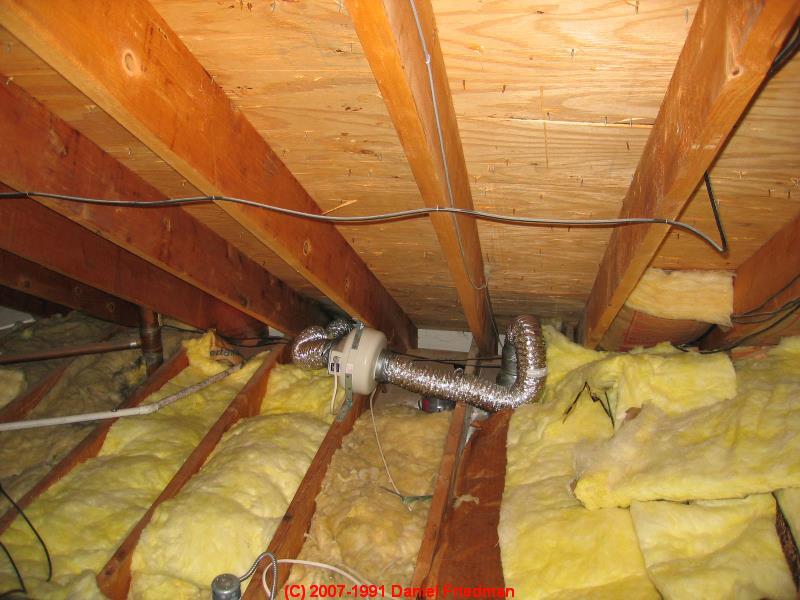
Our photos show the colors (and manufacturers) and forms of fiberglass building insulation. Fiberglass building insulation is commonly installed in batts or chopped forms and may be yellow, pink, green, or white in color as is shown in these four photographs.
Black Fiberglass Insulation

This photo of Eagle Pitcher fiberglass insulation (possibly it's actually mineral wool) is provided by InspectApedia.com reader Robert who commented:
I found this insulation manufactured by Eagle Pitcher. Doing some research I found they made many concrete products containing asbestos but can't find anything definitive on insulation.
Its a dark grey/black color. Any input to what it is?
The building was initially built in the late 20's in California but has gone through many re-models/additions since then so not exactly sure of the age.
Moderator reply:
Generally fiberglass insulation does not contain asbestos unless by cross-contamination.
A "review" of various online information sources on EP is not a substitute for an abestos test, but a review of several sources to date has not found any mention of fibrous building insulating batts like those in your photo as an asbestos product.
EaglePitcher industries, a U.S. company, specialized in lead and zinc products as early as 1916, later producing a wide range of asbestos-containing materials including insulation products used by the U.S. military ships and vehicles.
See details about EAGLE PITCHER ASBESTOS PRODUCTS at that link.
But these articles may be of interest:
ASBESTOS IN MINERAL WOOL / STONE WOOL
Black Fiberglass Insulation: dirty / moldy?
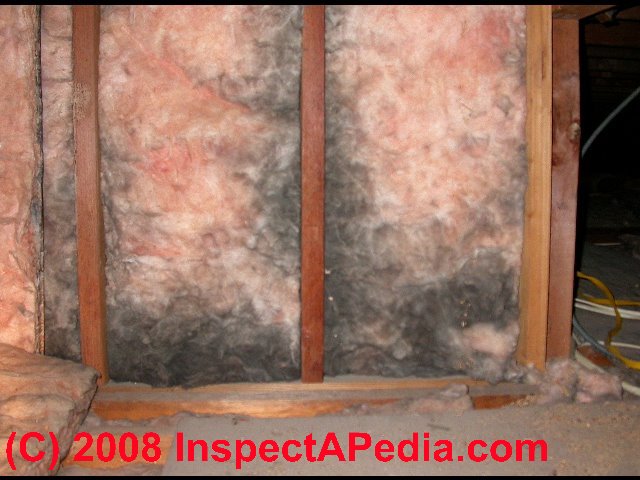
Above: the black colored fiberglass is actually from staining, usually from air bypass leaks and deposits of house dust, or more-rarely from mold contamination.
Under the microscope fiberglass fibers are colorless or clear, as we illustrate later in this article.
It is the resin binder used by the manufacturer to stick the fibers together into a batt or a chopped piece of insulation that give fiberglass insulation its characteristic color.
For example this PHOTO of FIBERGLASS in the MICROSCOPE below in this article shows yellow resin binder.
Black Fiberglass Insulation?: No jet-black fiberglass insulation product has turned up in any of our research though Eagle Pitcher's dark gray - black insulation can be considered in this group. The black color on the fiberglass shown above is dirt from air bypass leaks.
You might see "black" on fiberglass insulation in these forms:
- Asphalt-like black tarry substances
may be used on the side of kraft paper or foil vapor retarders used to adhere the fiberglass batt to the paper or foil - Black-looking mold
may grow on fiberglass that has become dirty and wet, or it may be found more often on the kraft paper attached to fiberglass if that material has been wet - don't blame the fiberglass, blame building leaks on this problem. - Dust and dirt may be deposited
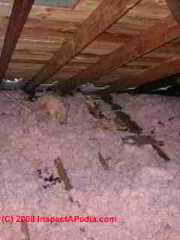
on fiberglass as air (containing house dust or other debris) moves past fiberglass at air leaks. In our photo at left you can see some pretty old and extensive thermal bypass leak stains on insulation in an attic.
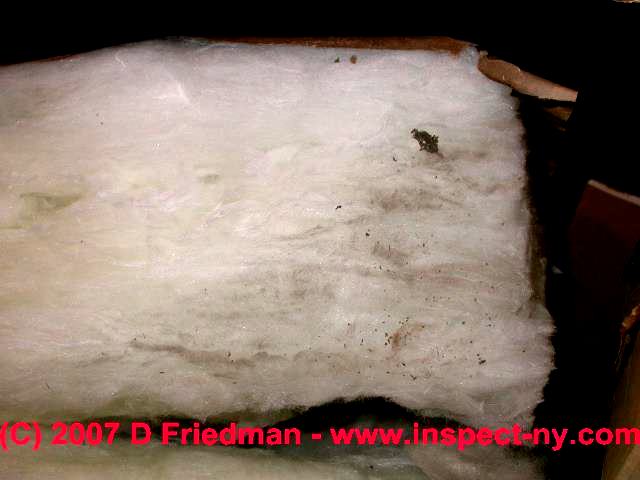
Above: In our photo below you can see the very beginnings of such black insulation staining in the right-side center of a white fiberglass batt. If you see dirty or black marks on fiberglass it's probably a thermal bypass leak.
Blue Fiberglass Insulation
Below: blue fiberglass.

Blue Fiberglass batts. The manufacturer of the light blue fiberglass shown below in photographs contributed by a reader (Anonymous) has not been identified.
The closest match to this light blue insulation is the green fiberglass batt insulation produced by Johns Manville and shown above on this page.

As you'll see below, Johns Manville fiberglass insulation was produced in other colors including a light pink.
Brown Fiberglass Insulation

Brown Fiberglass Insulation (above) is produced by EcoBatt® using the company's ECOSe technology, a plant-based binder provided as an alternative for the phenol/formaldehyde resin (PF) binder used in most glass mineral-wool products.
Knauf Industries is a multi-national building & construction materials manufacturer with locations and offices world-wide. Contact: Knauf Industries, Website: http://www.knaufinsulation.com/
Mineral wool batts (not fiberglass) may also be brown in color.
See MINERAL WOOL APPEARANCE VARIATIONS.
Green Fiberglass Insulation
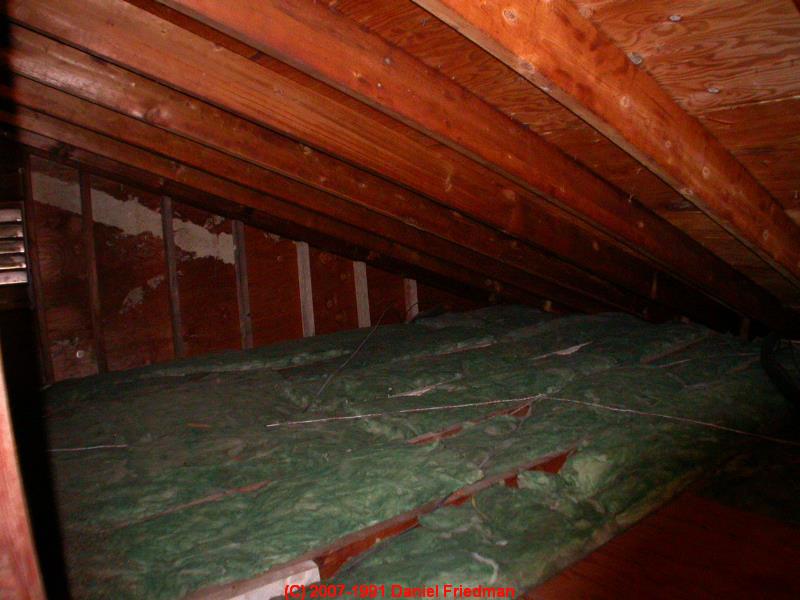
Green Fiberglass Insulation: John Mansville® has produced green fiberglass insulation like the green fiberglass batts we show above.
Pink FIberglass Insulation
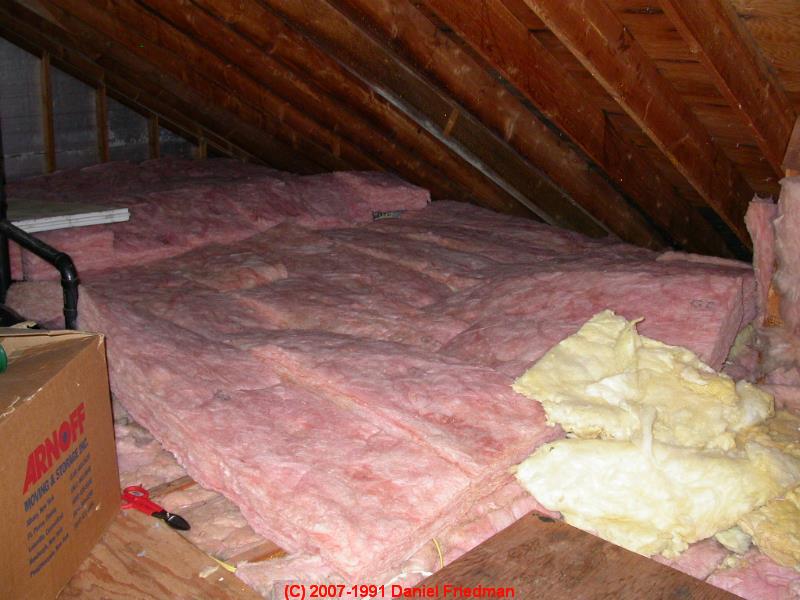
Pink Fiberglass Insulation: Owens Corning Pink Fiberglass® shown above is a registered trademark for their product line.
Watch out: insulation colors and product descriptions can be confusing.
Owens Corning also produced yellow-colored fiberglass as well as products sold as "insulating wool" or "glass wool", possibly in an effort to compete with "rock wool" or mineral wool insulation that were advertised as "natural products".
Johns-Manville Spinsulation Pink Fiberglass Insulation
And in addition to Owens Corning's patented pink fiberglass, older Johns Manville Spinsulation fiberglass was also a light-pink building insulation product, as we see in the photo below, courtesy of reader Dustin.
 ...
... 
Dustin wrote:
Have you ever come across JM Fiberglass Spinsulation? It's in the floor cavity above my basement in CO House was built in 1968.
Not sure if the insulation was original or installed shortly afterwards.
These photo and comment were posted originally at INSULATION INSPECTION & IMPROVEMENT - home.
See also: MINERAL WOOL APPEARANCE VARIATIONS where we include photos of Johns Manville Semi-Thik & Super Felt rockwool insulation.
White Fiberglass Insulation

Above courtesy of reader Katie & below by the editor: pictures of white fiberglass insulation.
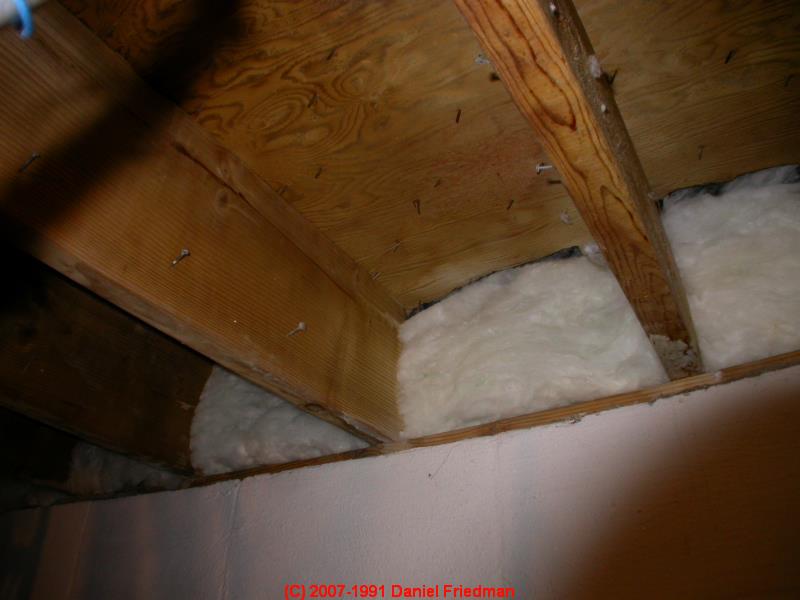
White Fiberglass Insulation: John Mansville currently produces white insulation (shown above) including their ComfortTherm® encapsulated batts.
As we note above on this page Johns-Manville also produced pink and also blue fiberglass insulation

Above: white fiberglass insulation from reader James, probably Johns-Manville white ComfortTherm® fiberglass insulation.
Really? Some "white" fibrous insulation is not fiberglass but is mineral wool insulation. Below is an example from reader Clifford, posted originally
at INSULATION IDENTIFICATION GUIDE. Mineral wool insulation is usually more gray in colour and its fibres are more coarse than fiberglass.

See details at MINERAL WOOL - ROCK WOOL INSULATION - home
Below, courtesy of an InspectApedia reader, this white insulation is likely to be fiberglass:
Question:
What insulation does this look like? It will melt under a torch (small pie almost vanished) but larger pieces seem more resistant. - 2021/07/05

Moderator reply:
Probably white fiberglass;
See inspectapedia.com/insulation/Fiberglass_Insulation_Identification.php FIBERGLASS INSULATION IDENTIFICATION & PROPERTIES
and in that article specifically look at WHITE FIBERGLASS INSULATION inspectapedia.com/insulation/Fiberglass_Insulation_Identification.php#White
Where we'll include your photo and question to invite further reader comment
it looks to light to be mineral wool - another possibility; but mineral wool is coarse-fibred and usually includes darker gray elements and often other particles.
And cotton, even treated with a flame retardant, ought not melt.
Compare your white insulation above with
MINERAL WOOL - ROCK WOOL INSULATION
and with
Yellow Fiberglass Insulation
 .
.
Yellow Fiberglass Insulation: (shown above) most fiberglass insulation manufacturers other than the ones listed below produce yellow fiberglass insulation. (China Fiberglass Insulation Manufacturers, for example.)
Below we illustrate Armstrong "natural fiber" "Insulating Wool", actually a yellow fiberglass insulation product labelled as actually manufactured by Owens Corning Fiberglass corporation.

[Click to enlarge any image]

...

and

Insulating Characteristics of Fiberglass Insulating Batts & Chopped Fiberglass Insulation
Fiberglass building insulation typically has an "R" value of 3.14 per inch. Shown above, a white fiberglass insulation batt.
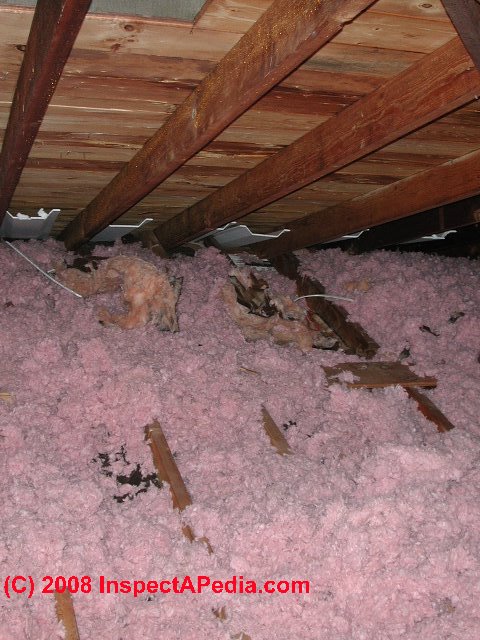
Shown below, pink chopped fiberglass insulation installed as a loose-fill or more-likely blown-in fiberglass insulation product.
[Click to enlarge any image]
Does Fiberglass Insulation Contain Asbestos?
No.
Fiberglass Insulation is a glass fiber product and does not normally contain asbestos, though it can become contaminated by rodents, insects, or mold, and especially if damaged, disturbed, and exposed to a living space, it can become a source of problem particles, as we discuss
Forensic Laboratory Photographs of Building Insulation
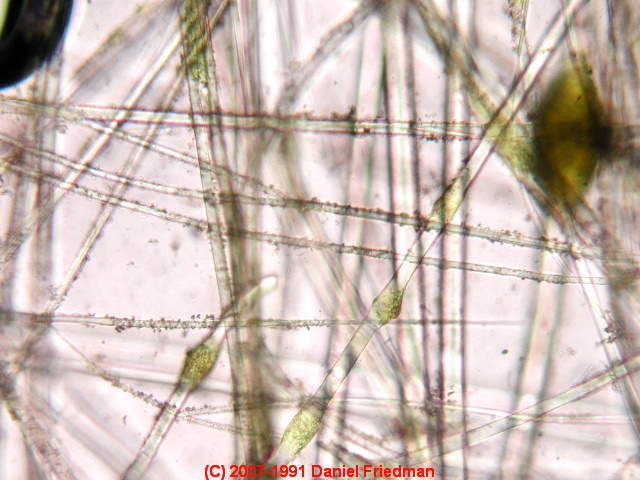
Laboratory photos of fiberglass can often assist in determining where fiberglass fragments and debris are originating.
The microscope lets us identify the color of resin binders which may enable us to match the colors in fiberglass dust to the colors and binders of samples taken from known fiberglass insulation reservoirs in the building.
Our own field investigations find that fiberglass particles are quite common in indoor air.
Unless the forensic particle laboratory is making a point of counting small fiberglass fragments in indoor air or dust samples, only a large-particle count may be provided and the presence and potential effects of fiberglass dust may be underestimated.
Furthermore, proper lab procedure and use of mountants with an appropriate refractive index to see glass fragments is critical as otherwise such particles may simply be invisible when viewed using conventional slide preparation methods.
At higher magnifications under the light microscope when we examine the ends of fiberglass fibres we will usually see a characteristic concoidal fracture, as I show below in two examples from our lab.

...

It can also be diagnostic, though incomplete, to note that under polarized light, fiberglass fibres will disappear completely while many other fibres including asbestos will remain.
Also see MINERAL WOOL by MICROSCOPE
A Guide to Health and Debris Characteristics of New versus Old Fiberglass Building Insulation
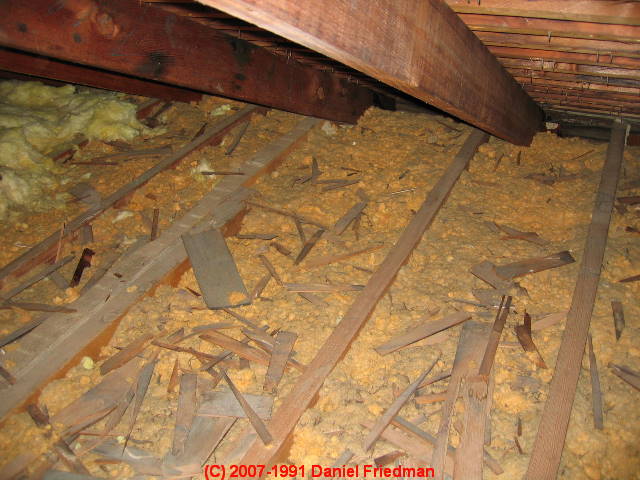
Some research argues that fiberglass particles are larger than and less dangerous than asbestos. However many small fiberglass particles may be in indoor air but may be below the threshold of some common measurement methods.
See FIBERGLASS HAZARDS in BUILDINGS
For more information about fiberglass as an indoor air quality concern see:
- AIR FILTERS, OPTIMUM INDOOR
- FIBERGHASS HAZARDS building insulation and HVAC duct work insulation hazards
- FIBERGLASS IN INDOOR AIR, HVAC DUCTS, AND BUILDING INSULATION
- FIBERGLASS PARTICLE IDENTIFICATION IN THE FIBERGLASS TEST LABORATORY
- GOODMAN GRAY FLEX DUCT DETERIORATION AND FAILURES
- MOLD IN FIBERGLASS INSULATION
- OWENS CORNING FLEX DUCT DETERIORATION AND FAILURES
- WORLD TRADE CENTER DUST PARTICLE IDENTIFICATION
- Fiberglass carcinogenicity update: "GLASS WOOL FIBERS EXPERT PANEL REPORT, Part B - Recommendation for Listing Status for Glass Wool Fibers and Scientific Justification for the Recommendation", The Report on Carcinogens (RoC) expert panel for glass wool fibers exposures met at the Sheraton Chapel Hill Hotel, Chapel Hill, North Carolina on June 9-10, 2009, to peer review the draft background document on glass wool fibers exposures and make a recommendation for listing status in the 12th Edition of the RoC.
The National Institute of Environmental Health Sciences is one of the National Institutes of Health within the U.S. Department of Health and Human Services. The National Toxicology Program is headquartered on the NIEHS campus in Research Triangle Park, NC.Following a discussion of the body of knowledge, the expert panel reviewed the RoC listing criteria and made its recommendation.
The expert panel recommended by a vote of 8 yes/0 no that glass wool fibers, with the exception of special fibers of concern (characterized physically below), should not be classified either as known to be a human carcinogen or reasonably anticipated to be a human carcinogen.The expert panel also recommended by a vote of 7 yes/0 no/1 abstention, based on sufficient evidence of carcinogenicity in well-conducted animal inhalation studies, that special-purpose glass fibers with the physical characteristics as follows longer, thinner, less soluble fibers (for 1 example, > 15 μm length with a kdis of < 100 ng/cm2/h) are reasonably anticipated to be a human carcinogen for the listing status in the RoC.
The major considerations discussed that led the panel to its recommendation include the observations of tumors in multiple species of animals (rats and hamsters).
Both inhalation and intraperitoneal routes of exposure produced tumors, although inhalation was considered more relevant for humans.
Don't confuse fiberglass insulation with asbestos insulation
Fiberglass insulation is not and should not be confused with asbestos nor with the well-studied health hazards associated with exposure to asbestos fibers or dust.
See ASBESTOS IDENTIFICATION IN BUILDINGS
Reader Comments, Questions & Answers About The Article Above
Below you will find questions and answers previously posted on this page at its page bottom reader comment box.
Reader Q&A - also see RECOMMENDED ARTICLES & FAQs
On 2023-02-12 by Valerie K
@InspectApedia Publisher, I did also reach out to Owens Corning and they responded to me that this particular product does not have asbestos in it.
On 2023-02-12 by InspectApedia Publisher - fiberglass insulation is not a product that contains asbestos
@Valerie K,
Fiberglass insulation is not an asbestos containing product.
If you found a credible resource that that has authoritative data that makes an exception to that, please let us know and give us those details so that we can study that information and report it here.
On 2023-02-12 by Valerie K
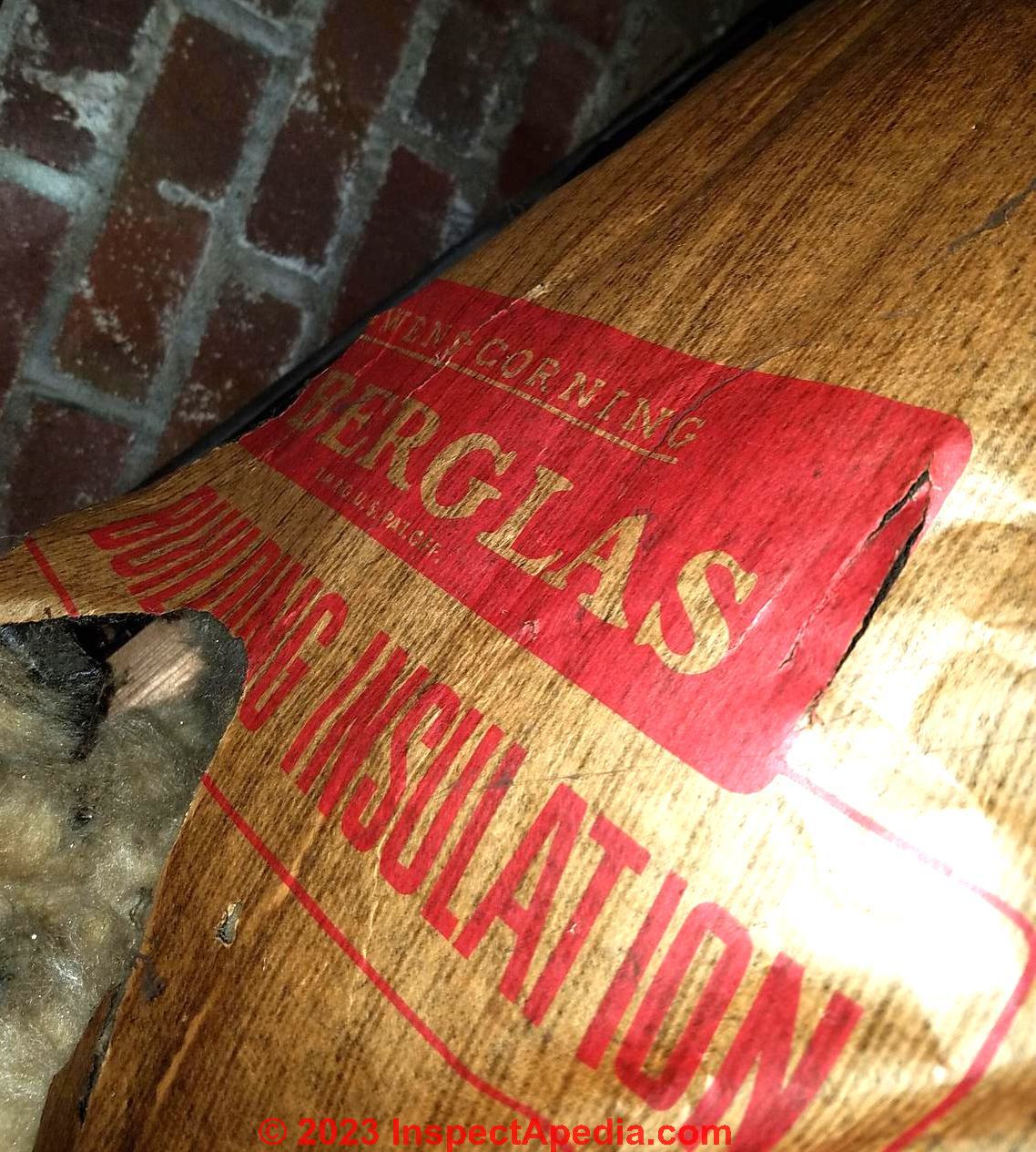
In our 1956 walk-in attic space there is also Owens Corning Fiberglass insulation that is falling apart in certain sections. I have read that certain fiberglass insulations do not contain asbestos but that some do. I have no idea as to the date of manufacture of this insulation. Do you think this insulation has the potential to have asbestos?
On 2022-06-23 by InspectApedia-911 (mod)
@zshepard95,
Your photo is a bit blurry but that certainly looks like fiberglass to me.
About your question whether fiberglass may be contaminated with other substances of course there's nothing that anyone can possibly answer from a photograph. You would need to examine the material in a forensic lab. But unless you have some basis for suspecting that it's probably not a particularly justified avenue of Investigation.
On 2022-06-23 by zshepard95
I had just posted 2 days ago with an original bad picture. I was able to get a sample of the insulation. Here is a much better and closer image. Any concern with asbestos being in this insulation or do you guys feel it is an asbestos safe material?
I know you had mentioned the possibility of a mineral wool, with this image, any different opinions or thoughts on the material or still feel like it is mineral wool? In sunshine it does seem to have the slightest glimmer/shine to it, almost seeming like you can see fibers but is hard to tell as I may be over analyzing or thinking it.
Any additional feedback would be great! I am planning to suck out and remove all the old insulation in the attic before blowing back in with new loose-fill, so just trying to get some suggestions. Any preference on what you would blow back in with? Fiberglass, cellulose, mineral wool?
Thanks in advance and have a great day!!!
-Zach

On 2022-06-21 by Anonymous - if it's mineral wool it's not asbestos
 @InspectApedia ,
Thanks for the reply! I just am trying to get an idea if it’s asbestos based or not as I need to add more and have considered removing the existing as an option to add in recessed lighting to the bedrooms below.
If it truly is mineral wool, I should be good and safe from asbestos then which would be awesome!
Here is one more image, you have to zoom in on it and past all the junk stored up there to see the insulation, but it’s the best images that I have at this time. Thanks for the reply(s)!
On 2022-06-21 by InspectApedia (mod)
@Zshepard95,
looks like mineral wool.
see our comparison photos of insulation at
MINERAL WOOL - ROCK WOOL INSULATION
You can upload as many photos as you wish at InspectApedia - use one comment for each photo - that is, you can only connect one photo to each comment but you can always post more comments and thus more photos.
On 2022-06-21 by Zshepard95
Hi, I was wondering what kind of insulation you all felt this was? It is from a 1974 built house and I believe it to be original.
I don’t have great pictures right now as this is in a house I am looking to buy and didn’t think to take up close images.
Since I can only upload 1 picture I will upload the one that shows it the closest, all though it’s not a great and clear picture unfortunately.
In most parts of the attic it is of a light gray color, but there are some areas where it is almost black due to I’m guessing a leak or moisture contacting it at some point?
I am thinking it might be fiberglass blown in, but am unsure and wanted your opinions. Any insight would be helpful!! Thanks!!

On 2022-06-18 by InspectApedia-911 (mod)
@Dannythom24,
That's white fiberglass.
On 2022-06-18 by Dannythom24
Hi, I've found what I think is loose fill fibreglass insulation in my wall cavity but I'm looking for a professional opinion.
It seems to be made up of shiny glass like strands that shine in the sun. I'm 90% sure it's fiberglass when compared with the images on here.
The house is from the 1950's but there's overspray of the stuff on yellow fibreglass batts in the attic that are think are more recent.
When burned with a cooks blowtorch, it quickly melts and forms tiny beads of what looks like glass.
Any advice would be greatly appreciated to put my mind at rest that it likely doesn't contain asbestos.
Many thanks in advance, Dan

On 2022-01-23 by Inspectapedia Com Moderator
@Joel K,
Quick and easy would be to Simply staple up a barrier of house rep. That will prevent dust or fiberglass from shedding to the area below and at the same time it won't trap moisture.
Frankly I'm surprised. Left undisturbed fiberglass Batts don't normally show significant amount of material.
On 2022-01-21 by Joel K
My son just bought a house. The basement ceiling appears to be (newly) insulated with white fiberglass. Very fine, and easily flakes off. It's uncovered. What the best way to protect against its harmful properties (when inhaled): have it removed, or cover it?
And if cover it, what material should be used (presumably allowing moisture to pass through the barrier, but keeping the fiberglass from flaking into the air & inhaled?
On 2021-12-30 by Inspectapedia Com Moderator - look for production number or date stamp to date insulation
@plantationpandemonium,
That's going to be a challenge but you might look carefully to see if there is a production Lot number or date stamp anywhere on the craft facing.
On 2021-12-29 by plantationpandemonium
Is there a key to date the insulation in my house? I have a feeling this has been replaced just prior to my purchase of this 1989 home, but seller did not disclose BIG problems with the plumbing in the bathroom above this ceiling.
If there is a key to decoding the date of this insulation I may be able to prove my case. Thank you.

On 2021-11-10 by Inspectapedia Com Moderator
@KC,
Some insulation uses a craft paper facing that is at here to the fiberglass using a bituminous or tar a compound that of course would be black and might be sprayed hither and Yon.
But frankly from text alone we can't say just what is on your insulation.
Perhaps you could try the add image button to post a sharp photo.
On 2021-11-09 by KC
My contractor is putting in our insulation this week. I'm noticing many sections with big patches of black that look like ink splatters or mildew. I was worried this was mold as we had quite a bit of rain get into the construction site during a storm a couple weeks ago. He says this is the black showing through the backside of the paper.
I would be relieved if that's the case. Any thoughts?
On 2021-09-27 by inspectapedia.com.moderator - R19 draft paper backed fiberglass insulation
@Frankie,
At the extreme right edge of your photo I see what looks like fiberglass insulation; that would be consistent with the R-19 stamping and the kraft paper backing.
On 2021-09-27 by Frankie
Does this contain asbestos it was put in, in 1979 and all it says is premium and insulation on it we’re doing work here and I can’t find nothing

Question: can you identify this pale yellow fibrous insulation stuck to the underside of metal roofing

[Click to enlarge any image]
We recently demolished a rotten porch roof. Before we started, we had a professional abatement company remove a black roofing sealant/mastic which contained 15% asbestos.

(The sealant was discovered to be an ACM when we had a professional tester go through the house and test materials he deemed suspicious in areas that needed renovation.)
Photos: light or pale yellow fibrous insulation bonded to the underside of corrugated metal roofing, courtesy of anonymous reader.
We thought all suspicious materials were tested, taken care of, and gone.
Sadly once we exposed the underside of the metal roofing we discovered what looks like rotten cardboard or paper fibers stuck to its underside. The fibrous material is more or less stuck to the metal roofing, and was not stuck to the boards the roofing was installed on.
The metal roofing is now off the house, but it is shedding all over the waste stacked on it. We were casually cautious when removing the roof (P100 half-masks were worn for part of the demolition in case of normal construction dust, mildew, etc.) but if the material is ACM there were nowhere near enough precautions taken.
We were not expecting to come across any more ACMs, as the professional tester didn't think the metal roof was a suspicious material.
I really, really hope it is just cardboard or paper. I figured for some peace of mind I would ask if Inspectapedia editors think this material is suspicious based on looks alone. (pictures attached) - Anonymous by private email 2020/06/15
Moderator reply: most-likely identification of light fibrous insulation bonded to metal roofing
 It would be helpful to know
- The country and city where the building with this roof is located
- The age of the building
- And of course the results of your lab test of the insulating material
With the apology but of course of lab tests would be necessary to state with certainty what that material is, it looks to me like, in order of probability;
- fiberglass bonded to the underside of corrugated metal roofing
- rock wool or mineral fiber bonded to the underside of the metal roofing
- wood fiber insulation (a cellulose product) or layer bonded to the metal roofing using asphalt (those black areas in some of your photos) or another adhesive.
If there is black asphaltic adhesive or mastic on the surface of the roof the asphalt itself, that could contain asbestos but it's not normally friable. Of course the layer in your photo can be something else, such as a layer of paper or other material previously bonded to the underside of the corrugated metal roofing as part of its insulation.
Also see our comparison photos of insulation at
MINERAL WOOL - ROCK WOOL INSULATION
and
FIBERBOARD SHEATHING IDENTIFICATION
Reader follow-up: no asbestos detected
Thank you for taking a look and providing some guesses, I really appreciate it. We did end up sending a sample to a lab. I'll let you know what the results are when they get back.
... I can't find the paperwork at the moment but it was a cardboard/cellulose layer and did not contain any asbestos. - 2021/07/17
...
...
Continue reading at FIBERGLASS HAZARDS or select a topic from the closely-related articles below, or see the complete ARTICLE INDEX.
Or see FIBERGLASS INSULATION IDENTIFICATION FAQs - questions & answers posted originally at the end of this article.
Or see these
Recommended Articles
- FIBERGLASS DUCT, RIGID CONSTRUCTION
- FIBERGLASS HAZARDS
- FIBERGLASS HVAC DUCTS
- FIBERGLASS INSULATION MOLD - mold contamination in fiberglass insulation can be impossible to see with the naked eye, but can be significant
- FIBERGLASS INSULATION R-VALUES
- FIBERGLASS PARTICLE CONTAMINATION TEST
- FORMALDEHYDE GAS SOURCES in BUILDINGS
- FORMALDEHYDE GAS SOURCES & HAZARDS RESEARCH
- HVAC DUCT WORK DEFECTS possible air quality and health concerns associated with exposure to fiberglass dust
- INSULATION IDENTIFICATION GUIDE for all types of building insulation materials
- MINERAL WOOL - ROCK WOOL INSULATION - mineral wool, rock wool, stone wool, slag wool identification
Suggested citation for this web page
FIBERGLASS INSULATION IDENTIFICATION & PROPERTIES at InspectApedia.com - online encyclopedia of building & environmental inspection, testing, diagnosis, repair, & problem prevention advice.
Or see this
INDEX to RELATED ARTICLES: ARTICLE INDEX to BUILDING INSULATION
Or use the SEARCH BOX found below to Ask a Question or Search InspectApedia
Ask a Question or Search InspectApedia
Try the search box just below, or if you prefer, post a question or comment in the Comments box below and we will respond promptly.
Search the InspectApedia website
Note: appearance of your Comment below may be delayed: if your comment contains an image, photograph, web link, or text that looks to the software as if it might be a web link, your posting will appear after it has been approved by a moderator. Apologies for the delay.
Only one image can be added per comment but you can post as many comments, and therefore images, as you like.
You will not receive a notification when a response to your question has been posted.
Please bookmark this page to make it easy for you to check back for our response.
Our Comment Box is provided by Countable Web Productions countable.ca
Citations & References
In addition to any citations in the article above, a full list is available on request.
- 3/07: thanks to Gary Randolph, Ounce of Prevention Home Inspection, LLC Buffalo, NY, for attentive reading and editing suggestions. Mr. Randolph can be reached in Buffalo, NY, at (716) 636-3865 or email: gary@ouncehome.com
- 06/07: thanks for photographs of transite asbestos heating ducts, courtesy of Thomas Hauswirth, Managing Member of Beacon Fine Home Inspections, LLC and (in 2007) Vice President, Connecticut Association of Home Inspectors Ph. 860-526-3355 Fax 860-526-2942 beaconinspections@sbcglobal.net
- Fiberglass carcinogenicity: Glass Wool Fibers Expert Panel Report, Part B - Recommendation for Listing Status for Glass Wool Fibers and Scientific Justification for the Recommendation", The Report on Carcinogens (RoC) expert panel for glass wool fibers exposures met at the Sheraton Chapel Hill Hotel, Chapel Hill, North Carolina on June 9-10, 2009, to peer review the draft background document on glass wool fibers exposures and make a recommendation for listing status in the 12th Edition of the RoC. The National Institute of Environmental Health Sciences is one of the National Institutes of Health within the U.S. Department of Health and Human Services. The National Toxicology Program is headquartered on the NIEHS campus in Research Triangle Park, NC.
- Our recommended books about building & mechanical systems design, inspection, problem diagnosis, and repair, and about indoor environment and IAQ testing, diagnosis, and cleanup are at the InspectAPedia Bookstore. Also see our Book Reviews - InspectAPedia.
- In addition to citations & references found in this article, see the research citations given at the end of the related articles found at our suggested
CONTINUE READING or RECOMMENDED ARTICLES.
- Carson, Dunlop & Associates Ltd., 120 Carlton Street Suite 407, Toronto ON M5A 4K2. Tel: (416) 964-9415 1-800-268-7070 Email: info@carsondunlop.com. Alan Carson is a past president of ASHI, the American Society of Home Inspectors.
Thanks to Alan Carson and Bob Dunlop, for permission for InspectAPedia to use text excerpts from The HOME REFERENCE BOOK - the Encyclopedia of Homes and to use illustrations from The ILLUSTRATED HOME .
Carson Dunlop Associates provides extensive home inspection education and report writing material. In gratitude we provide links to tsome Carson Dunlop Associates products and services.
 | HOME | ABOUT | ASK a QUESTION | CONTACT | CONTENT USE POLICY | DESCRIPTION | POLICIES | PRIVACY | |
| © 2024 - 1985 Publisher InspectApedia.com - Daniel Friedman | |||||||||