
InspectAPedia® FREE Encyclopedia of Building & Environmental Construction, Diagnosis, Maintenance & Repair |
Question? Just ask us! InspectAPedia
|
 Loose Wobbly Toilet Repair Guide
- POST a QUESTION or COMMENT about how to diagnose & fix a loose toilet
How to fix a loose toilet:
Here we explain how to diagnose and repair a loose, wobbly toilet.
A toilet that is loose is unsanitary and possibly unsafe. But worse, if it has rotted the bathroom floor or if the waste pipe flange below the toilet is damaged, repair can be more difficult (and expensive) unless you know these tricks of the trade.
InspectAPedia tolerates no conflicts of interest. We have no relationship with advertisers, products, or services discussed at this website.
How to Repair a Loose, Leaky Toilet Mount
How to Securely Bolt the Toilet to the Floor or Waste Flange
This article series TOILET REPAIR GUIDE discusses the cause, diagnosis, and repair of toilet problems (water closet problems) such as a toilet that does not flush well, clogged toilets, slow-filling toilets, running toilets, loose wobbly toilets, and odors at leaky toilets. Here we explain how to diagnose and repair problems with toilets, leaks, flushes, odors, noises, running and wasted water.
[Click to enlarge any image]
Our page top photo shows ugly staining in a toilet bowl - strong evidence that this toilet has been running, wasting water, possibly flooding the septic system, and sometimes giving bad flush performance as well. Details are below.
Citation of this article by reference to this website and brief quotation for the sole purpose of review are permitted. Use of this information at other websites, in books or pamphlets for sale is reserved to the author.
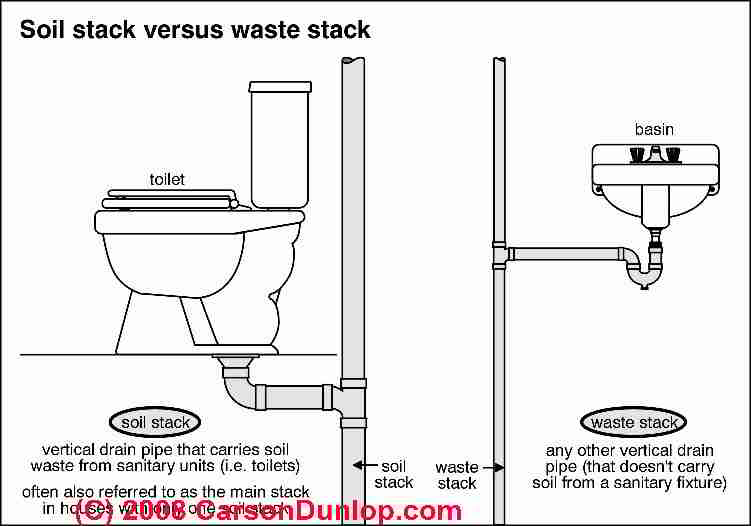
Before launching into our series of articles on diagnosing and repairing toilet problems such as clogged toilets, toilets that don't flush properly, running or leaky or noisy toilets, toilet odors, and loose toilets, take a look at the simple connection between a typical reservoir-tank toilet and the soil stack (waste piping) in the Carson Dunlop Associates sketch (above left), and review our description of basic types of toilets
at TOILET TYPES, CONTROLS, PARTS.
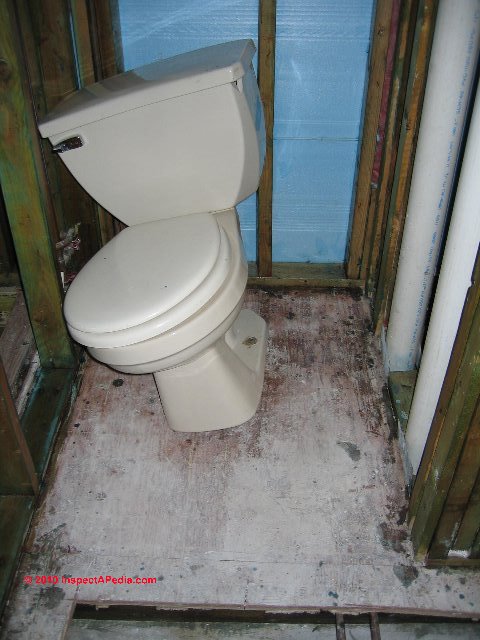
Loose toilets are more than a leak, source of sewer odors , and sewer gas hazard. A toilet that is poorly secured to the floor can actually be dangerous if it tips over, dumping its user onto the floor.
See LEAKY TOILET SEALS, ODORS from loose leaky toilet seals.
Should a toilet tip it is likely to break its water supply pipe, leading to building leaks and water damage, and its user could be injured by a fall or by broken toilet parts. If you do break a toilet supply riser pipe, turn off the water to the toilet immediately.
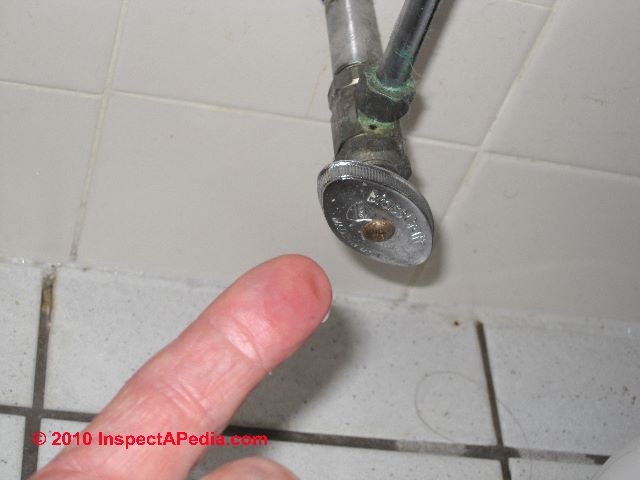
If the TOILET SUPPLY RISER SHUTOFF VALVE [photo] is stuck or not working, you'll have to turn off water at the main water shutoff for the building or at a shutoff supplying cold water to the bathroom.
Loose toilets are especially dangerous to people who have limited mobility and who have difficulty transferring between a wheelchair or walker and the toilet.
Our photo (left) shows a toilet tipped over and leaning on a nearby wall. You might notice that this is a bathroom undergoing gut renovation following a building flood - was it from a broken toilet water supply riser pipe?
For fire safety, that blue foam insulation on the foundation wall would not normally be left exposed in the building.
Can't I Just Tighten the Toilet Mounting Bolts?
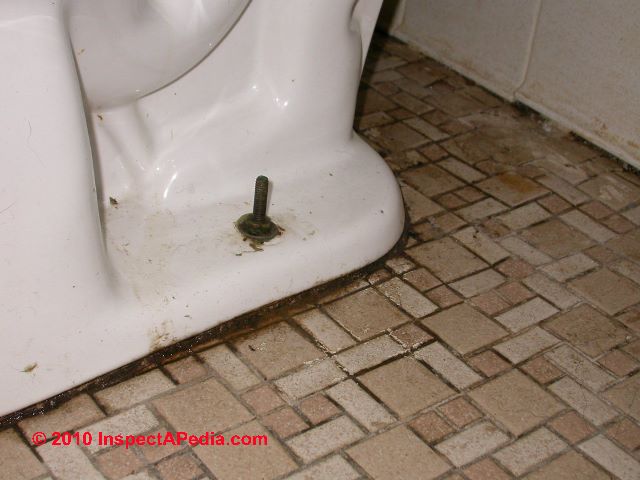 It is tempting to simply try tightening the toilet mounting bolts that secure the toilet either to the floor or to a flange connected to the top of the sewer pipe. And indeed if those components are in good condition, this repair may seem to fix the loose toilet problem.
But as we pointed out above, if a toilet has been loose and wobbly, it has usually compressed and spread its wax ring seal between the toilet base and the top of the waste pipe.
The result is a leak (photo at left), sometimes hidden, that sends unsanitary wastewater into the floor structure or into the ceiling below the toilet each time the toilet is flushed.
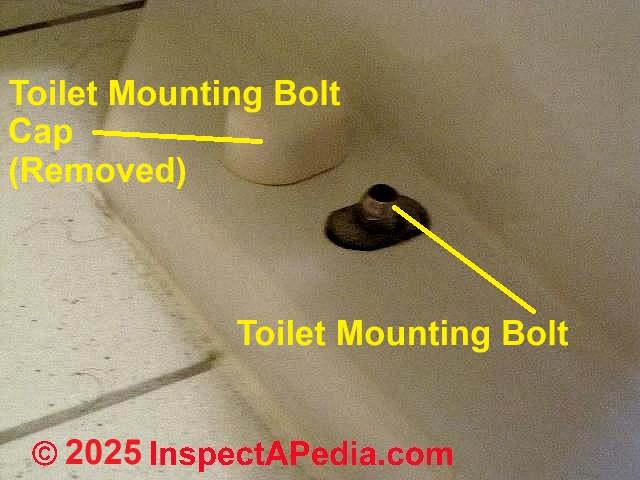
So a better loose toilet repair is to turn off water to the toilet, empty water from its tank and bowl, remove the toilet from the floor, remove and replace the old wax ring, and then BOLT THE TOILET [photo]securely to the TOILET MOUNTING FLANGE [photo] or floor.
Some toilet models use four bolts, two are connected to the waste pipe flange and two more lag bolts secure the toilet to the floor or subfloor.
What if the Toilet Mounting Flange is Broken or the Floor Below the Toilet is Damaged and the Bolts Won't Tighten?
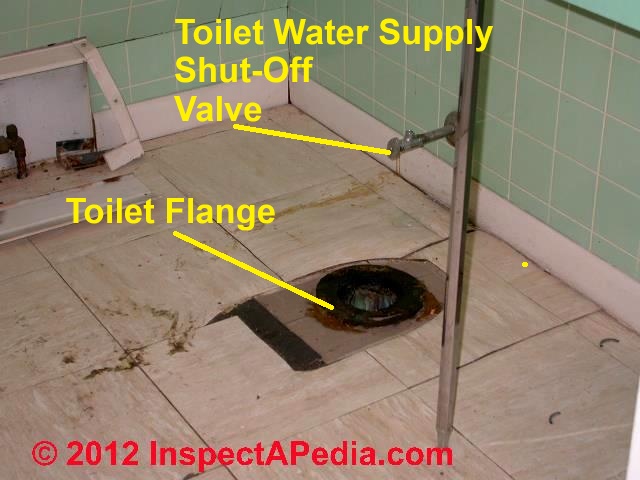 There are several fixes for this problem. If the floor around and below a toilet is badly damaged, the best repair is to remove the toilet, remove and replace the damaged subfloor and finish floor, and then reinstall the toilet, mounting it securely with its bolts and perhaps also with a thin bead of caulk around the toilet base for extra security.
Toilets that are intended to be secured by bolts connecting to a flange at the top of the waste pipe (photo at left) use a flat-headed T-bolt. The "T" is inserted into a slot in the toilet mounting flange, moved in a slot around the flange to the proper location, and the toilet is set over the protruding bolts and bolted down (with a new wax seal).
If the toilet mounting flange at the top of the waste pipe is broken or worn so that it won't hold the toilet mounting bolts securely it may be possible to replace the "T" bolts with a toilet bolt ending in a lag screw, bolted into subflooring close to the flange.
If the subfloor does not provide enough purchase for a lag-screw toilet mounting bolt, or if the subfloor is soft, but yet the finish flooring outside the toilet footprint is in good condition, you may not want to tear out the whole bathroom floor to fix this condition.
If there is access to the floor around the toilet from below, perhaps by removing drywall from the ceiling of the room below the toilet, it is usually possible to cut two 3/4" thick solid core plywood braces that surround the waste pipe. Screw these flat plates to the underside of the subfloor below the toilet, and use longer lag-screws to reach through the old soft subfloor or flange and into the new solid repair material.
Alternatively, a four-bolt toilet may afford two more mounting positions to secure the toilet to the floor.
 We use a thin bead of caulk applied to a clean under-side of the edges of the toilet base, combined with careful cleaning of the floor around the toilet, to provide additional adhesion of the toilet to the finish floor when it is reinstalled.
Use just enough caulk to glue down the toilet, but not such a wide bead that later removal of the toilet will be difficult. To remove a glued toilet later, we use a utility knife to simply cut through this caulk bead.
Here is our list of toilet trouble diagnosis and repair articles. You will see that some toilet problems are fixed easily and right at the toilet by a simple adjustment, while others may not be the toilet's fault at all, and may need more thoughtful diagnosis and repair.
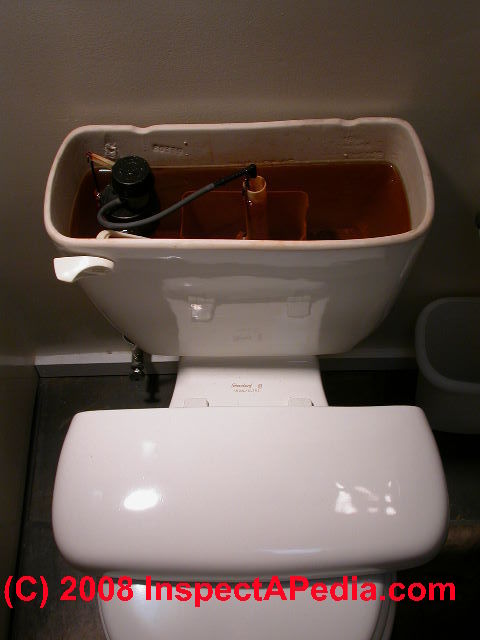
Taking off the toilet tank top: Some of these simple toilet diagnosis steps require that you look into the toilet flush tank on the back of the toilet.
Just lift the top off of the toilet tank and set it carefully aside on the floor where you won't break it or trip over it.
If you leave the tank top on the toilet seat (as we did for this photo) you're asking for trouble, and also, it's a bit in the way.
Our sketch below shows the parts you'll see inside the toilet tank. You may want to refer back to this drawing while reading the details of each class if individual toilet problems listed above and how they are detected, diagnosed, and repaired.
4 Floor & Toilet Flange Repair Options Depend on Degree of Floor Damage
 Question: how do I repair a loose toilet leaky around the base if the floor around it is rotted?
2017/06/03 Anthony V. said:
After I flush the toilet my tile floor gets squishy and water comes through the grout. Please help could it be a broken flange or a bad wax ring
This Q&A were posted originally at TOILETS REPAIR FAQs
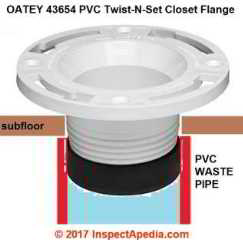
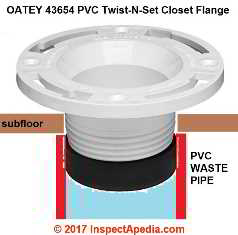
Show here: the Oatey 43654 PVC Twist-N-Set Closet Flange: a device that lets you re-set a toilet where its original mounting flange has broken. This toilet mounting flange is designed to replace a cast-iron closet flange. Its gasket will expand to fit inside all three types of waste pipe service-weight, heavy-weight, and hubless waste pipes.
Reply:
Anthony,
At LEAKY TOILET SEALS, ODORS we explain that both wastewater and odors around a toilet might be due to a bad wax ring seal. If you catch this problem in time - that is, before the leaks have damaged the subfloor below, the repair is pretty easy - just replace the wax seal; but it's important to inspect the condition of the floor to permit selection of the proper repair method.
Watch out: never try to repair a loose leaky toilet by simply tightening its mounting bolts. Even if the toilet stops wobbling, the wax ring seal has been compromised and leaks into the floor are likely to continue.
Here are four cases of extent of repair needed around a loose, leaky toilet base.
1. Loose Toilet, Floor Intact: replace wax ring seal
If the toilet is simply loose or has a compressed wax ring, it gets removed, a new ring installed, and it's re-bolted to the floor securely.
2. Loose Toilet, Floor Intact (or not), Broken Flange: replace toilet flange & wax ring seal
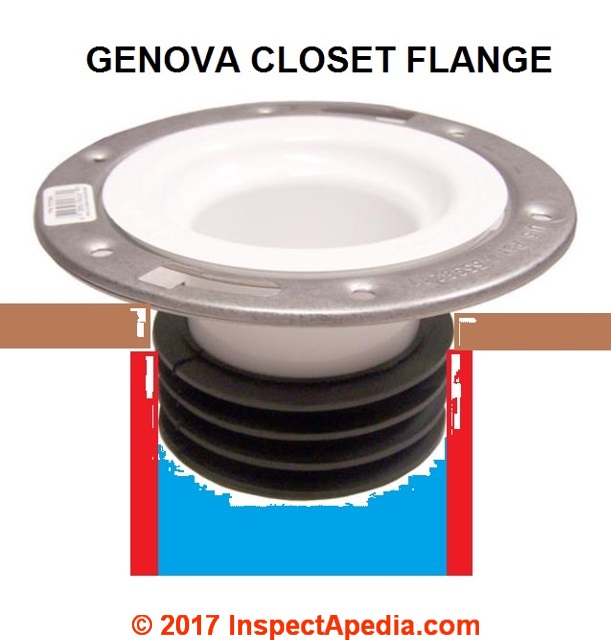 But if the flange is broken you may need to break away and remove the old flange and then install a new replacement flange that secures to the subfloor and that directs wastewater into the remaining waste pipe before replacing the toilet's wax ring and re-installing the toilet.
In this article we show two replacement toilet mounting flange kits, one from Oatey and another from Genova. Both of these toilet flange repair devics are designed to mount by being pushed into the existing waste pipe opening and screwed to sound subfloor.
You will need to mount the closet flange (toilet flange) so that
- The smaller round screw openings are over sound, solid subflooring - to accept screws that secure the flange to the floor.
- The slots into which the toilet mounting bolts will insert are located approximately at the left and right sides of the end position of the toilet base.
You'll notice that the Oatey offers a thick plastic flange and two pairs of toilet bolt slots; the Genova closet flange uses a thinner metallic outer ring. Either of these should fit successfully under nearly all floor-mount toilets. Culwell also offers 4" and 3" protecting toilet flanges suitable for this repair.
Other plumbing suppliers such as Jones Stephens offer traditional brass or cast-bronze replacement closet flanges like the model shown below. These flanges are also screwed to the subfloor but do not include a built-in funnel to direct wastewater into the waste pipe.
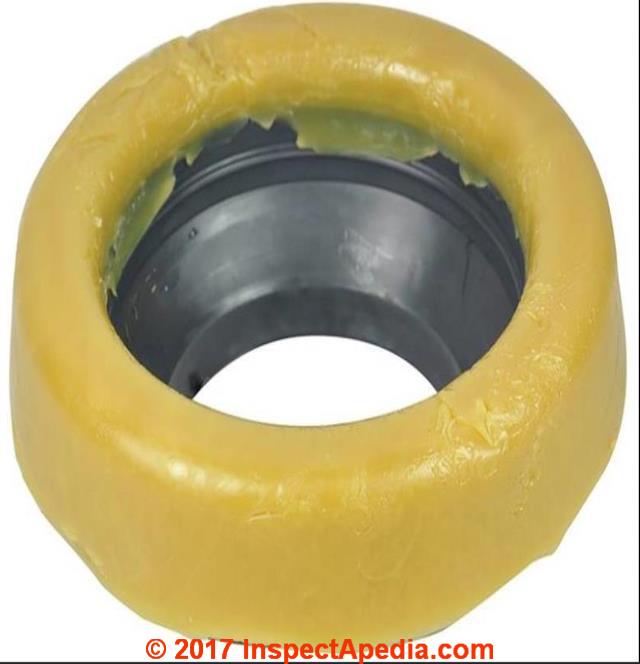
With a traditional cast brass or steel replacement toilet mounting flange you'll want to use a wax-ring seal that includes a sleeve: an intengral plastic or PVC funnel-shaped element that assures that all wastewater enters the waste pipe - our second illustration below.

The Oatey flange offers four openings for screws to secure the flange to the subfloor while the Genova offers six screw positions. So your choice between these two may depend on how much good subfloor you have to accept mounting screws and on where that good subfloor is in relation to the end position of the sides of the toilet. Each product has its own advantages: more screw positions or more toilet bolt slots.
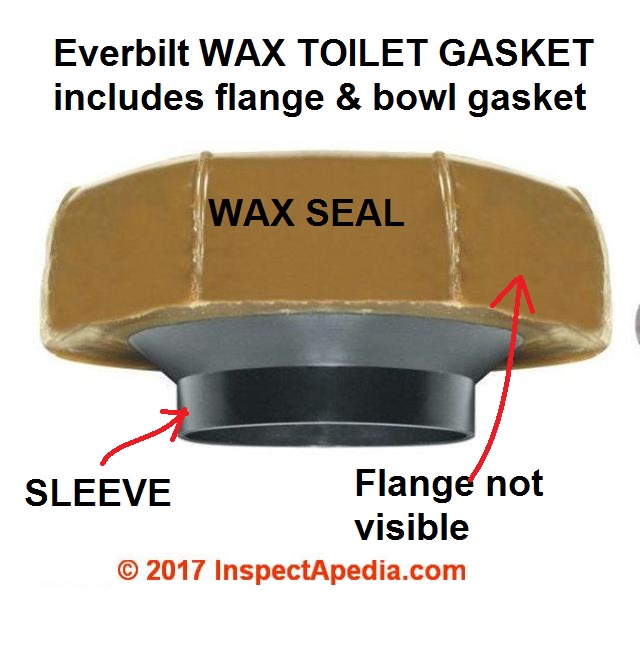
Above is a combination toilet mount, wax ring seal, and sleeve produced by Everbilt. The flange is not shown. More about toilet wax ring seals is at LEAKY TOILET SEALS, ODORS
Watch out: both the wax-ring with sleeve and the EverBilt wax-ring, sleeve, flange package shown above are examples of an "extra-thick" wax ring option. You need the extra-thick wax ring on some toilets whose ceramic bottom mating protrusion is recessed in the toilet base.
But you do not need the extra-thick wax ring seal on many toilets whose bottom protrusion is at or close to the bottom edge of the toilet base. Using a wax ring seal that is thicker than needed can, during toilet mounting, push blobs of wax right into the waste pipe opening, causing a partial blockage of the waste line and problems of poor toilet flush performance - a subtle problem that might be hard to diagnose if you miss this detail.

Above: the toilet has been removed and most of the wax spud ring has been scraped away to prepare for the installation of a new spud ring and then bolting down the new toilet. I push the wax ring onto the toilet base itself and then set the toilet in place. That avoids pushing wax into the flush-opening into the toilet base.
The most troublesome case arises if the toilet has been leaking for a long time: the subfloor itself may be rotted - which is possible in the case you describe since you say the tile grout is damaged.
If that's the case the repair is a bit more work.
The steps involve one of the three remaining approaches discussed here.
3. Loose Toilet on Significantly-Damaged Floor & Subfloor: repair from above
- Remove the toilet
- Cut away floor and subfloor around the toilet waste pipe, removing flooring to expose the floor joists below, extending the size of the cutout to the *center* of floor joists on either side of the waste pipe so that we have a secure edge to screw down replacement subflooring before then continuing with the other repairs I just described above.
- Install new subfloor to match thickness of adjoining original subfloor.
- Install new floor covering as needed
- Replace the toilet using new spud ring gasket (wax ring seal) and toilet mounting flange as needed.
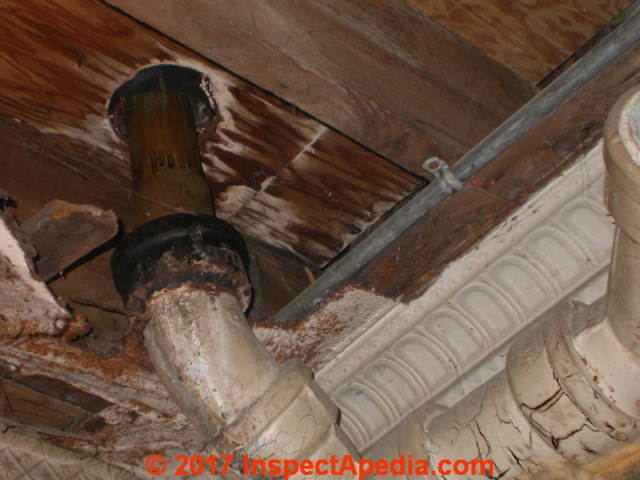
4. Loose Toilet on Small Area of Damaged Subfloor: repair from below
On occasion I've found that the subfloor was rotted but only for a couple of inches right around the toilet flange. A perfectly functional repair can be made in this case without ripping out the existing floor and subfloor - particularly appealing if the existing floor tile is still sound. For this situation I take the following steps: [Click to enlarge any image]
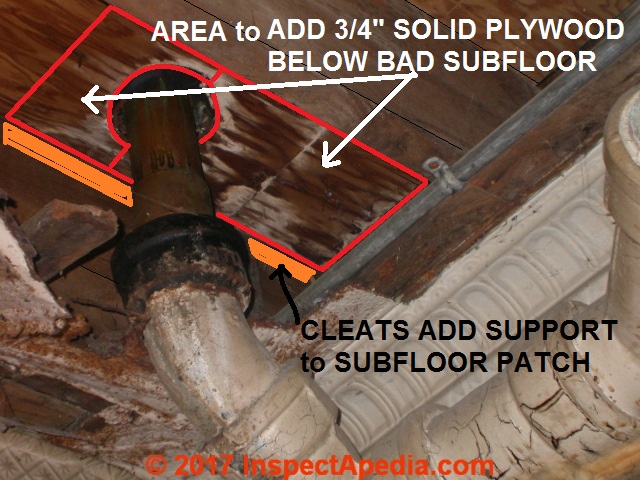
- remove the ceiling below the toilet in an area large enough to work around the toilet base - typically at least 24" square. I cut away ceiling to the center of nearby floor joists to make replacement of ceiling drywall easy.
- cut a square or really a rectangle that I will then saw in half to form a repair patch to be placed around the waste pipe from below.
- You will end with two pieces of 3/4" solid plywood underlayment that fit between the floor joists between which the toilet waste pipe runs. Using a jig saw we can cut half-round cutouts to fit the repair patch of subfloor around and quite close to the waste pipe.
- The repair patch of subfloor has to be large enough that it can be screwed to sound subflooring that remains around the toilet waste pipe.
- The repair patch, to be applied from below, is screwed "up" into sound subfloor around the toilet using stainless steel or galvanized construction screws short enough that they won't push up the finished-flooring above.
- I add cleats along the floor joist sides just below the patch for added support to my patch
- With the from-below subfloor reinforcement we are in essence providing a sound subfloor into which the toilet mounting lag bolts can extend from above - so you will need longer toilet mounting bolts that can pass past the soft or rot-area of the original subfloor and into and even a 1/4" or more through the 3/4" thick from -below solid plywood patch.
...
Continue reading at TOILET INSTALLATION PROCEDURE or select a topic from the closely-related articles below, or see the complete ARTICLE INDEX.
Or see these
Recommended Articles
- BLOCKED DRAIN REPAIR
- CLOGGED DRAIN DIAGNOSIS
- PLUMBING LEAK DETECTION METHODS
- PLUMBING LEAK DETECTION & SHUTOFF DEVICES
- SEWER GAS ODORS
- TOILETS, INSPECT, INSTALL, REPAIR - home
- FLUSHOMETER VALVES for TOILETS URINALS
- LEAKY TOILET SEALS, ODORS
- LOOSE TOILET REPAIRS
- LOW WATER USAGE / POWER FLUSH TOILETS
- TOILET DESIGN CHOICES
- TOILET CLEARANCE DISTANCES
- TOILET CLOG REPAIR, UN-BLOCK
- TOILETS, DON'T FLUSH LIST - home
- TOILET FLUSH OPERATION
- TOILET FLUSH HANDLE LEVER REPLACEMENT
- TOILET INSTALLATION PROCEDURE
- TOILETS, DON'T FLUSH LIST
- TOILET FLUSHES POORLY
- TOILET LEAK CATASTROPHES
- TOILET OVERFLOW EMERGENCY
- TOILET PLUGS, SEWER BACKUP
- TOILET REPLACEMENT PROCEDURE
- TOILET RUNS CONTINUOUSLY
- TOILET SEAT / SEAT-LID REPLACEMENT & BOLT SPREADS
- TOILET TANK / CISTERN LID REPLACEMENTS
- TOILET TANK SWEATS
- TOILET WON'T FLUSH
- WATER DAMAGED BATHROOM FLOOR REPAIR
- TOILET TYPES, CONTROLS, PARTS - home
Suggested citation for this web page
LOOSE TOILET REPAIRS at InspectApedia.com - online encyclopedia of building & environmental inspection, testing, diagnosis, repair, & problem prevention advice.
Or see this
INDEX to RELATED ARTICLES: ARTICLE INDEX to TOILET INFORMATION
Or use the SEARCH BOX found below to Ask a Question or Search InspectApedia
Ask a Question or Search InspectApedia
Try the search box just below, or if you prefer, post a question or comment in the Comments box below and we will respond promptly.
Search the InspectApedia website
Note: appearance of your Comment below may be delayed: if your comment contains an image, photograph, web link, or text that looks to the software as if it might be a web link, your posting will appear after it has been approved by a moderator. Apologies for the delay.
Only one image can be added per comment but you can post as many comments, and therefore images, as you like.
You will not receive a notification when a response to your question has been posted.
Please bookmark this page to make it easy for you to check back for our response.
Our Comment Box is provided by Countable Web Productions countable.ca
Citations & References
In addition to any citations in the article above, a full list is available on request.
- In addition to citations & references found in this article, see the research citations given at the end of the related articles found at our suggested
CONTINUE READING or RECOMMENDED ARTICLES.
- Carson, Dunlop & Associates Ltd., 120 Carlton Street Suite 407, Toronto ON M5A 4K2. Tel: (416) 964-9415 1-800-268-7070 Email: info@carsondunlop.com. Alan Carson is a past president of ASHI, the American Society of Home Inspectors.
Thanks to Alan Carson and Bob Dunlop, for permission for InspectAPedia to use text excerpts from The HOME REFERENCE BOOK - the Encyclopedia of Homes and to use illustrations from The ILLUSTRATED HOME .
Carson Dunlop Associates provides extensive home inspection education and report writing material. In gratitude we provide links to tsome Carson Dunlop Associates products and services.
 | HOME | ABOUT | ASK a QUESTION | CONTACT | CONTENT USE POLICY | DESCRIPTION | POLICIES | PRIVACY | |
| © 2024 - 1985 Publisher InspectApedia.com - Daniel Friedman | |||||||||