
InspectAPedia® FREE Encyclopedia of Building & Environmental Construction, Diagnosis, Maintenance & Repair |
Question? Just ask us! InspectAPedia
|
Roof Safety & Roof Fragility - When to Stay Off of a Roof
Roof damage from foot traffic; how to access & work on fragile roof surfaces
- POST a QUESTION or COMMENT about fragile roof surfaces & when to stay off of a roof
Roof damage from foot traffic; how to access & work on fragile roof surfaces
Walking on a roof can damage it, or worse, you may fall off and be injured or killed:
Here we describe roof safety and roof damage issues when inspecting, repairing, or otherwise walking on other roof materials such as asphalt, slate, wood roofs.
This article tells readers how to identify fragile or unsafe roof surfaces, when to stay off of them, how to repair them. By listing common causes of asphalt roof shingle failures and how to recognize them, building owners and roofing contractors may also be able to reduce the occurrence of asphalt roof shingle storage, handling, and installation errors that affect roof life
InspectAPedia tolerates no conflicts of interest. We have no relationship with advertisers, products, or services discussed at this website.
Roof shingle fragility and damage risks
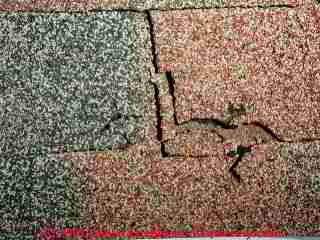
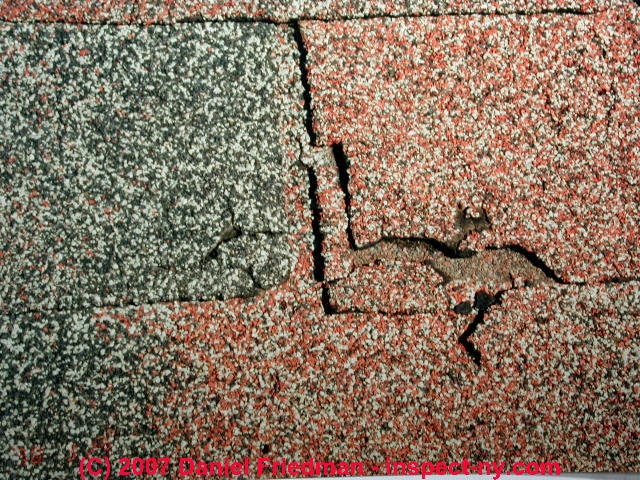
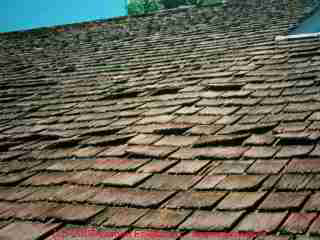
Foot Traffic Damage to Roofs: Walking on some roofs causes damage as the photograph at the top of this page shows. That roof damage occurred when an inspector stepped on the fragile corner of an asphalt roof shingle. This pattern of breakage traced his footprints right up the roof to the chimney and back down the other side. These are the very "footprints of damage" which we have reported in some other articles on fragile, old, worn roof shingles.
[Click to enlarge any image]
This "failed" roof was not leaking until the fellow who was asked to inspect it walked across this fragile surface. From a ladder at the roof edge one could clearly see the virtual footprints of broken shingle edges where the "inspector" had walked. In this case the "inspector" was a roofing contractor who came back down to the ground and told the home owner that she needed a new roof right away.
She was upset because her ASHI-certified home inspector had said that the thought she could use the roof for another two to five years. Our opinion was that she did need a new roof very soon but that had not been the case until "bigfoot" had stomped all over it.
Worn out fragile roofs: The roof in the photograph shown here is one which is worn out, probably already leaking at least into the layers of roofing material, and it is so fragile that it should not be walked-on. I would stay off of worn, brittle, or cupped-shingle roofs, particularly in cold weather (shingles are more likely to break).If we absolutely have to walk on such a roof, we would tiptoe carefully, avoiding stepping on the raised or cupped shingle sections, or if doing repairs, we would prop a ladder up off of the roof surface and work from that scaffold as is sometimes done with slate or other fragile roof surface repairs.
Guidelines for Direct Walking-On Inspection of Various Roof Surfaces & Roof Conditions
Some home inspectors reduce their workload and speed the the job by asserting that they do not walk on any roof surface under any condition, citing reasons of safety or fear of damaging the roof surface. But expert inspectors generally agree that there are many roof areas, conditions, and important roof defects, even total roof failure (such as thermal splitting), that are simply not visible except direct access to the roof edge (by ladder or other means) or by walking on the roof.
Watch out: Do not try to walk on any roof which is: too high, steep, wet, slippery, fragile, or covered with loose mineral granules, or other loose roof surface debris - such roofs are not suited for safe access. Do not walk on any roof which is installed over an incomplete, damaged, or rotted surface, as you might, like my helper on one roofing job, fall right through the roof surface!
Advice About Walking on & Inspecting Asphalt Shingle Roofs
We do not walk directly on any asphalt shingle roof that has one or more of these hazards:
- Roof is uncomfortable or feels unsafe or too fragile for any reason, in the opinion of the inspector
- Steep pitch roofs - judgment of the inspector
- High roofs - judgment of the inspector
- Fragile roofs - judgment of the inspector
- Wet, icy, snowy roofs - judgment of the inspector
- Roofs with curled, cracked, or broken shingles - judgment of the inspector
- Roofs for which there is not ready, safe access - judgment of the inspector
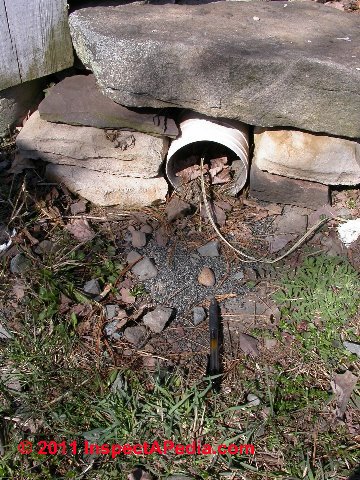
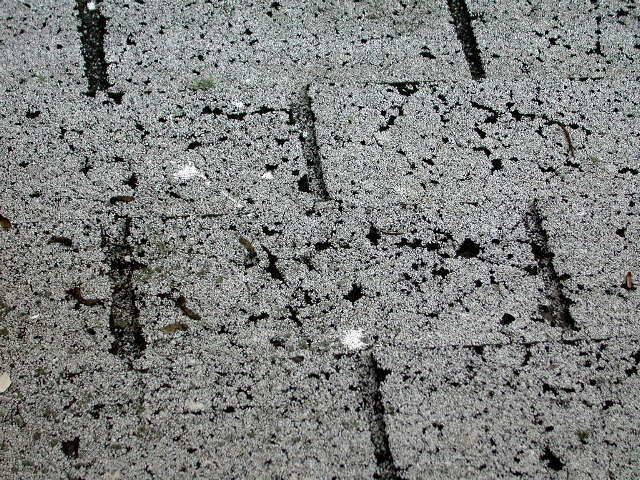
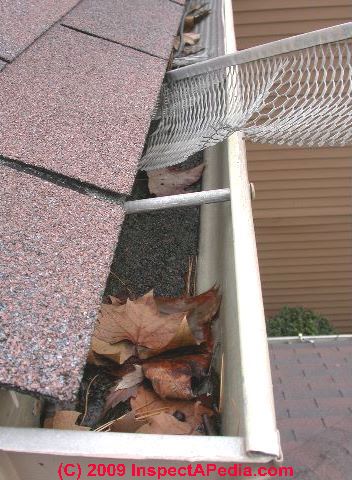
Loose mineral granules on an asphalt shingle or roll roofing roof surface, are dangerous and can cause the inspector to slip and fall off of the roof, regardless of the cause of loose material: whether because the roof is brand new (initial granule loss due to wear during installation) or old (mineral granules are loose because of age and loss of adhesion, weather exposure, or foot traffic).
Inspecting at ground level (photo above left) may show evidence of severe roof granule loss even before the inspector, owner, or roofing contractor has placed a ladder at the roof edge for a closer-look. From the roof edge you may see a gutter with a half inch or even more of mineral granules (above right). The two times we see asphalt roof shingle mineral granules on the ground or in gutters in quantity is at brand new asphalt shingle roofs, or at older, damaged, worn roofs whereon granules have lost their adhesion to the shingle by weather, age, foot traffic, hail, or other damage.
The determination of the safety and reasonableness of inspection method of any roof (or any other building
component) is the sole responsibility of the building inspector, with the exception that the building owner also has the right to ask that the inspector
omit or not access any building component or system.
The inspector is required in all cases to describe how an inspection was performed or
if it was not performed, to explain why and to explain the implications of this to his or her client.
Advice About Inspecting & Walking on Cement Asbestos or Fiber Cement Roofs
Cement asbestos roof shingles: these shingles are as fragile as slate; it's best to stay off of this surface. Though we've walked
carefully on a few such roofs it's easy to damage them. See our inspection advice at ASBESTOS & FIBER CEMENT ROOFING and our advice about tile and slate roof inspections found in this document (below).
Advice for Walking on & Inspecting Clay Tile Roofs
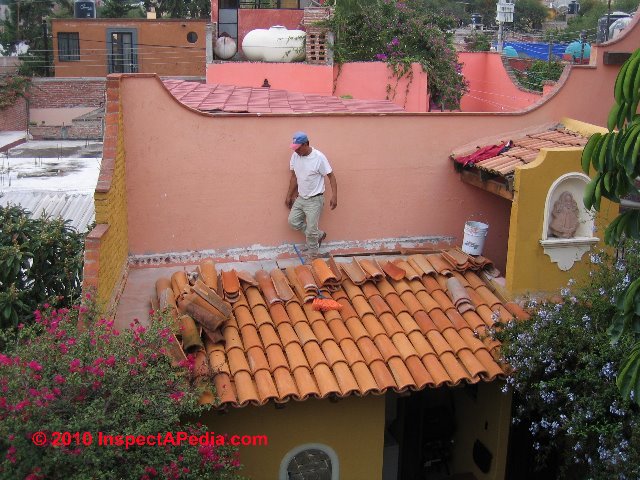
To prevent breakage, walk on tiles with extreme caution. Profile tile and lightweight tile are the most vulnerable, and concrete tiles are more fragile when they are freshly manufactured or “green.” If possible, place antennas and other roof-mounted equipment where it is easy to access without crossing many tiles.
When it is necessary to walk on tiles, step only on the head-lap (lower 3 inches) of each tile. With Mission- or S-tiles, it is best to step across two tiles at once to distribute the weight. When significant rooftop work is required, place plywood over the tile to distribute the load.
Watch out: our own experience is that it is absolutely impossible to walk on many clay tile roofs without damaging them, particularly soft clay such as the roof type used in Latin America (our photo at left).
For these roofs contractors have to remove sufficient clay tiles to provide a walking area. The removed tiles are replaced as the worker is leaving the work area of the roof.
Below we show two photos of a low slope (leaky) flat shingle-style clay tile roof on a New York Home. The ease of access meant that this roof was walked-on by someone (not us) who broke many clay tiles. You'll also notice the flattened metal tabs that were intended to hold replacement tiles in place. The tabs appear to have been bent flat by snow sliding down the roof, thus permitting clay tiles to begin to move as well (see the loose tile in the center of our photo at below left).
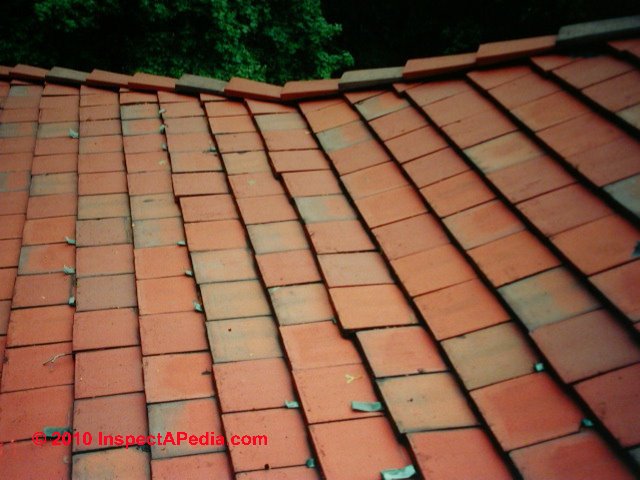
On some other fragile but not totally fragile roofs such as slate roofs, cement tile, cement-asbestos, fiber cement, and hard-fired ceramic clay tile roofs, contractors suspend a ladder over the roof surface, hanging it from the ridge, and cushioning it off of the roof surface using foam or insulation padding, or contractors work from scaffolding. - Ed.

Advice for Inspecting Other Fragile or Unsafe Roof Surfaces
- Cupped roof shingles: stay off in cold weather; inspect the shingles from the roof edge, from upper building windows, or if the roof must be walked-on, step carefully in the cupped portions on tiptoe, avoiding stepping on the raised curled portions of the shingles as otherwise you'll break off large corners and may lead to an immediate need for re-roofing. If the shingles are also brittle, even in warm weather, do not walk on the roof. See CUPPING ASPHALT SHINGLES
- Cracked roof shingles: vary in fragility, depending on shingle age and reason for cracking. Some "cracked" roof surfaces such as roofs damaged by thermal splitting, are not likely to be further damaged by careful direct inspection by walking their surfaces. See CRACKS & THERMAL SPLITTING in FIBERGLASS SHINGLES
- Curled roof shingles: as with cupped shingles, stay off in cold weather; inspect the shingles from the roof edge, from upper building windows, or if the roof must be walked-on, step carefully on the flat portions of the shingle, on tiptoe, avoiding stepping on the raised curled edges of the shingles as otherwise you'll break off the edges. If the shingles are also brittle, even in warm weather, do not walk on the roof. See CURLING ASPHALT SHINGLES
- Fishmouthed roof shingles: are fragile and may be damaged if you step on the raised portion of shingle. If the fishmouthing is on a fairly new roof and the shingles are not otherwise brittle it may be possible to walk on such a surface. See FISHMOUTHING ASPHALT SHINGLES
- Low-slope or single membrane roofs: can often be safely walked-on but beware of fragile, worn roll roofing which may be damaged by careless foot traffic, and beware of raised blisters, ridges, wrinkles which can also be damaged by careless walking.
Advice for Walking on or Inspecting Metal Roofs
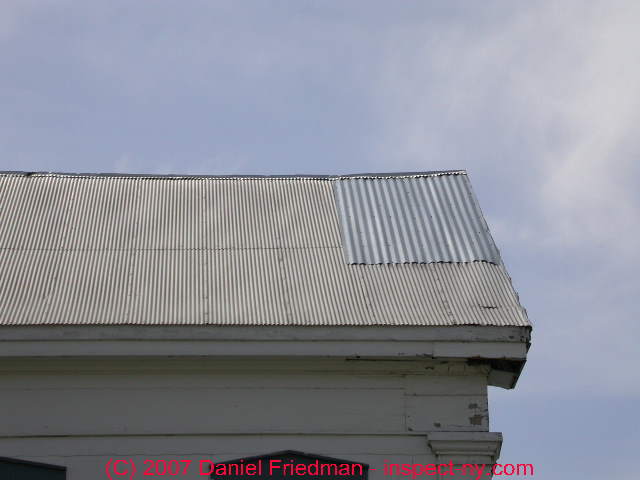
Metal roof surfaces: can be walked-on provided
(1) the roof is not too steep and
(2) the metal roofing was installed
over closely-spaced nailers or sheathing. Beware that some metal roofs may be installed directly over rafters and widely
spaced horizontal nailers, and may be fragile or subject to denting.
Do not step on raised seams or other flashing areas
that may be damaged; beware, metal roofs are very slippery when wet. The metal roof in the right-hand photo above was high, steep, and
slippery. We would not consider walking on such a surface.
Advice About Walking on & Inspecting Slate Roofs
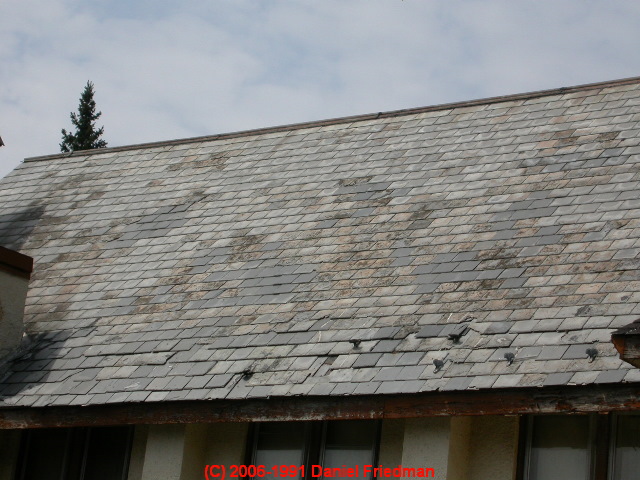
Slate roofs are fragile and are likely to be damaged by foot traffic;
it's best to stay off of slate roof surfaces during a building inspection. See SLATE ROOF INSPECTION PROCEDURE for details.
Inspectors should be cautious in evaluating any roof condition to avoid failing the roof material itself when leaks are confined to flashing areas.
Watch out: our own experience is that it is absolutely impossible to walk directly on slate roofs without damaging them, particularly if the slates are worn, loose, damaged. And walking on such surfaces is unsafe.
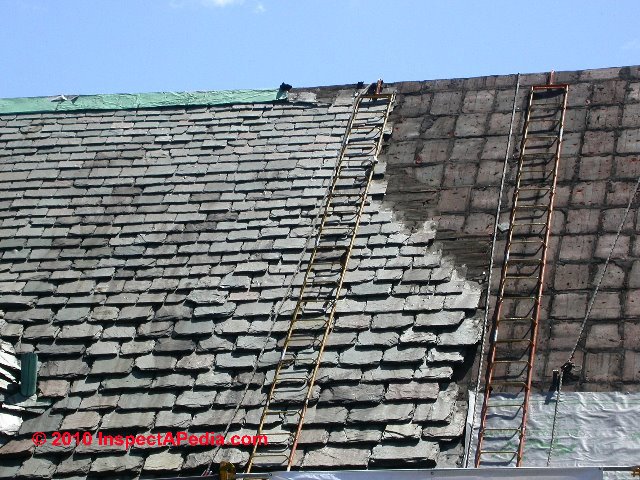
On some other fragile but not totally fragile roofs such as slate roofs, cement tile, cement-asbestos, fiber cement, and hard-fired ceramic clay tile roofs, contractors suspend a ladder over the roof surface, hanging it from the ridge, and cushioning it off of the roof surface using foam or insulation padding, or contractors work from scaffolding.
Our photo (above left) shows a slate roof being replaced in Duluth, MN. Notice the pairs of ladders that are used to install new slates without walking on this roof surface. The ladders address both a steep slope falling hazard and the probable damage to the slates from foot traffic.
Advice for Walking on & Inspecting Wood shingle roofs:
Wood shingle or shake roofs such as shown in our photograph are fragile and will be damaged by any foot traffic.
We've walked on new, good-condition wood shingle roofs but they are easily damaged by foot traffic which can cause splits in the shingles. In addition wood shingles are often slippery and dangerous to walk on and absolutely slippery when wet.
Advice for Walking on or Inspecting Wet, Icy, Steep, Snow-Covered Roofs
Wet, icy, or snow covered roofs are unsafe to walk on in most circumstances, possibly excepting expert inspection of flat roofs with safe parapets or railings installed.
Also see Building Safety Hazards Guide, and readers are also invited contribute roof failure information to the web author for research purposes. web author for research purposes.
...
Continue reading at ROOF JOB PROBLEMS, RESOLVING or select a topic from the closely-related articles below, or see the complete ARTICLE INDEX.
Or see these
Recommended Articles
- ALGAE, FUNGUS, LICHENS, MOSS on ROOFS - a really slippery roof surface
- ROOFING INSPECTION & REPAIR - home
Suggested citation for this web page
ROOF INSPECTION SAFETY & LIMITS at InspectApedia.com - online encyclopedia of building & environmental inspection, testing, diagnosis, repair, & problem prevention advice.
Or see this
INDEX to RELATED ARTICLES: ARTICLE INDEX to BUILDING ROOFING
Or use the SEARCH BOX found below to Ask a Question or Search InspectApedia
Ask a Question or Search InspectApedia
Try the search box just below, or if you prefer, post a question or comment in the Comments box below and we will respond promptly.
Search the InspectApedia website
Note: appearance of your Comment below may be delayed: if your comment contains an image, photograph, web link, or text that looks to the software as if it might be a web link, your posting will appear after it has been approved by a moderator. Apologies for the delay.
Only one image can be added per comment but you can post as many comments, and therefore images, as you like.
You will not receive a notification when a response to your question has been posted.
Please bookmark this page to make it easy for you to check back for our response.
Our Comment Box is provided by Countable Web Productions countable.ca
Citations & References
In addition to any citations in the article above, a full list is available on request.
- In addition to citations & references found in this article, see the research citations given at the end of the related articles found at our suggested
CONTINUE READING or RECOMMENDED ARTICLES. - Mark Cramer Inspection Services Mark Cramer, Tampa Florida, Mr. Cramer is a past president of ASHI, the American Society of Home Inspectors and is a Florida home inspector and home inspection educator. (727) 595-4211 mark@BestTampaInspector.com
- Our recommended books about building & mechanical systems design, inspection, problem diagnosis, and repair, and about indoor environment and IAQ testing, diagnosis, and cleanup are at the InspectAPedia Bookstore. Also see our Book Reviews - InspectAPedia.
- Best Practices Guide to Residential Construction, by Steven Bliss. John Wiley & Sons, 2006. ISBN-10: 0471648361, ISBN-13: 978-0471648369, Hardcover: 320 pages, available from Amazon.com and also Wiley.com. See our book review of this publication.
- Decks and Porches, the JLC Guide to, Best Practices for Outdoor Spaces, Steve Bliss (Editor), The Journal of Light Construction, Williston VT, 2010 ISBN 10: 1-928580-42-4, ISBN 13: 978-1-928580-42-3, available from Amazon.com
- The Journal of Light Construction has generously given reprint permission to InspectAPedia.com for this article. All rights and contents are ©Journal of Light Construction and may not be reproduced in any form.
- Architectural elements: the technological revolution: Galvanized iron roof plates and corrugated sheets; cast iron facades, columns, door and window caps, ... (American historical catalog collection), Diana S Waite, available used out of Amazon.
- Asphalt Roofing Residential Manual from ARMA the Asphalt Roofing Manufacturers Association Website https://www.asphaltroofing.org/product/residential-asphalt-roofing-manual/ ,
- Building Pathology, Deterioration, Diagnostics, and Intervention, Samuel Y. Harris, P.E., AIA, Esq., ISBN 0-471-33172-4, John Wiley & Sons, 2001 [General building science-DF] ISBN-10: 0471331724 ISBN-13: 978-0471331728
- Building Pathology: Principles and Practice, David Watt, Wiley-Blackwell; 2 edition (March 7, 2008) ISBN-10: 1405161035 ISBN-13: 978-1405161039
- Built-Up Roof Systems, Manual C.W. Griffin, Mcgraw-Hill (Tx); 2nd edition (July 1982), ISBN-10: 0070247838, ISBN-13: 978-0070247833
- Concrete Folded Plate Roofs, C. Wilby PhD BSc CEng FICE FIStructE (Author), Butterworth-Heinemann, 1998, ISBN-10: 0340662662, ISBN-13: 978-0340662663
- Concrete Shell Roofs, C. Wilby PhD BSc CEng FICE FIStructE (Author),
- Concrete Dome Roofs (Longman Concrete Design and Construction Series),
- Concrete Roofing Tile, History of the, Batsford, 1959, AISN B000HLLOUC (availble used)
- Copper Roofing, by CDA
- Copper Roofing, Master specifications for copper roofing and sheet metal work in building construction: Institutional, commercial, industrial, I.E. Anderson, 1961 (hard to find)
- Corrugated Iron, Building on the Frontier, Simon Holloway
- Green Roof Plants: A Resource and Planting Guide, Edmund C. Snodgrass, Lucie L. Snodgrass, Timber Press, Incorporated, 2006, ISBN-10: 0881927872, ISBN-13: 978-0881927870. The text covers moisture needs, heat tolerance, hardiness, bloom color, foliage characteristics, and height of 350 species and cultivars.
- Green Roof Construction and Maintenance, Kelley Luckett, McGraw-Hill Professional, 2009, ISBN-10: 007160880X, ISBN-13: 978-0071608800, quoting: Key questions to ask at each stage of the green building process Tested tips and techniques for successful structural design Construction methods for new and existing buildings Information on insulation, drainage, detailing, irrigation, and plant selection Details on optimal soil formulation Illustrations featuring various stages of construction Best practices for green roof maintenance A survey of environmental benefits, including evapo-transpiration, storm-water management, habitat restoration, and improvement of air quality Tips on the LEED design and certification process Considerations for assessing return on investment Color photographs of successfully installed green roofs Useful checklists, tables, and charts
- Handbook of Building Crafts in Conservation, Jack Bower, Ed., Van Nostrand Reinhold Company, NY 1981 ISBN 0-442-2135-3 Library of Congress Catalog Card Nr. 81-50643.
- Historic Preservation Technology: A Primer, Robert A. Young, Wiley (March 21, 2008) ISBN-10: 0471788368 ISBN-13: 978-0471788362
- Historic Slate Roofs : With How-to Info and Specifications, Tina Skinner (Ed), Schiffer Publishing, 2008, ISBN-10: 0764330012 , ISBN-13: 978-0764330018
- Low Slope Roofing, Manual of, 4th Ed., C.W. Griffin, Richard Fricklas,
McGraw-Hill Professional; 4 edition, 2006, ISBN-10: 007145828X, ISBN-13: 978-0071458283
- Roof failure causes in depth (and specific methods for avoiding them)
- Roof design fundamentals and flourishes, based on voluminous industry research and experience
- New technologies and materials -- using them safely and correctly
- Comprehensive coverage of all major roofing systems pecifications, inspection, and maintenance tools for roofing work
- Metal Roofing, an Illustrated Guide, R.A. Knowlton , [metal shingle roofs],
- Patio Roofs, how to build, Sunset Books
- Problems in Roofing Design, B. Harrison McCampbell, Butterworth Heineman, 1991 ISBN 0-7506-9162-X (available used)
- Roofing The Right Way, Steven Bolt, McGraw-Hill Professional; 3rd Ed (1996), ISBN-10: 0070066507, ISBN-13: 978-0070066502
- Slate Roofs, National Slate Association, 1926, reprinted 1977 by Vermont Structural Slate Co., Inc., Fair Haven, VT 05743, 802-265-4933/34. (We recommend this book if you can find it. It has gone in and out of print on occasion.)
- Roof Tiling & Slating, a Practical Guide, Kevin Taylor, Crowood Press (2008), ISBN 978-1847970237
- The Slate Roof Bible, Joseph Jenkins, www.jenkinsslate.com, 143 Forest Lane, PO Box 607, Grove City, PA 16127 - 866-641-7141 (We recommend this book).
- Solar heating, radiative cooling and thermal movement: Their effects on built-up roofing (United States. National Bureau of Standards. Technical note), William C Cullen, Superintendent of Documents, U.S. Govt. Print. Off (1963), ASIN: B0007FTV2Q
- Tile Roofs of Alfred: A Clay Tradition in Alfred NY
- Wood Shingle Roofs, Care and Maintenance of wood shingle and shake roofs, (EC), Stanley S. Niemiec (out of print)
- In addition to citations & references found in this article, see the research citations given at the end of the related articles found at our suggested
CONTINUE READING or RECOMMENDED ARTICLES.
- Carson, Dunlop & Associates Ltd., 120 Carlton Street Suite 407, Toronto ON M5A 4K2. Tel: (416) 964-9415 1-800-268-7070 Email: info@carsondunlop.com. Alan Carson is a past president of ASHI, the American Society of Home Inspectors.
Thanks to Alan Carson and Bob Dunlop, for permission for InspectAPedia to use text excerpts from The HOME REFERENCE BOOK - the Encyclopedia of Homes and to use illustrations from The ILLUSTRATED HOME .
Carson Dunlop Associates provides extensive home inspection education and report writing material. In gratitude we provide links to tsome Carson Dunlop Associates products and services.
 | HOME | ABOUT | ASK a QUESTION | CONTACT | CONTENT USE POLICY | DESCRIPTION | POLICIES | PRIVACY | |
| © 2024 - 1985 Publisher InspectApedia.com - Daniel Friedman | |||||||||