
InspectAPedia® FREE Encyclopedia of Building & Environmental Construction, Diagnosis, Maintenance & Repair |
Question? Just ask us! InspectAPedia
|
 How to Choose a Contractor
Steps to Getting a Good Roofing Job at a Fair Price
- POST a QUESTION or COMMENT about roofing contractors & roofing job problems
How to find a roofer and then choose a roofing contractor: Factors to consider when hiring a roofing contractor.
This article series provides a simple, step-by-step guide designed to help you find the roofing contractor who's right for you. When you need to repair your roof or replace roof coverings on a building, this article gives advice on finding and choosing a roofing contractor - by Jessie Srader, with edits and additions by DJF.
We also discuss how to choose roof material, how to negotiate the roofing contract, when to leave the roofer alone to do the job, and how to resolve roofing job disputes.
Whatever your roofing repair or replacement needs, you need a qualified professional roofing contractor you can trust and there are several aspects to consider. We have broken down this process into 6 steps that discuss how best to find success in reaching a good outcome with your roof project.
[Click to enlarge any image]
6 Steps to a Successful Roofing Job
- STEP 1: FINDING A ROOFER
- STEP 2: CHOOSING A ROOFING CONTRACTOR
- STEP 3: CHOOSING ROOF MATERIAL - separate article
- STEP 4: NEGOTIATE ROOFING CONTRACT - separate article
- STEP 5: LETTING THE ROOFER ROOF - separate article
- STEP 6: RESOLVING ROOF JOB PROBLEMS - separate article
InspectAPedia tolerates no conflicts of interest. We have no relationship with advertisers, products, or services discussed at this website.
When Choosing a Roofing Contractor & Roof Shingle or Covering Material be sure to consider
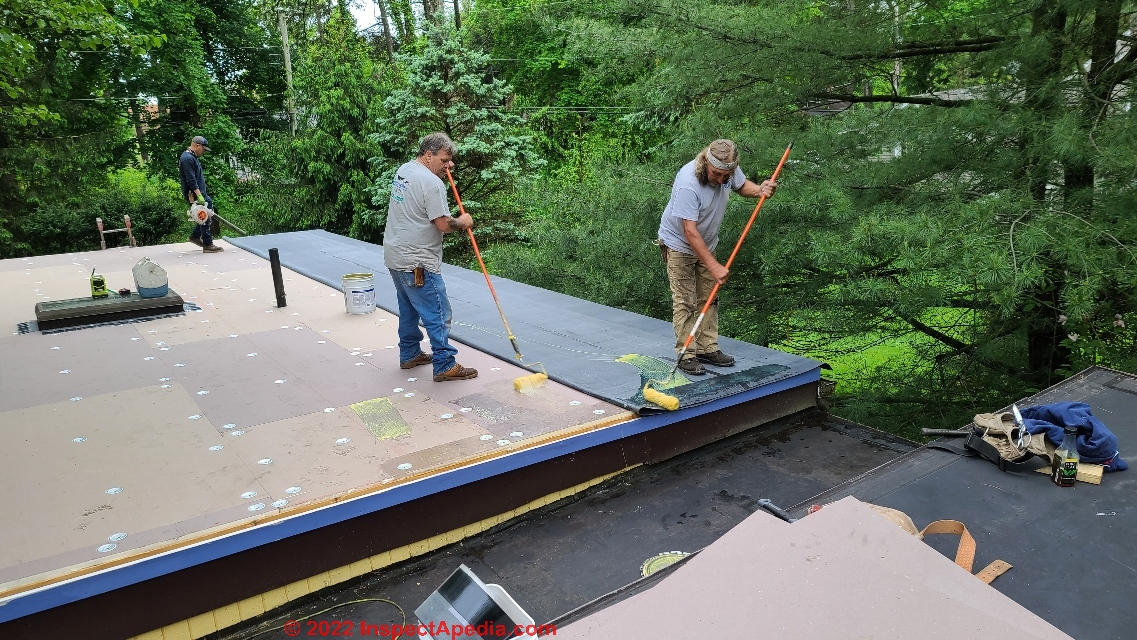
Photo: PJ Exteriors, Poughkeepsie, New York, a roofing and building exterior repair company, replacing a leaky EPDM roof in 2022. Photo by the editors.
The old roof was torn off along with its layer of insulating board; any sections of damaged plywood roof sheathing were replaced and the roof cavity inspected for wet insulation or hidden mold contamination before the job continued.
Some of these same workers had installed the EPDM roof on another wing of this building (lower right in this photo) twenty tears before, back in 2002. That roof was still in good condition twenty years later.
-
Workmanship:
the best assurance that your new roof will not leak and that it will have a long life is to select a quality shingle product and to be certain that the shingles are installed absolutely correctly - good workmanship is what makes a roof shed water.
- Shingle or other roof material quality:
we would not hesitate to buy a good quality shingle product from any of the current roofing shingle manufacturers, including GAF, but
- Shingle installation standards:
we would want to be sure that my installer applied them according to the best practices in the industry since otherwise any warranty will be voided anyway.
The principal sources of asphalt shingle roofing installation standards are the National Roofing Contractors Association (NRCA's Roofing and Waterproofing Manual), and the Asphalt Roofing Manufacturer's Association (ARMA). There are also ASTM standards for roofing products.
- Roofing contractor reputation and experience:
before hiring ANY roofing contractor, we would check with the local better business bureau and would ask for references from local customers of the contractor.
- Supervision during the roof shingle installation:
we would want to be darn sure that the people actually doing the work are trained or at least supervised, continually, every day all day on the job, by a trained, experienced, roofing contractor.
Too many roofing companies have a salesman or prime contractor who sells the job but sends untrained workers to put on the roof with minimal or no actual supervision.
- Maintain your roof:
with your roofing contractor, discuss regular roof inspections, the condition of your under-roof or attic ventilation, and what special problem spots may be on your roof, and what to do about them.
STEP 1: How to Find a Roofer - Beginning a search for a roofing contractor
This means finding a roofing contractor who knows good roofing practices, roof flashing details, how to handle problem spots on building roofs, and alternative roof covering products: shingle types, grades, colors, low slope roofing, flat roofing materials, etc.
A competent roofer will provide you with sound advice on products, reasonable explanation of procedures, and, most importantly, solid results - no leaks, and a durable roof. It's difficult to determine the capabilities and reliability of a contractor.
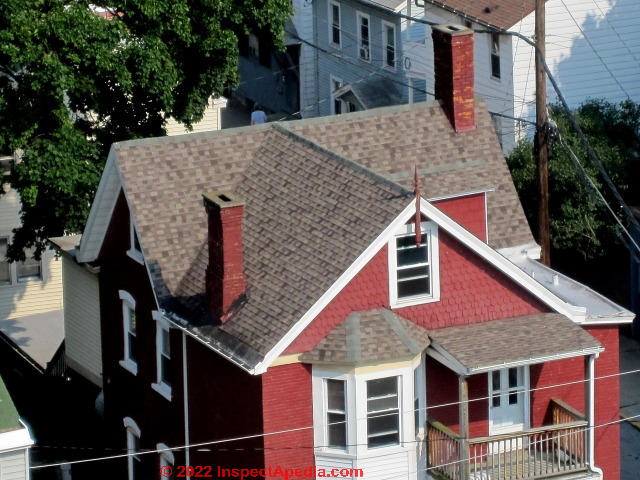
For specific roofing types there are usually specialty industry & trade associations that can provide referrals to those roofing companies with suitable training and expertise, such as the following:
- Asphalt Shingle Roofing (photo above)
- ARMA - Asphalt Roofing Manufacturer's Association [Website] Asphalt Roofing Manufacturer's Association - https://www.asphaltroofing.org/ 750 National Press Building, 529 14th Street, NW, Washington, DC 20045, Tel: 202 / 207-0917
- Also see ASPHALT ROOF SHINGLES
- Also see ROLL ROOFING, ASPHALT & SBS
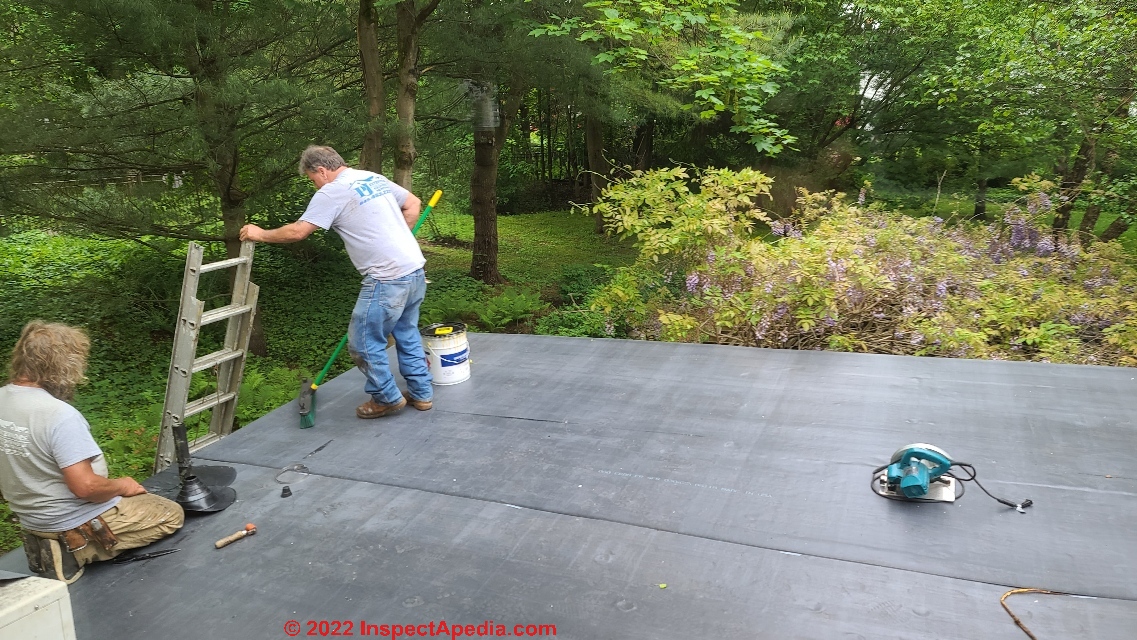
- Membrane, Flat & Low Slope Roofing
- LOW SLOPE ROOFING
- MEMBRANE & SINGLE PLY ROOFS
- RUBBER, EPDM, PVC ROOFING - (photo above)
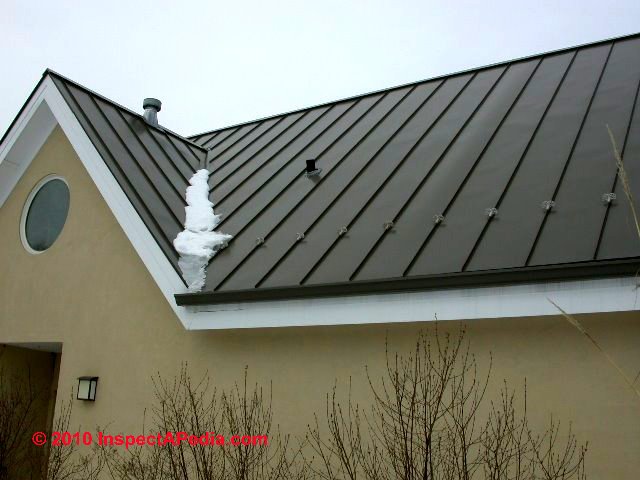
- Metal Roofing (photo above)
- Metal Roofing Alliance, E. 4142 Hwy 302, Belfair, WA 98528, Telephone:(360) 275-6164, Customer Support 410-534-6900, Email: support@metalroofing.com, Website: www.metalroofing.com. Quoting:
The Metal Roofing Alliance was formed in 1998 by a small group of forward-thinking metal roofing manufacturers with the main goal of educating consumers about the many benefits of metal roofing. ... membership has grown to include paint companies, material suppliers, industry publications and more. - Also see DURALITA & METAL TILE ROOFS
- Also see METAL ROOFING
- Metal Roofing Alliance, E. 4142 Hwy 302, Belfair, WA 98528, Telephone:(360) 275-6164, Customer Support 410-534-6900, Email: support@metalroofing.com, Website: www.metalroofing.com. Quoting:
- NRCA [Website] National Roofing Contractors Association - http://www.nrca.net/, 10255 W. Higgins Road, Suite 600,
Rosemont, IL 60018-5607, Tel: (847) 299-9070
Also consult NRCA for roof installation standards for most types of roofing materials & types used in North America - PLASTIC ROOFING TYPES
- RUBBER ROOF SHINGLES & SLATES
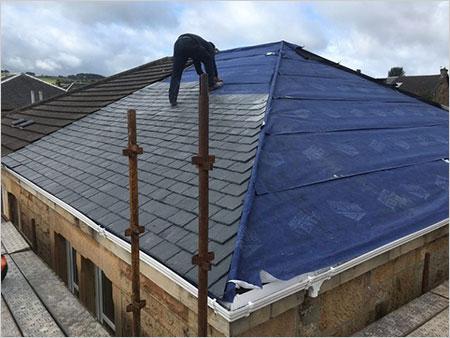
- Slate Roofing (photo above)
- NATIONAL SLATE TECHNOLOGY CENTER [Website] courses for architects, builders, etc.
- Slate Roofing Contractors Association [Website: www.slateroofers.org ] of North America [Website]
- NATIONAL SLATE ASSOCIATION [Website] includes list of slate testing laboratories
- SLATE ROOF REPAIR REFERENCES
- Also see SLATE ROOF INSPECTION & REPAIR - home
- Also see STONE ROOFING
- THATCH ROOFING
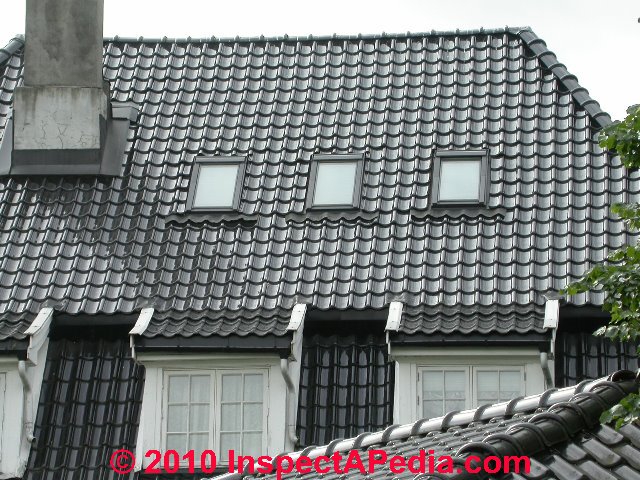
- Tile Roofing
- Tile Roofing Institute, 2150 N 107th St. Ste 205, Seattle, WA 98133 USA Tel: 206-209-5300 Website: http://tileroofing.org/ Email: info@tileroofing dot org
- Also see ASBESTOS & FIBER CEMENT ROOFING
- Also see CLAY TILE ROOF SUPPLIERS
- Also see CONCRETE ROOFING
- Also see FIBER CEMENT ROOFING
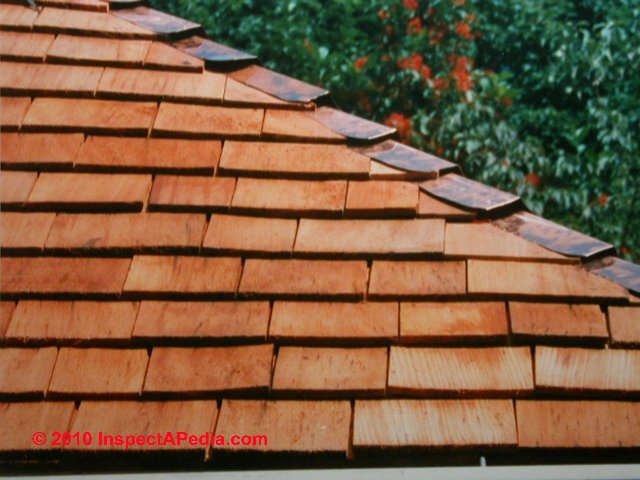
- Wood Shake & Shingle Roofing
- CEDAR SHAKE & SHINGLE BUREAU, [Website] CSSB, U.S.: Sumas, WA 98295-1178, Tel: 604-820-7700, In Canada:
Cedar Shake and Shingle Bureau #2 - 7101 Horne Street, Mission, BC V2V 7A2 Tel: (604) 820-7700, E-mail: info@cedarbureau.com , website: http://www.cedarbureau.org/
CCSB offers wood shingle installation instructions in the form of a manual - cedarbureau.org/installation/wall_manual/introduction.htm - Also see WOOD SHAKE & SHINGLE ROOFING - home
Any home improvement is a complex combination of elements, the success of which depends on the quality of materials, installation and overall construction.
There are many ways to start your search for the contractor who meets your individual needs. Referrals are obviously the best source for names of credible companies. Ask friends and family members who they have used in the past.
- Contact your local Chamber of Commerce about contractors who are active in the community.
- The Better Business Bureau, state and local licensing authorities, local trade associations and your local yellow page directory are also excellent sources of information.
- Local suppliers of building products often can point you to roofers in your area.
Readers should also see ROOFING CONTRACTOR CERTIFICATIONS for a simple basic outline of the key ingredients to a good roofing job and a long lasting roof.
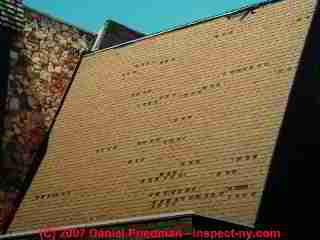
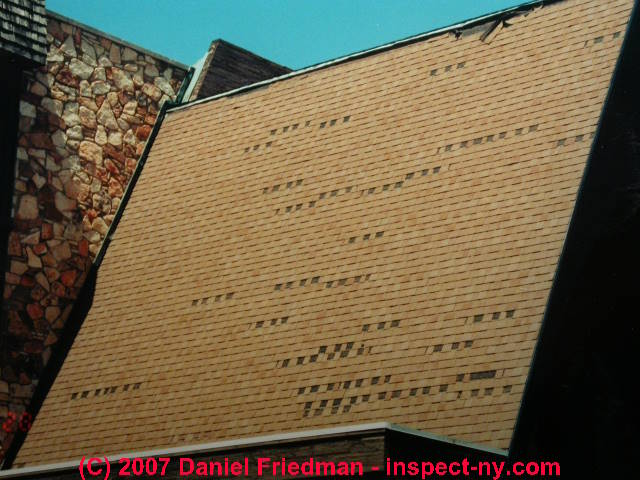
Also see ROOFING INSPECTION & REPAIR. Our photo (page top) shows lost shingles from an asphalt shingle roof - possibly due to improper nailing.
STEP 2: How to Choose a Roofer: Meeting and Evaluating Potential Roofing Contractors
After you have compiled a list of possible contractors, take time to evaluate each one carefully. A professional contractor will be happy to provide any information you may require.
Many homeowners have been mystified by the seeming lack of interest and response from the contractors they call. To get a contractor to respond to your call, tell him you are shopping around, but are only interviewing three contractors, not ten.
A contractor is shopping for good jobs that will make a fair profit and bring future referrals . Many contractors have had experiences with unreasonable or dishonest homeowners. Therefore, they look for warning signs of customer problems during the initial job interview.
Set up a meeting to discuss your needs and their qualifications, and be sure to pay close attention to the attitude of the company representative. Good contractors take pride in their work and will be enthusiastic about the possibility of helping you with your problems.
If you feel confident that the contractor is truly interested in your project, ask for the company's vital statistics-specific business information which will help you make your final decision.
- Business Name and Address:
A good, professional contractor will provide the telephone number. These are essential when checking on the company's previous business dealings. - Experience:
The training and experience of a contractor, as well as the age of his or her company, will help you determine their ability to successfully complete your project. - Licensing/Bonding:
Some states or provinces (Canada) require special licensing for contractors. - Ask for business license numbers and information on the company
which bonds the contractor.
Then check with local authorities to see that the company compiles with regulations. - Insurance Coverage:
A contractor should carry worker's compensation and general liability insurance. Request the name and address of the insurance carrier, along with a copy of the company's insurance certificate.
Beware of low bids which are a result of incomplete insurance coverage and workman's compensation. - Professional References:
Your contractor's past can help determine your future. - Ask for credit references:
References and a list of completed projects including the names and telephone numbers of previous clients. - Company Philosophy:
Discuss application techniques and workmanship guarantees. - Does the contractor stand behind his work ?
Suggestions for this article should be sent to InspectApedia's editor at CONTACT, or to the author jsrader@intergate.com
Roof Repair Estimates vs Roof Inspection
Question: what is the difference between a roof inspection and a roof estimate?
One question: what is the difference between a roof inspection and a roof estimate. Do roof inspectors eventually do the work or are they totally independent?
Thank you the wonderful information regarding slate roofing.
(SLATE ROOF INSPECTION & REPAIR - home )
My family and I are assessing whether to buy a lovely 1812 Federal style house. Somewhere in 1860 they built an additional floor and a slate mansard roof. The house is located in Ossining, NY and the owners have never really replaced the slate roofing except for the very occasional slate here and there.
So for the most part the roof hasn't been touched or had any major work since 1860.
The attic has some signs of water damage, and the flooring and walls look like they have had severe issues with contracting and expanding so there is warping on the floors and severe cracks on the ceilings and window casings. Could you guys recommend a roofing expert/ inspector for a roof of this style and age near Ossining, NY?
Anonymous by private email 2017/02/24
Reply:
OPINION: The difference between a roof repair estimate and a roof condition inspection depends on who does the inspection.
Home inspectors, professional roof inspectors, and roof inspectors who work for insurance settlements are not people who would do the repair work.
However there are also roofing contractors who will perform a paid roof inspection. It's typical for the contractor to offer that if you hire them they will credit the inspection cost against the cost of the repair
Obviously you want to avoid conflicting interests. For that reason, some professions such as home inspections actually prohibit the inspector from doing the work that the inspector said was needed. At least that was the professional standard of the model National inspection Association, ASHI, the American Society of home inspectors.
Not all home inspectors are equally qualified to perform roof inspections. In particular roof inspection for your roof needs to be by someone who has depth of experience in slate Roofing. Otherwise you're likely to get crazy advice.
When states begin to license home inspectors, so many contractors who wanted to be licensed objected to the ethical constraint that most states omitted requiring the avoidance of conflict of interest. So it's something you want to watch with care.
We can't make a specific contractor referral, both to avoid conflicts of interest and because more simply I don't have one. Even when I've found a good slate roof contractor, the work quality of what that contractor may provide later to someone else may vary a lot depending on the crew, supervision, and maybe other factors.
What we can do is discuss, when you have 2 or more bids, what you're being told and what prices are being offered. Often we can suggest questions to ask that help steer away from trouble.
BE SURE to use a contractor who specializes in slate. An asphalt roofer may bid the job and ruin the roof or make other mistakes.
If the roof really dates from 1860 there are plenty of questions to ask about the condition of slates, underlayment, slate fasteners, flashings on the roof, roof sheathing, roof framing. Don't let an idiot walk on the roof; inspect from attic, ground, and ladder at roof edges.
Also see CONSULTANTS & EXPERTS DIRECTORIES where you can find various inspectors & consultants
Reader Comments, Questions & Answers About The Article Above
Below you will find questions and answers previously posted on this page at its page bottom reader comment box.
Reader Q&A - also see RECOMMENDED ARTICLES & FAQs
On 2019-08-16 - by (mod) -
Glenn, We appreciate the nice comments.
On 2019-08-16 by glenn walke
glenn walke said:
I like the tip that you gave to choose a roofing contractor who is experienced. My wife and I have been talking about finding a contractor to help us if we decide to replace our old shingles, and it would be important for us to know that we could find a trustworthy contractor.
If we decide to find a contractor, I will be sure to check their experience level beforehand.
On 2017-08-01 by KCT
After being left with a severely leaking roof by a shoddy contractor, my attorney warned me NEVER to sign a roofing contract with an arbitration clause. Cross out the clause, initial it, then sign....if the roofer will not accept this, get another roofer.
On 2017-03-31 by Kyle Winters & Cindy Tesler:
Thanks for the tip to make sure your shingles are being installed properly according to the best practices in the industry.
You also said that these principals come from the National Roofing Contractors Association. I think it's important to choose a roofer that has an online gallery of their other works so that you can get a better idea of what your finished roof will look like.
I like all of the things you list as important to look for in any roofing contractor. In particular, I like that you recommend finding a roofer with insurance coverage. After all, working on roofs is quite dangerous, so you want to make sure they're covered in case there is an accident.On 2017-03-20 nnika Larson said:
We are looking at having our roof replaced simply because it is quite old and has some leaks.
Hopefully, a new roof will help improve energy efficiency in our home as well. It's definitely important to find a roofing contractor that you can trust. As you said, looking at their professional references is a good indicator of how they will perform according to past performance. Thanks for sharing!
On 2016-10-28 Sarah Smith said:
Re-posting without link
My roof is in desperate need of repairs. A reputable contractor is important, and I agree that you should check a contractor in regards to the BBB. Something else to do is to get a roofing company that is affordable for you, so that you don't spend more than you have.
I need to get a new roof on my house and love the idea of setting up roof inspections so that your roof can stay in top condition.
I agree that you want to find a roofer that has a good reputation and has references. I'll have to make sure to follow your advice to help me get a good professional roofer.
On 2016-03-11 by Sam Wilkins
Re-posting without disallowed advertising link:
Sam Wilkins said:
It makes sense that the business you choose should have a lot of experience. That way you can be sure they know what they're doing and hopefully won't damage anything. My husband needs to find a roofing contractor, so I will make sure to have him ask about experience.
...
Continue reading at STEP 3: CHOOSING ROOF MATERIAL or select a topic from the closely-related articles below, or see the complete ARTICLE INDEX.
Or see these
Recommended Articles
- BEST ROOFING PRACTICES
- DISPUTE RESOLUTION on ROOF JOB PROBLEMS
- ROOFING CONTRACTOR CERTIFICATIONS
- ROOFING CONTRACTOR, FIND & CHOOSE
- ROOF MEASUREMENTS - compare how different roofers measure the roof and estimate the job
- WORKMANSHIP & ROOF DAMAGE
Suggested citation for this web page
ROOFING CONTRACTOR, FIND & CHOOSE at InspectApedia.com - online encyclopedia of building & environmental inspection, testing, diagnosis, repair, & problem prevention advice.
Or see this
INDEX to RELATED ARTICLES: ARTICLE INDEX to BUILDING ROOFING
Or use the SEARCH BOX found below to Ask a Question or Search InspectApedia
Ask a Question or Search InspectApedia
Try the search box just below, or if you prefer, post a question or comment in the Comments box below and we will respond promptly.
Search the InspectApedia website
Note: appearance of your Comment below may be delayed: if your comment contains an image, photograph, web link, or text that looks to the software as if it might be a web link, your posting will appear after it has been approved by a moderator. Apologies for the delay.
Only one image can be added per comment but you can post as many comments, and therefore images, as you like.
You will not receive a notification when a response to your question has been posted.
Please bookmark this page to make it easy for you to check back for our response.
Our Comment Box is provided by Countable Web Productions countable.ca
Citations & References
In addition to any citations in the article above, a full list is available on request.
- Fiberglass Asphalt Shingle Failures Information and Claims GAF & Other Shingle Failures Website; Thermal Splitting of Asphalt Shingles & other shingle failures
- Fire Retardant Treated FRT Plywood Failures inspection, detection, testing of defective FRT plywood roof sheathing
- Fiberglass Asphalt Shingle Failures Information and Claims GAF & Other Shingle Failures Website; Thermal Splitting of Asphalt Shingles & other shingle failures
- Fire Retardant Treated FRT Plywood Failures inspection, detection, testing of defective FRT plywood roof sheathing
- Slate Roofs: How to Inspect and Repair Slate Roofs - Detailed Procedures for Inspection and Repair of Slate Roofs - ASHI Technical Journal, 1991, Updated 2006
- Slate Roofs: Inspecting and Evaluating Slate Roofs Hudson Valley ASHI seminar content
- Best Practices Guide to Residential Construction, by Steven Bliss. John Wiley & Sons, 2006. ISBN-10: 0471648361, ISBN-13: 978-0471648369, Hardcover: 320 pages, available from Amazon.com and also Wiley.com. See our book review of this publication.
- Decks and Porches, the JLC Guide to, Best Practices for Outdoor Spaces, Steve Bliss (Editor), The Journal of Light Construction, Williston VT, 2010 ISBN 10: 1-928580-42-4, ISBN 13: 978-1-928580-42-3, available from Amazon.com
- The Journal of Light Construction has generously given reprint permission to InspectAPedia.com for this article. All rights and contents are ©Journal of Light Construction and may not be reproduced in any form.
- Architectural elements: the technological revolution: Galvanized iron roof plates and corrugated sheets; cast iron facades, columns, door and window caps, ... (American historical catalog collection), Diana S Waite, available used out of Amazon.
- Asphalt Roofing Residential Manual from ARMA the Asphalt Roofing Manufacturers Association Website https://www.asphaltroofing.org/product/residential-asphalt-roofing-manual/ ,
- Building Pathology, Deterioration, Diagnostics, and Intervention, Samuel Y. Harris, P.E., AIA, Esq., ISBN 0-471-33172-4, John Wiley & Sons, 2001 [General building science-DF] ISBN-10: 0471331724 ISBN-13: 978-0471331728
- Building Pathology: Principles and Practice, David Watt, Wiley-Blackwell; 2 edition (March 7, 2008) ISBN-10: 1405161035 ISBN-13: 978-1405161039
- Built-Up Roof Systems, Manual C.W. Griffin, Mcgraw-Hill (Tx); 2nd edition (July 1982), ISBN-10: 0070247838, ISBN-13: 978-0070247833
- Concrete Folded Plate Roofs, C. Wilby PhD BSc CEng FICE FIStructE (Author), Butterworth-Heinemann, 1998, ISBN-10: 0340662662, ISBN-13: 978-0340662663
- Concrete Shell Roofs, C. Wilby PhD BSc CEng FICE FIStructE (Author),
- Concrete Dome Roofs (Longman Concrete Design and Construction Series),
- Concrete Roofing Tile, History of the, Batsford, 1959, AISN B000HLLOUC (availble used)
- Copper Roofing, by CDA
- Copper Roofing, Master specifications for copper roofing and sheet metal work in building construction: Institutional, commercial, industrial, I.E. Anderson, 1961 (hard to find)
- Corrugated Iron, Building on the Frontier, Simon Holloway
- Green Roof Plants: A Resource and Planting Guide, Edmund C. Snodgrass, Lucie L. Snodgrass, Timber Press, Incorporated, 2006, ISBN-10: 0881927872, ISBN-13: 978-0881927870. The text covers moisture needs, heat tolerance, hardiness, bloom color, foliage characteristics, and height of 350 species and cultivars.
- Green Roof Construction and Maintenance, Kelley Luckett, McGraw-Hill Professional, 2009, ISBN-10: 007160880X, ISBN-13: 978-0071608800, quoting: Key questions to ask at each stage of the green building process Tested tips and techniques for successful structural design Construction methods for new and existing buildings Information on insulation, drainage, detailing, irrigation, and plant selection Details on optimal soil formulation Illustrations featuring various stages of construction Best practices for green roof maintenance A survey of environmental benefits, including evapo-transpiration, storm-water management, habitat restoration, and improvement of air quality Tips on the LEED design and certification process Considerations for assessing return on investment Color photographs of successfully installed green roofs Useful checklists, tables, and charts
- Handbook of Building Crafts in Conservation, Jack Bower, Ed., Van Nostrand Reinhold Company, NY 1981 ISBN 0-442-2135-3 Library of Congress Catalog Card Nr. 81-50643.
- Historic Preservation Technology: A Primer, Robert A. Young, Wiley (March 21, 2008) ISBN-10: 0471788368 ISBN-13: 978-0471788362
- Low Slope Roofing, Manual of, 4th Ed., C.W. Griffin, Richard Fricklas,
McGraw-Hill Professional; 4 edition, 2006, ISBN-10: 007145828X, ISBN-13: 978-0071458283
- Roof failure causes in depth (and specific methods for avoiding them)
- Roof design fundamentals and flourishes, based on voluminous industry research and experience
- New technologies and materials -- using them safely and correctly
- Comprehensive coverage of all major roofing systems pecifications, inspection, and maintenance tools for roofing work
- Metal Roofing, an Illustrated Guide, R.A. Knowlton , [metal shingle roofs],
- Patio Roofs, how to build, Sunset Books
- Problems in Roofing Design, B. Harrison McCampbell, Butterworth Heineman, 1991 ISBN 0-7506-9162-X (available used)
- Roofing The Right Way, Steven Bolt, McGraw-Hill Professional; 3rd Ed (1996), ISBN-10: 0070066507, ISBN-13: 978-0070066502
- Slate Roofs, National Slate Association, 1926, reprinted 1977 by Vermont Structural Slate Co., Inc., Fair Haven, VT 05743, 802-265-4933/34. (We recommend this book if you can find it. It has gone in and out of print on occasion.)
- Roof Tiling & Slating, a Practical Guide, Kevin Taylor, Crowood Press (2008), ISBN 978-1847970237
- The Slate Roof Bible, Joseph Jenkins, www.jenkinsslate.com, 143 Forest Lane, PO Box 607, Grove City, PA 16127 - 866-641-7141 (We recommend this book).
- Smart Guide: Roofing: Step-by-Step Projects, Creative Homeowner (Ed), 2004, ISBN-10: 1580111491, ISBN-13: 978-1580111492
- Solar heating, radiative cooling and thermal movement: Their effects on built-up roofing (United States. National Bureau of Standards. Technical note), William C Cullen, Superintendent of Documents, U.S. Govt. Print. Off (1963), ASIN: B0007FTV2Q
- Tile Roofs of Alfred: A Clay Tradition in Alfred NY
- Wood Shingle Roofs, Care and Maintenance of wood shingle and shake roofs, (EC), Stanley S. Niemiec (out of print)
- In addition to citations & references found in this article, see the research citations given at the end of the related articles found at our suggested
CONTINUE READING or RECOMMENDED ARTICLES.
This article may be printed as hard copy and redistributed at no charge, provided the web page source citation is provided. It cannot not sold. It cannot be reproduced electronically nor copied to other websites. The source citation is: InspectAPedia.com/roof/Roofing_Contractor_Selection.php Comments or correc
- Carson, Dunlop & Associates Ltd., 120 Carlton Street Suite 407, Toronto ON M5A 4K2. Tel: (416) 964-9415 1-800-268-7070 Email: info@carsondunlop.com. Alan Carson is a past president of ASHI, the American Society of Home Inspectors.
Thanks to Alan Carson and Bob Dunlop, for permission for InspectAPedia to use text excerpts from The HOME REFERENCE BOOK - the Encyclopedia of Homes and to use illustrations from The ILLUSTRATED HOME .
Carson Dunlop Associates provides extensive home inspection education and report writing material. In gratitude we provide links to tsome Carson Dunlop Associates products and services.
 | HOME | ABOUT | ASK a QUESTION | CONTACT | CONTENT USE POLICY | DESCRIPTION | POLICIES | PRIVACY | |
| © 2024 - 1985 Publisher InspectApedia.com - Daniel Friedman | |||||||||