
InspectAPedia® FREE Encyclopedia of Building & Environmental Construction, Diagnosis, Maintenance & Repair |
Question? Just ask us! InspectAPedia
|
 Septic Tank Covers
- POST a QUESTION or COMMENT about septic tank covers, septic tank cover strength, collapse, or safety concerns
Septic tank covers, openings & access ports:
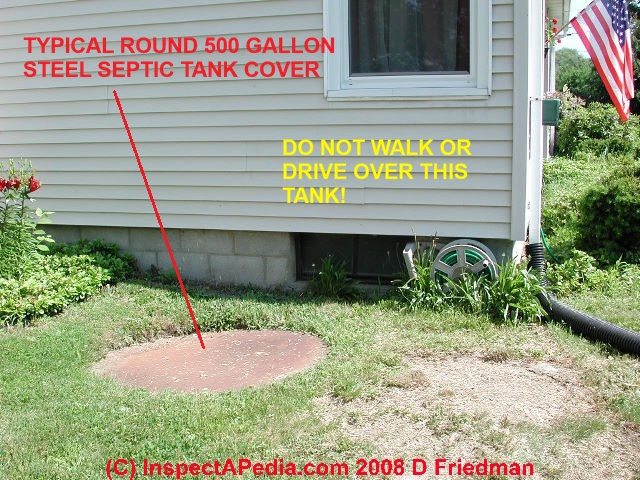
Here we provide a guide to septic tank covers, finding, types, and septic tank cover safety. Assuring the septic tank cover is safe. Where to look for the septic tanks, septic tank covers, or septic tank cleanout lids.
What are the types of septic tank covers, how do we assure the septic tank (cesspool, drywell, or seepage pit) cover is safe;
How deep is a septic tank cover buried, & do we find & remove septic tank covers?
InspectAPedia tolerates no conflicts of interest. We have no relationship with advertisers, products, or services discussed at this website.
Septic Tank Covers
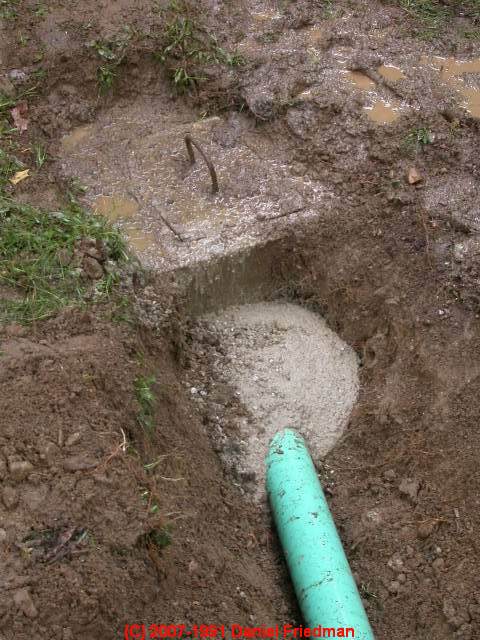 Once the Septic Tank has Been Located How Deep is The Septic Tank Cover & Is the Cover Safe?
Septic Tank Cover Depth & location
Tank Cover Depth: How deep will the septic tank cover be?
The top of the septic tank is often about one foot below the surface. But this depth varies alot.
However the septic cover can be several feet deeper.
If you note the depth at which the waste line leaves the building foundation wall, say perhaps 3 ft. below the top of soil (grade level) then if the site were dead flat and if the tank were
Found 12 feet from the foundation wall, at a typical waste line slope of 1/8" to 1/4" per linear foot of run, the septic tank's entry port for the waste line would have to be roughly 3 ft. 3" below grade level.
Obviously if the site is not flat these septic tank cover depth estimate numbers change.
Septic Tank Cover Safety Procedures
Be absolutely certain that the covers and cleanout access covers over the septic tank are secure and durable so that it will be impossible for someone to fall into the tank (which is often fatal), and so that a child could not remove the cover.
If your septic tank is in an area where vehicles may drive over it, special heavy-duty rated covers are available. Discuss this option with your septic tank contractor.
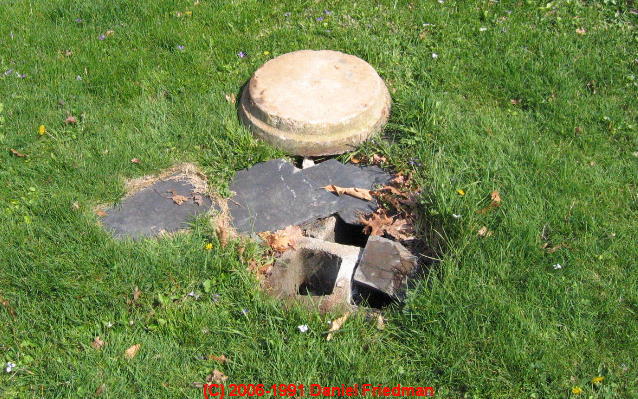
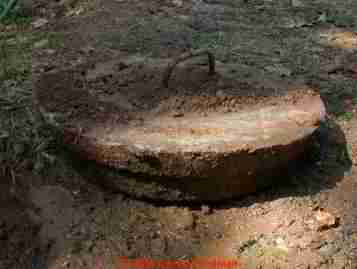
If there is the slightest doubt about the condition of the septic tank cover (such as seeing subsidence over the tank location) you should rope off the area and prevent anyone from walking over it, again because falling into a septic tank is likely to be fatal.
- For help in removing and replacing septic tank, cesspool, or drywell covers
see HOW TO OPEN A SEPTIC TANK & CLOSE the SEPTIC TANK separate articles - For information about septic tank cover strength & vehicle loading, information that also applies to cesspools, drywells and similar structures,
see SEPTIC TANK DESIGN STRENGTH SPECS
Reader Question: septic tank cover collapse
11/28/2014 Scott C. said:
I have a septic system with a power assited pump tank. The lid collapsed under the weight of the soil it was buried under. There was about 3'2" of clay type soil that the installer covered it with. The lid thickness is 4". Is that up to standard for that much soil? -
[This question was originally posted at SEPTIC TANK DEPTH]
Reply:
Scott,
If you want to investigate the adequacy of the lid over a septic tank you need a bit of data. Septic tanks are indeed rated for different weights and loads.
See SEPTIC TANK DESIGN STRENGTH SPECS
The thickness of the septic tank lid alone is not enough to know whether or not it was adequate - as we don't know if it contained steel reinforcement or if it did, on what spacing and using what material, nor do we know the quality of the concrete, nor its history (e.g. prior vehicle traffic over the tank) nor do we know the septic tank and size.
Reader Question about septic tank cover security regulations in Alberta
04/30/2015 Septic Tank Lids said:
Can you please inform me of the Regulations in Alberta regarding Septic Tank Lids?
We have a concrete Bell & Siphon and I notice the lower and smaller lids (one form each compartment) being are left at the top on the larger lids and under a cover on our concrete patio.
When I question the owner of the pump truck company...he said "that is a good place for them as they are a nuisance...they have to pull them up with a hook...
. they get stuck with dirt...and the metal hooks break...and then they have to get down and smash them with a mallet".
We have had the same tank system for 40 years and keep it covered and never had a problem until I noticed this recently, that someone had thrown the lower lids on top of the larger lids and under our cover. THak you Jane
This question and reply were originally posted
at GRAVITY/SIPHON DOSING SYSTEMS.
Reply:
Sure STL:
Here is an Excerpt from the Alberta septic tank code
3.1.2.3. Access Opening Lid/ Cover
1) All access openings shall be equipped with a secure lid or cover.1
1 Intent: Sentence (1) — To increase safety by preventing unauthorized or accidental entry into the access opening of a septic tank or holding tank.
Acceptable protective measures include, but are not limited to, a padlock, a cover that can only be removed with tools, or a cover having a minimum weight of 29.5 kg (65 lb).
2) The opening of a manhole access that extends above ground shall be insulated to an equivalent R-8 insulation value to protect the tank contents from freezing.
The handbook offers this additional commentary on these practices:
It is imperative that the lid or cover of the manhole access opening be secure to prevent anyone from accidentally falling into a tank. Once fallen into a tank it is essentially impossible to get out without help.
his securing of the access lid must be provided at time of installation and is an ongoing responsibility of the owner to ensure it remains secure.
During periods of time the occupants are away on a holiday for a number of days or in time of very low flow the tank is much more susceptible to freezing without this insulated lid.
In sum, if the cover over your septic tank could be moved by a child so that someone could fall in, the risk is a quick and ugly death. Be sure the covers are safe.
- Source: ALBERTA PRIVATE SEWAGE SYSTEMS STANDARDS OF PRACTICE, 2009 HANDBOOK, [PDF] retrieved 30 April 2015 U 2018/03/18, original source: http://www.safetycodes.ab.ca/ Public/Documents/ PSSSOP_Handbook_Version_12_Online_Feb_21_2012b.pdf
Reader Question: how do I cap this wiring conduit at my septic tank cover?
2013/0318 NT asked:
Our dogs removed what appears to be a part of our septic which was covering wiring. Where can I fine a replacement?
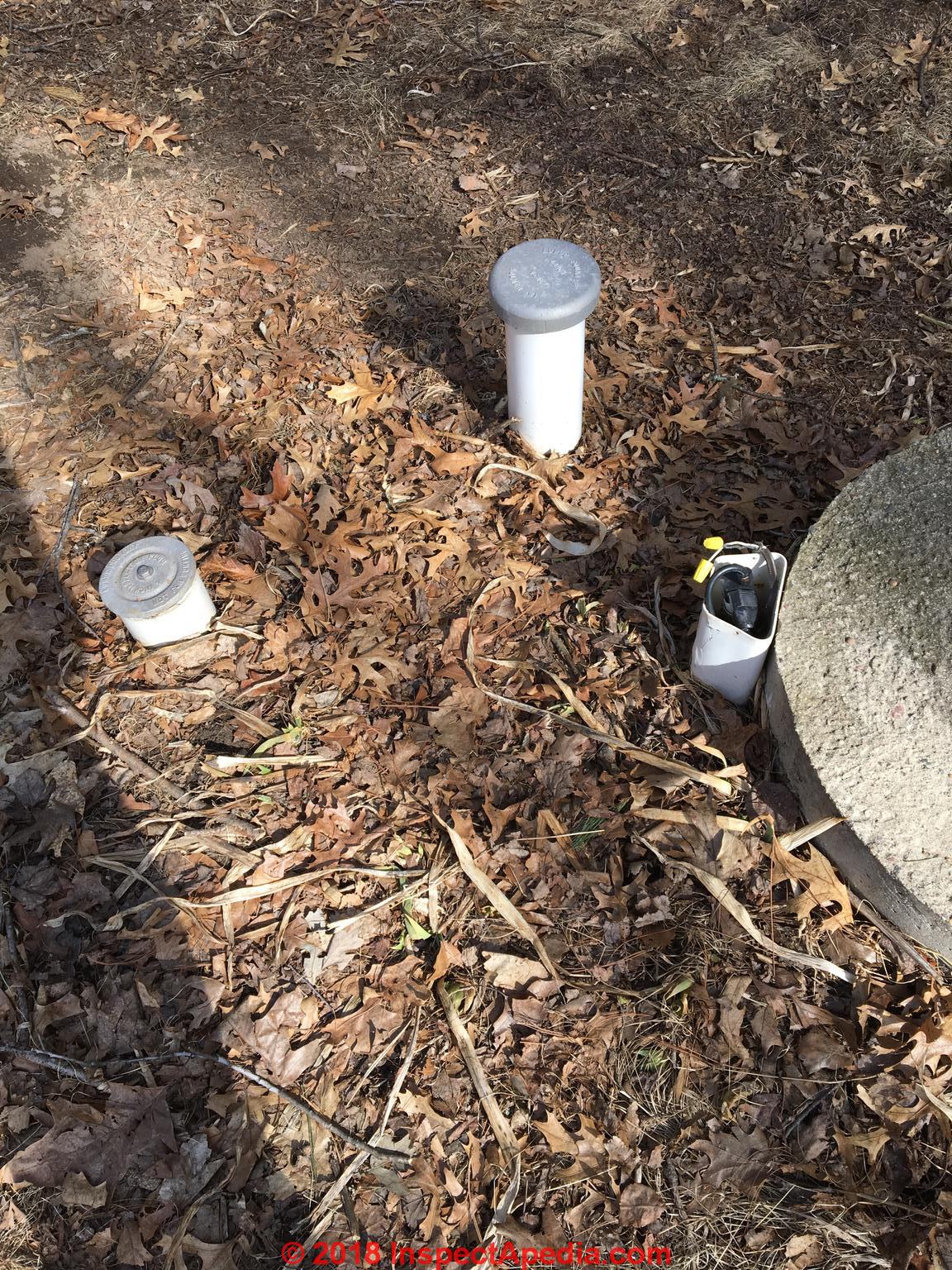
Photo provided by reader NT. [Click to enlarge any image]
Reply: proper conduit and exterior electrical boxes are required for outdoor septic pump wiring
 NT:
NT:
The white plastic "tube" in your photo (above) looks like a riser conduit for septic pump or alarm wiring. I cannot tell if it's a product designed for that use or a home-made couduit using downspout material.
I would start by giving your septic installer or maintenance company a call to ask what they used - that can save you a lot of digging around time.
Meanwhile be sure to place a makeshift cover over the conduit top to keep rainwater out. Even a plastic bottle would probably help.
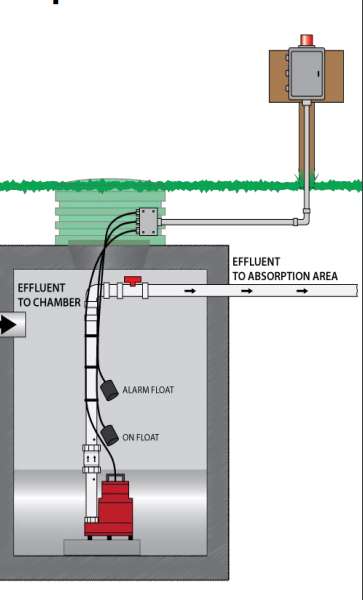
Watch out: I am doubtful that the conduit used was proper and approved for electrical wiring. Normally underground electrical wires run outside are run through waterproof PVC conduit to a riser and an outdoor-rated electrical box and cover.
The illustration here [Click to enlarge any image] shows what I am describing: use of listed components for underground and outdoor electrical wiring with a riser well above ground. This illustration is excerpted from a presentation on proper installation practices from the Chippewa County Health Department in MI
- Johnson, Matt, PUMP CONTROLS, FLOATS, PANELS AND INSTALLATION [PDF] Chippewa County Health Department, 508 Ashmun Ave., Sault Ste. Marie MI 49783 retrieved 20-18/03/18, original source:
www.chippewahd.com/cms/lib/MI17000311/Centricity/Domain/105/Control%20Panels%20and%20Installation%20MATT%20JOHNSO
Reader Comments, Questions & Answers About The Article Above
Below you will find questions and answers previously posted on this page at its page bottom reader comment box.
Reader Q&A - also see RECOMMENDED ARTICLES & FAQs
Readers asking about replacing damaged septic tank lids:
On 2020-11-24 by Jonathan bruno
I ran over the top of the concrete cover how do I figure what size I need
On 2020-09-24 by Janet
Can I replace my concrete septic lid with a pvc lid?
On 2020-07-29 by James Williams
I need to replace my concrete lid on my septic tank, 26" X 56" to put a riser on. Do you make a pad or do you know where I can get one?
On 2020-07-24 by Al
I have an old concrete septic tank with a concrete slab top. One corner of the lid cracked and fell into tank leaving a hole in one corner.
Was told by contractor that was not a problem and put an outdoor sprinkler box to cover the hole so it would be easier to pump out.
Problem with sewer fly’s, could this be because the top is not sealed?
On 2020-11-24 - by (mod) -
For all of the readers above:
you will need to excavate just enough of the septic tank at least at the corners to measure the dimensions of the tank cover.Watch out: Meanwhile: when a septic tank tank cover is damaged or missing, be sure to rope off and keep people away from the area as if someone falls into the tank it's a quick and nasty death
The new septic tank lid must be safe (falling into a tank is fatal)
That means it needs to be strong enough and it needs to be bolted to the tank top;
On 2020-07-17 by Cristian - how do I replace the cap on a septic tank cover/venmt
Hi,
I had a contractor run over one of the vent pipes and now is just exposed.
I’m looking to put a cap on - does it needs to be vented or slotted?
Can I use something like a pipe fitting
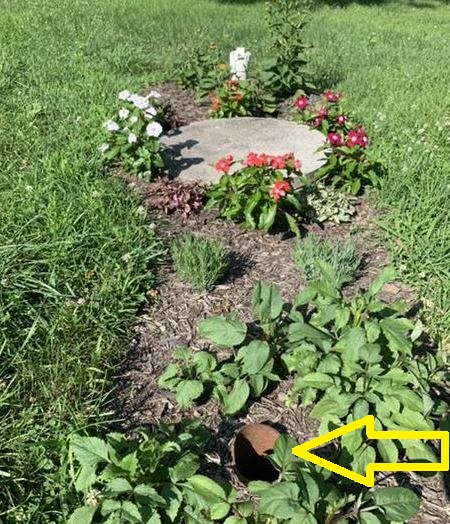
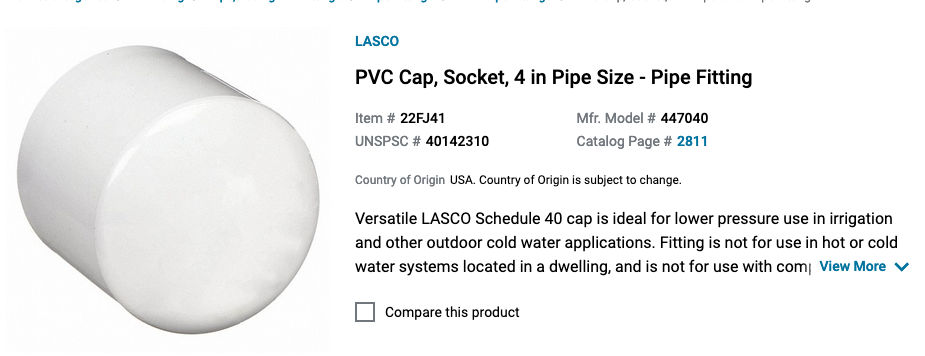
(Grainger part no. 22FJ41 https://www.grainger.com/mobile/product/LASCO-PVC-Cap-22FJ41)?
Thanks!
On 2020-07-18 by (mod) - use proper vent cap on septic line or tank vents
If it's a vent, not an access or cleanout opening, then yes you need
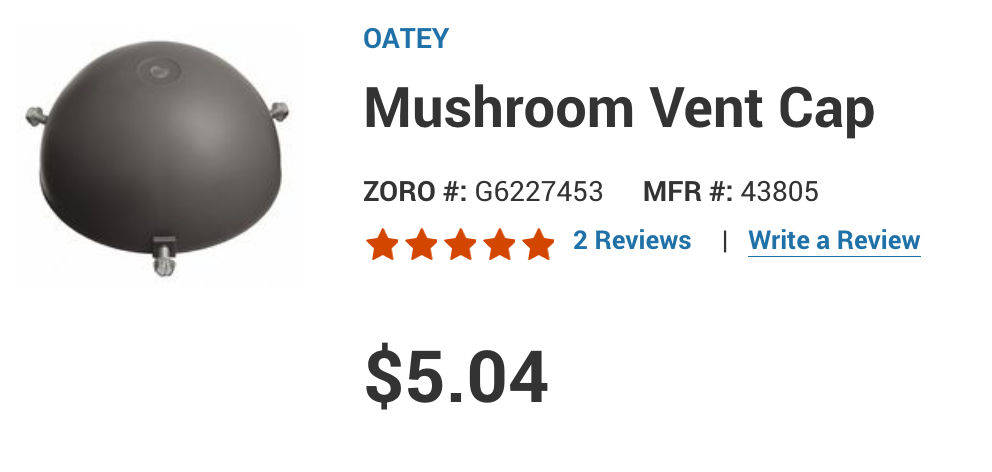
1. a cover that will vent (slots is ok), That Grainger part is a solid cap - ok for push-on-pull-off access but not for venting
2. protection from surface runoff water entry -
See the example from Oatey, below and click the image to see details.
The PVC vent cap to which you refer is suitable for a cleanout access but would not provide venting.
On 2020-03-31 by Helen Myers - What size lid would I need for a 250 gallon septic tank
What size lid would I need for a 250 gallon septic tank you
On 2020-03-31 - by (mod) - lid size required for a 250-gallon septic tank?
Helen
There is no single right answer to your question about lid size required for a 250-gallon septic tank because tank dimensions vary all over the place.
But
Watch out: there is no 250-gallon septic tank that can be legal, code-approved, nor that will work properly for any normal building connection or use. It is considerably too small. The result is that your tiny 250-gallon septic tank will remain agitated and will push solids into the drainfield and will quickly destroy it.
That leads to discharge of sewage pathogens into your local ground, groundwater, lakes, streams, and potentially your own drinking water.
On 2020-02-03 by Donald Ray Dunn - four covers over my septic tank - foound roots, tank makes burping sound
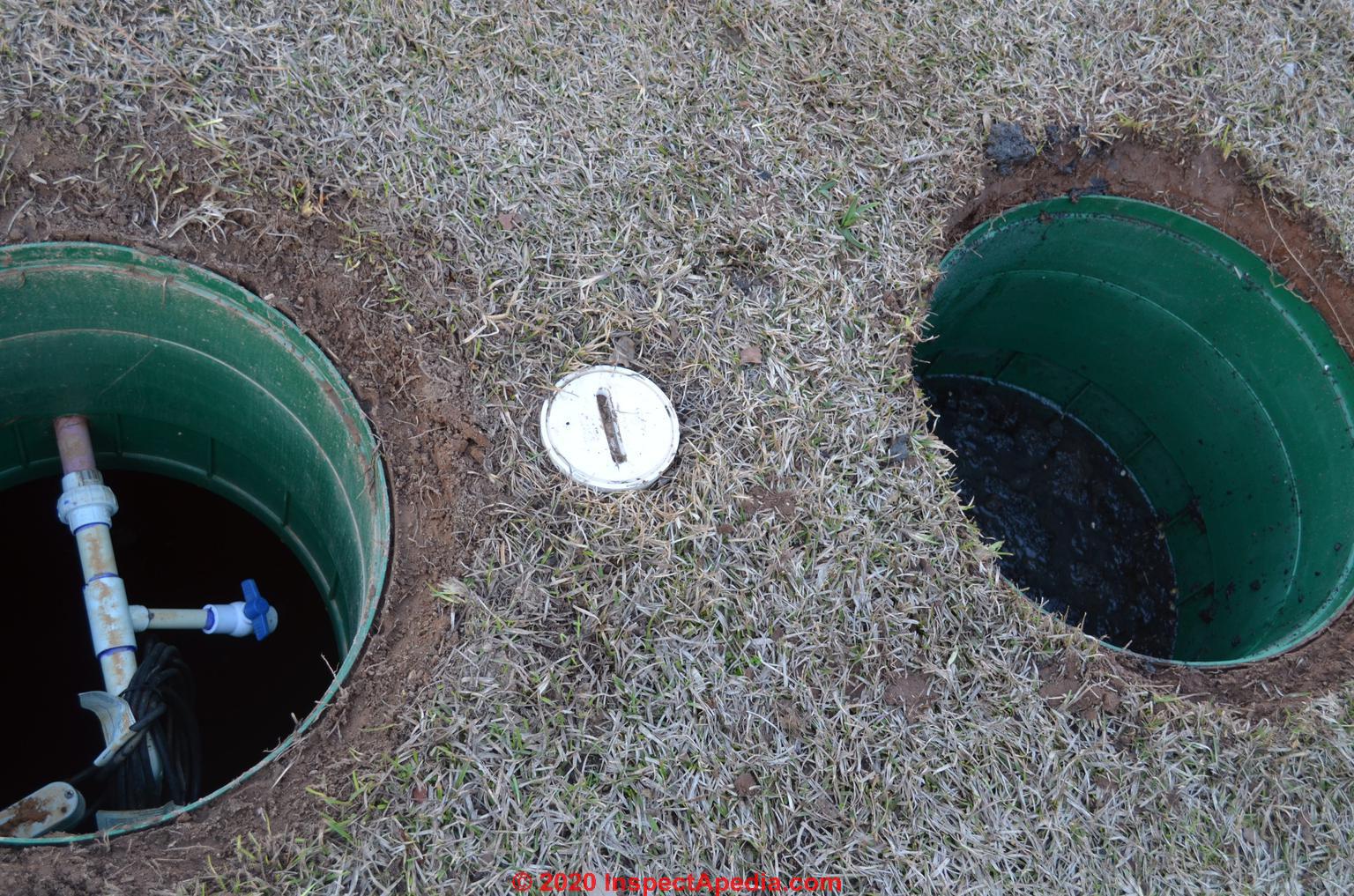
I have four green round covers on my system. It has an air pump and sprinkler attached. I'm sure it's an aerobic system. I can't find any information about who installed it. I have heard that four covers means it is a newer type and my home is only about 14 years old.
Are there different types of aerobic systems? I want to know what is happening in each tank and what looks normale and what should alarm me about the condition of my tank? I had burping when I flushed the toilet.
Had some one come out and they discovered roots they cleaned what they could and said they would pump it out. I purchased some rootX and used it going by the instructions. Four weeks later It started burping again.
I opened the covers to see what was going on. Tank one had a mass of roots floating ,which I removed tank two looked good tank three had large chunks of floating decomposed/ looked like dirt. I removed those chunks.
Tank four water level was very low.
The burping has stopped again. I just don't know if I fixed the problem I also wonder why there was so much chunks floating if they pumped it out
On 2020-02-03 - by (mod) -
Donald it sounds very much as if you're describing an aerobic septic system.
Root-X will not fix nor help your septic system - see SEPTIC TREATMENTS in the ARTICLE INDEX FOR DETAILS.
However it does sound as if your system needs cleaning and perhaps repair, and you'll want the service company to find how and where roots were invading the system as if that's not corrected the problems will be recurrent and risk both contamination of the local environment and a septic failure that backs up into the home.
When there are pumps and aerators in use on a septic system somewhere indoors or outside at the tank you should find a control box, perhaps with an audible or visible alarm, and on and in that box will be (or should be) a data tag with information about the system's brand, model, and installer.
Do let me know and attach a photo of what you find and we can comment further.
About floating solids - it's normal for there to be some floating solids in a septic tank: feces and toilet paper and possibly clots of grease; But not chunks of wood or roots.
The low water suggests that the effluent pump or effluent distribution system was not working and/or there's a leak in the septic tank.
On 2018-08-16 by pam - I can't afford a septic tank riser
I already have a riser on the one where the guys ticks the pump down to pump it. and I have another round concrete one which is over the sewage pump tank. a guy came to rewire the pump and it works fine but i can't afford a riser for that one and now it's all exposed.
I guess what I'm asking (is probably what u can't legitimately give me) is a way to cover it now that that area is dug down onlya foot or so but rain and sand are going to get into it Jerry riggin like a tarp or a piece of plywood with a tarp i guess is what i'm asking
On 2018-09-14 - by (mod) -
On 2018-08-16 by (mod) -
Pam
The worry here is in this order
1. without a proper and safe cover someone can fall into the tank and be injured or killed
2. surface water leaking into the system risks overloading the septic drainfield, destroying it and sending sewage into the local environment.
If you can jury-rig a cover, even using plywood and a tarp, that drains away from the pumping chamber AND IF you can also fence off and keep people away such that there is no safety hazard, you could try that, but I suspect that the time, trouble, and cost of those will be about the same as buying a new concrete cover from your local septic supplier.
...
Continue reading at SEPTIC TANK OPEN, HOW TO or select a topic from the closely-related articles below, or see the complete ARTICLE INDEX.
Or see SEPTIC TANK COVER FAQs - questions and answers posted originallyi at this page.
Or see these
Recommended Articles
- CONCRETE CORROSION DUE TO HYDROGEN SULFIDE
- SEPTIC & CESSPOOL SAFETY - home
- SEPTIC TANK ACCIDENT REPORTS
- SEPTIC TANK COVERS
- SEPTIC TANK CLOSE, HOW TO
- SEPTIC TANK DEPTH
- SEPTIC TANK DESIGN STRENGTH SPECS
- SEPTIC TANKS FLOATING UP
- SEPTIC TANK, HOW TO FIND
- SEPTIC TANK OPEN, HOW TO
- SEPTIC TANK PUMPING SCHEDULE
- SEPTIC TANK RISERS
Suggested citation for this web page
SEPTIC TANK COVERS at InspectApedia.com - online encyclopedia of building & environmental inspection, testing, diagnosis, repair, & problem prevention advice.
Or see this
INDEX to RELATED ARTICLES: ARTICLE INDEX to SEPTIC SYSTEMS
Or use the SEARCH BOX found below to Ask a Question or Search InspectApedia
Ask a Question or Search InspectApedia
Try the search box just below, or if you prefer, post a question or comment in the Comments box below and we will respond promptly.
Search the InspectApedia website
Note: appearance of your Comment below may be delayed: if your comment contains an image, photograph, web link, or text that looks to the software as if it might be a web link, your posting will appear after it has been approved by a moderator. Apologies for the delay.
Only one image can be added per comment but you can post as many comments, and therefore images, as you like.
You will not receive a notification when a response to your question has been posted.
Please bookmark this page to make it easy for you to check back for our response.
Our Comment Box is provided by Countable Web Productions countable.ca
Citations & References
In addition to any citations in the article above, a full list is available on request.
- Barger, Eric, "TRAFFIC RELATED [Septic] TANK DESIGN", [PDF] NPCA, National Precast Concrete Association, 1320 City Center Drive, Suite 200, Carmel, IN 46032 USA, Phone: (800) 366-7731 Website: http://precast.org/ 28 July 2010, retrieved 2017/06/06, original source: precast.org/2010/07/traffic-related-tank-design/
- In addition to citations & references found in this article, see the research citations given at the end of the related articles found at our suggested
CONTINUE READING or RECOMMENDED ARTICLES.
- Carson, Dunlop & Associates Ltd., 120 Carlton Street Suite 407, Toronto ON M5A 4K2. Tel: (416) 964-9415 1-800-268-7070 Email: info@carsondunlop.com. Alan Carson is a past president of ASHI, the American Society of Home Inspectors.
Thanks to Alan Carson and Bob Dunlop, for permission for InspectAPedia to use text excerpts from The HOME REFERENCE BOOK - the Encyclopedia of Homes and to use illustrations from The ILLUSTRATED HOME .
Carson Dunlop Associates provides extensive home inspection education and report writing material. In gratitude we provide links to tsome Carson Dunlop Associates products and services.
 | HOME | ABOUT | ASK a QUESTION | CONTACT | CONTENT USE POLICY | DESCRIPTION | POLICIES | PRIVACY | |
| © 2024 - 1985 Publisher InspectApedia.com - Daniel Friedman | |||||||||