InspectAPedia.com InspectAPedia®
Google
InspectAPedia
 

Free Encyclopedia of Building & Environmental Inspection, Testing, Diagnosis, Repair

Ask a Question or Search InspectAPedia

  • HOME
  • AIR CONDITIONING
  • DAMAGE ASSESSMENT
  • ELECTRICAL
  • EXTERIORS
  • HEATING
  • HOME INSPECTION
  • INTERIORS
  • PLUMBING
  • ROOFING
  • SEPTIC SYSTEMS
  • STRUCTURE
  • WATER SUPPLY
  • ENERGY SAVINGS
  • ENVIRONMENT
  • INDOOR AIR IAQ
  • INSULATION
  • MOLD INSPECT TEST REMOVE
  • NOISE
  • ODORS
  • SOLAR ENERGY
  • VENTILATION
  • EXPERTS DIRECTORY
  • CONTACT US


InspectAPedia ® Home

SEPTIC SYSTEM INSPECT DIAGNOSE REPAIR

SEPTIC CARE INSTRUCTIONS
SEPTIC CONSULTANTS
SEPTIC D-BOX INSPECTION
SEPTIC DRAINFIELD FAILURE DIAGNOSIS
SEPTIC DRAWINGS
SEPTIC DYE TEST PROCEDURE
SEPTIC FAILURE SIGNS
SEPTIC INSPECTION & TEST GUIDE
SEPTIC LIFE EXPECTANCY
SEPTIC ODORS
SEPTIC PUMPS
SEPTIC SUPPLIES & PARTS
SEPTIC SYSTEM DESIGN ALTERNATIVES
SEPTIC SYSTEM DESIGN BASICS
SEPTIC SYSTEMS, HOME BUYERS GUIDE to
SEPTIC SYSTEM SAFETY WARNINGS
SEPTIC TANKS
SEPTIC TREATMENTS & CHEMICALS
SEWAGE & SEPTIC CONTAMINANTS
SEWAGE BACKUP, WHAT TO DO
SEWAGE BACKUP TEST & CLEANUP
SEWAGE BACKUP PREVENTION
SEWAGE CONTAMINATION in buildings
SEWAGE CONTAMINANTS in FRUIT / VEGETABLES
SEWAGE EJECTOR / GRINDER PUMPS
SEWAGE LEVELS in SEPTIC TANKS
SEWAGE NITROGEN CONTAMINANTS
SEWAGE PATHOGENS in SEPTIC SLUDGE
SEWAGE PUMPS
SEWER BACKUP PREVENTION
SEWER GAS ODORS
SEWER LINE REPLACEMENT
SINKHOLES, WARNING SIGNS
SMELL PATCH TEST to Track Down Odors
SOAKAWAY BED FAILURE DIAGNOSIS
SULPHUR & SEWER GAS SMELL SOURCES
SUMP PUMPS

TOILETS, INSPECT, INSTALL, REPAIR
TOILET ALTERNATIVES
TOILETS, DON'T FLUSH LIST
TRAPS on PLUMBING FIXTURES
TREATMENTS & CHEMICALS, SEPTIC

VIDEO GUIDES: Septic Videos

WASHING MACHINES & SEPTIC SYSTEMS
WATER SOFTENERS & CONDITIONERS
WATER SUPPLY & DRAIN PIPING
WASTEWATER TREATMENT BASICS
WATER, WELLS, WATER TANKS: TESTING GUIDE
WINTERIZE A BUILDING

More Information

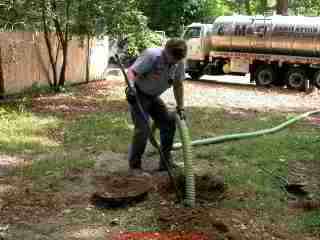
Photograph of septic tank being pumped.

Supplemental Checklist & Worksheet for Level-0 Septic Tank & System Inspection & Test
     

  • SEPTIC SYSTEM INSPECTION WORK SHEETS
    • 3 Septic inspection checklists & data recording sheets help define 3 levels of thoroughness of septic tank and field inspection & testing
    • LEVEL 0 INSPECTION WORK SHEET Septic inspection checklist for Level-0 basic septic system inspections
    • L-0 ADDITIONAL WORK SHEET Supplemental septic inspection checklist for Level-0 testing
    • LEVEL 1 INSPECTION WORK SHEET Septic inspection checklist for Level-1 septic system inspection
  • SEPTIC TANK GRASS or SNOWMELT - separate article
  • Questions & answers about septic system inspection, tests, procedures, & checklists
  • References

Click to Show or Hide Related Topics

  • SEPTIC SYSTEM INSPECT DIAGNOSE REPAIR - home
  • BOD WASTEWATER TEST
  • CHLORINE IN SEPTIC WASTEWATER
  • CHLORAMINE / CHLORINE Tests
  • CLEARANCE DISTANCES, SEPTIC SYSTEM
  • CLOGGED DRAIN DIAGNOSIS
  • EFFLUENT RETENTION TIME
  • FLOODED SEPTIC SYSTEMS, REPAIR
  • GUIDE TO SEPTIC SYSTEMS
  • HOW SEPTIC SYSTEMS WORK
  • HOME BUYERS GUIDE to SEPTIC SYSTEMS
  • HOME SELLERS GUIDE
  • ODORS, SEPTIC or SEWER
  • PLANTS & TREES OVER SEPTIC SYSTEMS
  • SEPTIC & CESSPOOL SAFETY
  • SEPTIC BIOMATS
  • SEPTIC CLEARANCE DISTANCES
  • SEPTIC COMPONENT LOCATIONS
  • SEPTIC LOADING & DYE TEST PROCEDURE - home
  • SEPTIC PUMPS
  • SEPTIC SYSTEMS, PLANTS OVER
  • SEPTIC SYSTEM INSPECTION & TEST GUIDE - home
    • ABANDONED or NEW SEPTIC SYSTEM TESTS
    • DISPOSAL vs TREATMENT
    • SEPTIC FAILURE CAUSES / SIGNS
    • SEPTIC FAILURE CRITERIA
    • SEPTIC FAILURE LAWSUIT
    • SEPTIC FAILURE WET SPOTS
    • SEPTIC D-BOX INSPECTION
  • SEPTIC DRAINFIELD INSPECTION & TEST - home
    • SEPTIC DRAINFIELD LOCATION
    • SEPTIC DRAINFIELD FAILURE CAUSES
    • SEPTIC DRAINFIELD FAILURE DIAGNOSIS
    • SEPTIC DRAINFIELD LIFE
  • SEPTIC SYSTEM INSPECTION CLASS
    • SEPTIC INSPECTION LEVELS
    • SEPTIC SYSTEM INSPECTION WORK SHEETS
  • SEPTIC SYSTEM ODORS
  • SEPTIC SYSTEM PUMPS
  • SEPTIC SYSTEM SAFETY WARNINGS
  • SEPTIC TANK INSPECTION PROCEDURE - home
    • SEPTIC TANK GRASS or SNOWMELT
    • SEPTIC TANK LOCATION
  • SEPTIC TANK PUMPING PROCEDURE - home
  • SEWAGE EJECTOR / GRINDER PUMPS
  • SEWAGE LEVELS in SEPTIC TANKS
  • SOIL CONDITIONS
InspectAPedia tolerates no conflicts of interest. We have no relationship with advertisers, products, or services discussed at this website.

Septic system inspection field data checklist & worksheets - part 2: here is the second of three detailed septic system field inspection and test worksheets to assist in inspecting and documenting the condition of septic systems. This article is part of our series: Septic Systems Online Book procedures, defects in onsite waste disposal systems, septic tank problems, septic drainfield problems, checklists of system components and things to ask. Septic system maintenance and pumping schedules.

Green links show where you are. © Copyright 2013 InspectAPedia.com, All Rights Reserved. Author Daniel Friedman.

SEPTIC INSPECTION WORK SHEETS - Septic System Inspection and Testing Worksheets

Here we provide the second of a series of field worksheets useful during the conduct of septic system inspections for investigations of the condition of a septic system using level 0, 1, and 2 septic inspections.

Additional Worksheet for Level 0 Inspection - Find, Pump Out, Clean, & Inspect the Condition of the Septic Tank
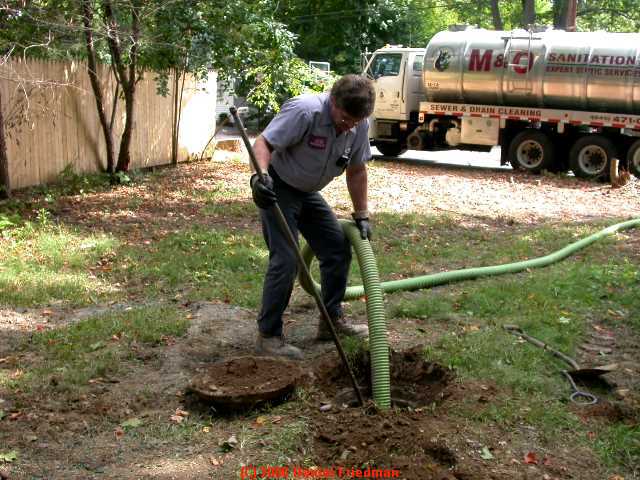
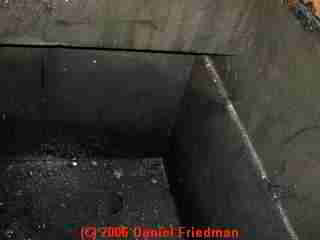
Photograph of septic tank being pumped. Photograph of septic tank interior after pumping.

Septic tank pumping, which should not be performed until after any loading and dye testing, can provide additional key information about the condition of the septic tank and even, indirectly, the condition of the drainfields. These photographs show a septic tank being pumped and then the interior of the concrete tank after septic tank cleanout.

 TREATMENT TANK:
 TANK LAST PUMPED: _________________  Information Source: Seller/Realtor/Other
 Reason for Pumping:    Regular Service, Inspection, Diagnosis, Other:_________
 Components inspected when last pumped: Y/N         Volume Pumped Out: _______
  Damage/Defects Observed:________________________________________________
  Site-built tank, not water tight; missing/damaged baffles; damaged cover;
  tank settling, dislocating piping; bottom of scum within 3" of outlet bottom;
  top of sludge within 8" of outlet baffle (need pumping).
  COMMENTS:____________________________________________________________
  WARNING: Tanks not pumped regularly are at extra risk of hidden, potentially
  costly damage to the Absorption system. Tanks pumped immediately prior to the
  inspection may prevent normal system testing (by loading with water) and may
  indicate a history of recent problems or failures.
  OVERLOADED SYSTEMS: If the system is overloaded or you see sludge at or over
  the exit baffles, do not recommend immediate pumping until the root
  cause of the problem has been determined and corrected. Otherwise an
  objective second opinion may not be possible.

PUMPING EQUIPMENT:                    (Locate on site plan)
  PUMP-Mound     Not Visible.         Reported/observed at:________________
   Operating Satisfactorily  Y/N      Information Source: Seller/Realtor/Other
   Single Pump/Duplex Pump            Pump Alarm System Installed Y/N
   Electrical Wiring: Not Visible     Exposed/Unsafe/Needs Repairs
   Depth of flooding in pump tank from bottom of lid to water surface _____in.
   Depth of sludge in pump tank _________ in. Tank Pumped  Y/N  Date_________
   Pump cycle/drawdown time: _____________ minutes
   Alarm installed     Y/N   Tested Y/N   Working Y/N  Separate Circuit Y/N
   Pump Chamber Capacity     Not visible  Capacity________________________
  PUMP-Ejector   Not Visible.         Reported/observed at:________________
   Operating Satisfactorily  Y/N      Information Source: Seller/Realtor/Other
   Electrical Wiring: Not Visible     Exposed/Unsafe/Needs Repairs
   Pump cycle/drawdown time: _____________ minutes
   Sludge in pump tank Y/N
  COMMENTS:____________________________________________________________
  WARNING: pump systems require a special sewage pump; use of sump pumps
  or other improper pumps will result in short, unreliable system operation.

DISTRIBUTION BOX LOCATION:
                 Not Identified.     Reported/observed at:________________
                                     Information Source: Seller/Realtor/Other
  Damage/Defects Observed: Solids from tank, leaks, out of level, clogs___

DOSING TANK with pumps or siphons:
                 Not Identified.     Reported/observed at:________________
                                     Information Source: Seller/Realtor/Other
  Damage/Defects Observed: Solids from tank, leaks, pump defects, ________

ABSORPTION SYSTEM:                  (Locate on Site Plan if possible)
   None Present: Comments:____________________________________________________
   Elevated Sand Mound Absorption Area:___________________________
   Seepage Bed   Absorption Area:___________________________
   Trench System Absorption Area:___________________________
   Cesspool      Capacity:_____________________________ Used for Overflow Y/N
   Other:_______ Absorption Area:___________________________
   Leaching Pits/Chambers/Galleries: Number:__________________________________
   Leach Trenches: Number:_____ Length:________________ Separation:___________
   Leach Fields:   Number:_____ Dimensions:____________
   Design Defects: trench/piping at excessive slope (>25%); surface water
                   flooding; flood-prone area; rocky soils;
                   less than 10ft from property line;
                   less than 100ft from well;
                   less than 50ft from pond/stream;
   Damage/Defects Observed: Solids from tank, hydraulic failure, ponding,
    (Most          effluent, dye, odors; surface defects: grading, settlement,
     systems)      slope failure, erosion, ruts from vehicles; inspection ports
                   show uneven effluent levels in individual trench/bed;
                   encroachments onto area by drives, buildings, pools, etc.
                   exposed to runoff, roof drainage, water softener, etc.
                   vegetation, trees, ponding, other signs of failure
   Damage/Defects Observed: hydraulic failure, cover damage, inlet pipe
    (Cesspool)     damage, ground subsidence, structural collapse, plus others
                   listed above

ADDITIONAL VISUAL INSPECTION of the ONSITE SEPTIC SYSTEM or WASTEWATER DISPOSAL System

 TANK COVER       OPENED  Y/N   DAMAGED Y/N   SECURE Y/N (Safety Concern)
 BAFFLES          VISIBLE Y/N   DAMAGED Y/N
 SLUDGE EXITING TANK  Y/N  (Indicates serious damage to absorption system)
  COMMENTS:____________________________________________________________
  WARNING: Damaged tank baffles is a strong indication of serious, potentially
  costly damage to the Absorption system. Additional inspection and possibly
  excavation will be necessary to evaluate this system.

CESSPOOL ONSITE INSPECTION SPECIFICS:   (Locate on Site Plan)
 Number and configuration:______________________________________________
 Dimensions: ___________________________________________________________
 Depth, top of liquid to inlet invert:_______________
 Depth, solids layer: _______________________________
 Depth, scum layer:   _______________________________
 Materials/Construction:________________________________________________
 Damage/Defects Observed: groundwater inflow, __________________________

Frequently Asked Questions (FAQs)

...

Ask a Question or Search InspectApedia

Use the search box below to ask a question or to search the InspectApedia.com website.

Ask a Question or Enter Search Terms in the InspectApedia search box just below.

Technical Reviewers & References

Related Topics, found near the top of this page suggest articles closely related to this one.

  • We discuss the requirements for different levels of inspections (level 0, 1, 2 septic inspections) at: Septic System Inspection Types & Inspection Levels
  • Field worksheets for various types of septic system inspections can be found at Checklists for Inspecting, Testing, & Maintaining Residential Septic Systems
  • See Septic Tank Inspection Procedure for details of inspecting septic tanks themselves and a septic tank inspection checklist.
  • See Septic Field Inspection Procedure for details of inspecting septic drainfields.
  • See Septic Loading and Dye Test Procedure for the details of that process
  • See Septic Inspection Testing for our full list of septic inspection methods and procedures.
  • See Signs of Septic System Failure: A First Step in Septic Diagnosis, for septic system failure criteria
  • See our online septic system inspection course at Inspecting Onsite Waste Disposal Systems - Septic System Testing Methods & Procedures - a Classroom Presentation
  • see Inspecting, Testing, & Maintaining & Designing Residential Septic Systems - for our Septic Systems Online Book on this topic

  • 3-SEPTIC SYSTEM COMPONENTS- the Basic Parts of a Conventional Septic Tank and Leachfield in our introductory document Home Buyer's Detailed Guide to Septic Systems - Buying a Home With a Septic Tank
  • What is a Septic System An Engineer's View - Types of treatment tanks, adsorption systems, pumps, and other special equipment are discussed in some further detail in this text
  • Sketches of the Septic System Components Private Sewage Disposal Systems - Septic Drawing Library
  • Septic System, Septic Tank, & Cesspool Safety Warnings for Septic Inspectors, Septic Pumpers, and Homeowners.
  • The Septic System Information Website home page for this topic
  • Septic Systems Inspection, Testing, & Maintenance- online textbook. Detailed how to inspect, maintain, repair information
  • The Home Buyer's Guide to Septic Systems
  • Septic Tank Pumping Guide: When, Why, How to pump the septic tank
  • Home & Outdoor Living Water Requirements
  • Septic Tank Capacity vs Usage in Daily Gallons of Wastewater Flow, calculating required septic tank size, calculating septic tank volume from size measurements
  • Septic Tank/Soil-Absorption Systems: How to Operate & Maintain [ copy on file as /septic/Septic_Operation_USDA.pdf ] - , Equipment Tips, U.S. Department of Agriculture, 8271 1302, 7100 Engineering, 2300 Recreation, September 1982, web search 08/28/2010, original source: http://www.fs.fed.us/t-d/pubs/pdfimage/82711302.pdf.
  • How Big Should the Leach Field Be? - table of soil percolation rate vs. field size
  • Septic System Drainfield Absorption System Biomat Formation - what leads to drain field clogging and expensive drainfield repairs
  • Table of Required Septic & Well Clearances: Distances Between Septic System & Wells, Streams, Trees, etc.
  • Ten Steps to Keeping a Septic System Working, suggestions from the U.S. EPA, edits and additions by DJF
  • Pennsylvania State Fact Sheets relating to domestic wastewater treatment systems include
    • Pennsylvania State Wastewater Treatment Fact Sheet SW-161, Septic System Failure: Diagnosis and Treatment
    • Pennsylvania State Wastewater Treatment Fact Sheet SW-162, The Soil Media and the Percolation Test
    • Pennsylvania State Wastewater Treatment Fact Sheet SW-l64, Mound Systems for Wastewater Treatment
    • Pennsylvania State Wastewater Treatment Fact Sheet SW-165, Septic Tank-Soil Absorption Systems
    • Document Sources used for this web page include but are not limited to: Agricultural Fact Sheet #SW-161 "Septic Tank Pumping," by Paul D. Robillard and Kelli S. Martin. Penn State College of Agriculture - Cooperative Extension, edited and annotated by Dan Friedman (Thanks: to Bob Mackey for proofreading the original source material.)
  • ...

Books & Articles on Building & Environmental Inspection, Testing, Diagnosis, & Repair

  • Our recommended books about building & mechanical systems design, inspection, problem diagnosis, and repair, and about indoor environment and IAQ testing, diagnosis, and cleanup are at the InspectAPedia Bookstore. Also see our Book Reviews - InspectAPedia.
  • Home Reference Book - Carson DunlopThe Home Reference Book - the Encyclopedia of Homes, Carson Dunlop & Associates, Toronto, Ontario, 25th Ed., 2012, is a bound volume of more than 450 illustrated pages that assist home inspectors and home owners in the inspection and detection of problems on buildings. The text is intended as a reference guide to help building owners operate and maintain their home effectively. Field inspection worksheets are included at the back of the volume. Special Offer: For a 10% discount on any number of copies of the Home Reference Book purchased as a single order. Enter INSPECTAHRB in the order payment page "Promo/Redemption" space. InspectAPedia.com editor Daniel Friedman is a contributing author.

    Or choose the The Home Reference eBook for PCs, Macs, Kindle, iPad, iPhone, or Android Smart Phones. Special Offer: For a 5% discount on any number of copies of the Home Reference eBook purchased as a single order. Enter INSPECTAEHRB in the order payment page "Promo/Redemption" space.

  • GO TO Carson Dunlop's Home Study Course Information - How to Become a Home Inspector: Carson Dunlop's nationally recognized Home Study Course, selected by ASHI the American Society of Home Inspectors and other professionals and associations. This website author is a contributor to this course.
  • GO TO Carson Dunlop's Home Study Course Information - How to Become a Home Inspector: Carson Dunlop's nationally recognized Home Study Course, selected by ASHI the American Society of Home Inspectors and other professionals and associations. This website author is a contributor to this course.
  • GO TO Carson Dunlop's Home Study Course Information - How to Become a Home Inspector: Carson Dunlop's nationally recognized Home Study Course, selected by ASHI the American Society of Home Inspectors and other professionals and associations. This website author is a contributor to this course.
    Building inspection education & report writing systems from Carson, Dunlop & Associates Ltd
  • Inspecting Septic Systems: Online Book, Inspection, Test, Diagnosis, Repair, & Maintenance: our Online Septic Book: Septic Testing, Loading & Dye Tests, Septic Tank Pumping, Clearances, details of onsite waste disposal system inspection, testing, repair procedures.

  • Advanced Onsite Wastewater Systems Technologies, Anish R. Jantrania, Mark A. Gross. Anish Jantrania, Ph.D., P.E., M.B.A., is a Consulting Engineer, in Mechanicsville VA, 804-550-0389 (2006). Outstanding technical reference especially on alternative septic system design alternatives. Written for designers and engineers, this book is not at all easy going for homeowners but is a text I recommend for professionals--DF.
  • Builder's Guide to Wells and Septic Systems, Woodson, R. Dodge: $ 24.95; MCGRAW HILL B; TP; Quoting from Amazon's description: For the homebuilder, one mistake in estimating or installing wells and septic systems can cost thousands of dollars. This comprehensive guide filled with case studies can prevent that. Master plumber R. Dodge Woodson packs this reader-friendly guide with guidance and information, including details on new techniques and materials that can economize and expedite jobs and advice on how to avoid mistakes in both estimating and construction. Chapters cover virtually every aspect of wells and septic systems, including on-site evaluations; site limitations; bidding; soil studies, septic designs, and code-related issues; drilled and dug wells, gravel and pipe, chamber-type, and gravity septic systems; pump stations; common problems with well installation; and remedies for poor septic situations. Woodson also discusses ways to increase profits by avoiding cost overruns.
  • Country Plumbing: Living with a Septic System, Hartigan, Gerry: $ 9.95; ALAN C HOOD & TP; Quoting an Amazon reviewer's comment, with which we agree--DF:This book is informative as far as it goes and might be most useful for someone with an older system. But it was written in the early 1980s. A lot has changed since then. In particular, the book doesn't cover any of the newer systems that are used more and more nowadays in some parts of the country -- sand mounds, aeration systems, lagoons, etc.

Design Manuals for Septic Systems

  • US EPA Onsite Wastewater Treatment Systems Manual [online copy, free] Top Reference: US EPA's Design Manual for Onsite Wastewater Treatment and Disposal, 1980, available from the US EPA, the US GPO Superintendent of Documents (Pueblo CO), and from the National Small Flows Clearinghouse. Original source http://www.epa.gov/ORD/NRMRL/Pubs/625R00008/625R00008.htm Onsite wastewater treatment and disposal systems, Richard J Otis, published by the US EPA. Although it's more than 20 years old, this book remains a useful reference for septic system designers. U.S. Environmental Protection Agency, Office of Water Program Operations; Office of Research and Development, Municipal Environmental Research Laboratory; (1980)
  • Eco John® Innovative Toilet Solutions, Global Inventive Industries, Fountain Valley CA, PDF, product brochure
  • "International Private Sewage Disposal Code," 1995, BOCA-708-799-2300, ICBO-310-699-0541, SBCCI 205-591-1853, available from those code associations.
  • "Manual of Policy, Procedures, and Guidelines for Onsite Sewage Systems," Ontario Reg. 374/81, Part VII of the Environmental Protection Act (Canada), ISBN 0-7743-7303-2, Ministry of the Environment,135 St. Clair Ave. West, Toronto Ontario M4V 1P5 Canada $24. CDN.
  • Manual of Septic Tank Practice, US Public Health Service's 1959.

Onsite Wastewater Disposal Books

  • Onsite Wastewater Disposal, R. J. Perkins; Quoting from Amazon: This practical book, co-published with the National Environmental Health Association, describes the step-by-step procedures needed to avoid common pitfalls in septic system technology. Valuable in matching the septic system to the site-specific conditions, this useful book will help you install a reliable system in both suitable and difficult environments. Septic tank installers, planners, state and local regulators, civil and sanitary engineers, consulting engineers, architects, homeowners, academics, and land developers will find this publication valuable.
  • Onsite Wastewater Treatment Systems, Bennette D. Burks, Mary Margaret Minnis, Hogarth House 1994 - one of the best septic system books around, suffering a bit from small fonts and a weak index. While it contains some material more technical than needed by homeowners, Burks/Minnis book on onsite wastewater treatment systems a very useful reference for both property owners and septic system designers.
  • Septic Tank/Soil-Absorption Systems: How to Operate & Maintain [ copy on file as /septic/Septic_Operation_USDA.pdf ] - , Equipment Tips, U.S. Department of Agriculture, 8271 1302, 7100 Engineering, 2300 Recreation, September 1982, web search 08/28/2010, original source: http://www.fs.fed.us/t-d/pubs/pdfimage/82711302.pdf
  • Soil Percolation Tests soil perc testing guide and instructions
  • Percolation Testing Manual, CNMI Division of Environmental Quality, PO Box 501304, Saipan, MP 96950
  • Planting Over Septic System Component", Daniel Friedman (author/editor, InspectAPedia.com), The Innovator, Winter/Spring 2008, BCOSSA, British Columbia OnSite Sewage Association, 201-3542 Blansard St., Victoria BC V8X 1W3 Canada
  • Save the Septic System - Do Not Flush These Items Down the Toilet, Daniel Friedman, InspectAPedia.com - PDF document, printable
  • SEPTIC STANDARDS
  • SEPTIC MAGAZINES
  • Septic System Owner's Manual, Lloyd Kahn, Blair Allen, Julie Jones, Shelter Publications, 2000 $14.95 U.S. - easy to understand, well illustrated, one of the best practical references around on septic design basics including some advanced systems; a little short on safety and maintenance. Both new and used (low priced copies are available, and we think the authors are working on an updated edition--DF. Quoting from one of several Amazon reviews: The basics of septic systems, from underground systems and failures to what the owner can do to promote and maintain a healthy system, is revealed in an excellent guide essential for any who reside on a septic system. Rural residents receive a primer on not only the basics; but how to conduct period inspections and what to do when things go wrong. History also figures into the fine coverage.
  • Test Pit Preparation for Onsite Sewage Evaluations, State of Oregon Department of Environmental Quality, Portland OR, 800 452-4011. PDF document. We recommend this excellent document that offers detail about soil perc tests, deep hole tests, safety, and septic design. Readers should also see Soil Percolation Tests and for testing an existing septic system, also see Dye Tests
  • Grass is Always Greener Over the Septic Tank, Bombeck, Erma: $ 5.99; FAWCETT; MM; This septic system classic whose title helps avoid intimidating readers new to septic systems, is available new or used at very low prices. It's more entertainment than a serious "how to" book on septic systems design, maintenance, or repair. Not recommended -- DF.
  • US EPA Onsite Wastewater Treatment Systems Manual Top Reference: US EPA's Design Manual for Onsite Wastewater Treatment and Disposal, 1980, available from the US EPA, the US GPO Superintendent of Documents (Pueblo CO), and from the National Small Flows Clearinghouse. Original source http://www.epa.gov/ORD/NRMRL/Pubs/625R00008/625R00008.htm
  • Water Wells and Septic Systems Handbook, R. Dodge Woodson. This book is in the upper price range, but is worth the cost for serious septic installers and designers. Quoting Amazon: Each year, thousands upon thousands of Americans install water wells and septic systems on their properties. But with a maze of codes governing their use along with a host of design requirements that ensure their functionality where can someone turn for comprehensive, one-stop guidance? Enter the Water Wells and Septic Systems Handbook from McGraw-Hill.
    Written in language any property owner can understand yet detailed enough for professionals and technical students this easy-to-use volume delivers the latest techniques and code requirements for designing, building, rehabilitating, and maintaining private water wells and septic systems. Bolstered by a wealth of informative charts, tables, and illustrations, this book delivers:
    * Current construction, maintenance, and repair methods
    * New International Private Sewage Disposal Code
    * Up-to-date standards from the American Water Works Association
  • Wells and Septic Systems, Alth, Max and Charlet, Rev. by S. Blackwell Duncan, $ 18.95; Tab Books 1992. We have found this text very useful for conventional well and septic systems design and maintenance --DF. Quoting an Amazon description:Here's all the information you need to build a well or septic system yourself - and save a lot of time, money, and frustration. S. Blackwell Duncan has thoroughly revised and updated this second edition of Wells and Septic Systems to conform to current codes and requirements. He also has expanded this national bestseller to include new material on well and septic installation, water storage and distribution, water treatment, ecological considerations, and septic systems for problem building sites.
  • The NSFC Products List has an excellent list of design manuals/modules available from their website or by telephone 800-624-8301
  • Submissions welcome. send us a suggested document link or request an exchange of website links
  • ...

HOME ABOUT CONTACT COPYING DESCRIPTION POLICIES PRINTING PRIVACY © 2013 Copyright InspectAPedia.com