
InspectAPedia® FREE Encyclopedia of Building & Environmental Construction, Diagnosis, Maintenance & Repair |
Question? Just ask us! InspectAPedia
|
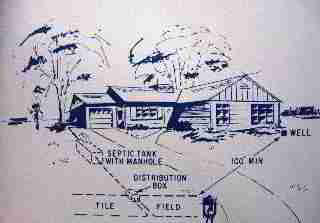 Problems with a Neighbor's Septic System
Neighboring septic disputes
- POST a QUESTION or COMMENT about responding to septic system smells, odors, or failures on neighboring properties
Trouble from neighbor's septic system:
This article offers advice for investigating, diagnosing, and resolving odor, seepage, or well contamination problems that appear to originate on a neighbor's property.
InspectAPedia tolerates no conflicts of interest. We have no relationship with advertisers, products, or services discussed at this website.
Advice for Investigating Septic Odors, Seepage, Failures, on Neighboring Lands
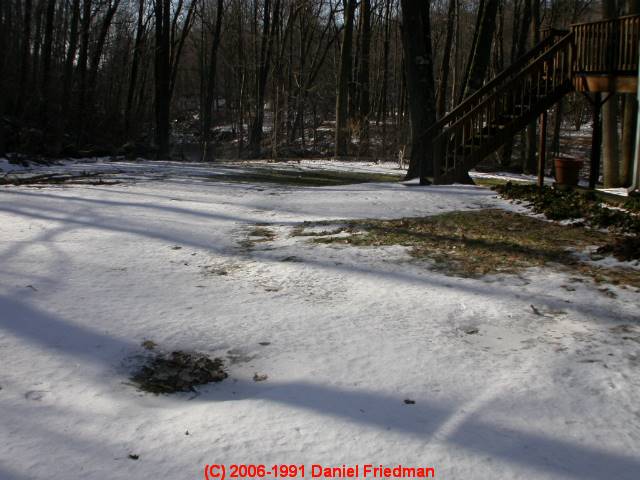
Hi, My neighbor has a septic tank in the front of their house, the house is about 30 years old. I can smell her septic on certain days but my concern is that it is very close to the property line and their property is about 8 feet higher in elevation and I think the waste is leaching into our yard.
Originally the yards were pretty level, but we cut away the banking to make a driveway. How can I tell if that waste is in the soil around our driveway.
Oh yeah, the banking doesn't freeze there in the winter. Thanks, C
Check with your Neighbors First
In general, septic effluent must be disposed of on the property from which it originates.
It’s always best to ask a neighbor to consider and address a problem before calling the authorities, but if a neighbor is unwilling or perhaps unable to act, the second step of involving the health department may be necessary.
In my experience, when an owner’s property was sending raw septic effluent onto a neighbor’s property and the offender refused to address the matter, the health department would get involved and require action.
Whenever there seems to be a problem that begins with a neighbor's property, we advise a prompt, courteous inquiry with the neighbor involved. Explain your concerns, invite their assistance, give the neighbor an opportunity to respond. Usually that approach will lead to satisfaction for everyone.
If you have the bad luck to encounter a neighbor who is unable or unwilling to assure that their septic system is not contaminating a neighbor, other steps may be necessary.
Check the distances between the neighboring septic system and property boundaries, wells, etc
 Perhaps start your research by looking
at CLEARANCE DISTANCES, SEPTIC SYSTEM
and then review the distances between the neighboring septic system and your property lines and anyone's well with your local health department.
Clearance distances from wells, property lines, streams, etc. must all be respected.
Investigate the source of septic odors
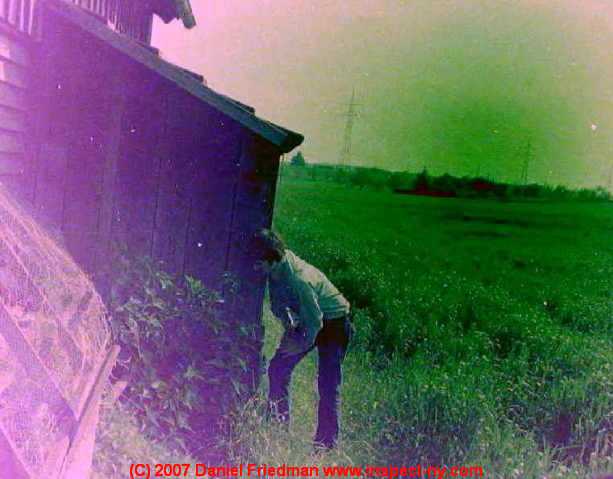
Sniffing out odors on your own property can be a challenge, and you should stay off of a neighbor's land unless you're invited there.
Odors may mean the neighbor’s system is in failure, or that their plumbing and venting are improperly installed, or (less likely) there could be another odor source. In my experience, most health departments will require action of septic effluent is actually entering a neighbor’s property, but won’t require action on odors.
So if your neighbor’s system is producing wet spots or wet areas on your land, they will most likely be required to fix that. Here is our article on diagnosing septic odors:
Investigate the source of wet areas that might or might not be due to someone's septic system failure
If there are wet areas that may be due to a septic problem
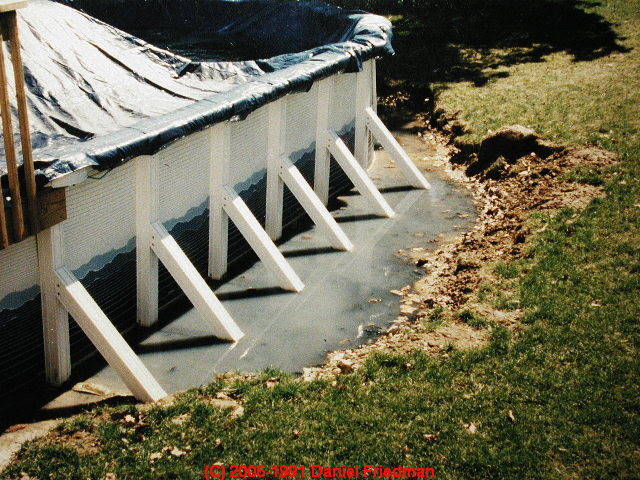
In this photo, excavation for an above ground pool disclosed sewage effluent flowing to the surface at an adjoining property.
If there are wet areas produced on your land, or for that matter, on the neighbor’s nearby land, their septic system may be in failure and needs repair for health reasons as well as functional reasons.
Here is a list of septic system failure criteria:
When effluent appears, the health department may use a septic dye to attempt to assure that the effluent is from a septic system and not another groundwater source.
I find that septic dye usually but not always appears in less than a day in the wet areas when the septic has failed.
At times the septic is in failure but the dye doesn't show up – because of dilution by other groundwater or use of bleach by an owner
. An explanation of how septic dye may not appear even though a septic has failed is at
If there are no wet areas but you still suspect a septic problem

This photo shows an uphill neighboring septic field whose effluent flowed below ground into the drive drainage system of the property in the foreground of the picture. This photo shows septic dye appearing in the area drain basin in the driveway.
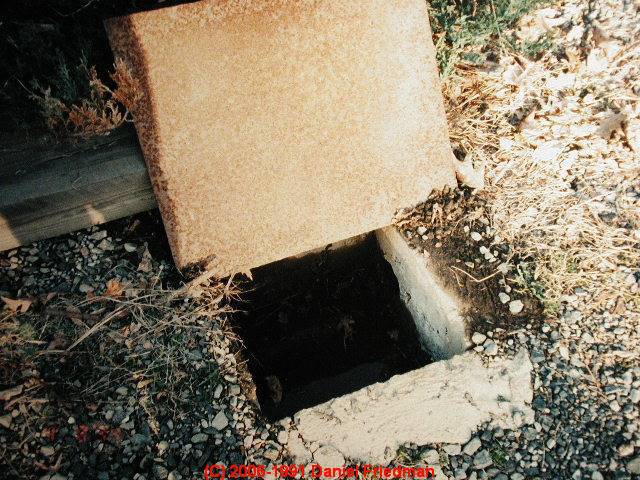
If there are no wet areas developing but the ground shows evidence of nearby effluent passage such as odors or warmth in winter, it may be expected that soon enough effluent will be appearing and the issue will become unambiguous – repair will be required.
Pay special attention to suspect areas during wet weather.
If there are no wet areas being produced on your land then effluent is not appearing at the ground surface, that is, if there is no visual evidence of septic failure, and absent a clearance distance issue which I introduced above,I'm not sure your health department would consider the neighbor to be in violation of health codes.
Soil testing for evidence of septic failure
Testing a soil for coliform bacteria or e coli bacteria to indicate that it’s contaminated with sewage effluent can be performed by a local water testing lab.
I’d call the lab to ask them the procedure they want you to use to test a soil sample rather than a water or groundwater sample, and I’d ask what standards of comparison are used. (And I ask that you share that information with me.)
Whom Should You Contact For Septic System Failure or Neighbor Encroachment Disputes?
Watch out: repeating advice we gave earlier, in the interest of amicable relationships among neighbors, if you have a concern about a neighboring septic system it is almost always best to first approach your neighbor directly, calmly and politely to discuss your concern.
Contact your local building and zoning officials about a septic system dispute if:
- Property line violations: your neighbor's septic system includes components installed on your property
You may need assistance from an attorney and / or a surveyor who can confirm property lines and who can review the required septic system setbacks from property lines or site features
Contact your local health department officials about a septic system dispute if:
- Septic system failures going un-repaired: your neighbor's septic system is discharging sewage or sewage effluent to the ground surface anywhere on anyone's property.
If a neighbor's septic system is in obvious failure and you have already had no result from speaking directly with your neighbor or if doing so is in your opinion unsafe, then contact your local health department and ask the health inspector to inspect the properties involved. - Septic systems too close to waterways, property boundaries, etc: If you see a septic system constructed or being constructed in obvious violation of typical clearance distances from community or private wells, lakes, streams, etc. given
at CLEARANCE DISTANCES, SEPTIC SYSTEM
Reader Comments, Questions & Answers About The Article Above
Below you will find questions and answers previously posted on this page at its page bottom reader comment box.
Reader Q&A - also see RECOMMENDED ARTICLES & FAQs
On 2022-07-02 by InspectApedia-911 (mod) - need own lawyer to represent your concerns, not your neighbors'
@Stephen,
Your "local lawyer" is not working for you.
You need your own lawyer who can review the circumstances, explain what you can and should do, and who cares about your health and money.
1. your neighbor may have trouble selling their property without a working septic
2. your neighbor will have trouble selling their property when their septic depends on an illegal (code violating) encroachment on a neighbor's land
3. your health department should condemn the neighbor's property if it's clear that their septic is discharging sewage effluent to the ground surface: doing so is a public health hazard and is a health code violation in most jurisdictions
Keep us posted
This Q&A were posted originally at
On 2022-07-02 by Stephen
I recently found out that my neighbor put his leech field on my, (previously his brothers), land because his land wouldn’t perk!?! It has begun to fail every now and then and he has his house up for sale and has an offer. I was unaware of this situation at passing and have been here 5 years. What are my options? He isn’t communicating and the local lawyer has told me she can’t discuss it with me? Conflict of interest!
On 2022-04-29 by Inspectapedia Com Moderator - RV park neighbor doesn't address sewage issues
@Sally,
Discharge of sewage onto the ground is un-healthy and violates health codes, and is a risk to both your neighbor and others in the RV park.
If you have not already given notice, in writing, to the RV park owners then you should do so. The park owners may understand the serious health and life-safety conditions present, and being notified in writing prevents a later claim that they had no idea of the conditions.
If you have already notified your RV park owners/management both in writing and orally and if they do not respond then you have no choice but to ask for help from local building code and health officials.
Try asking your health department to take a look and help make your home and RV park health-safe.
Be SURE to be brief, well-organized, and to the point when you call. If you give too much detail it makes it harder for your health officials to understand and respond well.
Bottom line: there is open sewage and feces being discharged onto the ground in your RV park and the condition has been going on for a long time.
Even more immediate: an open septic tank means that someone could fall-in, causing a quick and nasty death.
Contact:
Contra Costa Health Services
Address: 50 Douglas Dr #310, Martinez, CA 94553
Opens 8AM
Phone: (925) 957-5400
Also and separate from your health department is the Costa County Code Enforcement division.
Code Enforcement
Overview
The Code Enforcement Program enforces the building and zoning ordinances for the unincorporated areas of Contra Costa County. The code enforcement process is typically initiated by responding to citizen complaints and by staff proactively investigating violations. Our goal is to resolve conflict(s) through voluntary compliance. In the absence of voluntary compliance, the offices have a range of other options to encourage compliance including citations, administrative actions, and abatement.
Submit a Code Enforcement Complaint
Code Enforcement Complaint Form (online submittal)
or Call: (925) 655-2710 - surely dumping sewage is also a form of illegal dumping.
Web: https://www.contracosta.ca.gov/4725/Code-Enforcement
On 2022-04-29 by Sally
I live in a RV Park in Contra Costa County in California. My neighbor has a trailer that leaks into the ground. A half sized bucket that has been under her trailer for over a year that is beyond green. Plus she leaves her BLACK TANK OPEN all the time. Which creates a POOP PYRAMID. Which it sends horrific gases out of the roof vent and comes directly into my 5th wheel. Wheather my windows, door and roof air vents are closed. This happens all day every day.
I have a registered nurse come three times a week. He has witnessed the frequency of the gases come into my 5th wheel. He said the gases are toxic and bad for my health. I contacted the property manager over a year ago. In writing. She came to check one time as far as I know. Nothing was done. I recently sent another email stating, I cannot take the horrid smell any longer and what my home health nurse said. Which I am being treated for an open wound.
Also this at the end of the summer I had noticed the neighbors sewer hose was disconnected from the parks sewer pipe. Which wasn’t a proper fitted connector. A barbell weight was holding it in place. Her friend that works on her trailer walks over the sewer hose and left it disconnected more than once. I knocked on her door to tell her her sewage is all over the ground, and a huge ball of poop as well.
Her connection to the parks like is less than 12 inches from the back of my space. I assumed she picked up her poop. She said her friend said to throw some dirt on it. That dirt is contaminated, flies swarm her sewer hose as well it is again cracked due to someone stepping on it.
Anyways, I was taking up the leaves from her tree that blew against my pet fence. I had stepped down and I felt something under my foot that should not be there. Thank goodness I didn’t step all the way down. It was the big ball of poop I assumed she picked up! I was so disgusted I took a picture of it and emailed it to the property manager. Nothing has been done.
After two years of this I electronically sent a complaint to the proper agency to my county in early February. Over a month afterwards I received a phone call saying they received my complaint and the inspector will be out to inspect. He is backlogged. But he will be there at his soonest. It’s days from May end no inspection or inspector. The days are becoming warmer and the smell becomes worse! My family doesn’t want to come over any longer.
My sister was helping me with my shed. She asked if she could go talk to her. I said please do!!! My sister comes back frustrated. Telling me, she’s playing stupid! & said I smell it too. My sister said yeah it’s your own stuff (to keep it clean). Blaming she has to wait for her check to do anything about it.
Days later some guy is fixing her cracked hose with a piece of a dark garbage bag wraps around the hose and pulls out adhesive spray all excited about his work! Later she comes out asking if the smell has gotten better since the hose had been fixed? I told her Thats not the problem and again I explained it to her!
I told her her black tank has to have a mountain in the tank the urine seeps out. Creating the pyramid probably it’s a brick by now and if you throw toilet paper which she does because it’s also on the ground. It’s a boulder that somehow needs to be broken up and you need to close your line and use the proper chemicals..
I gave her a long industrial garden hose to fix the problem. As well as a proper fitting elbow to connect to the parks sewer pipe. It’s a shame I have to live like this! I consider myself an excellent tenant that pays their rent on time and I stay to myself and mind my own business! I used to enjoy working in my yard. Planting flowers in my pots doing projects outdoors . Even my two dogs do not stay outside like the used to.
To add to everything. Her cats like to poop underneath my 5th wheel. & find a gap somewhere as I spent a lot of time buying and assembling lattice around the bottom of my trailer to keep them out. Which days ago they pushed there way out and jumped right onto my seeer hose and ripped holes in it. Thank goodness I was flushing my hose with a connector that attaches to my garden hose and I turn the water on all the way. To clean the inside of my hose.
I put a drainage pipe sock over my hoses and roof flashing on top of my hose holder. So the wind doesn’t blow my hose off the holder any longer. This is an island and windy in the evenings.
I even started looking for a small house to move to. I will more in likely have to use my retirement to buy something. Which housing prices are outrageous in the Bay Area.
How can I get the inspector out here sooner? It’s been three months since I sent the complaint? What is the property’s responsibility. They never check new tenants connections or give any instructions or proper rules in the park rules about issues like this?
One last thing. That lady’s friend installed her water heater behind her trailer. It’s out in the open where her weeds are out of control. With the electric cord on the ground and her water line intake hose all on top of each other. I feel that’s a fire hazard! & our trailers are probably 6 feet away from each other.
Besides her trailer is inhabitable in my opinion. Dry rot , broken windows, leaking pipes, electricity used to go off when it rains, no roof air vent covers. Spider webs all over , and filthy. Help!!!
On 2022-04-24 by Inspectapedia Com Moderator - septic clearance distances
@stanley solovei,
Please see the clearance distances given in the table on this page
SEPTIC CLEARANCE DISTANCES
But keep in mind that the distance may vary depending on your location (country, state, city). Different authorities may recommend different distances and your local regulating department is the final authority on the requirements.
On 2022-04-24 by stanley solovei
How close can a leach field be to a property line
On 2022-04-22 by Inspectapedia Com Moderator - how to test septic effluent
@Brenda Roberts,
When effluent appears, your local health department may use a septic dye to try to determine that the effluent is from a septic system and not another groundwater source.
And depending on what the results of any testing are and repeating the advice we give above on this page, in the interest of amicable relationships among neighbors, if you have a concern about a neighboring septic system, it is almost always best to first approach your neighbor directly, calmly and politely to discuss your concern.
On 2022-04-21 by Brenda Roberts
I have a puddle in my yard that smells like raw sewage. How can I get it checked to be sure that's what it is?
On 2022-04-05 by Inspectapedia Com Moderator
@Linda,
Your health department is the local legal authority us power to require an owner to fix an unsanitary or public health-hazard condition. Perhaps you want to ask them if they intend to take any action.
Let us know what you are told. Sometimes letting the sun shine on these problems helps get people moving.
On 2022-04-04 by Linda
My neighbors sewer has been overflowing for two years. I have called the Health department twice. They told me something was supposed to be done about it. But still nothing has been.
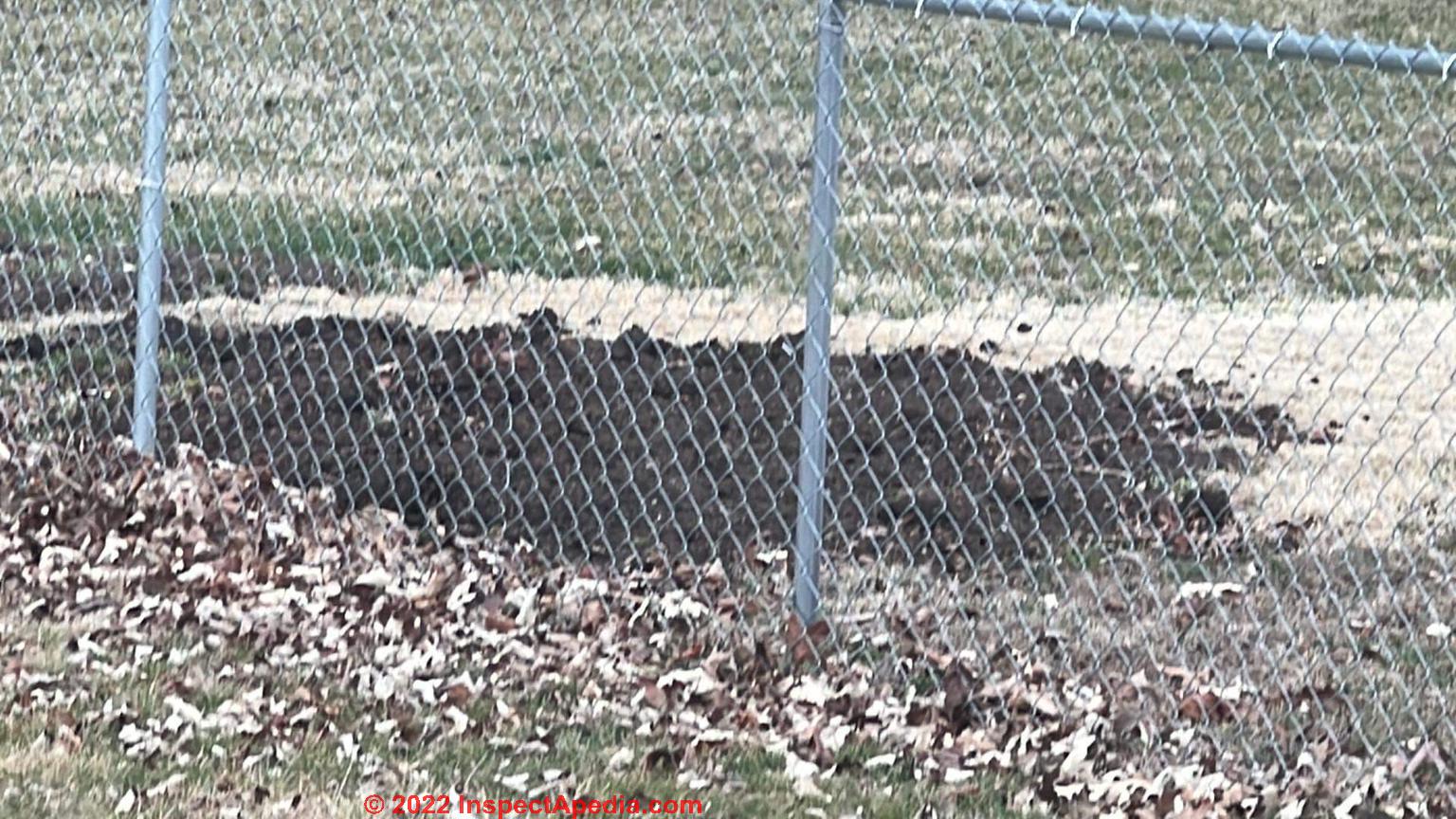
On 2022-04-04 by Inspectapedia Com Moderator - testing pond water for contamination
@Lloyd Lunsford,
There are two, possibly three options for testing pond water for sewage contamination:
1. your local health department
2. private but licensed or state/provincially-certified water testing labs near you
3. out-of-area mail-in water test labs: but beware that some types of bacteria test need to be processed within 24-hours of sample collection, so mailing such test samples is not practical nor reliable
See details at
SWIMMING WATER TESTS
On 2022-04-04 by Lloyd Lunsford
where can i get my pond water tested for my neighbors septic?
On 2022-03-31 by Inspectapedia Com Moderator
@F E SWINNERTON,
You might want to first talk to your neighbor to be sure s/he is aware of the leakage on their property. They may not be aware of it or may be working on fixing the problem already.
If it is, in fact, sewage effluent that is leaking, and your neighbor chooses not to address it, then as we advise in the article above, get help from your health department.
On 2022-03-31 by F E SWINNERTON
Septic lank leakage on neighbour's field
On 2022-03-24 by Inspectapedia Com Moderator - added help needed to assess sewage effluent on property
@Lisa,
If neighbour's sewage effluent is running onto your property - visually evident, smelly - and the neighbor won't address the problem, you probably need an onsite inspection by a home inspector or septic contractor to confirm that what you're seeing is neighbor's sewage effluent. Then if the neighbour won't address it, as we advise in the article above, get help from your health department.
On 2022-03-24 by Lisa
This is a picture expanded of the drain the stream it is making on my property. Should I take a soil sample for e coli? Should I hire a plumber to come have a look? Should I get a lawyer?
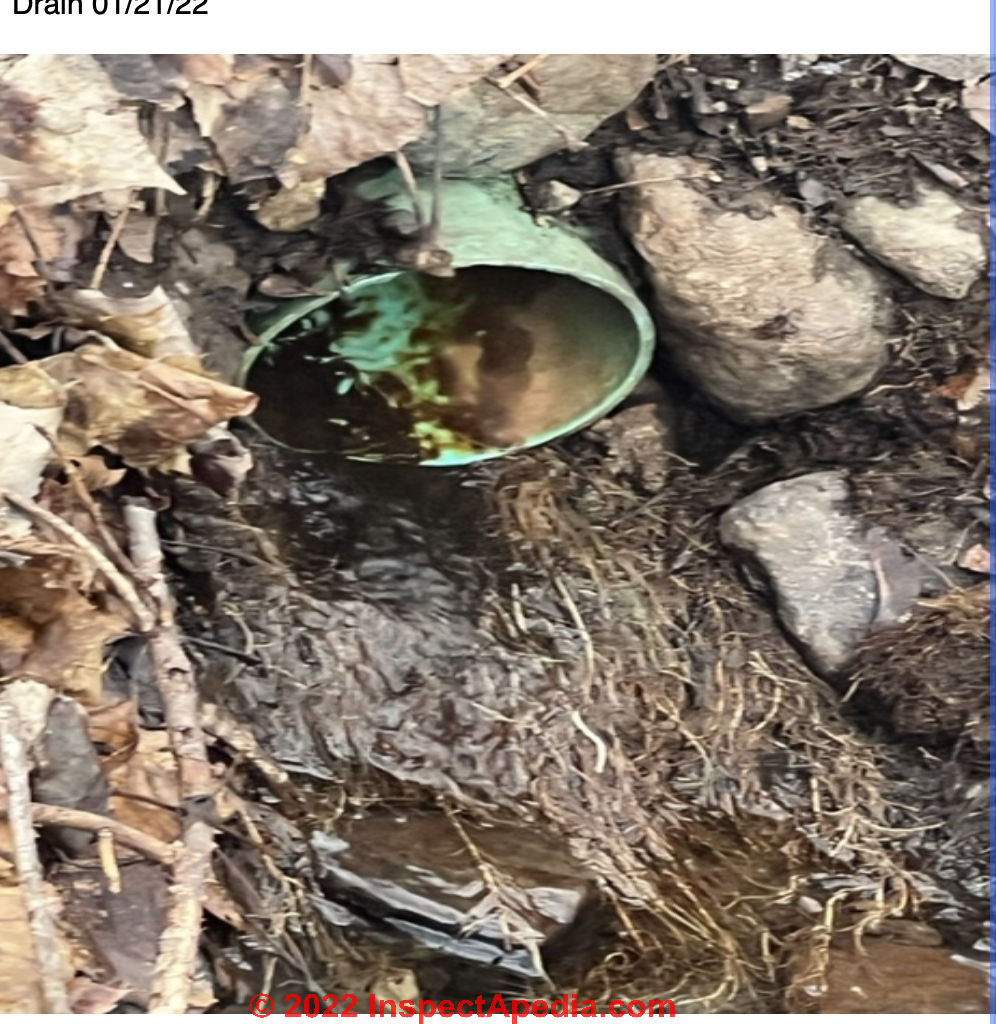
On 2022-03-24 by Lisa
I am seriously concerned about an abutter’s drain depositing effluent on to my property. The drain is inches from the corner of the properties.
This winter, a septic company was using a high pressure jet to unblock this drain. The workman were spewing a thick black effluent onto a wetland on my property. I did not even know this drain was there.
The neighbor made a driveway on the property line 15 years ago...apparently he put in a drainage pipe which looks as though it is coming from his septic tank hump.
I promptly contacted the town and had the code inspector come to have a look. At first she was concerned, saying this has been going on for some time, looks like is ti coming from his septic.
The abutter claimed that it was a curtain drain and that a tree root was blocking it, she believed that to be true and she was done.
I am not convinced that it a “curtain drain” as the pipe leads directly from the hump that appears to be a waste tank.
I am hoping you might be able to help me with my continued concern.
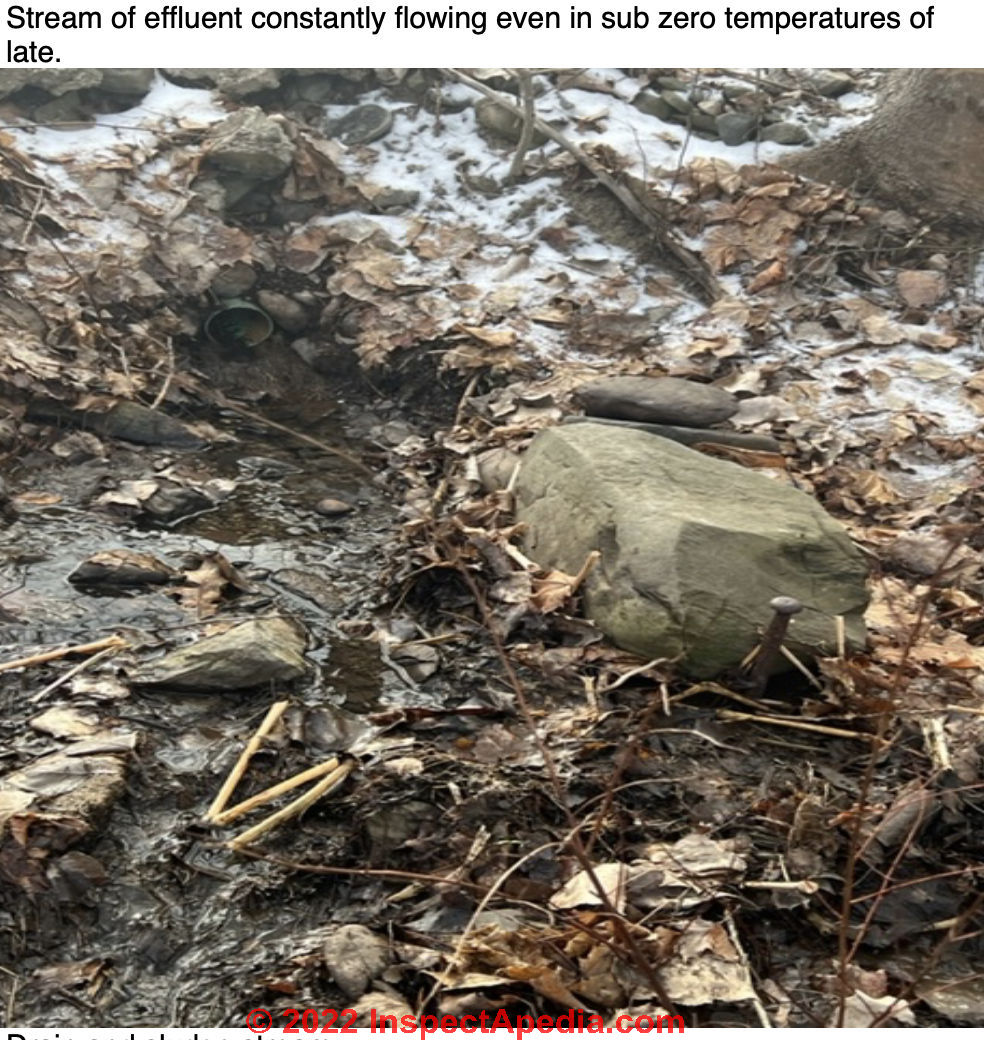
On 2022-03-22 by Inspectapedia Com Moderator
@Beverly,
Start by contacting your local health department to ask them for assistance.
On 2022-03-22 by Beverly
Live in Mississippi. Property line is less than 100 ft. Neighbors live up hill from us. Creek bed behind our home. Seem to be pumping raw sewage in creek bed. Smells horrible.
On 2022-03-15 by Inspectapedia Com Moderator
@Young,
You should ask your local health department for assistance.
On 2022-03-15 by Young
A camper is in a driveway and it's leaking raw sewage there is people living in it and has been since November of last year can you please do something about it the name is McDonalds and Daniel's address is 2524 cayuga trail lafayette indiana 47909
On 2022-03-11 by Inspectapedia Com Moderator - Untreated sewage being dumped on the ground
@Anonymous,
In just about any country and city it is unsanitary, a health hazard, and illegal to discharge sewage or sewage effluent to the ground surface.
If your landlord is doing that and isn't taking steps to repair the problem, you probably need help from your health department.
If you tell me your city, state, and country, I can try to help find that department's contact information.
On 2022-03-11 by Anonymous
My landlord has a open sewage he will not take care of it and he is pump it out on the ground
What can I do who do I call please help me
On 2022-03-05 by Inspectapedia Com Moderator - neighbor dumping raw sewage and cat litter next to my yard
@Anonymous,
I don't know what your local Health Department would say about cat litter waste disposal at the properly and there being garbage. But in most communities (you don't give us your country and city of location) it is illegal to discharge or dump sewage onto the ground surface anywhere.
If your neighbor won't stop doing that and wont clean up the sewage mess then you will need help from your health department.
On 2022-03-05 by Anonymous
My neighbor a male has been dumping his raw sewage as he was without plumbing for over a week he was dumping a large garbage can full. And garbage on the land next too him and continues too dump his cats litter BOXES
On 2022-02-28 by Inspectapedia Com Moderator - Concern about increased septic flow on property
@Danni,
First, my OPINION is that it is worse than foolish to buy a house with no inspection. Even an all-cash buyer ought to want to know what they're buying, what might be dangerous or costly to repair.
Second, in just about any country and city it is unsanitary, a health hazard, and illegal to discharge sewage or sewage effluent to the ground surface.
If your neighbor is doing that and isn't taking steps to repair the problem you probably need help from your health department.
On 2022-02-28 by Danni
My new neighbors bought the neighboring existing house in June and paid cash, so there was no inspection for a mortgage. The property was built circa 1960. The in ground septic system is antiquated and has never been replaced. I had a single woman, whose husband built the house, as a neighbor for the past 34 years.
There is an old black pipe, made of some kind of composite material, that comes out of the property and empties into the paved ditch up hill from us. Until the new neighbors moved in the amount of liquid that came out of this pipe was minuscule, barely visible.
Since the new neighbors moved in the flow is constant, heavier when they are home, but constant with an odor and slight iridescence. It flows in dry seasons, heavier in rain. My driveway is on a hill next to their property. The liquid now seeps through my hillside and empties onto my driveway.
The flow in the ditch out front is constant and in front of my mail box, so I have to step in it to get my mail. In the winter it makes an ice dam in my driveway of brown ice. It was normal to have storm water after a rain in this ditch but it would dry up and not appear until the next rain.
I had two samples tested for coliform, one from the black pipe and the other from my hillside. The readings were so high they did not register a number, just greater than the maximum amount. I seems obvious this is sewage from their system.
I tried talking to the neighbor but he initially feigned ignorance of knowing anything about the pipe or where the liquid could be coming from. They said they had the system tested and that it is legal and grandfathered. Such a system would not be allowed today.
This past weekend I tried to talk to them again and show them the results of the tests but I was not greeted nicely. Needless to say I am concerned. I drive over the ditch to get into my driveway, running over their waste water and tracking it into my garage. I have to step in it to get my mail.
What are my rights as a neighbor? Just because a system is grandfathered doesn't mean it works. Isn't it illegal to have your sewer water emptying into a public ditch and your neighbors yard?
I live in Southeastern Pennsylvania, about 40 miles northeast of Philadelphia in Montgomery County.. Any advise is greatly appreciated
On 2021-10-13 by inspectapedia.com.moderator - Waco Texas septic system law or dumping violations report information
@Shaunarie Hyland,
You need to contact your local building department or septic or plumbing inspector.
for the city of Waco TX you can use the building department's contact form
https://www.waco-texas.com/cms/forms/contactus.aspx#gsc.tab=0
as they don't appear (on their website) to make it easy to just call
City of Waco, Texas , PO Box 2570, 300 Austin Ave. , Waco, Texas 76702
Or contact the Waco health department at
Health Department
LaShonda Malrey-Horne, Director
Public Health District
225 W. Waco Drive Phone: (254) 750-5450
On 2021-10-13 by Shaunarie Hyland
There is an illegal septic system placed above the ground at 979 San Ann Road Waco Texas…76712…it is across the street from the core of engender property. The system was put in a night to avoid anyone seeing it. It is extremely illegal
Please go take a look.
It is in the front yard Bennett the pecan trees.
On 2021-09-14 by inspectapedia.com.moderator - neighbor's camper's septic system stinks
@Charlotte,
Did you try any of the suggestions we offer on the page above?
Perhaps you need to get your health department involved.
On 2021-09-14 by Charlotte
we have a neibor that never get their drop tank pumped we live where there campers and it is a camper it stinks alot just sometimes we live on the lake and what can be done
On 2021-08-03 by inspectapedia.com.moderator - neighbor's septic drainfield has holes, settlement, smells
@Marisa,
my best advice is right above on this page - please give it a read and don't hesitate to post follow up questions
On 2021-08-03 by Marisa
Neighbors septic has drain field in front yard. There is an area on that side of my yard that has holes and often a bad smell. What can I do?
On 2021-07-26 by inspectapedia.com.moderator - Check on septic setback distances
@Anna,
Depending on the country, city, county or Province where you live there are regulations requiring a setback from the property line for septic components. You need to find out what that requirement is where you live. About the septic tank itself making noise, that's pretty unusual, I don't know what that would be.
On 2021-07-26 by Anna
We live next door to a farm and the farmer has installed a septic tank next to the dividing fence and the noise of this is disturbing to neighbours sitting in the garden.
On 2021-07-08 by danjoefriedman (mod) - neighbor's septic system sprays effluent into my yard
@Upset,
I don't blame you for being upset if there is actual fecal material being sprayed around.
That doesn't sound like a septic system that's working correctly.
If you can't talk to your neighbor about this and encourage the neighbor to get the system examined by an expert you may need to get help from your local Health Department.
In no community is it legal nor sanitary to dispose of raw sewage onto the ground surface.
But before forming your statement of fact be sure that you've got an accurate description of what's going on. There may be small, under treated sewage effluent that is not the same as actual spraying of raw sewage or feces.
On 2021-07-08 by Upset
Our neighbor's septic tank sprays feces in his yard. We can't go outside with the smell being so strong. Is this legal?
On 2021-07-01 by inspectapedia.com.moderator - Coliform bacteria concerns
@Anonymous,
Most coliform bacteria do not cause disease. However, some rare strains of E. coli, particularly the strain 0157:H7, can cause serious illness. - NYS DOH - https://www.health.ny.gov/environmental/water/drinking/coliform_bacteria.htm
Total coliforms are a group of related bacteria that are (with few exceptions) not harmful to humans. A variety of bacteria, parasites, and viruses, known as pathogens, can potentially cause health problems if humans ingest them. EPA considers total coliforms a useful indicator of other pathogens for drinking water. Total coliforms are used to determine the adequacy of water treatment and the integrity of the distribution system. - U.S. EPA - Revised Total Coliform Rule https://www.epa.gov/dwreginfo/revised-total-coliform-rule-and-total-coliform-rule
See REVISED TOTAL COLIFORM RULE SUMMARY SHEET [PDF] - original source: U.S. EPA https://nepis.epa.gov/Exe/ZyPDF.cgi?Dockey=P100K9MP.txt
How "bad" or how much of a health hazard a total coliform count is depends on where it was measured:
- in septage
- in soil
- in surface water such as a lake or stream (here the water would be unsafe for swimming)
- in drinking water (here your number would be unsafe to drink)
On 2021-07-01 by Anonymous
Effluent readings are Total coliform MPN/100ml are>2420. So is E.Coli. How bad is this?
On 2021-06-28 by (mod) - Oklahoma DEQ not addressing sewage spills in creeks
@Chuck,
Quite understandably all that you report is disturbing and disappointing. If you have actual documentation on these matters perhaps that's something you would want to post and press people are people you can then identify.
On 2021-06-28 by Chuck - Oklahoma simply will not enforce common sense environmental regulations [reader OPINION]
A new neighbor says on a recorded conversation; "My (sewage effluent) spray head is basically in the bottom of this
creek." That creek then flows across my 5 acres where I've lived for 30 years in Oklahoma. On another recorded
conversation, an Oklahoma Department of Environmental Quality supervisor says he doesn't care if the neighbor's
sewage effluent gets in this creek. Nothing he can do about that. ODEQ doesn't have anything to do with creeks.
That is simply not true. ODEQ is the government agency charged with enforcing regulations protecting state water
quality and ensuring these sewage systems are installed properly and do not discharge into creeks, streams and other
surface waters. The E.coli count in this creek has been as high as 24,190 colonies per 100ml. If that sounds high,
you are correct.
That is 120 times the safe limit for skin contact. Not 120%, 120 TIMES. I have contacted everyone that
should be concerned and many that don't want to be concerned. I have reached out to everyone who represents me
except the President and V.P. All I hear is crickets.
Oklahoma simply will not enforce common sense environmental regulations that would protect
waters of this state. How sad! Massive tax cuts for businesses and corporations and budget cuts to critical state
agencies.
On 2021-06-08 - by (mod) - call your local health department for help with neighbor's septic complaints
@Debbie,
Call your local health department.
Our best advice, more-through than if I make it up anew here in a comment, is found on the page above. Please take a look and don't hesitate to ask me if any of that leaves you with questions or comments.
On 2021-06-08 by Debbie
RE-Posted by moderator - Comments Box used a complexURL & lost this posting
My neighbor doesn’t take care of his septic system, we have to have a sprinkler system for our septic and when the neighbors come on it stinks has been smelling for over 10 years and I’m tired of smelling when I sit out side emit sure how healthy it is I pay to keep mine from smelling I think they should too please let me know who I can report them too to get fixed
On 2021-05-12 - by (mod) - North Carolina septic system dumps raw sewage
@Missi,
Start by contacting your local health department to ask them for assistance
On 2021-05-10 by Missi
we purchased our home in North Carolina almost 6 months ago & noticed the smell almost immediately. We knew it wasn't ours because we had it flushed & inspected before move in. We've tried speaking to the neighbor &
they don't seem to have any intention of fixing the problem of raw sewage in their yard because the tank & leech line are both broken & the health dept doesn't seem to be in a hurry at all even tho they know & have seen the horrible issue, I'm the one who has to smell it on a constant basis. Does anyone in North Carolina have any advice?
On 2021-05-07 by (mod) - Neighbors septic disposed of on our land?
@lorrie,
You will need an attorney to look at your deed to see what, if any, easements your neighbor has on your property.
Also check with your department of health
On 2021-05-06 by lorrie
there is a apartment complex next to my property I have just found out that they crossed the creek with the septic lines and their drain fill lines are in the front of my property is that legal there are seven apartments that are hooked to this is that legal for them to put drain fill lines and somebody else's property they used to own both but not anymore
On 2021-04-21 - by (mod) - neighbor pumps sewage onto the ground surface - who do I call?
@Justin, your department of health
On 2021-04-20 by Justin
I have a question my neighbor is pumping. Septic sewage in there yard and it smells really bad who do I contact to resolved this proplem
On 2021-04-07 - by (mod) - Raeford North Carolina septic failure authority
@Murphy,
sounds as if it's appropriate to ask for help from your local health department
That will be Hoke County Department of Health
683 E Palmer St, Raeford, NC 28376
(910) 875-3717
On 2021-04-07 by Murphy
There is a fecal sewage smell up the street from me. It's on driftwood lane in raeford, nc. We have known hoarders. That's around where the smells at.
On 2021-02-23 by (mod) - neighbor's sewage into our driveway
@Jo, if the landowners unwilling to correct the discharge of raw sewage onto the ground you will need to get help from your local health department. You don't give your country or city of location but in most places in the world it is illegal to discharge raw sewage onto the surface. It's also of course a health hazard.
Ask your local health department for help
On 2021-02-22 by Jo
My Neighbors leach lines or one of has burst and we have constant flowing water into our driveway and yard (we are on a slight slant) causing in to become nasty and muddy. It doesn't smell at the minute. We have spoken to them and they say they have spoken to their landlord but nothing has been addressed yet. What can I do?
On 2021-02-14 - by (mod) - distance from neighbour's plumbing vent to our door
Vickie
Your neighbors plumbing vent, correctly installed, but extend above the roofline. Properly located like that it's hard to know from simply the text of your message what could possibly be the problem. Perhaps you need to describe a bit more.
On 2021-02-14 by Vickie
Is the a certain distance the neighbours sewage vent should be away from our back door
On 2021-01-19 by (mod) - neighbor connected to our septic tank
Ocn
This is a question for your attorney: what happens if you, after notifying the neighbor in writing ahead of time, simply exercise your control over your own property by interrupting the neighbour's septic lines that are on your land?
By the way, it's disappointing that nobody advised you to perform proper due-diligence inspections of the property before the purchase.
On 2021-01-19 by OcnLvr
We purchased a Building Lot and didn't know the neighbor was hooked to a Septic Tank. The City will not release Building Permits to me, until the neighbor hooks on to the City Sewer. Some of the Leach Lines run on my Property. The Seller claims he didn't know the neighbor was on a Septic Tank, nor Leach Lines ran on the Property I purchased from him.
Our Home Builder is ready to start building, but can't do anything until the City releases the Permits. I am having to pay DAILY Fees to the Builder because he can't build, because of this issue. The Health Department is aware of this problem, but won't force the neighbor to hook to the Sewer. I've contacted the City.
I've tried to talk to the Neighbor, he won't answer his door. No one is doing anything. Is there anything legally I can do, to make this guy hook up to the Sewer, so I can start building? I just don't know what to do. Any suggestions?
...
Continue reading at CLEARANCE DISTANCES, SEPTIC SYSTEM or select a topic from the closely-related articles below, or see the complete ARTICLE INDEX.
Or see NEIGHBOURING SEPTIC SYSTEM FAQs - questions & answers posted originally at this article.
Or see these
Recommended Articles
- CLEARANCE DISTANCES, SEPTIC SYSTEM
- NEIGHBORING SEPTIC SYSTEM PROBLEMS
- PLANTS & TREES OVER SEPTIC SYSTEMS
- SEPTIC COMPONENT LOCATIONS
- SEPTIC DRAINFIELD LOCATION
- SEPTIC VIDEOS
- SEPTIC to POOL DISTANCE
- SEWAGE CONTAMINATION
- SWIMMING WATER TESTS
- WELLS CISTERNS & SPRINGS - home
- WELL CLEARANCE DISTANCES
- WELL LOCATION, HOW TO FIND
Suggested citation for this web page
NEIGHBORING SEPTIC SYSTEM PROBLEMS at InspectApedia.com - online encyclopedia of building & environmental inspection, testing, diagnosis, repair, & problem prevention advice.
Or see this
INDEX to RELATED ARTICLES: ARTICLE INDEX to SEPTIC SYSTEMS
Or use the SEARCH BOX found below to Ask a Question or Search InspectApedia
Ask a Question or Search InspectApedia
Try the search box just below, or if you prefer, post a question or comment in the Comments box below and we will respond promptly.
Search the InspectApedia website
Note: appearance of your Comment below may be delayed: if your comment contains an image, photograph, web link, or text that looks to the software as if it might be a web link, your posting will appear after it has been approved by a moderator. Apologies for the delay.
Only one image can be added per comment but you can post as many comments, and therefore images, as you like.
You will not receive a notification when a response to your question has been posted.
Please bookmark this page to make it easy for you to check back for our response.
Our Comment Box is provided by Countable Web Productions countable.ca
Citations & References
In addition to any citations in the article above, a full list is available on request.
- New York State Department of Health, APPENDIX 75-A WASTEWATER TREATMENT STANDARDS - INDIVIDUAL HOUSEHOLD SYSTEMS , [PDF] New York State Department of Health, 3 February 2010, retrieved 3/1/2010, original source: https://www.health.ny.gov/regulations/nycrr/title_10/part_75/appendix_75-a.htm
CONTINUE READING or RECOMMENDED ARTICLES.
- Carson, Dunlop & Associates Ltd., 120 Carlton Street Suite 407, Toronto ON M5A 4K2. Tel: (416) 964-9415 1-800-268-7070 Email: info@carsondunlop.com. Alan Carson is a past president of ASHI, the American Society of Home Inspectors.
Thanks to Alan Carson and Bob Dunlop, for permission for InspectAPedia to use text excerpts from The HOME REFERENCE BOOK - the Encyclopedia of Homes and to use illustrations from The ILLUSTRATED HOME .
Carson Dunlop Associates provides extensive home inspection education and report writing material. In gratitude we provide links to tsome Carson Dunlop Associates products and services.
 | HOME | ABOUT | ASK a QUESTION | CONTACT | CONTENT USE POLICY | DESCRIPTION | POLICIES | PRIVACY | |
| © 2024 - 1985 Publisher InspectApedia.com - Daniel Friedman | |||||||||