
InspectAPedia® FREE Encyclopedia of Building & Environmental Construction, Diagnosis, Maintenance & Repair |
Question? Just ask us! InspectAPedia
|
 Chemicals That Should NOT Be Flushed into a Septic Tank
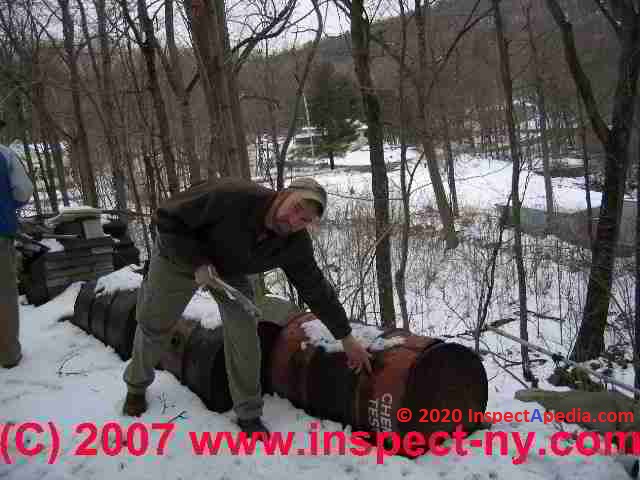
- POST a QUESTION or COMMENT about septic system chemicals and about using septic systems to dispose of certain chemicals and substances that may harm the drainfield or contaminate the environment
What items and chemicals are NOT safe to flush down the toilet and into a private septic system besides normal household cleaners and household chemicals?
This document explains how to extend the life of the septic system by being careful about what goes into it.
InspectAPedia tolerates no conflicts of interest. We have no relationship with advertisers, products, or services discussed at this website.
Effects of Other Chemicals Flushed Into a Septic Systems
List of other chemicals & substances that we have seen dumped into septic systems and in one case, into a well - don't do this!Do not use septic tanks, wells, even abandoned wells and septic tanks to dispose of chemicals.
- Chemicals, Oils, Paints: Do not flush these chemicals into the septic system in any quantity:
- Furniture polish
- Lye, NaOh, Sodium Hydroxide, caustic soda, drain cleaners, oven cleaners, and similar cleaning products, in concentrations above those recommended below. See LYE in SEPTIC SYSTEMS for details
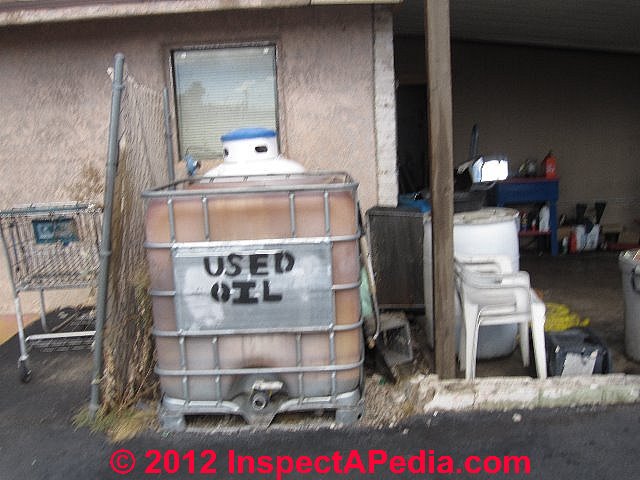
- Oils such as used motor oil or unwanted cooking oil - photo , courtesy Canyon Auto, Tucson AZ.
- Paints of any kind, latex, oil, alkyd, acrylic, water-based
- Pesticides
- Photo chemicals
- Thinners (such as paint thinner)
- Varnishes
- Antibiotics and Septic Systems: Normal use of antibiotics by occupants in a one or two family residence with a septic system will not harm the septic tank or fields.
High levels of discharge of antibiotics in urine and body waste from many building occupants using such drugs, such as at a nursing home with 50 residents and an onsite septic system, can kill bacteria in the septic tank and leach field and thus may indeed be a problem for such facilities.
See DRUGS INTO the SEPTIC TANK? for details. - De-Greasing Chemicals: industrial oil and grease removing chemicals are harmful while drain maintenance chemicals intended to dissolve grease may be harmless or in some cases helpful.
Details are in our septic tank chemicals article in this section:
FOG DEGREASERS. - Dishwasher detergents:
see DISHWASHER & LAUNDRY DETERGENTS CONTAINING PHOSPHATES & SURFACTANTS for a discussion of the effects of phosphates & detergents on the environment. - Disinfectants, antimicrobials, including pine cleaners, bathroom and kitchen cleaners, quaternary ammonium compounds, liquid bleaches, sodium hypochlorite.
- Drain cleaners - See LYE in SEPTIC SYSTEMS
- Heavy metals - products that will expend heavy metals into the septic tank and soils around the drainfield include copper and lead leaching from copper water supply pipes and building drains where the water supply is aggressive or corrosive.
In addition to copper from pipes, cadmium, chromium, silver, and zinc are found in small amounts in personal care products and soaps, and in larger quantities in paints and some cleaners. - Hydrochloric acid HCL poured into a well: a reader explained that his plumber poured several gallons of pure HCL into the well to attempt to free a pump that seemed to be stuck in the well casing.
The plumber eventually got the pump free - we're not sure the hydrochloric acid was what did the trick - the pump may have been stuck at the pitless adapter which protrudes into the well casing.
In any case the plumber has contaminated the well and worse, probably s/he has contaminated the local aquifer with a toxic chemical. We were left with no advice but to hope that dilution will eventually reduce the effect of this stupid move, and that the owner should test his well water for HCL.
Since the owner and plumber ran lots of water to "flush out" the well, they've moved at least some of the acid into the owner's septic system and local groundwater where it contaminates the area further.
Our opinion was that it was probably better to move the HCL as much as possible out of the well by any means rather than contaminate the aquifer for this well and perhaps for the neighbors. - Illegal Drug Manufacturing and Septic Systems: Anecdotally we report on a septic system in New York near the Taconic State Parkway was connected to house in which was operated an illegal drug manufacturing operation - perhaps a "meth lab". So much drug-production-related contaminant was flushed down house drains that the workers contaminated their own well and poisoned themselves.
- Laundry detergents & soaps used in washing machines & dishwashers are discussed separately
at WASHING MACHINES & SEPTIC SYSTEMS - Lye, Caustic Soda, or Sodium Hydroxide (NaOH) in the septic tank: in concentrations above those recommended by Gross (1987) are described here along with concentrations of bleach, Lysol™ and Drano™ or similar products such as Oven Monster™ caustic soda or lye.
Lye or NaOH is the principal ingredient in many drain cleaners and other cleaning products.
From the Cornell Cooperative Extension we have this recommended limit on the use of bleach or caustics or drain cleaners in septic systems:Maximum daily dosage of selected household Chemicals for a 1,000-gallon septic tank (Gross, 1987)
- Liquid hypochlorite bleach - 1.3 gallons maximum daily dosage
- Pine cleaner - 2.5 gallons maximum daily dosage
- Crystal® drain cleaner - 0.65 ounces maximum daily dosage
CRYSTAL DRAIN CLEANER Opener® [PDF] , from Roebic, is composed of caustic soda or lye or sodium hydroxide in a dry form. Yet it is described as "safe for septic tanks" in product information provided at Lowes.)
Watch out: this is an extremely small amount compared to amounts typically used to clear a blocked drain.
A typical package of Drano® kitchen granules contains 17.6 ounces of granules.
Drano's instructions recommend using three heaping tablespoons of Drano® Kitchen Granules into a clogged kitchen drain. - source: Drano cited below.
We cannot directly convert TBSP of Drano® to ounces by weight without direct measurement as it's a dry substance, but 3 Tablespoons is 3 fluid ounces.
Drano's instructions for using Drano® liquid GEL call for pouring 16 oz. (liquid measure) slowly over the drain, or for complete clogs, using 32 oz. - that is fifty times the recommended maximum daily dose of a typical drain cleaner given by Gross (1987).
If two days are required to recover from 0.65 ounces of a drain cleaner, a septic tank and drainfield could require well over a month of usage to recover from the much higher "dose" described here.
Therefore frequent use of caustic drain cleaners appears to risk significant harm to a septic system.
---
Caustic soda or lye at high levels in a septic tank risks killing the bacteria needed to break down sewage pathogens both in the tank itself and also in the soil into which the septic tank effluent is discharged.
Occasional use, perhaps once a month, of a 15% caustic soda solution in amounts of a gallon or less, is not likely to harm the septic system, based on this calculation using Powell's online caustic soda dilution calculator [ https://www.powellfab.com/ ]
0.3 gallons of 15wt diluted sodium hydroxide + 0.8 gallons of water produces what the industry considers "dilute sodium hydroxide solution" such as might be used for grill cleaning.
If, then, one gallon of dilute sodium hydroxide enters a 1000 gallon septic tank (for example, as you don't give your septic tank size) the sodium hydroxide is further diluted by the 1000 gallons of sewage in the tank. Well almost.
If we figure that an in-use septic tank contains solid sludge, floating scum, and a remaining liquid volume, we can figure that your cleaning product is being initially diluted into about 750 gallons of wastewater.
If we figure that a typical septic tank is receiving no less than another 250 gallons of wastewater each day, at the end of day 1 a cleaning solution such as Oven Monster® used to clean ovens has been diluted at a rate of 1000:1 with wastewater - that's quite dilute.
Over the next four days that lye dilution is doubled. Over two weeks the lye or caustic soda dilution is multiplied by roughly 7-10 times.
Watch out: The companies producing Drano kitchen granules® and Roebic's Crystal Drain Opener® provide instructions and assert that their products are safe for septic systems.
HOWEVER if larger amounts of concentrated or diluted sodiuim hydroxide or NaOH or Lye is entering a septic system will indeed kill the necessary bacteria and is likely to contaminate the surrounding environment as well.
Sources:
Gross, Mark A. "Assessment of the effects of household chemicals upon individual septic tank performances." (1987).
Abstract:
A laboratory study and a field study were performed to determine the amounts of specific household chemicals required to destroy bacteria populations in individual domestic septic tanks. The particular chemicals evaluated include liquid chlorine bleach, High Test Hypochlorite (HTH), Lysol disinfectant and Drano crystal.
The laboratory study was performed to determine the approximate chemical concentrations to destroy the bacteria in the septic tank, and the field study showed the actual effect of the chemicals upon the bacteria in terms of reduction of the number of bacteria in the septic tank as well as the time required for the bacterial population to recover.
A liquid bleach concentration of 1.85 ml/l destroyed the bacteria in the septic tanks.
This corresponds to 7 liters (1.85 gallons) of liquid bleach in a 3780 liter (1000 gallon) septic tank. After addition of chlorine bleach, and within approximately 30 hours of normal septic system usage, the bacterial population had recovered to its original concentration.
A Lysol concentration of 5.0 ml/l destroyed the bacteria in the domestic tanks. This corresponds to 19 liters (5.0 gallons) of Lysol in a 3780 (1000 gallon) septic tank. Following the addition of Lysol, the bacteria population recovered to its original concentration within approximately 60 hours (2.5 days).
A Drano concentration of 3.0 mg/l destroys the bacteria in a septic tank.
This corresponds to 11.3 grams (0.4 ounces) in a 3780 liter (1000 gallon) septic tank. The bacterial population recovers to its original concentration within 48 hours following the addition of the Drano.
Schwartz, John HJ., Ann t. Lemley, Kalpana Pratrap, HOUSEHOLD CHEMICALS and YOUR SEPTIC SYSTEM [PDF] (2004), Water Treatment Notes, Cornell Cooperative Extension, produced in cooperation with the U.S. Department of Agriculture, retrieved 2018/05/17, original source: waterquality.cce.cornell.edu/publications/CCEWQ-16-HouseholdChemicalsSeptic.pdf in turn derived from Gross (1987) cited above.
CRYSTAL DRAIN OPENER, Roebic, at Lowes [PDF] product information, retrieved 2018/05/17, original source: https://www.lowes.com/pd /Roebic-Laboratories-Inc-32-oz -Drain-Cleaner-Crystals/ 4751600?cm_ mmc=SCE_PLA-_- Paint-_-DrainCleaning-_-4751600: Roebic_Laboratories,_Inc. &CAWELAID=&kpid=4751600&CAGPSPN =pla&store_code=2326&k_ clickID= fba39466-b15b-4d0c- a6bd-a382b48b16 e2&gclid =Cj0KCQ jw0PTXBRCGARIs AKNYfG2jk3 puXQIw3vAj2 MRtyt87Xe6 Euv33Sj6ald EpaUWD wVhfe4e wU-UaAp84EAL w_wcB
DRANO KITCHEN GRANULES PRODUCT INFORMATSION [PDF] retrieved 2018/05/17, original source: https://www.drano.com/en-us/products/drano-kitchen-granules-clog-remover
- Motor oil poured into a drinking well: at a home inspection we discovered two well casings near a driveway. One was a well that was in-use providing water to the home.
We noticed that the other casing was un-capped and asked the property owner what was up. He explained that he did a lot of work on his own cars and trucks, and that when he changed the oil, he figured that a great way to dispose of unwanted motor oil was to dump it into the old un-used well.
Do not dump motor oil into your well. You'll contaminate the local aquifer. Used motor oils contain a number of highly toxic substances such as heavy metals. Take used motor oil to almost any garage or gas station where they are required to dispose of it legally and safely. (They may charge you a small fee.)
This is a great example of why unused water wells should be abandoned properly, including sealing the well against surface- generated contaminants. - Pesticides and Septic Systems: people who need to dispose of un-used pesticides should not put them in building drains or toilets. In the U.S. contact your state department of environment or local health department to find the nearest local hazardous waste disposal station where you can usually drop off unwanted chemicals, paint, etc., often at no charge.
- Solvents, such as paint thinner, nail polish remover, degreasers and in some septic tank treatments or additive products.
See SEPTIC ADDITIVE TYPES - Subtle phthalates contamination of groundwater and wells from phthalates: in a compelling article in the New York Times in July 2009 Nicholas D. Kristof reported on the possible hazards of phthalates, chemicals that can leach into their contents and thence into the environment from some plastic food or water containers, or even toys.
While we have not found any research whatsoever that tests for the appearance of pthalates in septic systems and the ground water into which septic effluent ultimately appears, we recommend prudent avoidance of phthalate containing plastics for foods or beverages.
Mr. Kristof pointed out that "These are ubiquitous in modern life ... -- and many scientists have linked them to everything from sexual deformities in babies to obesity and diabetes."
Readers interested in the subtle but powerful effects of hormone mimicking chemicals and endocrine disruptors that appear in the environment, their sources, effects, and risks, should also see
Our Stolen Future, Theo Colborn, Dianne Dumanoski, and John Peterson Myers.
Reader Comments, Questions & Answers About The Article Above
Below you will find questions and answers previously posted on this page at its page bottom reader comment box.
Reader Q&A - also see RECOMMENDED ARTICLES & FAQs
Interesting Questions & Answers about Spilling Chemicals & Treatments Down Toilets
InspectAPedia is an independent publisher of building, environmental, and forensic inspection, diagnosis, and repair information provided free to the public - we have no business nor financial connection with any manufacturer or service provider discussed at our website.
On 2022-01-26 by desertdune
Actually, Kleenwise does NOT run thru the distiller! Put some in the water container, add hot water to activate, cover and let sit a few hours.
I've put it in the toilet and let sit several hours. Sometimes with hot water, other times not.
On 2022-01-25 by Inspectapedia Com Moderator
@desertdune,
Thanks for the follow-up; that's pretty interesting; typically a distiller de-scaler expects to be run through that appliance at high temperature, so I was skeptical that it'd work at all at normal household water supply temperature such as found in a toilet.
How long do you let the de-scaler sit in the toilet bowl?
On 2022-01-25 by desertdune
@Inspectapedia Com Moderator, I appreciate the reply. Honestly, it's been working better than the industrial descaler that IS recommended for toilets. Maybe I can use the industrial for maintenance. Thanks, again!
On 2022-01-25 by Inspectapedia Com Moderator
@Desertdune,
Kleenwise de-scaler, at the normal levels of household usage such as you describe -a teaspoon - will be perfectly safe for a septic system. That de-scaler is so very dilute in the septic tank (figure a teaspoon in 750 gallons or more + further dilution as more wastewater enters the
septic tank) that it's harmless.
See this KLEENWISE DISTILLER CLEANER SDS [PDF]
and you will read that Kleenwise is Sulfamic acid which is indeed corrosive and could be harmful if not used as directed.
See these KLEENWISE DISTILLER CLEANER INSTRUCTIONS [PDF]
You'll also read that this product is designed to clean a portable water distiller. It is not intended for use in a toilet trap and is not likely to be effective.
On 2022-01-25 by Desertdune
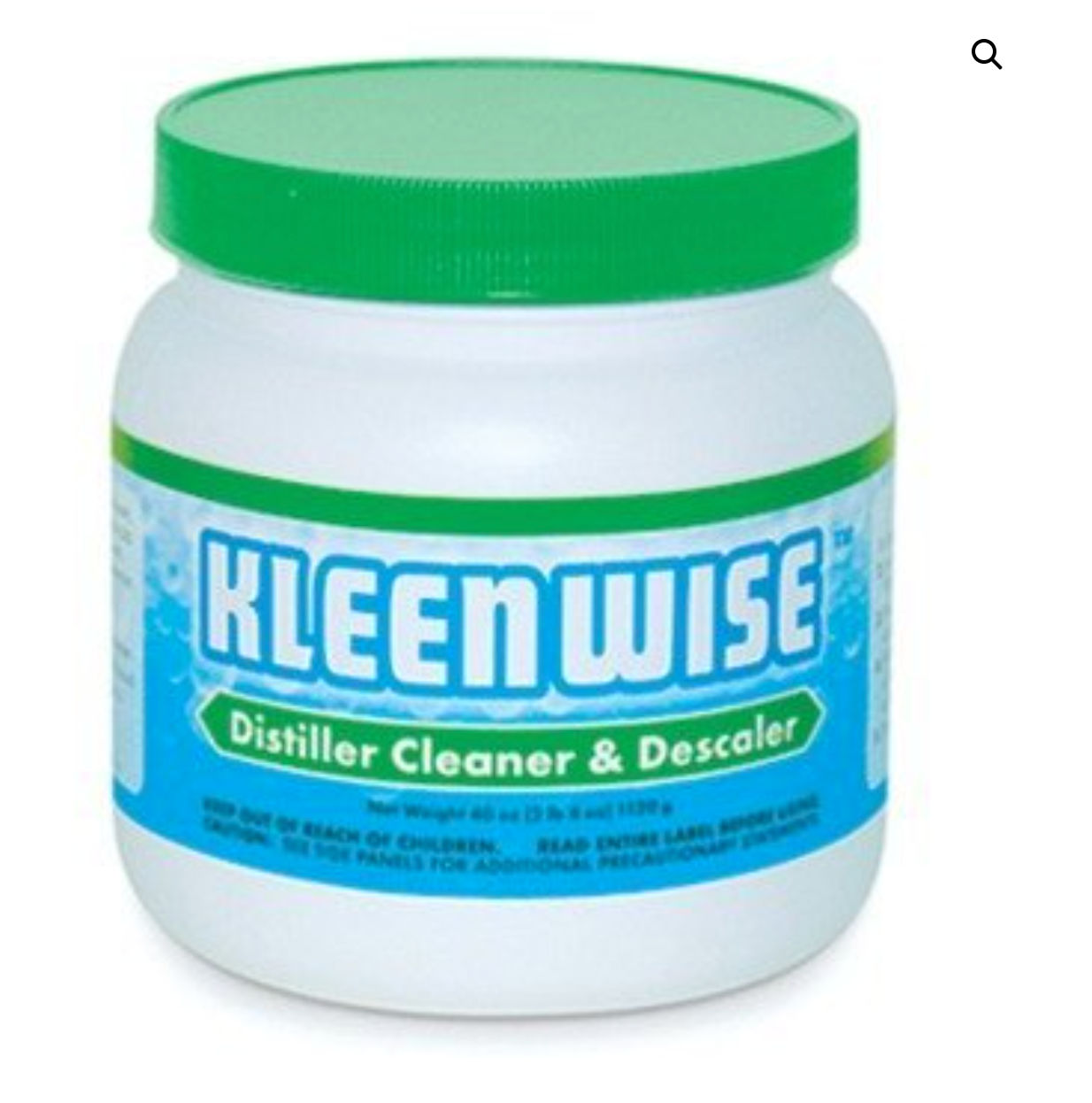
Will Kleenwise distiller + descaler (made with sulfamic and citric acid) be ok for a septic system? Trying to descale the toilet trap. Using about a daily teaspoon for a few days, allowing it to sit in the bowl. Then will move to maybe weekly use. Thanks!
On 2021-12-26 by Inspectapedia Com Moderator
@Davidv,
In my OPINION you can safely use salt or you can also use other ice melt alternatives (Calcium Chloride, Vinegar, Sand or other alternatives) near a septic system - at normal levels the quantity of salt in normal homeowner use isn't likely to be sufficient to kill off soil bacteria in the septic drainfield.
On 2021-12-26 by Davidv
Is there a product that is safe to melt ice on stairs of my cottage with the septic nearby? Salt? Other products? If the answer is that nothing is good, what is the least bad, as I need to use at least a little. Thx
On 2021-11-07 by Inspectapedia Com Moderator
@Kay,
Thank you.
I certainly agree that in that quantity there can't be a concern for damage to the septic system.
It would help us to understand why you were using this product at all. Can you say more?
On 2021-11-07 by Kay
@Inspectapedia Com Moderator, Thank you for your reply. I have looked over the PDF document you recommended, and it appears that using Odo Ban should be no problem with our septic.
We use approx. 2 tablespoons per week. We have a 1500 gallon septic. As far as being ultra careful when handling it (or any chemical), something we always do, Thanks again!
On 2021-11-04 by Inspectapedia Com Moderator
@Kay,
OdoBan is a biodegradable product designed to break down fats, oils, grease. "Biodegradable" should also mean harmless to the septic tank, BUT
For details about product safety, take a look at the ODOBAN SDS SAFETY DATA SHEET [PDF]
where you'll see important safety warnings.
On 2021-11-04 by Kay
Is Odo Ban harmful to a septic tank.?
On 2021-08-05 by Inspectapedia Com Moderator
@Monica,
"Used as directed" by the manufacturer the hair clog remover should be ok; you're not leaving straight, un-diluted lye in the drain system and you're further diluting it as the clogged fixture is used afterwards.
But
Watch out: any corrosive chemical drain cleaner is likely to be dangerous if you get it on your skin or in an eye. Read and follow the directions and handle with great care..
On 2021-08-05 by Monica
Is instant power hair clog remover safe for grinder pumps. It contains lye. Thank you.
On 2021-07-11 by Inspectapedia Com Moderator
@Purplt01,
I'm guessing that the white sludge in your kitchen drainage tank is, as is often the case, a mixture of soap and "FOG" - or Fats, Oils, Grease - as known in the plumbing trades; Even taking care to avoid solid food waste (which I doubt is ever reduced to zero at a kitchen drain), FOGs and some soaps will build in the tank;
While in general there is not a shred of evidence that septic tank additives are needed nor helpful for conventional septic systems, and while some such additives are actually illegal in many jurisdictions, for your situation Rid-X® contains Lipase - a protein produced by the human body (and of course by other means) intended to help break down (and absorb) fats.
But there may be other products, natural enzymes, for example, that help break down FOGs without forming an environmental contaminant.
Details are at SEPTIC TREATMENTS & CHEMICALS where you'll see lists of approved treatments.
FYI what commercial kitchens do is install a grease interceptor - a special trap that collects FOGS for easy removal from the drain system, combined of course with an effort to dump less grease and oil down the drain; You would normally install a commercial grease interceptor on a residential building (costs are between $1,000 and $10,000).
But nevetheless, your kitchen waste tank is acting like a FOG or "Grease Interceptor".
When I have a pan of cooking oil after frying, I prefer to soak that up with paper towels and dispose of that oil or grease directly into our household garbage; don't dump oils and greases down the drain. I find that what's left is broken down substantially by our dish soap (saponification) so that in a residential system FOGS are not usually a problem.
On 2021-07-11 by Purplt01
Question-I have an auxiliary tank (capacity about 50-60 gallons, about 20" diameter, and 3 ft. deep. Manufactured by Zoeller Pump Company ) for waste from our kitchen in an added on area of the house.
Waste water flows to this tank, then is pumped through interior PVC pipes to the cast iron pipes that flow to the main septic tank. We do not put waste other than water from the sink and dishwasher into this system. No disposal.
This tank occasionally (every 8-10 months) starts to "gurgle", and when I take the top off, I use my shop vac to empty it, and chip away at white solids (soap?) which have built up in the tank. I regularly add Rid Ex to the tank.
Any suggestions to keep the white solids from building up? We use minimal amounts of detergent in the kitchen. This tank is only connected to the kitchen sink, and the dishwasher.
On 2021-06-28 by Inspectapedia Com Moderator
@CJH,
Thank you, that's an interesting question. I don't think there has been enough research on your question to have an unambiguous answer.
But there is no doubt that pesticides ARE showing up in wastewater (Xie 2021).
I haven't researched long enough (yet) to be able to cite a complete body of authoritative research on this, but my guess and so OPINON is that it's fine to launder insect-repellent-treated clothing.
The claim would be that at normal consumer-use levels the pesticide that is removed by laundering will be sufficiently-dilute in the septic tank, combined, remember with other household wastewater, as to not be a detectable hazard to the drainfield. The second research article below seems to support that view.
The first article I'll cite pertains to municipal wastewaters.
Pesticides on pets and heavier-used pesticides on fabrics might be a concern in some cases, though, especially in urban areas. See
Sutton, Rebecca, Yina Xie, Kelly D. Moran, and Jennifer Teerlink. "Occurrence and sources of pesticides to urban wastewater and the environment." In Pesticides in Surface Water: Monitoring, Modeling, Risk Assessment, and Management, pp. 63-88. American Chemical Society, 2019.
Municipal wastewater has not been extensively examined as a pathway by which pesticides contaminate surface water, particularly relative to the well-recognized pathways of agricultural and urban runoff. A state-of-the-science review of the occurrence and fate of current-use pesticides in wastewater, both before and after treatment, indicates this pathway is significant and should not be overlooked. A comprehensive conceptual model is presented to establish all relevant pesticide-use patterns with the potential for both direct and indirect down-the-drain transport. Review of available studies from the United States indicates 42 pesticides in current use. While pesticides and pesticide degradates have been identified in wastewater, many more have never been examined in this matrix. Conventional wastewater treatment technologies are generally ineffective at removing pesticides from wastewater, with high removal efficiency only observed in the case of highly hydrophobic compounds, such as pyrethroids. Aquatic life reference values can be exceeded in undiluted effluents. For example, seven compounds, including three pyrethroids, carbaryl, fipronil and its sulfone degradate, and imidacloprid, were detected in treated wastewater effluent at levels exceeding U.S. Environmental Protection Agency (US EPA) aquatic life benchmarks for chronic exposure to invertebrates. Pesticides passing through wastewater treatment plants (WWTPs) merit prioritization for additional study to identify sources and appropriate pollution-prevention strategies. Two case studies, diazinon and chlorpyrifos in household pesticide products, and fipronil and imidacloprid in pet flea control products, highlight the importance of identifying neglected sources of environmental contamination via the wastewater pathway. Additional monitoring and modeling studies are needed to inform source control and prevention of undesirable alternative solutions.
Turner, Andrew. "Trace elements in laundry dryer lint: A proxy for household contamination and discharges to waste water." Science of The Total Environment 665 (2019): 568-573.
Abstract
Seventy samples of laundry dryer lint from 19 households have been analysed for trace elements (As, Br, Cu, Fe, Ni, Pb, Sb, Zn) by energy-dispersive portable X-ray fluorescence (XRF) spectrometry. Bromine, Fe and Zn were detected in more than sixty samples encompassing all households, with dry weight concentrations ranging from 5.5 to 213 μg g−1, 76 to 3580 μg g−1 and 24 to 3540 μg g−1, respectively. Lead and Sb were detected in twenty and eight samples from ten and seven households, respectively, with concentrations ranging from about 8 to 110 μg g−1 for Pb and 40 to 90 μg g−1 for Sb. In contrast, As was only detected in six samples from the same household with concentrations ranging from about 10 to 250 μg g−1. Analysis of 72 items of new or clean clothing and linen revealed the ubiquity of Sb in synthetic (largely polyester-based) articles and the presence of Br in a variety of natural and synthetic articles, suggesting that the dominant source of these elements in dryer lint is derived from clothing fibres themselves; specifically, Sb2O3 is employed as a catalyst in the manufacture of polyester and various brominated compounds appear to be used as disperse dyes. No detectable As or Pb in the clothing-linen samples indicates that their presence in dryer lint arises from contamination of laundry from extraneous sources (e.g. household dust and material accumulated from outdoor activities) and suggests that concentrations can be used as proxies for exposure or household contamination. Since dryer lint is representative of material shed during the washing of clothes and linen, its composition also serves as a proxy for contaminants entering the environment from this process. Of particular significance in this respect is the discharge of chemicals specific to textiles or associated with microfibers.
Xie, Yina, Robert Budd, Jennifer Teerlink, Yuzhou Luo, and Nan Singhasemanon. "Assessing pesticide uses with potentials for down-the-drain transport to wastewater in California." Science of The Total Environment 773 (2021): 145636.
Abstract
Pesticides and degradates are ubiquitously detected in municipal wastewater influent in the United States. However, little detailed information exists on their sources. The aim of this study is to investigate California Pesticide Use Report (PUR) and sales data to identify pesticide uses with a high potential for indoor down-the-drain (DtD) transport. The DtD transport of pesticides could result from direct applications to drains and sewers or through indirect activities such as washing pets, treated textiles, laundries, and cleaning surfaces treated with pesticides. An initial screening on pesticide products registered in California with DtD potentials showed that fipronil, imidacloprid, and seven pyrethroids were pesticides of concern due to the relatively high sales in DtD use patterns and high toxicity to aquatic organisms; and thus prioritized for additional evaluation. Uses and sales data of products containing the selected pesticides were analyzed for mass of active ingredient applied with specific DtD pathways and by different user groups. Professional uses were retrieved from the PUR and consumer uses were estimated by comparing PUR data to sales data. Overall, approximately 38,615 kg fipronil, 44,561 kg imidacloprid, and 240,550 kg pyrethroids were used annually in California from 2011 to 2015 with some likelihoods of DtD transport. The shares of professional use ranged from 56% (cypermethrin) to 98% (cyfluthrin), depending on the pesticide, with the majority of the mass applied in and around structures and for some pesticides (imidacloprid and permethrin) on landscapes as well. The remaining mass was applied by consumers on various DtD sources, including pet treatments (fipronil, imidacloprid, and permethrin), treated textiles (permethrin), indoor-only uses (cypermethrin), and mixed indoor/outdoor or outdoor-only applications (other pyrethroids). Results from this study help elucidate the relative significance of specific DtD pathways and pesticide occurrence in California waste streams.
On 2021-06-28 by CJH
I know not to drain-pour pesticides, including permethrin. But what about laundering permethrin-treated clothing? The specific product I'm considering using is "Sawyer Products Premium Permethrin Insect Repellent for Clothing, Gear & Tents," which contains 0.5% permethrin and recommends using 4.5 oz of product (so just under 638 mg permethrin) per outfit.
It says that clothes remain protected "for 6 weeks or 6 washings," before requiring retreatment, which would imply an average of just over 106 mg being "lost" per outfit per washing -- although I have no idea how that's distributed between washing off in the laundry and other routes of removal or destruction (evaporation (whether during initial drying after spraying or subsequently), in situ breakdown, rubbing off during use, skin absorption and subsequent metabolism, etc.).
I have a fairly large septic system for a single-family residence (I can find out the exact volume, but don't remember off the top of my head) and am probably the only one who would be using permethrin during the next month and a half. Is that level of permethrin entering my septic system going to be a problem?
The local tick population is both quite high and fairly heavily infected with Lyme disease, and I love tromping about in the woods, so I'd really rather double up on my protection, with both an insecticide like permethrin and a repellant like DEET. Speaking of which, what about runoff from clothing and exposed skin sprayed with DEET? Is that a septic tank issue?
On 2020-12-11 by (mod) - does the EverClean surface in some American Standard Toilets harm the septic system
Bottom line: No. A review of the company's description of the product and some basic reasoning argues that there is no effect on a septic system.
American Standard says:
EverClean® Surface
American Standard whirlpools with EverClean®, a permanent glaze additive right into the circulation piping to protect the pipes from mold, mildew, algae and fungus that could cause deterioration or staining of the pipes. On toilets the super smooth mirror like EverClean® surface is easier to keep clean, even after years of use. - www.americanstandard-us.com/everclean-surface
I searched for safety data sheets or SDS or MSDS information and did not yet find one for American Standard's product with certainty, though these two sheets may be of interest:
Ever-Clean Condensate Pan Tabs [PDF] - from Hydro-Balance Corp. - this appears to be a completely different product with similar intentions.
and
EverCoat, EverGlaze, from ITW Evercoat, Glazing Spot Putty [PDF] from ITW Evercoat, div of Illinois Tool Works, Inc.,
I am guessing from its literature that the American Standard glaze additive is a proprietary product for which more searching for an SDS will be needed.
In any event IMO there is not an iota of reason, from what we have read to date, to consider replacing your toilet that uses this glaze product.
Another except from American Standard on their EverClean coating for toilet:
American Standard offers a wide range of toilets with our unique EverClean® Surface.
It is an ultra-smooth glaze with antimicrobial properties which is applied on top of the conventional glaze and fired into all glazed surfaces of the toilet.
It gives the toilet a super smooth, mirror-like finish - which stays cleaner because the soil has a harder time clinging to it.
The EverClean® surface also inhibits the growth of stain and odor-causing bacteria, mold, and mildew on the surface.- retrieved 2020/12/11, original source: https://www.americanstandard-us.com/parts-support/how-to/choosing-a-toilet
American Standard part of LIXIL ActiClean Toilet Cleaning Cartridge SDS [PDF] - this is a toilet cleaning cartridge, not a ceramic coating
On 2020-12-11 by Anonymous
Thanks for your reply. That makes me feel a bit better, although I am still not happy they market it that way. Have you been able to find out what they use in the glaze? If it were you, would you replace it?
On 2020-12-11 by (mod) - why doesn't American Standard warn that EverClean® that kills bacteria is harmful to septic systems?
Rachelle:
OPINION:
1. the company wants to sell their product - described as resisting surface staining and odors in toilets.
2. a toilet surface that kills some bacteria will not kill enough bacteria to harm a septic tank.
There is not a shred of possibility of the surface killing all, nor even most, nor even much of bacteria found in human feces. Simply consider the volume of a normal bowel movement and compare that with the surface area of contact in a toilet of those feces during excretion. The surface area and thickness of any deposits will be trivial compared with the mass and volume of the feces themselves.
The company's product specification sheet for their Edgemere Dual Flush Right Height Elongated 12-inch Rough Complete Toilet includes this statement:
Stays cleaner, longer with EverClean®.
EverClean® surface inhibits the growth of stain- and odor-causing bacteria, mold and mildew on the surface
On 2020-12-11 by Rachelle
Rachelle said:
I have an American Standard with EverClean surface.
According to the website "The smooth toilet surface is finished with an EverClean glaze which includes an antimicrobial additive that inhibits the growth of stain and odor causing bacteria, mold and mildew on the surface."
I am worried that this antimicrobial glaze is damaging my septic system bacteria. It sounds like it uses silver to do this. Do I have reason to be concerned? I have emailed the company and am waiting to hear back. Why wouldn't they put "not safe for septic" on the box if it kills bacteria?
On 2020-10-16 - by (mod) -
 Thanks for the question, Robert.
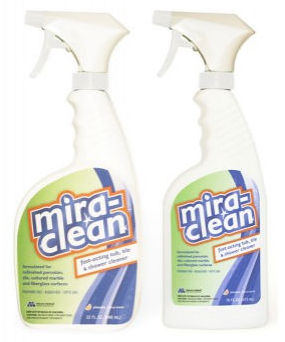
Take a look at the MIRACLE METHOD CLEANER MSDS [PDF] -
original source: http://www.genlabscorp.com/ghspdf/02211_EN.pdf
Nothing therein warns against flushing down drains, but the MSDS states
Dispose of contents and container according to the local, city, state and federal regulations.
The company's product use instructions state simply: ALWAYS RINSE THOROUGHLY after cleaning, and wipe the surface dry. - source: https://www.miraclemethod.com/care-and-cleaning.htm
Typically household cleaners are used in such a low volume that when rinsed from a plumbing fixture with fresh water they are sufficiently dilute as to be harmless in the septic tank and drainfield.
Watch out: however, that does not mean that it's ok to DISPOSE of un-used chemical cleaners or chemicals by dumping them down a drain. Don't do that.
On 2020-10-16 by Robert Warner
Can chemicals used by Miracle Method to clean and refinish a bathtub be flushed down the drain of a septic tank system?
On 2020-07-27 by Anonymous
Can you put veet sensitive hair removal down a septic tank
On 2020-03-01 - by (mod) - Re-Bath's Silver Shield toxicity MSDS
Thanks for an interesting question about Re-Bath product safety, Barb.
Re-Bath's Silver Shield is a "100% virgin acrylic" bath or tub surround that is described as a "non-porous technology that prevents bacteria from growing and reproducing"
- which is interesting since bacteria is a completely different organism from "mold".
Similarly a claim to be "mildew resistant" is, to any mycologist, nonsense. "Mildew" is a very specific and very narrow group of two mold families, both of which grow ONLY on Living Plants. So you're never going to find mildew in your bathroom unless you're keeping living plants in there.
In defense of the "mildew prevention" crowd I acknowledge that many people like the word and use it more-widely than is correct.
But if you were a lawyer writing a guarantee, citing mildew prevention is a pretty safe claim to make, right?
My OPINION is that any non-porous bathroom tub surround will do a great job at mold resistance - including similar materials such as fiberglass; in general it's the avoidance of seams and also avoidance of reliance on grout or sealants that might be a bit more mold friendly than was the ceramic surface of traditional bath tile.
Watch out: other tub surrounds rely on an infused pesticide, Triclosan, that *might* raise health concerns. That product is not part of the Re Bath product - a point which its vendors will perhaps enjoy pointing-out.
I am looking for an MSDS for Re Bath's Silver Shield.
I suspect we won't find an MSDS nor SDS for Silver Shield from Re-Bath because it sounds as if the product is simply an acrylic plastic tub surround, not a pesticide or chemical additive or treatment.
On 2020-02-28 by Barb
Re: Bath Wraps that have a silver anti-mold and mildew Silver Shield. Will this affect or harm a 3 -bedroom septic system?
On 2019-10-08 by (mod) - Maximus cattle wormer impact on septic
It seems unlikely that Maximus cattle wormer would in small quantity harm septic tank bacteria; after all a home septic tank is going to contain 1000 gallons or more of sewage and effluent.
Here is the product MSDS http://www.ancare.net.au/assets/maximus_pour-on_for_cattle-sds_expires_20210428.pdf
Product name: MAXIMUS Pour-On for Cattle
APVMA Code: 67606
Recommended Use: Treatment & control of Moxidectin sensitive internal and external parasites of cattle.
Supplier name: Merial Australia Pty Ltd
Address: Talavera Corporate Centre Building D
12-24 Talavera Road
Macquarie Park NSW 2113 AUSTRALIA
Moxidectin 113507-06-5 5g/L not set not set
Solvent naphtha (petroleum), light arom. 64742-95-6 150g/L not set not set
Other non hazardous ingredients secret to 1L not set not set
This is a commercial product whose exact ratio of components may vary slightly.
I'm unsure what you consider a "small bit of residue" but you are diluting 5 g/L Moxidectin. Solvent: 150 g/L Hydrocarbon Liquid into roughly 4000 litres of wastewater. If you poured an ENTIRE 5L bottle of Maximus into the septic tank that's 25 grams of Moxidectin in 4000 litres of waste or a dilution of the original product by a factor of 800.
Now to that let's add your daily wastewater usage - typically in 3-5 days you've pushed another 4000 litres of water into the septic tank.
I agree that Hydrogen sulfide or H2S is potentially dangerous and smelly as might be bacteria and methane and other sewer gas components; But if odors are coming out of your drains it is not at all likely to be from Maximus residue;
If flushing your drains doesn't fix the trouble I suspect that there is either a sewer line blockage or a plumbing vent system leak or blockage. In that case it's time to ask a plumber to snake, or use a sewer cam to inspect your drain waste venting system.
On 2019-10-08 by Jenny Leslie
Accidentally let go of a little bit of residue of a bottle of cattle wormer ( Maximus ) into the drain and I have apparently killed the bacteria in the septic and caused a bad smell coming out of the drains, the husband says it is Hydrogen Sulphide. ZHe also says this can be poisonous. What do I do?
On 2019-06-02 - by (mod) -
Wax flushed into building drains invites a drain clogged and sewage backup into the building. A very small amount of wax entering a septic tank probably is harmless as I would expect it to collect on the floating scum layer in to be removed during septic tank cleaning.
However if you're running a business and flushing large amounts of that into your system you risk are loading your septic tank and causing a blockage. Of course if the septic tank baffles are not intact you're also sending wax into the drain field and running that.
See WAXY BIOFILM SLIME CLOGS in DRAINS & PUMPS
On 2019-06-01 by Pam
I make batik clothing wand have moved to a home with a septic tank. I use beeswax to resist the dyes and part of my process involves washing the clothes in cold water before boiling the wax out.
Will the bits of wax that come off during the wash harm my septic tank or drain field over time? This septic system uses a pump required by the county health department.
Question: Does sulfurated lime dip affect septic systems?
(Dec 3, 2015) Rob said:
Does sulfurated lime dip affect septic systems?
Reply: not if you dump 4 ounces of concentrate into the system
(mod) said: Rob (and for other readers)
Lime sulfur dip is a sulfurated lime solution used for animals including pets to kill mites and other parasites, and according to typical sulfurated lime dip vendors the dip also works against fungi and bacteria. It smells like rotten eggs - that's the sulfur content.
Sold for pet use the typical container volume is 16 oz. typically in a 97.8% solution (for veterinary use). You should consult a vet before using this treatment on your animals.
Because the solution is a type of biocide it's appropriate to ask if it's harmful to the necessary biota in a septic tank.
In typical preparation of the solution I describe above you dilute 4 ounces of the solution into one gallon of water and apply that solution topically to the animal.
Used in that volume and concentration and considering that a typical residential septic tank volume is 1000 gallons or more, you are diluting the dip from 97.8% lime-sulfur concentration twice: 4 0z in 128 oz (that dilutes to 2.31%) and then that diluted solution is further disposed-of into 128,000 ounces in the septic tank.
That dilutes to a 0.00002 % solution - before further wastewater enters the tank to dilute that solution further.
At that dilution I am doubtful you'd be able to detect the solution in the septic tank.
Question: effects of Miracle Method® bathtub refinisher on the septic system
2017/06/09 JWS said:
Hello - I'm considering hiring "Miracle Method" to refinish our tub. Do know if their chemicals would cause irreparable harm to our septic system? What's the best way to manage this process? Thank you.
Reply:
JW
You ask an interesting and clever question:
1. does tub cleaning to prep for miraclemethod tub refinishing contaminate the environemnt
and also you imply
2 is there a leach-out of chemicals from a tub re-finishing coating that will contaminate the environment as we then run bathwater through the tub and into a septic system?
Miraclemethod dot com, the company's site describes their process:
First, the tub is thoroughly cleaned using specially formulated two-step cleaners to remove soap scum, mineral deposits, and body oils. Next, all cracks and chips are repaired. Miracle Method's proprietary bonding agent, MM-4, is applied to ensure a solid bond between the old surface and the new finish. Finally, a trained professional uses a fine-finish spray process to apply a hi-tech, durable acrylic coating. - Miracle Method cited below.
Here is the MIRACLE METHOD TUB REFINISH PDS (product information sheet) for the resin used by Miracle Method to refinish your tub.
The product data sheet for the coating itself ( an acrylic ) notes that the resin is not particularly water-soluble, so I'm doubtful that there would be a measurable impact on the septic system from the finish tub coating once that coating has cured in place.
Noting that the "miracle" in any tub restoration is largely in the surface reparation we looked for a description of just what cleaners are used in tub preparation - without finding a clear answer, though the company does market separately cleaners and strippers for which they provide both product data sheets and MSDS.
Mira Clean #1 is a proprietary cleaner sold by Miracle Sealants.
Here is a MIRACLEAN® PRODUCT DATA SHEET PDS - product data sheet for this cleaner
Here is the actual MIRACLEAN® / PrarieChlor® MSDS where we see a bleach product - a mix of sodium hypochlorite (main ingredient by percent or volume) , sodium hydroxide and sodium chloride (salt)
Mira Strip is a floor coating and wax stripper also produced by the company; I could not determine if this is also used in bath tub prep for the company's tub refinishing acrylic coating or not.
But here's that product MIRA-STRIP® PRODUCT DATA SHEET PDS - it contains a "petroleum distillate". (Naptha)
And here's an actual MIRA-STRI®P MSDS
OPINION: I am doubtful that trace levels of naphtha would harm a septic system thanks to the dilution in the larger volume of wastewater.
I am also doubtful that at normal usage levels a bleaching product used to clean a bathtub would harm a septic system.
Perhaps the company can provide more information on your question if you ask - do let me know.
- MiracleMethod, 4310 Arrowswest Dr ., Colorado Springs, CO 80907 USA Tel: 1-800-444-8827 Email: sales@miraclemethod.com
...
Continue reading at CHLORINE IN SEPTIC WASTEWATER or select a topic from the closely-related articles below, or see the complete ARTICLE INDEX.
Or see CHEMICALS to KEEP OUT OF SEPTICS FAQs - questions and answers posted originally on this page.
Or see these
Recommended Articles
- SEPTIC TREATMENTS & CHEMICALS
- CHEMICAL CONTAMINANTS in WATER for a discussion of chemical contaminants in drinking water
- CHEMICALS to KEEP OUT OF SEPTICS
- SEPTIC DRAINFIELD RESTORERS?
- ROOT KILLERS in SEWER LINES or SEPTIC PIPES
- SEPTIC DRAINFIELD RESTORERS?
- TOILETS, DON'T FLUSH LIST
Suggested citation for this web page
CHEMICALS to KEEP OUT OF SEPTICS at InspectApedia.com - online encyclopedia of building & environmental inspection, testing, diagnosis, repair, & problem prevention advice.
Or see this
INDEX to RELATED ARTICLES: ARTICLE INDEX to SEPTIC SYSTEMS
Or use the SEARCH BOX found below to Ask a Question or Search InspectApedia
Ask a Question or Search InspectApedia
Try the search box just below, or if you prefer, post a question or comment in the Comments box below and we will respond promptly.
Search the InspectApedia website
Note: appearance of your Comment below may be delayed: if your comment contains an image, photograph, web link, or text that looks to the software as if it might be a web link, your posting will appear after it has been approved by a moderator. Apologies for the delay.
Only one image can be added per comment but you can post as many comments, and therefore images, as you like.
You will not receive a notification when a response to your question has been posted.
Please bookmark this page to make it easy for you to check back for our response.
Our Comment Box is provided by Countable Web Productions countable.ca
Citations & References
In addition to any citations in the article above, a full list is available on request.
- New York State Department of Health, APPENDIX 75-A WASTEWATER TREATMENT STANDARDS - INDIVIDUAL HOUSEHOLD SYSTEMS , [PDF] New York State Department of Health, 3 February 2010, retrieved 3/1/2010, original source: https://www.health.ny.gov/regulations/nycrr/title_10/part_75/appendix_75-a.htm
- "Chemicals and Our Health", Nicholas D. Kristof, New York Times, 16 July 2009, p. 27. This outstanding editorial calls for improvements in public health policy to address phthalates and other environmental contaminants from common chemicals and products in everyday use. - DJ Friedman
- Our Stolen Future, Theo Colborn, Dianne Dumanoski, and John Peterson Myers, Plume-Penguin Publishing, 1997, ISBN 0-452-27414-1. This book is a seminal work on endocrine disruptors (chemical contaminants having impact at extremely low levels in the environment).
Amazon.com Review: By O T (Ontario, BC) - 'Our Stolen Future' is a great introduction to one of the most important scientific discoveries in our time. Having recently completed a thesis project at university on Endocrine Disruptors, I have reviewed hundreds of papers on the subject. This book is a good clear overview of the scientific literature on EDs. The authors are experts - Theo Colborn is largely responsible for creating the field by bringing together diverse researchers so they could see the big picture of their work. Many of the principle investigators are interviewed and quoted at length on the way chemicals participate in and interfere with delicate hormonal systems in animals (including humans). The major accomplishment of the book is to make an easy-to-follow story out of complex research. Many resources are available to help you assess the reliability of this story, and the best thing to do if you have any doubts is read review articles in scientific journals (which are easier to understand than technical papers). The Physicians for Social Responsibility (PSR) have a guidebook for health-care professionals on Endocrine Disruptors, and the US EPA has many reports on the matter. Beware of people or websites who try to 'debunk' this book (or the science behind it) by simply declaring it false, flawed or disproven. There is far too much supporting research for so simple a refutation. - Silent Spring, Rachael Carson, Mariner Books; Anv edition (October 22, 2002), ISBN-13: 978-061824906.
Amazon.com Review: Silent Spring, released in 1962, offered the first shattering look at widespread ecological degradation and touched off an environmental awareness that still exists. Rachel Carson's book focused on the poisons from insecticides, weed killers, and other common products as well as the use of sprays in agriculture, a practice that led to dangerous chemicals to the food source. Carson argued that those chemicals were more dangerous than radiation and that for the first time in history, humans were exposed to chemicals that stayed in their systems from birth to death. Presented with thorough document - SEPTIC TANK/SOIL-ABSORPTION SYSTEMS: HOW TO OPERATE & MAINTAIN [PDF] - , Equipment Tips, U.S. Department of Agriculture, 8271 1302, 7100 Engineering, 2300 Recreation, September 1982, web search 08/28/2010, original source: http://www.fs.fed.us/t-d/pubs/pdfimage/82711302.pdf.
- Pennsylvania State Wastewater Treatment Fact Sheet SW-161, Septic System Failure: Diagnosis and Treatment
- Pennsylvania State Wastewater Treatment Fact Sheet SW-162, The Soil Media and the Percolation Test
- Pennsylvania State Wastewater Treatment Fact Sheet SW-l64, Mound Systems for Wastewater Treatment
- Pennsylvania State Wastewater Treatment Fact Sheet SW-165, Septic Tank-Soil Absorption Systems
- Document Sources used for this web page include but are not limited to: Agricultural Fact Sheet #SW-161 "Septic Tank Pumping," by Paul D. Robillard and Kelli S. Martin. Penn State College of Agriculture - Cooperative Extension, edited and annotated by Dan Friedman (Thanks: to Bob Mackey for proofreading the original source material.)
- Our recommended books about building & mechanical systems design, inspection, problem diagnosis, and repair, and about indoor environment and IAQ testing, diagnosis, and cleanup are at the InspectAPedia Bookstore. Also see our Book Reviews - InspectAPedia.
- In addition to citations & references found in this article, see the research citations given at the end of the related articles found at our suggested
CONTINUE READING or RECOMMENDED ARTICLES.
- Carson, Dunlop & Associates Ltd., 120 Carlton Street Suite 407, Toronto ON M5A 4K2. Tel: (416) 964-9415 1-800-268-7070 Email: info@carsondunlop.com. Alan Carson is a past president of ASHI, the American Society of Home Inspectors.
Thanks to Alan Carson and Bob Dunlop, for permission for InspectAPedia to use text excerpts from The HOME REFERENCE BOOK - the Encyclopedia of Homes and to use illustrations from The ILLUSTRATED HOME .
Carson Dunlop Associates provides extensive home inspection education and report writing material. In gratitude we provide links to tsome Carson Dunlop Associates products and services.
 | HOME | ABOUT | ASK a QUESTION | CONTACT | CONTENT USE POLICY | DESCRIPTION | POLICIES | PRIVACY | |
| © 2024 - 1985 Publisher InspectApedia.com - Daniel Friedman | |||||||||