
InspectAPedia® FREE Encyclopedia of Building & Environmental Construction, Diagnosis, Maintenance & Repair |
Question? Just ask us! InspectAPedia
|
 Types of Sump Pumps for Water Removal
- POST a QUESTION or COMMENT about sump pumps used in building basements, crawl areas, other wet areas.
This article describes the different types of Sump Pumps, and describes how sump pumps should be installed, inspected, and maintained.
We describe types of back-up sump pumps including battery backup sump pumps and water powered sump pumps and we list sump pump and backup sump pump equipment suppliers.
We include specifications on pumping capacity, battery life, water consumption and other sump pump characteristics.
InspectAPedia tolerates no conflicts of interest. We have no relationship with advertisers, products, or services discussed at this website.
Four Common Types of Sump Pumps
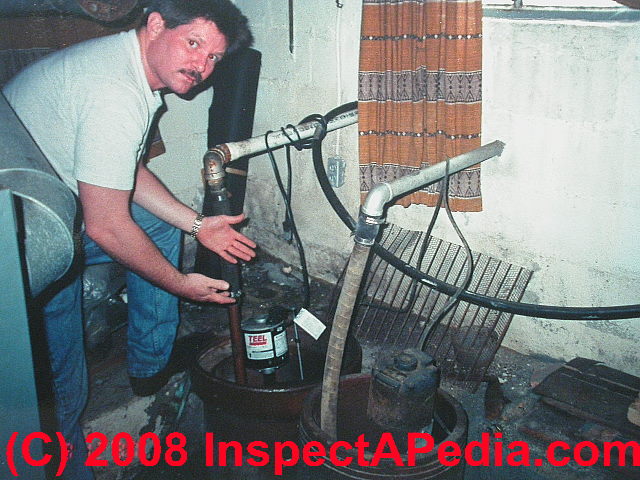
 Sump pumps remove unwanted water, such as surface or ground water that leak into a building.
A sump pump is normally installed in a pit at the low end of a basement or crawl space floor or in another location where water needs to be removed such as in a boiler pit or an outdoor well pit.
This article describes four types of pumps used to remove water from buildings or to lower water below a basement or crawl space floor to reduce the chances of water entry.
Guide to Submersible sump Pumps
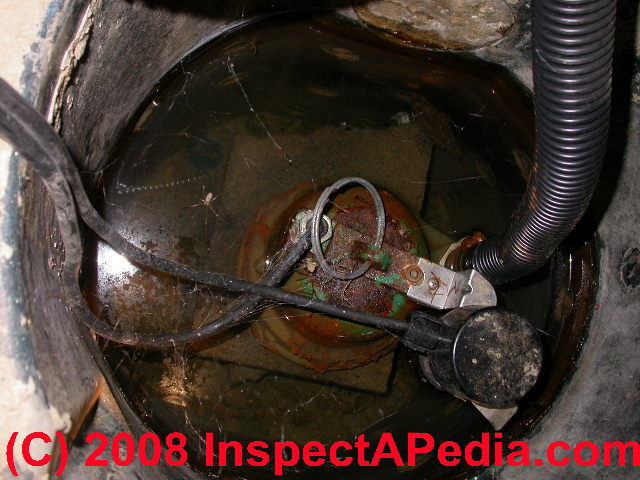
Submersible sump pumps, such as shown in the photo , use a motor housed in a water proof enclosure and a separate float that turns the pump on and off.
The sump pump float contains a position-activated switch and is connected to the submersible pump by a flexible wire. Some submersible sump pumps, such as the one shown here at left, use other types of float switches.
The submersible sump pump motor is capable of working when entirely under water.
A submersible sump pump uses a float switch intended to turn the pump on when ground water rises in the sump pit (or flows stupidly across your basement and into the pit) where it is discharged to a storm drain or the property surface.
Watch out for debris or wiring in the sump pit that block movement of the float switch - your sump may fail to turn on.
Guide to Pedestal Type Sump Pumps
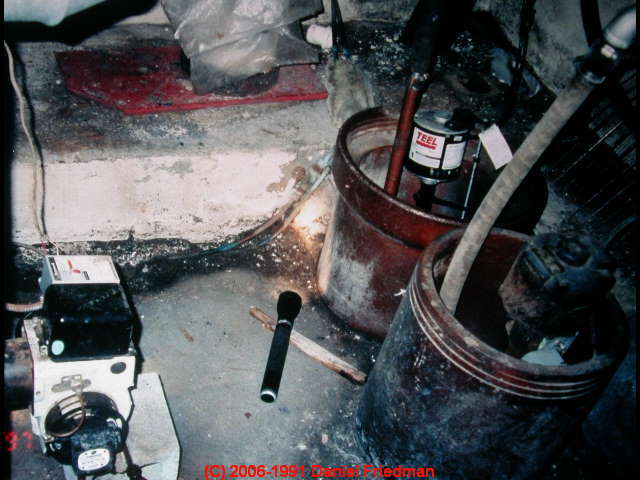
Pedestal sump pumps, such as shown in the photo , use a motor atop a pipe inside which the pump turns a shaft which operates the pump impeller. The pump impeller is located in a bottom pedestal which is under-water.
You'll notice that the electric motor that powers the pump impeller is mounted on top a tall shaft that extends well out of the water itself.The float that turns the pump on and off usually looks suspiciously a lot like a toilet tank float, connected to a vertical rod.
Pedestal sump pumps are an older non-submersible type of pump used for removing water from buildings.
As rising water in the sump pit lifts the float, the float lifts the rod and the rod includes an adjustable screw-clamp fitting which pushes on the electrical contact of a mechanical switch to turn the pump on. As the water level drops the float falls and another screw-clamp fitting above the switch turns the pump motor back off.
Battery Backup Sump Pump Choices
Battery-backup sump pumps, use a rechargeable battery which is normally connected to live electrical power in order to remain fully charged.
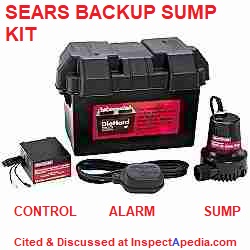
Shown above is a Sears battery-backup sump pump system which includes an marine-type automotive battery, battery charger, water sensor, an alarm.
Battery Backup Sump pump Pumping rate
Sears says the pump can remove 10,520 gallons on one charge. Do the math. 10,520 gals / 14.5 hours = 721 gallons per hour. 721/60 = 12 gpm. Sears rates the pump at 18 gpm. As long as water is entering your building at or slower than this rate this pump would be adequate.
Battery Backup Sump pump Pumping Time - How Long Will the Pump Last?
Sears also says the pump can run for 14.5 hours on one charge. If power outages in your area are longer than this you'll need an auxiliary power source or multiple staged batteries.
If electrical power fails, the battery can still operate the sump pump - for a while. Before relying on a battery backup sump pump find out the typical duration of power outages in your area. If the duration of electrical power outages is likely to be longer than the battery life of your sump pump then you need either extra batteries or a generator.
Sources of battery backup sump pumps
Battery-backup sump pump systems are made and sold by:
- Basement Watchdog battery backup sump pumps
- Base Products HydroPump battery backup sump pumps
- Gleason - Industrial Pro 1000 gph backup sump pump
- Glentronics, Inc., 645 Heathrow Drive, Lincolnshire, IL 60069 USA Tel: 800-991-0466 (Instalallation shown above)
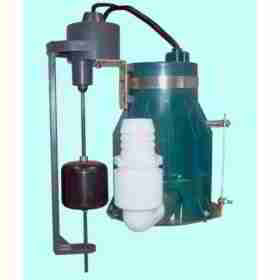
- Hydropump DH 1800 Battery Backup Sump Pump - 1800 gph with 9 ft lift (shown in illustration above)
- Little Giant Liberty 441 battery backup sump pump (similar to the Sears pump shown below)
- Sears battery powered backup sump kits include battery, charger & controller, sump pump, and a flood alarm sensor. (shown earlier, above)
- Sta-Rite Simer Flotec Omni A5000 emergency sump pump
- Wayne Security pump - 3300 gph battery backup sump pump and their 3540 gph pump have higher pumping capacity than some of the other models listed here
- Zoeller Zoeller-580-0005 Aquanot-I-Battery Backup Pump-- a pedestal sump pump design
We recommend this type of sump pump at homes where electrical power is frequently lost. Below our illustration, adapted from Glentronics sump pump instructions cited above, describes details of a typical battery-backup dual-sump pump installation.
You're most likely to lose electrical power during a storm, which may be exactly when you most-need the sump pump, making battery backup sump pumps a good idea.
Homeowner's Guide to Water Powered Sump Pumps
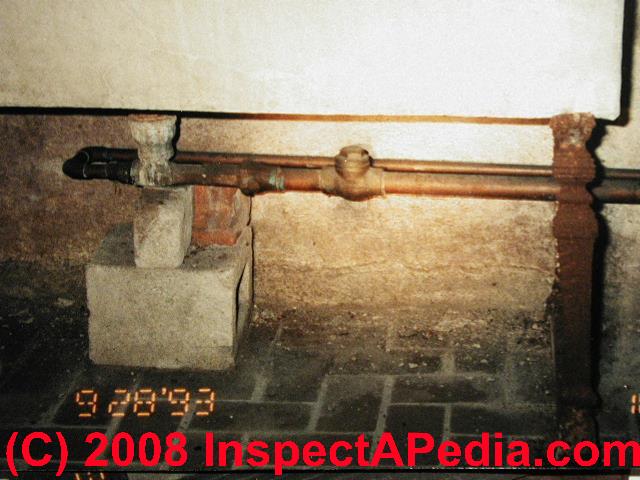
Water powered sump pumps, (as shown in the photos above or the sketch below) use municipal water pressure and a venturi fitting to pick up and eject water from a building during flooding. Sketch shows the Aquanot pedestal pump - see PlumbingSupply.com listed below.
Usually water driven pumps are turned on manually by opening a water valve near the pump or by connecting a free-standing pump to a garden hose which in turn is connected to a hose bib. Water driven sump pumps work only where municipal water is provided . (In our opinion, running a water driven pump off of a home system may provide inadequate flow and risks overtaxing the well and pump system.)
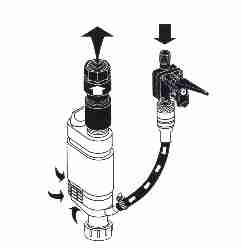
Water powered sump pumps offer the advantage that the pump can operate when there is no electrical power.
Code legal? At least the older versions of these devices are illegal in many municipalities because their installation constitutes a cross-connection which can back-contaminate public water mains with unsanitary floodwaters. Before installing a water-powered sump pump check with your local building department to be sure it is permitted in your area. There may be newer versions that are code-approved: we invite more data and comment on this product.
See CROSS CONNECTIONS, PLUMBING for details.
Pump capability: the pumping capability of water driven pumps depends on the input water supply pressure and flow, the piping diameters, and the height that the water has to be lifted. Look closely at the flow rates claimed for the water driven sump pump you're considering and be sure it matches the pressure and diameter of the water supply piping to which you intend to connect it.
Water Quantity Consumed by Water Powered Sump Pumps
Most of the water powered pumps we reviewed gave no data on the volume of water that would be consumed from the municipal input source during a pumping operation. When a water powered sump pump says it can remove 900 gph, that number describes only the net additional water picked up by the pump, not the total water used from the municipal supply. If you're concerned about water consumption or water cost this approach may be need careful investigation.
The quantity of water used by a water powered sump pump depends on the water pipe diameter and the municipal water pressure that is being supplied. Typical water usage rates range from 7 gpm to 15 gpm.
Some water powered sump pump manufacturers such as Basepump™ do provide full product specifications on water removal capability as well as water consumption rate. For example, a high-powered water powered sump pump installed in a home supplied by municipal water at 40 psi and using 3/4" to 1" diameter piping with a ten-foot lift height can remove 1500 gallons of water per hour from the building and will consume an additional 900 gallons of municipal water.
Sources of water powered sump pumps - where to buy water powered sump pumps
- Aquanot pedestal pump (sketch above) from PlumbingSupply.com & plumbingworld.com This pump is intended to be operated by connection to a garden hose for its input water.
- Basement Saver water powered sump pump provides models from 900 to 2000 gph requiring 45 to 90 psi and supporting a 10-foot lift.
- Base Products - Basepump, water powered backup sump pump - models RB750, HB1000, and CB1500 can remove between 750 gallons of sump water per hour up to 2000 gallons per hour, depending on the incoming water pressure that powers the pump (40 psi up to 100 psi), and the pipe diameter (1/2" to 1" in diameter). www.basepump.com/Basepump.htm
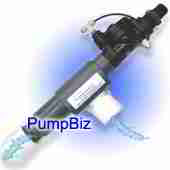
- Pump Biz water powered Water Commander or Pump Commander (shown at left) This water powered sump pump is designed to be connected to a 3/4" municipal water supply and is capable of removing up to 1,324 gph at 60 psi input pressure and a 10-foot lift.
- RadonSeal provides water powered sump pumps combined with a seal against radon gas leakage into a building at the sump pump pit.
- Wayne water powered sump pump Model EWP10 - Wayne is a large producer of many pump models
- Zoeller system-water powered pump Model 4065199 - Zoeller is a large producer of many pump models
- Also see SUMP PUMP MANUALS
Reader Comments, Questions & Answers About The Article Above
Below you will find questions and answers previously posted on this page at its page bottom reader comment box.
Reader Q&A - also see RECOMMENDED ARTICLES & FAQs
Question: how can I make my sump pump more-dependable
I have had two minor flood events when a sump pump float switch failed. One source claimed that the constant flexing of the wire broke the the wire. This seems improbable, as common extension cords flex frequently.
float on a rod can fail when scale collecting on the rod, or the rod guides keep it moving.
Cheap floats can leak, become waterlogged, and fail to rise to the occasion.
Then I read about electrical contact sensors -- they use a tiny current to control a relay. The water completes the circuit. There are two types of these: In the single contact type, when the water rises high enough to touch the electrode, the pump runs for a set amount of time. In the second type, you have a pair of electrodes, and the pump turns on when the upper electrode makes contact, and turns off when the lower one loses contact.
But electrodes have problems with scale too, as well as with galvanic corrosion.
What options are there for reliable sump pump control?
(In spring during the melt season, my pump can cycle as often as every 90 seconds. - Anonymous, 2021/06/04
This Q&A were posted originally at SUMP PUMPS
Moderator reply: 8 Steps to Sump Pump Reliability
Thanks that's a helpful question about sump pump reliability.
What follows is OPINION, not authoritative data, on maximizing sump pump reliability
1. Prevent water entry:
Ideal but not available in most buildings: use a building drain system that works by gravity, sending any under-floor water to daylight away from the building.
Maintain roof drainage and surface water runoff to keep water away from the building foundation. Most basement and crawl space water entry originates as roof spillage around the building. See details
2. Install the sump pump properly
Be sure that the sump pit and pump were constructed and installed following the sump pump manufacturer's instructions to the letter.
If you don't have the installation manual for your sump pump contact the manufacturer or see
Be sure that you have selected the proper sump pump for your application.
See SUMP PUMP TYPES (above on this page)
Sump Pump Water Level Switch Position
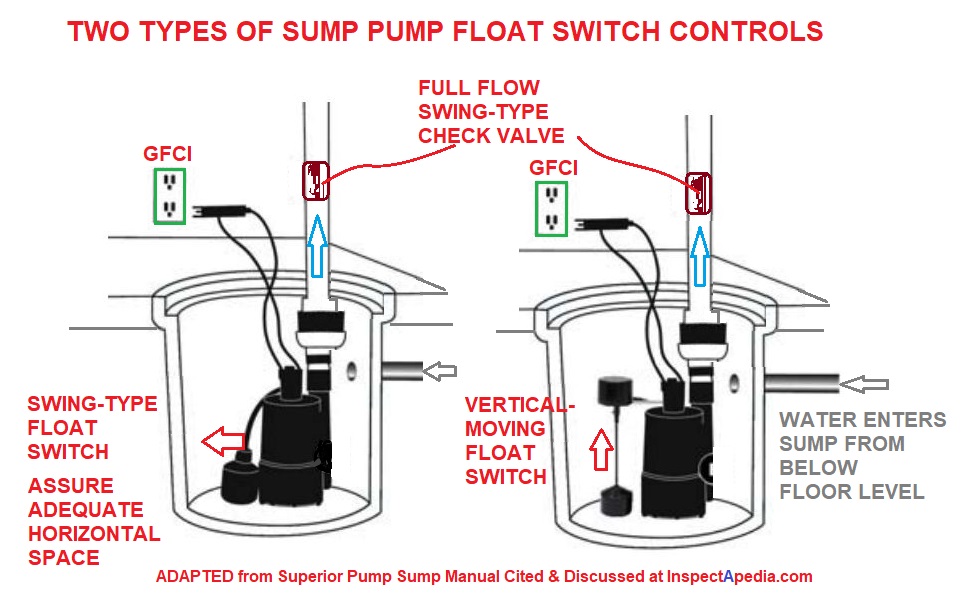
Be sure that the float that activates your sump pump can move freely.
Watch out: while a typical pedestal pump uses a float that moves vertically and can operate in a smaller basin, if your sump uses a free-floating switch like the one shown below, the sump basin must be large enough for the switch tomove freely.
Illustration, adapted from Superior Pump's sump pump installation instructions shows the difference between a wide-angle sump pump switch installation and a vertical sump pump switch installation. If your sump pump is able to move its horizontal position in the pumping chamber it may move over time until its floating switch jams.
Supeior is cited in detail at SUMP PUMP MANUALS
[Click to enlarge any image]
Sump Pump Pit / Chamber
The type of pumping chamber that you select, install, or build also affects pump reliability.
A pre-formed PVC or concrete or other pumping chamber or sump pit liner exposes the pump to less debris and may extend the pump impeller life; a sump pump that is set directly into a dirt “hole” or gravel-based excavation will clog more-quickly and is not a recommended approach.
Sump Pump Location
The pump location affects its ability to remove water from your building; the best sump pump location is at the lowest point in a basement or crawl space floor.
When a sump cannot be located at the floor’s lowest point, to avoid standing water or puddles in other floor areas you may need to install an in-floor or under-floor drain system that drains other floor areas to the sump pit.
3. Power the pump from a dedicated, reliable GFCI electrical circuit.
GFCI's, important safety devices that shut off electrical current if a short or current leak is detected, are particularly important in damp or wet locations where your sump pump will be installed, but in these locations the GFCI is also more-likely to trip off.
Similarly, if your sump is on a GFCI circuit that powers other devices, even other basement or building electrical receptacles, other events or devices on the circuit can trip off the GFCI.
If that trip-off is not noticed the sump has lost power and cannot protect the building from water entry.

Above: typical duplex sump pump installation using a battery-powered second or backup pump, adapted from Glentronics cited in detail
[Click to enlarge any image]
4. Add a Backup Sump System
In areas of frequent power loss, install a sump that uses a battery backup system.
Keep in mind that in the event of a major storm or disaster the building may be without power for days or longer and may also be exposed to flooding or sewage backups that no short term battery backup sump can handle; in some cases an emergency generator system might be justified.
A combination sump pump system combines a primary sewage pump that runs using line voltage (it’s plugged into an 120VAC or 240VAC electrical circuit) and a second battery-backup sump pump (typically 12VDC or 24VDC)
5. Secure the sump wiring and the sump itself
Be sure that the pump and its wiring are properly secured and particularly for pedestal type sump pumps, check that the pump assembly doesn't wobble or rotate - conditions that can break a wire or jam the float control.
6. Install a Flood Alarm
Consider installing one or more water detection alarms on the floor near the sump pit. Alarms can sound in the building, turn on a light, or even notify you by telephone or email if water flooding is detected.
See FLOOD ALARMS - detect water on floors or in basements or crawl spaces
Readers whose pump is actually a septic pump, or effluent pump should
7. Assure Adequate Sump Pump Capacity:
The type of sump pump you select affects its pumping capacity.
Pedestal type sump pumps use a vertical post that keeps the pump motor above water while the pump impeller and water pick-up are at the bottom of the sump pit.
Submersible sump pumps use a waterproof assembly that combines both the electric motor that operates the pump and the pump impeller assembly and water pick-up into one unit that can be under-water. Submersible sumps generally have more pumping capacity in gpm than a pedestal pump.
In areas where inflow of water may overload the sump or for increased reliability, consider a dual-sump system, using either a second higher-level float to turn on the second sump or use a control system that alternates which pump runs - to keep them both in operation and tested.
See SEPTIC PUMP DUPLEX DESIGNS
8. Sump Pump Regular Inspection & Maintenance
Water level sensor reliability: both float-type water level sensors and electronic sensors can fail, the first by having its movement jammed and the second by age and corrosion or scale buildup;
But regular inspection of the pump's installation and controls can reduce the risk of a sump system failure.
Check each of the sump pump reliability factors listed above, particularly looking for free-movement of the float control.
Lift the float - does the sump turn on? Is it still secured in place?
When the sump pump runs, is the motor making new horrible noises? If so the impeller is damaged or the motor is dying.
Does the check valve close properly to prevent water from back-flowing from the sump outlet into the pumping chamber when the pump turns off?
Remove accumulated sludge and debris from the sump pit; inspect the pump controls for proper operation.
...
Continue reading at SUMP PUMP SINGLE vs DUPLEX or select a topic from the closely-related articles below, or see the complete ARTICLE INDEX.
Or see these
Recommended Articles
- CONDENSATE PUMPS
- FLOOD ALARMS
- PUMPS USED in BUILDINGS
- SEPTIC SYSTEM PUMPS
- SEWAGE EJECTOR / GRINDER PUMPS
- SUMP PUMPS - home
- APPLIANCE DIAGNOSIS & REPAIR
- BATTERY BACKUP SUMP PUMPS
- CRAWL SPACE DRYOUT
- CROSS CONNECTIONS, PLUMBING
- MERCURY HAZARDS in SUMP PUMP CONTROLS
- PEDESTAL SUMP PUMP GUIDE
- SUMP PUMP DISCHARGE
- SUMP PUMP INSPECTION
- SUMP PUMP MANUALS
- SUMP PUMP RELIABILITY
- SUMP PUMP TYPES
- SUBMERSIBLE SUMP PUMP GUIDE
- SUMP PUMP SINGLE vs DUPLEX
- SEPTIC PUMP DUPLEX DESIGNS
- WATER ENTRY in BUILDINGS
- WATER POWERED SUMP PUMPS
- WATER ENTRY in BUILDINGS - home
Suggested citation for this web page
SUMP PUMP TYPES at InspectApedia.com - online encyclopedia of building & environmental inspection, testing, diagnosis, repair, & problem prevention advice.
Or see this
INDEX to RELATED ARTICLES: ARTICLE INDEX to BUILDING LEAKS & WATER ENTRY
Or use the SEARCH BOX found below to Ask a Question or Search InspectApedia
Ask a Question or Search InspectApedia
Questions & answers or comments about sump pumps used in building basements, crawl areas, other wet areas.
Try the search box just below, or if you prefer, post a question or comment in the Comments box below and we will respond promptly.
Search the InspectApedia website
Note: appearance of your Comment below may be delayed: if your comment contains an image, photograph, web link, or text that looks to the software as if it might be a web link, your posting will appear after it has been approved by a moderator. Apologies for the delay.
Only one image can be added per comment but you can post as many comments, and therefore images, as you like.
You will not receive a notification when a response to your question has been posted.
Please bookmark this page to make it easy for you to check back for our response.
Our Comment Box is provided by Countable Web Productions countable.ca
Citations & References
In addition to any citations in the article above, a full list is available on request.
- New York State Department of Health, APPENDIX 75-A WASTEWATER TREATMENT STANDARDS - INDIVIDUAL HOUSEHOLD SYSTEMS , [PDF] New York State Department of Health, 3 February 2010, retrieved 3/1/2010, original source: https://www.health.ny.gov/regulations/nycrr/title_10/part_75/appendix_75-a.htm
- Our recommended books about building & mechanical systems design, inspection, problem diagnosis, and repair, and about indoor environment and IAQ testing, diagnosis, and cleanup are at the InspectAPedia Bookstore. Also see our Book Reviews - InspectAPedia.
- In addition to citations & references found in this article, see the research citations given at the end of the related articles found at our suggested
CONTINUE READING or RECOMMENDED ARTICLES.
- Carson, Dunlop & Associates Ltd., 120 Carlton Street Suite 407, Toronto ON M5A 4K2. Tel: (416) 964-9415 1-800-268-7070 Email: info@carsondunlop.com. Alan Carson is a past president of ASHI, the American Society of Home Inspectors.
Thanks to Alan Carson and Bob Dunlop, for permission for InspectAPedia to use text excerpts from The HOME REFERENCE BOOK - the Encyclopedia of Homes and to use illustrations from The ILLUSTRATED HOME .
Carson Dunlop Associates provides extensive home inspection education and report writing material. In gratitude we provide links to tsome Carson Dunlop Associates products and services.
 | HOME | ABOUT | ASK a QUESTION | CONTACT | CONTENT USE POLICY | DESCRIPTION | POLICIES | PRIVACY | |
| © 2024 - 1985 Publisher InspectApedia.com - Daniel Friedman | |||||||||