
InspectAPedia® FREE Encyclopedia of Building & Environmental Construction, Diagnosis, Maintenance & Repair |
Question? Just ask us! InspectAPedia
|
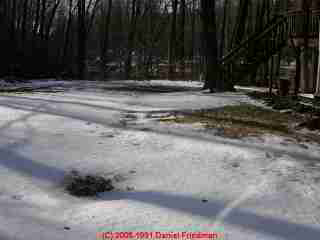 Signs of Trouble With Septic Systems
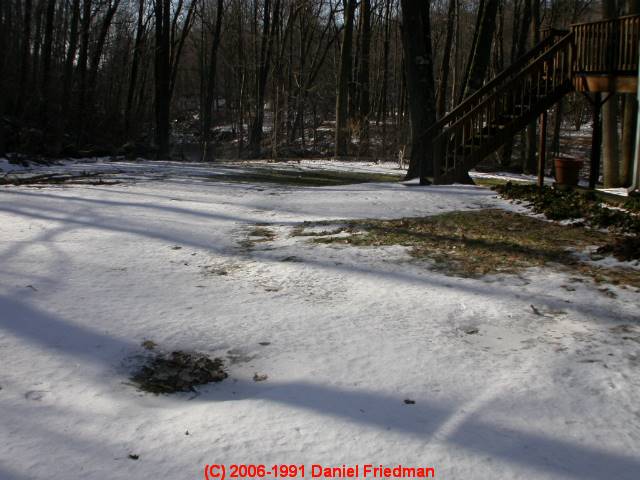
- POST a QUESTION or COMMENT about how to spot trouble with a septic system when buying a home
Septic tanks and drainfields, what to watch for before you buy:
This septic system inspection article discusses other things that can go wrong with a septic tank or septic system, of special concern to home buyers.
Septic backups, failures, breakouts, odors: This document provides advice for home buyers who are buying a home with a private septic system: homes using a septic tank and drainfield or similar soil absorption system. Here we describe what goes wrong with septic systems and their various components.
InspectAPedia tolerates no conflicts of interest. We have no relationship with advertisers, products, or services discussed at this website.
Other signs of trouble with a septic system
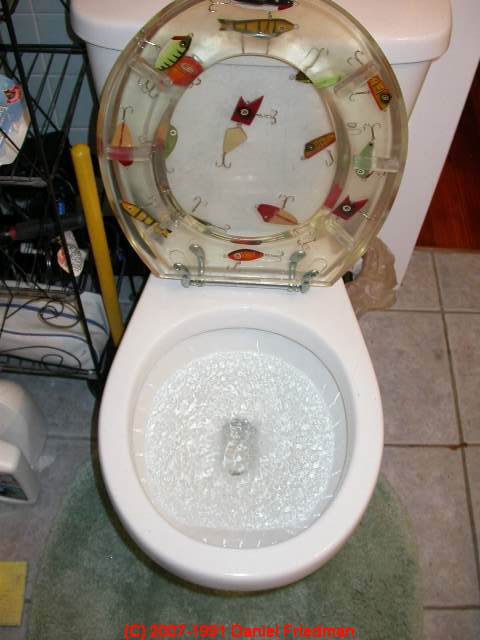
Slow Building Drains can indicate septic system trouble
[Click to enlarge any image]
The following section of our buyer's guide to a property with a septic tank recommends and describes septic inspection and test methods in more detail, explains how to be sure your septic inspection and septic test are conducted properly, tells you where to get more septic system information about a given property, and warns of unsanitary or dangerous site conditions.
Slow or sluggish fixture drains: Slow flushing toilets (such as shown in this photo), shower or tub or sink drains, can indicate a developing septic
system problem, though it could also be a partial drain blockage.
That is, slow fixture drains may be system-related but it could also indicate just a clog in the interior
piping or sewer line.
You should have the interior piping checked before proceeding with an investigation of the sewage disposal system.
See CLOGGED DRAIN DIAGNOSIS & REPAIR for a guide in how to determine if a slow drain is a clogged pipe or a septic system problem.
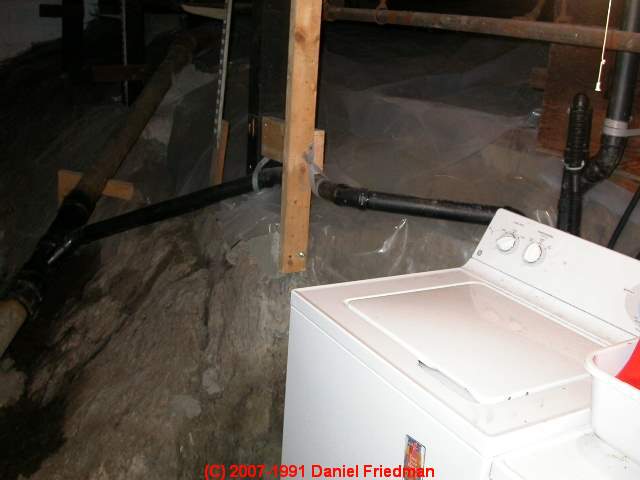
Washing Machine Backups can mean septic system or drywell trouble or even a public sewer line problem
Washing machine backups: Large volume wastewater discharges (such as, washing machines, dishwashers and bathtubs) may cause either a backup,
as noted above, or, an overflow of sewage above the septic tank or leaching field.
If this condition is usually at its worst during and/or directly following a heavy rain event, then the septic system is indeed suspect.
If backup alone occurs independent of wet weather, you might first check for a partial blockage of the main drain that
has occurred some distance from the house.
In such cases a small discharge will simply be held by the main waste pipe, draining slowly past the blockage, while
a large discharge will cause a backup.
Septic or sewage odors can indivcte septic system trouble
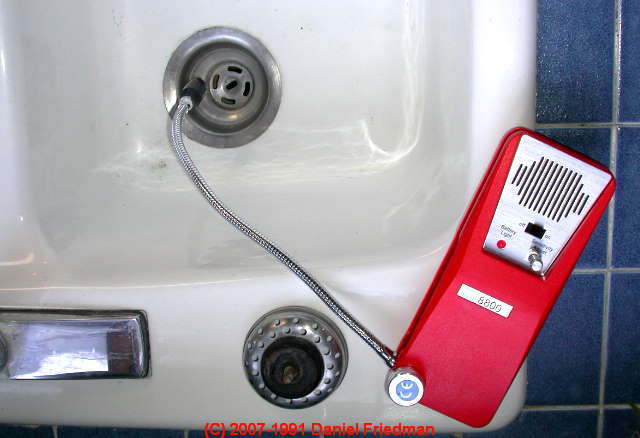
Septic or Sewage Odors: Foul septic odors in storm drainage piping, catch basins, footing drain piping or curtain drain discharges may indicate that sewage from your property or an adjacent one is entering these ground water systems.
Curtain drains or intercept drains can protect septic drainfields in areas of wet soils or surface and subsurface groundwater
See "SEWER GAS ODORS diagnosing, finding, and curing septic tank and sewer line smells"
and if odors are occurring in wet or cold weather, be sure to
see "SEWER GAS ODORS in COLD / WET WEATHER - Septic Odors or Sewage Odor Diagnosis & Repair Guide for diagnosing and eliminating cold weather sewer gas odors"
...
Continue reading at HOME BUYER'S SEPTIC TEST or select a topic from the closely-related articles below, or see the complete ARTICLE INDEX.
Or see these
Recommended Articles
- SEPTIC SYSTEM TEST BASICS - quick guide for buying a home with a septic tank
- HOME BUYERS GUIDE to SEPTIC SYSTEMS - complete guide to buying a home with a septic tank
- SEPTIC SYSTEM TROUBLE: WHAT GOES WRONG
- HOME BUYER'S SEPTIC TEST
- SEPTIC TEST FINAL OVERVIEW
- SEPTIC FAILURE LAWSUIT
- HOME SELLERS GUIDE TO SEPTIC INSPECT
- SEPTIC DRAINFIELD INSPECTION & TEST - home
- PLUMBING DRAIN NOISE DIAGNOSIS.
- SEPTIC DISPOSAL FIELD CLOGGING INSPECTION
- SEPTIC DRAINFIELD FAILURE CAUSES
- SEPTIC DRAINFIELD FAILURE DIAGNOSIS
- SEPTIC FAILURE CRITERIA
- SEPTIC FAILURE LAWSUIT
- SEPTIC FAILURE SIGNS
- SEPTIC FAILURE SPOTS
- SEPTIC ODORS INDICATING DRAINFIELD FAILURE
- SEPTIC TANK GRASS or SNOWMELT
- SEPTIC TROUBLE SIGNS, OTHER
- SOAKBED SOIL CONDITIONS
- SEPTIC DRAINFIELD LIFE
- SEPTIC DRAINFIELD LOCATION
- SEPTIC DRAINFIELD RESTORERS?
- SEPTIC TANK, HOW TO FIND
- SEPTIC TESTS: DYE & LOADING TESTS
- SEPTIC SYSTEM ODORS
- SEPTIC / SEWAGE SOIL CONTAMINATION HAZARDS
- SEWAGE BACKUP, WHAT TO DO
- SEPTIC TANK LEVELS of SEWAGE
Suggested citation for this web page
SEPTIC TROUBLE SIGNS, OTHER at InspectApedia.com - online encyclopedia of building & environmental inspection, testing, diagnosis, repair, & problem prevention advice.
Or see this
INDEX to RELATED ARTICLES: ARTICLE INDEX to SEPTIC SYSTEMS
Or use the SEARCH BOX found below to Ask a Question or Search InspectApedia
Ask a Question or Search InspectApedia
Questions & answers or comments about how to spot trouble with a septic system when buying a home.
Try the search box just below, or if you prefer, post a question or comment in the Comments box below and we will respond promptly.
Search the InspectApedia website
Note: appearance of your Comment below may be delayed: if your comment contains an image, photograph, web link, or text that looks to the software as if it might be a web link, your posting will appear after it has been approved by a moderator. Apologies for the delay.
Only one image can be added per comment but you can post as many comments, and therefore images, as you like.
You will not receive a notification when a response to your question has been posted.
Please bookmark this page to make it easy for you to check back for our response.
Our Comment Box is provided by Countable Web Productions countable.ca
Citations & References
In addition to any citations in the article above, a full list is available on request.
- New York State Department of Health, APPENDIX 75-A WASTEWATER TREATMENT STANDARDS - INDIVIDUAL HOUSEHOLD SYSTEMS , [PDF] New York State Department of Health, 3 February 2010, retrieved 3/1/2010, original source: https://www.health.ny.gov/regulations/nycrr/title_10/part_75/appendix_75-a.htm
- Portions of the original text were provided by the CT Department of Public Health and Addiction Services. Daniel Friedman (web author) has made extensive edits and content additions to the original file.
- In addition to citations & references found in this article, see the research citations given at the end of the related articles found at our suggested
CONTINUE READING or RECOMMENDED ARTICLES.
- Carson, Dunlop & Associates Ltd., 120 Carlton Street Suite 407, Toronto ON M5A 4K2. Tel: (416) 964-9415 1-800-268-7070 Email: info@carsondunlop.com. Alan Carson is a past president of ASHI, the American Society of Home Inspectors.
Thanks to Alan Carson and Bob Dunlop, for permission for InspectAPedia to use text excerpts from The HOME REFERENCE BOOK - the Encyclopedia of Homes and to use illustrations from The ILLUSTRATED HOME .
Carson Dunlop Associates provides extensive home inspection education and report writing material. In gratitude we provide links to tsome Carson Dunlop Associates products and services.
 | HOME | ABOUT | ASK a QUESTION | CONTACT | CONTENT USE POLICY | DESCRIPTION | POLICIES | PRIVACY | |
| © 2024 - 1985 Publisher InspectApedia.com - Daniel Friedman | |||||||||