
InspectAPedia® FREE Encyclopedia of Building & Environmental Construction, Diagnosis, Maintenance & Repair
|
Question? Just ask us! InspectAPedia
|
 What to Ask & How to Test a Home With a Septic Tank
- POST a QUESTION or COMMENT about how to evaluate the condition of a private septic systems when buying a home
Guide to buying a property with a septic tank:
This document provides detailed step by step inspection and testing advice for home buyers who are buying a property with a private septic system, that is, a septic tank and a leach field or drainfield or similar soil absorption system.
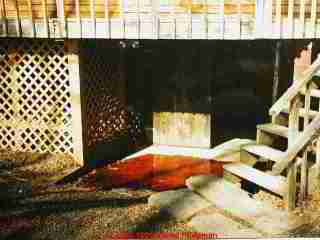
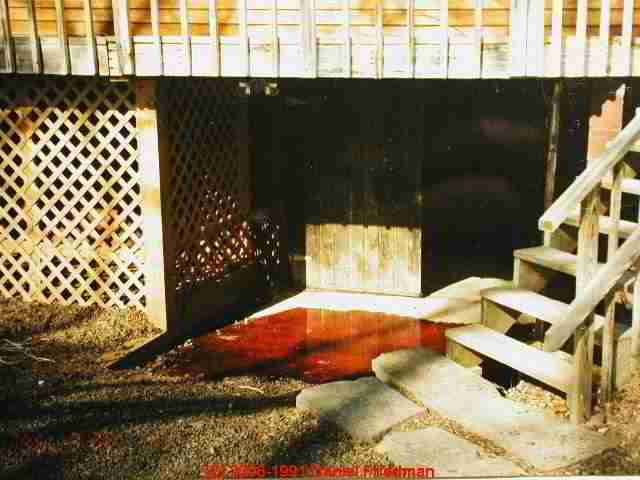
We list detailed questions to ask about the septic system, how to perform the visual septic inspection, ordering the loading and septic dye test (the too-obvious results of a dye test at a problem site are in the photo at the top of this page), pumping the septic tank, and finding additional information about the septic system.
We explain how to be sure your septic inspection and septic test are conducted properly. We tell you where to get more septic system information about a given property, and we warn of unsanitary or dangerous site conditions.
InspectAPedia tolerates no conflicts of interest. We have no relationship with advertisers, products, or services discussed at this website.
When, Where, Why, and How to Inspect and Test a Septic System When Buying a Home
While no septic inspection and test can guarantee 100% that all septic defects have been found, properly conducted, septic inspection and testing procedures can reduce the chances of a dangerous or costly surprise at a property served by an onsite waste disposal system.
When buying a home with a private septic system, septic tank and leachfield, at a minimum you should always should do steps
- 1-ASK ABOUT THE SYSTEM, followed by
- 2-VISUAL INSPECTION, and
- 6-ASK OUTSIDERS yourself.
- If you hire an expert to inspect and test the septic
system the inspector will also perform
step 2-VISUAL INSPECTION
and 3-LOADING & DYE TEST.
Some home inspectors can provide this service as can independent septic engineers and a few septic contractors. Below we tell you how to get the inspection and testing done properly. Other articles at this website give great detail about how to perform an effective and valid septic system inspection and test.
- A septic pumping contractor performs
Step 4 PUMPING the SEPTIC TANK
Watch out: for getting duped. Be sure to
see WHEN NOT TO PUMP A SEPTIC TANK - warnings especially for home buyers about septic tanks pumped before an inspection or test;
also
See SEPTIC TANK PUMPOUT TIMING ERRORS
and
See SEPTIC TANK PUMPING MISTAKES - and possibly the septic pumping contractor will make these
Step 5-5. ADDED INVESTIGATIONS or other measures.
In case you missed it before, steps 1 and 2 are essential. Step 3 is usually a good idea. Step 4 depends on the results of steps 1,2,3 but is usually a good idea. Step 5 is not usually done but might be necessary. Step 6 is what you do if you're being really thorough. Below we discuss each of these steps in more detail.
5-1. ASK ABOUT THE SYSTEM What to Ask the Property Owners About the Septic System
Basic Questions: (An essential step) Ask the seller the following questions. Don't worry if the seller says they don't know the answers. "Not knowing" is also important information. These questions are deliberately a bit vague in order to allow people to tell you whatever they know rather than cutting off or suggesting answers. Convey the answers to these questions to your septic test consultant.>
- How old is the property?
- Is the property occupied or vacant? If occupied, for how long and by how many occupants? If vacant, for how long?
- How long has the seller owned the property?
- Where is the septic system?
[Tip: if the owner has been at the property for years and does not know where the septic tank is located, they have never pumped it - which looks bad for the leach field. On the other hand, if they know exactly where it is and if it has an easily-opened access cover, you might wonder if it's being pumped unusually often - which could also be a telltale.] - What is installed?
[Tip: this means: is it a conventional tank and drain field? Is the tank concrete or steel? How big is the tank? Are there separate drywells or seepage pits? If so the owner may have had a concern with the capacity of the leach field.] - What is the service or repair history of the septic system?
[Tip: if the system has received regular pumping that's good. If it has never been pumped, you should be pessimistic about the remaining life of the leach field. If a new tank has been installed but connected to old fields you should be pessimistic about the leach fields. If everything was installed new last year, you may be a lucky buyer.] - When was the septic tank last pumped?
[Warning: if the seller offers to "have the tank pumped for you" ask them not to do so before your inspection. Pumping the tank prevents testing the drain field.]
Other useful but less reliable sources of information about your septic system include:
- Ask for any drawings regarding the actual location (an "as-built drawing) of the existing septic system.
However while you should ask for drawings and records, you should never completely trust them. For example, a septic system may not have all of its components installed just as they were placed on a drawing. The excavator could have hit bedrock or other obstructions and moved things a bit. - Ask for the records regarding maintenance of the system;
Has the septic tank been pumped at a frequency of at least 3 to 5 years?; What pumping contractor was used?; If the system contains a pump. how often has it been maintained?; If major repairs have been made, when and to what extent? - Ask about the past performance of the system. Have any of the symptoms described earlier manifested during the life of the system?
5-2. VISUAL INSPECTION: Make a Visual Site Inspection for Signs of Septic Trouble or Site Limitations

Visual Inspection of the septic system & the property:
(An essential step) Make a visual inspection of the property. Look for wet areas, smelly areas, rocky areas, areas of recent excavation. Also make note of the location of and distance to nearby streams, private wells, ponds, buildings, property lines, and rocky areas, and areas of trees and shrubbery.
[Warning: be very alert for evidence of sink holes or subsidence. Do not walk over anything suspicious as you might step into or fall into a collapsing system.]
Once the locations of the septic tank and leaching fields are known, walk over the entire area and observe whether there is any evidence of a sewage overflow condition. Greener grass in the leaching area may not necessarily indicate a system problem. If, however the area is completely saturated and odorous you should be very concerned. It most likely indicates an active failure.
Try to get a sense of how natural conditions are effecting the capacity of the property to disperse water.
- Is the sewage disposal area located In a
depression
which would have a tendency to collect run-off of rain water? Is the lot flat? Is there a water course of wetland (swamp) near the leaching system? - Is the system virtually at the same elevation
as nearby wetlands? - Are
there steep slopes
and/or ledge outcrops which reduce the available area for leaching purposes? - Are there obvious failure signs
such as wet areas or smells or visible sewage in the area of the septic tank, D-box, or drainfield?
All of the above factors could indicate that the existing system will experience difficulty or, that there may not be much additional area suitable for sewage disposal on the lot if needed in the future.
More Reading:
Table of Required Septic Clearances: Distances Between Septic System & Wells, Streams, Trees, etc.
Table of Required Well Clearances: Distances Between Drinking Water Wells and Septic Systems, Treated Soils, Farm buildings, & Other Site Features
5-3. LOADING & DYE TEST How to Perform a Home Buyer's Septic Loading & Dye Test
This document section is maintained in a separate web page
5-3. LOADING & DYE TEST.
Text is repeated below for people who scroll down instead of using the left-side links to navigate the HOME BUYERs GUIDE to Septic Systems.
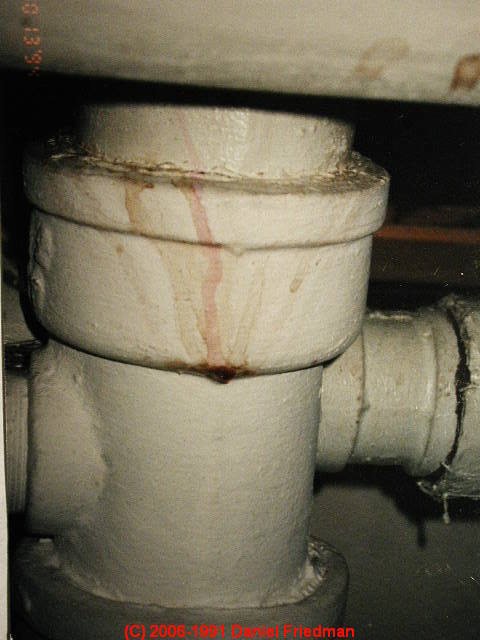
Most home sales are contingent upon a home Inspection. But home inspections do not usually include a test of the existing septic system. Septic Tests are beyond the scope of a professional home inspection but these septic tests are offered as an additional for-fee service by many home inspectors who serve areas where private systems are common. The photo at above left shows septic dye leaking out of a main house drain just after it was flushed down a toilet above.
Hire your own septic test consultant who has experience with and is familiar with septic loading and dye testing standards, a licensed septic inspector (in states which license this specialty such as MA), or a licensed septic system installer, who performs a great deal of work in the particular town.
They can give you advise as to the condition of the soils and septic systems In the area and what might be expected (especially pertaining to costs) if/when you find problems with the existing system.
This photo shows a small property bordering on a river. We were told that a "new septic system" was installed but I could not see where a conventional tank and drainfield could possibly fit except below the driveway.
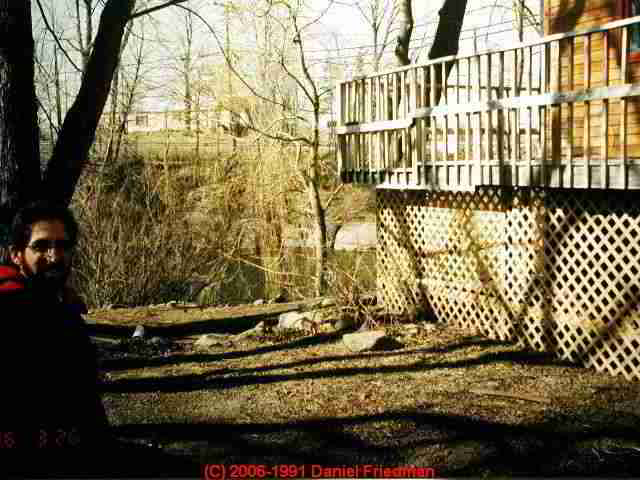
Because of the nearly overwhelming temptation at such sites to pipe septic effluent directly into the river, we performed a septic loading and dye test to see if the river would turn red.
The river did not quickly turn red but after less than 100 gallons of water had been run into the septic system our red septic dye appeared at the basement entry platform at the edge of the driveway, as shown in the photo used at the top of this page.
Warning:: Unfortunately many of the people performing these tests perform only a perfunctory test such as a low-water volume test (50 gallons is meaningless) or use an insufficient amount of tracer septic dye.
Therefore, the conclusions reached from these tests are often misleading. Be sure your test is performed by an expert and that an adequate volume of water is used. We specify no less than 50 gallons per bedroom or 250 gallons, whichever is greater.
Warning: if you hire a separate consultant to just perform the septic inspection and dye test you're at risk of getting a bad deal. It takes time to get enough water into the system to perform a reasonably aggressive test. It's economical to do this test if overlapped with other work at the site (like a home inspection).
But someone coming to the site just to do the septic test is not going to wait around for 2+ hours for water to run into the system - you're likely to get an inadequate test. If you must use a third party just for this test be sure to review the test parameters and agree on them ahead of time.
Warning: Do not pump the septic tank before the loading and dye test. Depending on its size an empty septic tank could require 2-3 days' worth of water to re-fill the tank.
An empty tank means that the "loading water" run into the system during the dye test procedure is simply filling the tank rather than testing the ability of the drain field to absorb effluent.
5-3a What is a Septic Dye Test?
This procedure puts a test volume of water into the system to look for evidence of a blocked pipe or for breakout of septic effluent at the yard surface - indications of the need for repair. If you are looking at a completely new home and septic system you might omit this test but don't assume that new systems are immune to failures.
Pipes settle and break or systems can be improperly installed. If the tank was pumped immediately before your inspection you should be suspicious, and you might defer the loading and dye test as it may be unable to put enough water into the system to test the drain fields. The dye itself is just a coloring agent to identify water that may appear at the yard surface. It's the test volume of water that's important.
If the dye appears on the ground or appears in a brook or catch basin the system is in failure. We have seen dye breakout in 15-30 minutes in many instances where there was no pre-existing wet spot but where subsequent excavation confirmed that the system was either damaged or in failure.
More Reading:
SEPTIC LOADING & DYE TEST PROCEDURE, complete details of the septic loading and dye test procedure, test data forms, septic loading test water volumes, septic tracer dye quantities, critical observations.
5-3b TEST LIMITATIONS Septic Dye Test Limitations
Watch out: if dyed effluent or water does not break out on the property surface, this does not necessarily mean the system is functioning or will function properly in the future.
There are certainly cases in which effluent does not appear at the surface for some time, possibly up to five days, and there are other defects which predict upcoming expensive repair or replacement of the system but which are not detected by loading the drain field.
National data collected among professional home inspectors between 1985 and 1995 indicated that a significant number of inspectors performing dye tests discovered total failure of the septic system within 20 to 30 minutes of beginning testing.
We agree that a dye test is by no means a complete test of a system, that the other measures suggested here are extremely valuable, and that the volume of water used is critical: too little or too much can both be serious mistakes.
If a wet area or soggy area is present, dye has been found to appear in the short time indicated. However beware: NYS DEC has found dye appearing in nearby streams as late as five days following a septic dye test in cases where effluent migrates through considerable ground area before entering a stream.
5-3c FLOODING TESTS What Are Septic "Flooding Tests"?
Some authors describe an attempt to "flood" the septic system with 1000 gallons of water to attempt to force a sign of system failure to manifest itself.
A typical home with a private well and pressure tank should be able to deliver 5 gallons per minute.
If this test were performed overlapped with a home inspection (a 2 1/2 to 4 hour procedure) one could obtain this test volume.
Warning this test should not normally be attempted. Placing 1000 gallons of water into a septic system in two hours is likely to exceed its design parameters, and in the case of certain systems, it could actually damage the system.
While all inspections and tests should aggressively seek to protect the interests of the parties involved by being thorough, a test which exceeds system design parameters would be improper.
5-3d PROBE TESTS of Septic Fields & Locating Septic Components
Probing is a procedure whereby the Inspector attempts to locate the "key" elements of the system (septic tanks and leach fields) and determine if they are experiencing hydraulic distress (meaning the septic tank and fields are flooded).
If a probe in a leach field produces a hole which fills rapidly with water this test indeed indicates a problem with the system. But if a probe does not produce this condition, the test has been unreliable since it may be during a time of dry soils or a day when very little water was used by the homeowner or the home in fact may have been vacant. This test, if performed, must be done by an expert, with caution, and is inconclusive if it does not detect a problem.
WARNING: probing can damage buried equipment such as fiberglass septic tanks or tank covers or plastic septic drain lines. Further, there is little assurance that the probing is done in the area where a problem is present.
More Reading:
- SEPTIC SYSTEM INSPECTION METHODS AND PROCEDURES
- SEPTIC FAILURE CAUSES: How Does Each Septic System Component Fail? - What to Look For During a Septic Inspection - Step by Step Diagnosis
- INSPECTING & TESTING SEPTIC SYSTEMS: Online Book, Inspection, Test, Diagnosis, Repair, & Maintenance: Our Online Septic Book: Septic Testing, Loading & Dye Tests, Septic Tank Pumping, Clearances, details of onsite waste disposal system inspection, testing, repair procedures.
5-4. PUMP THE TANK When and How to Pump the Septic Tank When Buying a Home

After performing the septic loading and dye test and obtaining whatever historical maintenance and repair information you can obtain from the prior owner, you may want a septic contractor to located, open, pump, and inspect the septic tank.
The decision to include this next and more invasive step depends on what you have already learned about the age, history, and probable condition of the system. The pumping decision should be advised by the visual inspection, site history, and loading/dye test results.
Warning: [Repeated from the Dye Test discussion] Do not pump the septic tank before the loading and dye test.
Depending on its size an empty septic tank could require 2-3 days' worth of water to re-fill the tank.
An empty tank means that the "loading water" run into the system during the dye test procedure is simply filling the tank rather than testing the ability of the drain field to absorb effluent.
Pumping a septic tank prior to purchasing a home may or may not be necessary, depending on the age and service history of the system and the results of the visual inspection and loading and dye test.
For example, if a tank is less than two years old or was pumped in the last year, and if there are no other signs of septic problems at the site, we might defer the pumpout.
In this case we would strongly recommend calling the pumper to ask about the condition of the system at the time they last cleaned it.
But pumping the tank for diagnostic reasons can be helpful in any case. Important additional information, available when the tank is pumped, can tell you if it was past-due for pumping (risking damaging the drain fields) and if it is damaged.
You'll also know exactly where the tank is, if it's concrete, steel, fiberglass or home made, if it has been damaged, if the baffles are broken, if the tank has been flooded (indicating a blocked drainfield), and if the tank has a safe cover.
Even if there are no signs of trouble from the inspection and dye test, if nothing is known about the system history, or if it is known that the system has not been opened and pumped in 3 years or longer, this step is strongly advised. If the septic tank has been pumped quite recently, you should call the pumping contractor to ask if, at the time of pumping, the contractor observed any indications of system problems or upcoming system repairs.
5-5. ADDED INVESTIGATIONS Additional Septic System Physical Investigation Measures
Additional steps which are not normally done but which may be performed if there is evidence of system damage or failure are listed next. These steps would ordinarily be performed by a septic contractor who installs or repairs septic systems. Some septic pumping companies also perform septic repairs and field investigations. A septic engineer may be needed if you are expanding a system or if you require design to repair a system on a difficult site.
- Find and Open the Distribution Box
which connects the pipe from the tank to the network of drainfield lines. - Excavate suspicious areas
such as wet areas at in the leach field, subsidence areas. - Perform soil percolation tests
or "Perc tests" to evaluate the ability of the soils to absorb effluent. This involves digging a hole, pouring in water, and measuring the time for a given volume of water to be absorbed into a given square foot area of soil. - Soil & Site Research
to include determination of the soil quality, the depth of the seasonal high water table in the ground below the leach area, etc. - this work may be needed if a system is to be replaced or relocated, especially at a difficult site.
5-6. ASK OUTSIDERS Other Information Sources About Septic Systems
- Talk to neighbors
about the general performance of septic systems In the area and specifically the system on the property you're Interested In.
However, this is suggested only for those comfortable approaching this subject with strangers and with the realization that the information gathered may not be totally factual for various reasons (devaluation of their own property; not wanting to spoil the sale of a friendly neighbor, etc.) - Soil Maps:
Use of Soil Conservation Service County Soil Maps (through the town sanitarian), try to identify the type of soil most likely present on the site in order to predict the feasibility of future repairs to the existing leaching system. - Water Meter Readings:
Obtain water meter readings (if the home is serviced by a municipal water supply) to determine what the present occupants of the home are utilizing.
Then compare those results with what your family is presently using. If your family Is using significantly more water than the former occupants you may be asking for trouble if the sewage system is undersized by today's standards. - Septic Tank Pumper Records: Additional useful information which may be available from the service
company who has pumped the tank recently includes the following:
- Type of tank material - old steel tank may be at or end useful life
- Tank size - along with usage determines appropriate pumping frequency and system capacity
- Evidence of damage to tank components - broken baffles mean the leach fields are probably ruined
- Evidence of backflow into the tank during start of pumping - indicates flooded leach field, probably failed
- High sludge level and/or excessive floating scum level - indicate high risk of having pushed solids out into the leach field, destroying it
If the system has not been cleaned in several years and if the seller will permit, have the tank pumped to obtain this additional information. Typical pumpout fees are around $100. if excavation is not necessary. If the tank location is unknown extra costs will be involved to locate and excavate it - steps to which a seller is likely to object.
Health Department: Go to Town Health Department to Review the Property's Septic System Information File.
- Ask the town sanitarian
to review the file with you. Is there enough information in it for him/her to give you an opinion on how the existing system and/or lot meets present health code requirements? - Ask for the records
regarding maintenance of the system; Has the septic tank been pumped at a frequency of at least 3 to 5 years? What pumping contractor was used? If the system contains a pump, how often has it been maintained?; If major repairs have been made, when and to what extent? - Your goal
is to, confirm and supplement information received from the property owner. - Obtain guidelines
concerning the proper maintenance of a subsurface sewage disposal system - be sure the guidelines are for the specific type of septic system that you have installed. - If you are contemplating an addition
to the home or plan on renovating an unfinished basement discuss the possibilities with the sanitarian and determine the procedures you would have to follow to accomplish your plans. In wm cases it will not be possible to "enlarge" an existing home. - Ask about the general neighborhood,
the frequency of repairs, ability to install proper size repair systems, average life of systems in the area, etc.
...
Continue reading at SEPTIC TEST FINAL OVERVIEW or select a topic from the closely-related articles below, or see the complete ARTICLE INDEX.
Or see HOME BUYERS SEPTIC SYSTEM FAQs - questions and answers posted originally at this article.
Or see these
Recommended Articles
- ABANDONED or NEW SEPTIC SYSTEM TESTS
- HOME BUYERS GUIDE to SEPTIC SYSTEMS - complete guide to buying a home with a septic tank
- SEPTIC SYSTEM TROUBLE: WHAT GOES WRONG
- HOME BUYER'S SEPTIC TEST
- PRE-PURCHASE SEPTIC DYE TEST
- SEPTIC TEST FINAL OVERVIEW
- SEPTIC FAILURE LAWSUIT
- HOME SELLERS GUIDE TO SEPTIC INSPECT
- SEPTIC SYSTEM TEST BASICS - quick guide for buying a home with a septic tank
- SEPTIC SYSTEM TROUBLE: WHAT GOES WRONG
- SEPTIC COMPONENT LOCATIONS
Suggested citation for this web page
HOME BUYER'S SEPTIC TEST at InspectApedia.com - online encyclopedia of building & environmental inspection, testing, diagnosis, repair, & problem prevention advice.
Or see this
INDEX to RELATED ARTICLES: ARTICLE INDEX to SEPTIC SYSTEMS
Or use the SEARCH BOX found below to Ask a Question or Search InspectApedia
Ask a Question or Search InspectApedia
Try the search box just below, or if you prefer, post a question or comment in the Comments box below and we will respond promptly.
Search the InspectApedia website
Note: appearance of your Comment below may be delayed: if your comment contains an image, photograph, web link, or text that looks to the software as if it might be a web link, your posting will appear after it has been approved by a moderator. Apologies for the delay.
Only one image can be added per comment but you can post as many comments, and therefore images, as you like.
You will not receive a notification when a response to your question has been posted.
Please bookmark this page to make it easy for you to check back for our response.
Our Comment Box is provided by Countable Web Productions countable.ca
Citations & References
In addition to any citations in the article above, a full list is available on request.
- New York State Department of Health, APPENDIX 75-A WASTEWATER TREATMENT STANDARDS - INDIVIDUAL HOUSEHOLD SYSTEMS , [PDF] New York State Department of Health, 3 February 2010, retrieved 3/1/2010, original source: https://www.health.ny.gov/regulations/nycrr/title_10/part_75/appendix_75-a.htm
- Our recommended books about building & mechanical systems design, inspection, problem diagnosis, and repair, and about indoor environment and IAQ testing, diagnosis, and cleanup are at the InspectAPedia Bookstore. Also see our Book Reviews - InspectAPedia.
- In addition to citations & references found in this article, see the research citations given at the end of the related articles found at our suggested
CONTINUE READING or RECOMMENDED ARTICLES.
- Carson, Dunlop & Associates Ltd., 120 Carlton Street Suite 407, Toronto ON M5A 4K2. Tel: (416) 964-9415 1-800-268-7070 Email: info@carsondunlop.com. Alan Carson is a past president of ASHI, the American Society of Home Inspectors.
Thanks to Alan Carson and Bob Dunlop, for permission for InspectAPedia to use text excerpts from The HOME REFERENCE BOOK - the Encyclopedia of Homes and to use illustrations from The ILLUSTRATED HOME .
Carson Dunlop Associates provides extensive home inspection education and report writing material. In gratitude we provide links to tsome Carson Dunlop Associates products and services.
 | HOME | ABOUT | ASK a QUESTION | CONTACT | CONTENT USE POLICY | DESCRIPTION | POLICIES | PRIVACY | |
| © 2024 - 1985 Publisher InspectApedia.com - Daniel Friedman | |||||||||