
InspectAPedia® FREE Encyclopedia of Building & Environmental Construction, Diagnosis, Maintenance & Repair |
Question? Just ask us! InspectAPedia
|
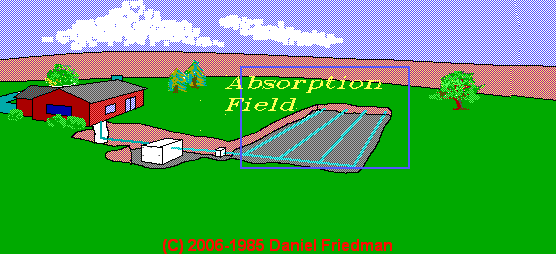 An Introduction to Septic Systems - the Basics
- POST a QUESTION or COMMENT about home septic systems: what is a septic tank, what is a drainfield? How do septic tanks work? How do drainfields work? What are the recomended steps to clean out or maintain septic tanks and drainfields?
What is a septic system?
This article explains what a septic system is, with a brief description of how septic systems work and what are the main components of a septic tank and drainfield system. This article describes the basic function, design & care of private septic tanks & drainfields or soakaway beds.
Key articles for people unfamiliar with septic systems are listed here:
InspectAPedia tolerates no conflicts of interest. We have no relationship with advertisers, products, or services discussed at this website.
An Introduction to Septic Systems - How do Septic Systems Work?
If you don't know if your building is connected to a public sewer or a private septic system, see SEPTIC or SEWER CONNECTION?.
What is a Septic System? Or What's a Septic Tank? What's a Drainfield? How do they work?
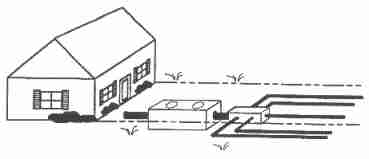
[Click to enlarge any image]
A "septic system," also referred to as a private, on-site waste disposal system, receives waste water and solids from a building's plumbing facilities (bathrooms, kitchens, shower, laundry), treats, and then disposes of the effluent from this waste, by permitting it to absorb into soils at the property.
Wastewater or septic effluent treatment is accomplished by bacterial (and other microorganism) action in the "septic" or "treatment" tank and it is mostly accomplished by bacteria in the soil around and below the effluent absorption system, or "drain field."
This bacterial action is needed to reduce the level of pathogens in the effluent discharges from the waste system into the soil. In addition to reducing the level of pathogens and the reduction of organic waste to a combination of new cell masses, CO2, and water, wastewater treatment removes organic matter, nitrites and nitrates, and phosphorous. In an absorption field the soil performs an additional role of filtering the septic effluent.
A bit more detail is at HOW SEPTIC SYSTEMS WORK
Where are the Septic Tank & Leachfield Usually Located on a Property & How are these components Laid-Out ?
The septic tank is usually located close to the building, perhaps just ten feet away, but on difficult sites a grinder pump may instead send wastewater to a more remote septic tank and drainfield. Incidentally, depending on where you live, the "drainfield" that absorbs & treats the final septic wastewater or effluent might be called a leachfield, leaching bed, drainage trench, soakaway bed or other terms. (Contact Us to suggest other septic system terms to include here.)
The principal components of a private on-site waste disposal system usually include the following:
Below is a simple sketch of a septic tank showing how solid waste leaving the building thorugh its main drain or wastewater piping or "sewer line" or "septic line" is retained inside the tank while liquid effluent flows to the drainfield. (Click images to see an enlarged version). Here are the main components of a septic system and a brief description of what each does:
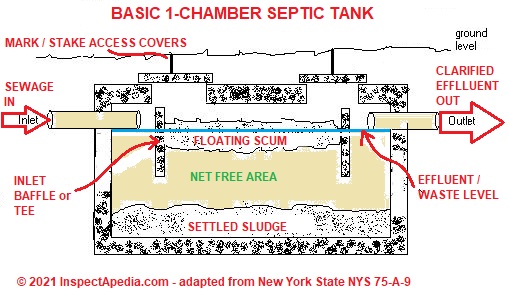
- Wastewater Piping
connecting the building to the treatment tank conducts wastewater from toilets, sinks, tubs, showers, out to a septic tank. Wastewater from toilets is called "black water" and wastewater from sinks is called "graywater" - A septic tank
or sewage treatment tank which retains solid waste, letting liquid waste flow to an onsite disposal system.
Be sure to
see SEPTIC TANK PUMPING SCHEDULE since pumping the septic tank regularly is the single most useful thing you can do to extend the life of a septic system. - Effluent piping
connecting and conducting clarified effluent from the treatment tank to a distribution box - A distribution box
connecting the effluent line from the tank to the absorption system or "drain field"
See SEPTIC D-BOX INSTALL, LOCATE, REPAIR - An absorption system
which permits effluent to drain to soils below and some of it to evaporate to air above. There are many ways to get rid of septic effluent, described
at SEPTIC SYSTEM DESIGN BASICS
and
at SEPTIC SYSTEM DESIGN ALTERNATIVES,
or see the list and definitions given
at TYPES OF SEPTIC SYSTEMS - master list - A bio-mat
or bio-mass of pathogen-digesting bacteria which forms in soil below the absorption system. The bio-mat is what makes the wastewater sufficiently sanitary to discharge into the ground.
Many variations on this general scheme are used, depending on local climate, soil conditions, available space, economy, and available materials. Special equipment and systems may be designed for problem or difficult sites such as rocky or wet ground, permafrost, or wet tropical marshlands.
...
Continue reading at SEPTIC INFO for HOMEOWNERS, BUYERS or select a topic from the closely-related articles below, or see the complete ARTICLE INDEX.
Or see these
Recommended Articles
- HOW SEPTIC SYSTEMS WORK
- SEPTIC SYSTEM CARE GUIDE - home
- SEPTIC TANK & SYSTEM CARE BASICS for specific advice about the septic tank
- SEPTIC TANK PUMPING SCHEDULE When, Why, How to pump the septic tank
- SEPTIC CLEARANCE DISTANCES Distances Between Septic System & Wells, Streams, Trees, etc.
- TEN STEPS to KEEP a SEPTIC SYSTEM WORKING suggestions from the U.S. EPA, edits and additions by DJF
- SEPTIC TANK & SYSTEM CARE BASICS An Engineer's View & Septic System FAQ's
- WASTEWATER TREATMENT BASICS
Suggested citation for this web page
SEPTIC SYSTEM BASICS at InspectApedia.com - online encyclopedia of building & environmental inspection, testing, diagnosis, repair, & problem prevention advice.
Or see this
INDEX to RELATED ARTICLES: ARTICLE INDEX to SEPTIC SYSTEMS
Or use the SEARCH BOX found below to Ask a Question or Search InspectApedia
Ask a Question or Search InspectApedia
Try the search box just below, or if you prefer, post a question or comment in the Comments box below and we will respond promptly.
Search the InspectApedia website
Note: appearance of your Comment below may be delayed: if your comment contains an image, photograph, web link, or text that looks to the software as if it might be a web link, your posting will appear after it has been approved by a moderator. Apologies for the delay.
Only one image can be added per comment but you can post as many comments, and therefore images, as you like.
You will not receive a notification when a response to your question has been posted.
Please bookmark this page to make it easy for you to check back for our response.
Our Comment Box is provided by Countable Web Productions countable.ca
Citations & References
In addition to any citations in the article above, a full list is available on request.
- Our recommended books about building & mechanical systems design, inspection, problem diagnosis, and repair, and about indoor environment and IAQ testing, diagnosis, and cleanup are at the InspectAPedia Bookstore. Also see our Book Reviews - InspectAPedia.
- In addition to citations & references found in this article, see the research citations given at the end of the related articles found at our suggested
CONTINUE READING or RECOMMENDED ARTICLES.
- Carson, Dunlop & Associates Ltd., 120 Carlton Street Suite 407, Toronto ON M5A 4K2. Tel: (416) 964-9415 1-800-268-7070 Email: info@carsondunlop.com. Alan Carson is a past president of ASHI, the American Society of Home Inspectors.
Thanks to Alan Carson and Bob Dunlop, for permission for InspectAPedia to use text excerpts from The HOME REFERENCE BOOK - the Encyclopedia of Homes and to use illustrations from The ILLUSTRATED HOME .
Carson Dunlop Associates provides extensive home inspection education and report writing material. In gratitude we provide links to tsome Carson Dunlop Associates products and services.
 | HOME | ABOUT | ASK a QUESTION | CONTACT | CONTENT USE POLICY | DESCRIPTION | POLICIES | PRIVACY | |
| © 2024 - 1985 Publisher InspectApedia.com - Daniel Friedman | |||||||||