
InspectAPedia® FREE Encyclopedia of Building & Environmental Construction, Diagnosis, Maintenance & Repair |
Question? Just ask us! InspectAPedia
|
 Diagnose & Fix Water Pump Short Cycling
- POST a QUESTION or COMMENT about troubleshooting well pumps that turn on and off too often - short cycling water pumps
Well pump on-off rapid cycling diagnostic table:
This well pump problem table describes the steps to diagnose and cure all known causes of well pump short cycling - what causes the well pump to run too often.
Here is a table of all known causes of well pump rapid cycling. For each cause the table provides a diagnostic procedure and recommends a repair procedure.
InspectAPedia tolerates no conflicts of interest. We have no relationship with advertisers, products, or services discussed at this website.
Well Pump Short Cycling Diagnostic Guide - What to Check, How to Fix
Short cycling of a water pump (which is discussed in this article) means that the water pump turns on and off too rapidly or too frequently when water is being run in the building.
If this is the problem with your water pump, you can use the diagnostic table below or for more explanation see our description of the most
common WATER PUMP SHORT CYCLING CAUSES.
If you are not sure what "water pump short cycling" means or how it is recognized,
see SHORT CYCLING WATER PUMP.
Well Pump Short Cycling Diagnosis: Things to Check if the Well Pump Runs Too Often |
||
|---|---|---|
| Symptom | Diagnosis | Repair |
| SHORT CYCLING / pump turns on & off rapidly or too frequently |
Water pump turns on and off too rapidly or too frequently. On/off every 30 seconds or less. Read in depth on causes and cures of well pump short cycling on and off - the links at right are an alternative to using this more concise diagnostic SHORT CYCLING PUMP TABLES below on this page. |
Usual cause: water-logged water pressure tank. |
The items below are NOT short cycling water pump problems |
||
| INTERMITTENT CYCLING pump | The water pump runs for no apparent reason, when no water is running - pump is not cycling on & off rapidly - pump turns on and goes through a cycle at odd times. |
For pumps that run for no obvious reason see INTERMITTENT CYCLING WATER PUMPS For occasional complete loss of water pressure see |
NO WATER, PUMP ON Lost water pressure |
Water pressure has stopped completely, pump is running. Watch out: Turn OFF the pump to avoid damage. |
WATER PRESSURE TABLE 1: PUMP WON'T RUN, WON'T STOP, or CYCLES |
NO WATER, PUMP OFF Lost water pressure |
Water pressure stopped completely, pump doesn't turn on. |
WATER PRESSURE TABLE 3: PUMP RUNS, NO WATER or INSUFFICIENT WATER |
WEAK WATER Poor water pressure |
Water pressure is weak at some or all fixtures. Just at some fixtures: look for a closed valve, blocked elbow or piping downstream from last point where water is also routed to fixtures with good pressure At all fixtures: look for clogged water pipes, improper pressure switch settings, clogged water filter |
WATER PRESSURE TABLE 2: PUMP RUNS, WEAK or NO WATER PRESSURE |
Water Tank Problems - USUAL CAUSES of SHORT CYCLING well pumps |
||
| Symptom or Cause | Diagnostic Procedure | Repair Procedure |
|---|---|---|
WATER-LOGGED TANK Pump cycles on and off rapidly |
Pressure tank has lost its air charge because of a bad air volume control (for tanks that have no internal bladder) or because of a damaged water tank internal bladder. Water tank will be heavy, condensation line will be high on the tank, well above the tank's mid point. |
See SHAKE THE WATER TANK? - is it full of water? SeeWATER TANK AIR, HOW TO ADD |
| TANK AIR PRE-CHARGE too small | Water pump cycles too rapidly: the air charge is too little, or air has been lost from the tank. Water pump does not turn on and pressure is above the pressure control cut-in setting: the tank air pre-charge is set too high. |
Rapid cycling: see WATER-LOGGED TANK instructions just above, No pump turn-on: set the water pressure tank air charge to 2 psi below the pressure control switch cut-in pressure. |
TANK LOCATION Bad water pressure tank location |
Locating the water pressure tank too far from or on a different level from the pressure control switch can cause pressure control switch bouncing and rapid water pump on-off cycling at the start or end of a water pump operating cycle. | See WATER TANK LOCATION GUIDE |
| Water Pressure Tank Frozen | Frozen water pipes at the outlet of a water pressure tank or a frozen water pressure tank outlet tee, or a frozen water pressure tank itself can all case water pump short cycling. | Details describing this problem, its occurrence and repair are at WATER TANK or TANK TEE FROZEN |
Water Piping Problems - causes short cycling if leaks are extreme |
||
| Symptom or Cause | Diagnostic Procedure | Repair Procedure |
|---|---|---|
WATER PIPING Blocked water piping, clogged water filter or other water treatment equipment |
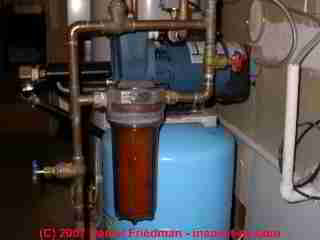
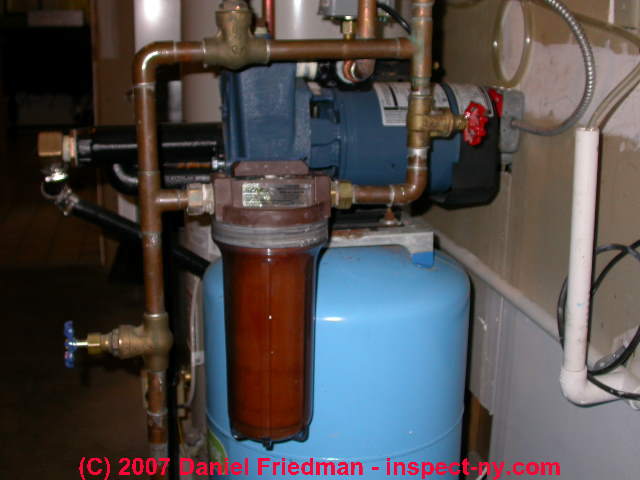
A blocked or clogged water filter or pipe or other water treatment equipment close to the water pressure tank can cause very rapid on-off cycling of the water pump, particularly if the filter, valve, or equipment is located between the water pump and the water pressure tank. Watch out: turn off the pump right away to avoid damage. |
Check the order of installation of equipment. Replace a dirty, clogged, or suspect water filter cartridge.
|
| Plumbing piping or fixture leak on the discharge or supply side of the system | A plumbing supply piping leak or running toilet can lead to frequent cycling of the water pump. Shut off all of the fixtures in the plumbing system at their local shutoff valves. If no shut off valves are installed or if they are stuck, install or repair them at the next opportunity. Listen for leaks. Check for running toilets by using a small amount of food coloring or septic dye dye in the toilet tank . If colored water appears in the bowl the toilet flush valve is leaking. |
Repair any plumbing leaks or leaky fixtures. TURNING WATER SUPPLY BACK ON when de-winterizing |
| Piping or fitting leak on the suction side or well side of the system | A leak in the well supply piping anywhere between the water pick-up point in the well bottom and the entry to the water pressure tank can cause loss of water pressure and water pump short cycling. (It can also cause air entry into the piping system). For shallow wells install a pressure gauge on the suction side of the system. If your well is a deep well (2-line jet pump) install a pressure gauge on the pump if an attachment point is available. Let the pump run until it reaches its cut-off pressure. Note the pressure on the gauge. Turn off power to the pump. Turn off water leaving the pressure tank and feeding the building - the valve on the "discharge" side of the system. Alternatively, after closing the water valve on the output or discharge side of the system (stop feeding water to the building), use a bicycle pump to pump air into the system at the air inlet valve (if your system has one). Pump to 30 psi. Watch for a pressure drop. If the system won't hold pressure then there is ale a leak on the "suction side" of the water system. Leaks may be a bad check valve, foot valve, or piping connection anywhere between the pressure tank and well bottom. |
At AIR DISCHARGE at FAUCETS, FIXTURES Water and pressure are lost through the leak when the pump runs, and air may enter the piping when the pump stops - depending on where the leak is located. First check and tighten all above-ground well piping connections to be sure nothing is leaking. Remember to check or replace any above-ground check valves that may be leaking. Repeat the test. If the system still won't hold pressure you will need to pull the well piping and check for a defective or leaky piping connection, leaky well piping check valve above ground, at the pump (if there is a valve there) or in the well at the foot valve. WELL PIPING LEAK DIAGNOSIS |
WATER VALVES Closed or partly closed water supply valve |
Be sure that you haven't forgotten and left a valve closed between the water pump and water pressure tank. This can happen if someone closes a valve to perform other work on the plumbing system and forgets to open it again. |
Be sure at least one clear water piping pathway is open between the water pump outlet side and the water pressure tank inlet side. Watch out: turn off the pump right away to avoid damage. |
Table of Detailed Water Delivery Problem Troubleshooting ProceduresThese are NOT normally water pump short-cycling problems |
||
| Symptom or Cause | Diagnostic Procedure | Repair Procedure |
|---|---|---|
| AIR DISCHARGE at plumbing fixtures | Inspect the air volume controls, snifter valves, automatic air insertion devices on the water pressure tank if your water tank does not use an internal bladder. Inspect for a ruptured bladder or an older air volume control or snifter valve that should have been removed when the bladder-type tank was installed. |
AIR DISCHARGE at FAUCETS, FIXTURES |
TANK LEAKS Water pressure tank leaks |
Inspect the water pressure tank for obvious perforations or severe rusting. Apply soapy water to the entire surface of the water tank, especially above the water line. You can spot the water line as the high point of condensation on the water tank exterior. Remember to check also for leaks at the air valve(s) used to pump air into the pressure tank. |
Temporary repair of a rust-perforation of a non-bladder type water tank may be possible using a sheet metal screw and neoprene or rubber washer. But the tank needs replacement. WELL TANK RELATION to WATER PRESSURE Note that for water tanks that do not use an internal bladder the air charge is gradually lost to absorption into water passing through the tank. |
| Pinhole leak in water pressure tank bladder | Water-logged internal-bladder type pressure tank with a pinhole leak in the bladder may accumulate water inside the bottom of the tank (where air should be) and thus cause water pump short cycling. But because water leaks into the tank's air space just at higher tank pressures and does not easily leak back into the pinholed bladder (where water should be in most designs) when we depress the air valve atop the tank it may not squirt water -just air. |
If the tank is abnormally heavy even when drained we suspect this problem. |
| Water pressure tank bladder damage or leak | If the pressure tank is a "captive air" or internal bladder type tank, a leaky or damaged bladder can cause the water tank to become waterlogged and cause short cycling of the water pump. Most bladder type water tanks contain water inside the bladder and air outside it. Be sure you checked the tank for apparent leaks as we described in the step above. If your bladder type water tank is fiberglass it may be reversed in design, containing air in the bladder and water in the tank. Still a damaged bladder leads to a waterlogged tank. |
A leaky or damaged water tank bladder needs to be replaced or the entire assembly replaced. |
| Defective or leaky Air Volume Control | A leaky or failed air volume control (AVC) will lead to a waterlogged water tank as the control is no longer doing its job of maintaining the tank's air charge. (Not all water tanks have an AVC). Inspect the AVC and its tubing for rust or water leaks. But an air leak may also be present - see our next step below. |
Repair or replace any suspect air volume control components. Optionally, remove and plug the AVC fittings and change to an alternative method of maintaining the air charge in the pressure tank: Use the water tank air inlet valve - details are at WATER TANK AIR INLET VALVE Drain the water tank - details are at WATER TANK AIR ADD BY DRAINING |
| Air volume control tubing leak: | Disconnect the air volume control at the water pump and plug that opening. If the water capacity improves there is probably a leak in the tubing or the control. |
Tighten all tubing fittings, be sure the tubing is correct diameter and proper fittings are used so that there are no air or water leaks. |
Water Pump Pressure Control Switch ProblemsThese are NOT normally the usual cause of short cycling pump problems |
||
| Symptom or Cause | Diagnostic Procedure | Repair Procedure |
|---|---|---|
| WATER PUMP SWITCH CHATTERING | Water pump cycles on and off very rapidly at start or end of a pump-on cycle | Multiple possible causes including bad check valve type or location, clogged piping, weak switch springs, low voltage, piping or check valve leaks, See detailed diagnosis & repair at |
SMALL DIFFERENTIAL SHORT CYCLING Pressure control switch differential adjustment too small |
Water pump turns on and off too frequently when water is being run in the building Pressure control switch adjusted incorrectly: Differential too small In a different problem case, setting the differential range too small combined with a high cut-out pressure on some pressure control switches can cause the water pump to run continuously. |
In adjusting the pressure control switch differential nut#2, if you completely loosened the smaller nut #2 (differential adjustment) so that the pump differential between cut-in pressure and cut-out pressure is very small the water pump may short cycle on and off rapidly when water is being run in the building. Re-adjust the pressure control switch. |
BURNED PUMP CONTACTS |
Check the switch contacts for burning or wear | Adjust or replace the pressure control switch. Temporary emergency repair by cleaning the switch contacts may be possible. See PUMP PRESSURE CONTROL REPLACE |
PUMP PROTECTION SWITCH RESET on some pump pressure controls |
If your pump has an electrical low water protection device that component may shut down the pump to protect it from damage if well water level or flow rate falls too low. That pressure control switch may shut down the pump and require manual re-setting |
WATER PUMP PROTECTION SWITCH |
| CLOGGED PRESSURE TUBE | Check the tubing connecting the pressure switch to the pump housing for clogging | Clean or replace the tubing and be sure the connections are not leaky - an air leak will prevent the switch from sensing pressure properly. PUMP PRESSURE CONTROL REPAIR |
| WRONG PRESSURE CONTROL SWITCH SETTINGS | Especially if someone has been fooling around with the pump pressure control cut-in and cut-out pressure settings, the difference between the cut-in (low) and cut-out (high) pressures may be set too small. Check the water pressure as the pump cuts in and again as it cuts off.
|
Typically we see about 20 psi difference between the pump cut-in and pump cut-out pressures. See WATER PUMP PRESSURE CONTROL SWITCH Watch out: Don't set the cut-out pressure too high or the pump will just keep running. Also, pump gauges are not always accurate. |
| SHORT CYCLE STOP VALVE FAILURE | If a well pump short cycling cycle stop valve has been installed and the system is relying on this device to cure a well pump cycling on and off too often, check that the valve is installed correctly and is working properly. | See SHORT CYCLE STOP VALVE |
Well PUMP MOTOR PROBLEMSThese are NOT normally the cause of pump short cycling problems |
||
| Symptom or Cause | Diagnostic Procedure | Repair Procedure |
|---|---|---|
PUMP MOTOR Bad water pump, pump start capacitor, or pump controls |
Especially if the water pump has been suffering a prolonged history of rapid short-cycling on and off or if a pump motor is old, worn, hard-starting, or has failing bearings, the pump's electrical controls such as a start capacitor used on some pump motors may have failed. Thanks to reader M.H. for this tip 7/23/14 |
Check for a pump drawing abnormally high current - signs of wear or motor failure. ELECTRIC MOTOR DIAGNOSTIC GUIDE Check for a bad start capacitor. |
Well Pump Wiring Problems blown fuses, tripped breakers, low pump output |
Well pump keeps tripping circuit breaker or blowing fuses, or well pump fails to deliver water at normal flow rate and pressure. Look for low supply voltage, burned control switch contacts, damaged well pump wiring, or a damaged well pump itself. A recent lightning strike can also damage well pumps or wiring leading to these symptoms. |
Also see ELECTRIC MOTOR DIAGNOSTIC GUIDE
|
| If the Well Pump Motor Runs for no apparent reason | If the pump runs too often the cause may be a control problem, water tank problem, piping problem, or a well problem. | INTERMITTENT CYCLING WATER PUMPS if the pump runs at odd times for no apparent reason. |
| If the Well Pump Motor Keeps Running & Won't Stop | If the pump won't turn off the cause may be a damaged pump control, a plumbing or fixture leak, or a well problem. Watch out: Turn OFF the pump to avoid damage. |
Watch out: If the pump motor won't shut off you should turn off electrical power to the pump to avoid damaging it, then diagnose the problem. |
Other causes of well pump short cycling that we have not mentioned: ask your plumber. And CONTACT us to add that helpful information for others.
Some of the well pump troubleshooting suggestions in this list can be found at the Betta-Flo Jet Pump Installation Manual from the National Pump Co.
NO WATER PRESSURE, PUMP RUNNINGThese are NOT well pump short cycling problems |
||
| Symptom or Cause | Diagnostic Procedure | Repair Procedure |
|---|---|---|
LOST PUMP PRIME Leaking foot valve in the well or leaking check valve at the pump Pump runs, no water is delivered. |
If the well pump frequently loses prime, there may be a leaky or failed check valve (at the pump) or foot valve (in the well). | If your jet pump (above ground) incorporates a check valve at or in the pump that valve may have failed. If there is no foot valve in the well (or if that valve doesn't work), the failure of the above-ground check valve at the pump can lead to short cycling or to loss of pump prime. To examine the foot valve the well piping has to be pulled. For this reason if you do pull the well piping we recommend replacing the foot valve rather than having to repeat this procedure again soon. Remember to inspect the piping, connections, tailpiece, ejector, and all components in the well. See |
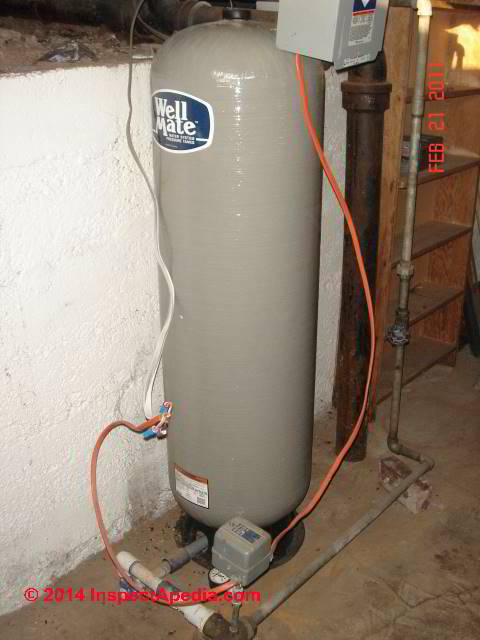
Short cycling of a water pump which is defined at SHORT CYCLING WATER PUMP means that the water pump or "well pump" turns on and off too rapidly or too frequently when water is being run in the building.
If this is the problem with your water pump,
see
SHORT CYCLING CAUSES describes the most common causes of this problem.
A chattering pressure control switch problem occurs when the pressure control switch turns on and off extremely rapidly, at intervals of seconds or less, usually at the start or end of a well or water pump-on cycle.
The causes of & cures for pressure switch chatter are explained
at WATER PUMP PRESSURE CONTROL SWITCH CHATTER
Intermittent water pump cycling which is discussed
at INTERMITTENT WATER PUMP CYCLING means that the water pump comes on for no apparent reason.
Loss of water pressure means that the pressure with which water enters a plumbing fixture has become too slow, or is sometimes too slow or weak in water flow rate, or water flow may stop entirely.
See WATER PRESSURE LOSS DIAGNOSIS & REPAIR
CONTACT us by email with questions or suggestions about this list.v
Reader Comments, Questions & Answers About The Article Above
Below you will find questions and answers previously posted on this page at its page bottom reader comment box.
Reader Q&A - also see RECOMMENDED ARTICLES & FAQs
 On 2020-03-19 - by (mod) - possible stuck pressure tank internal bladder causing pump short-cycling
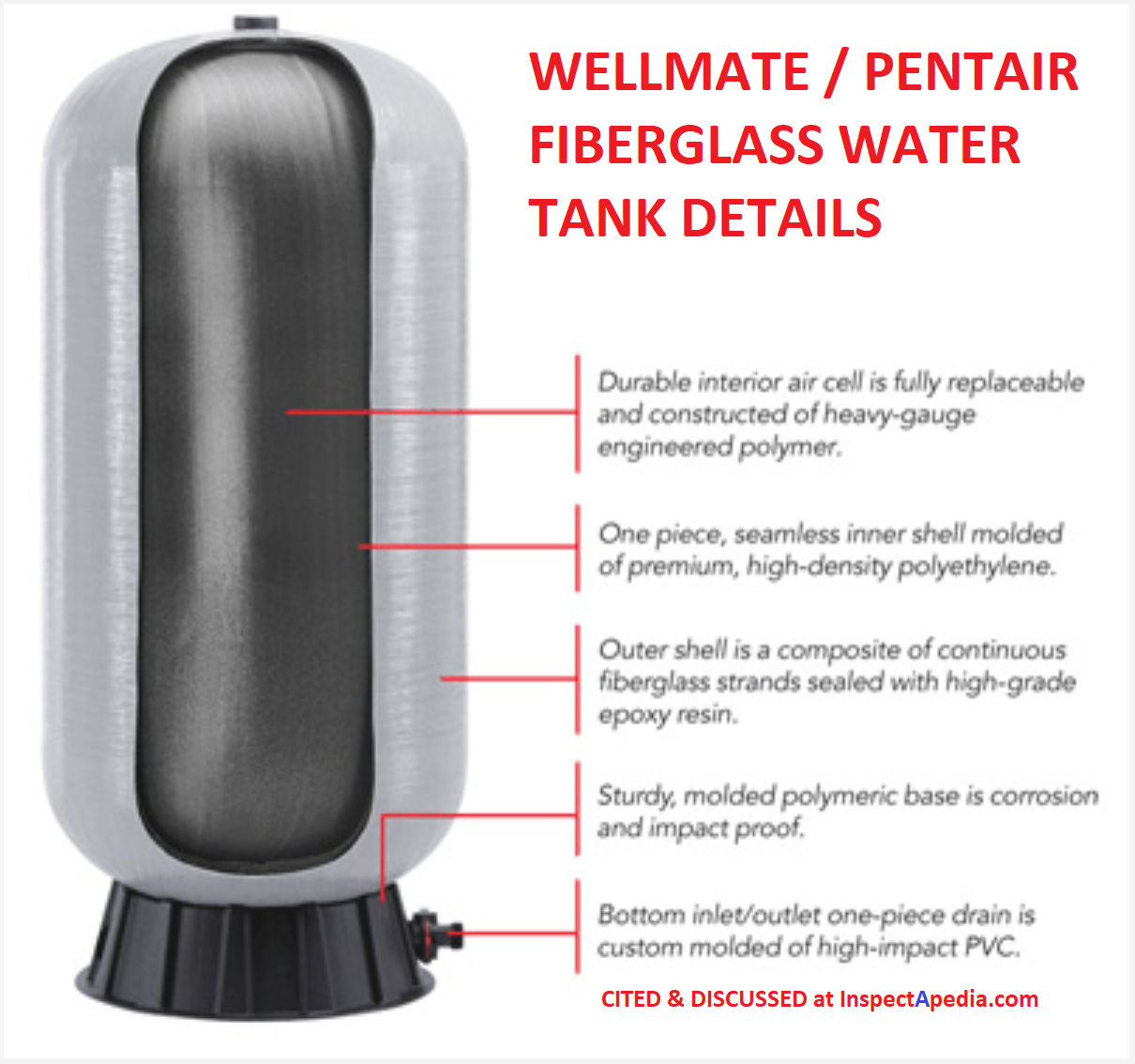
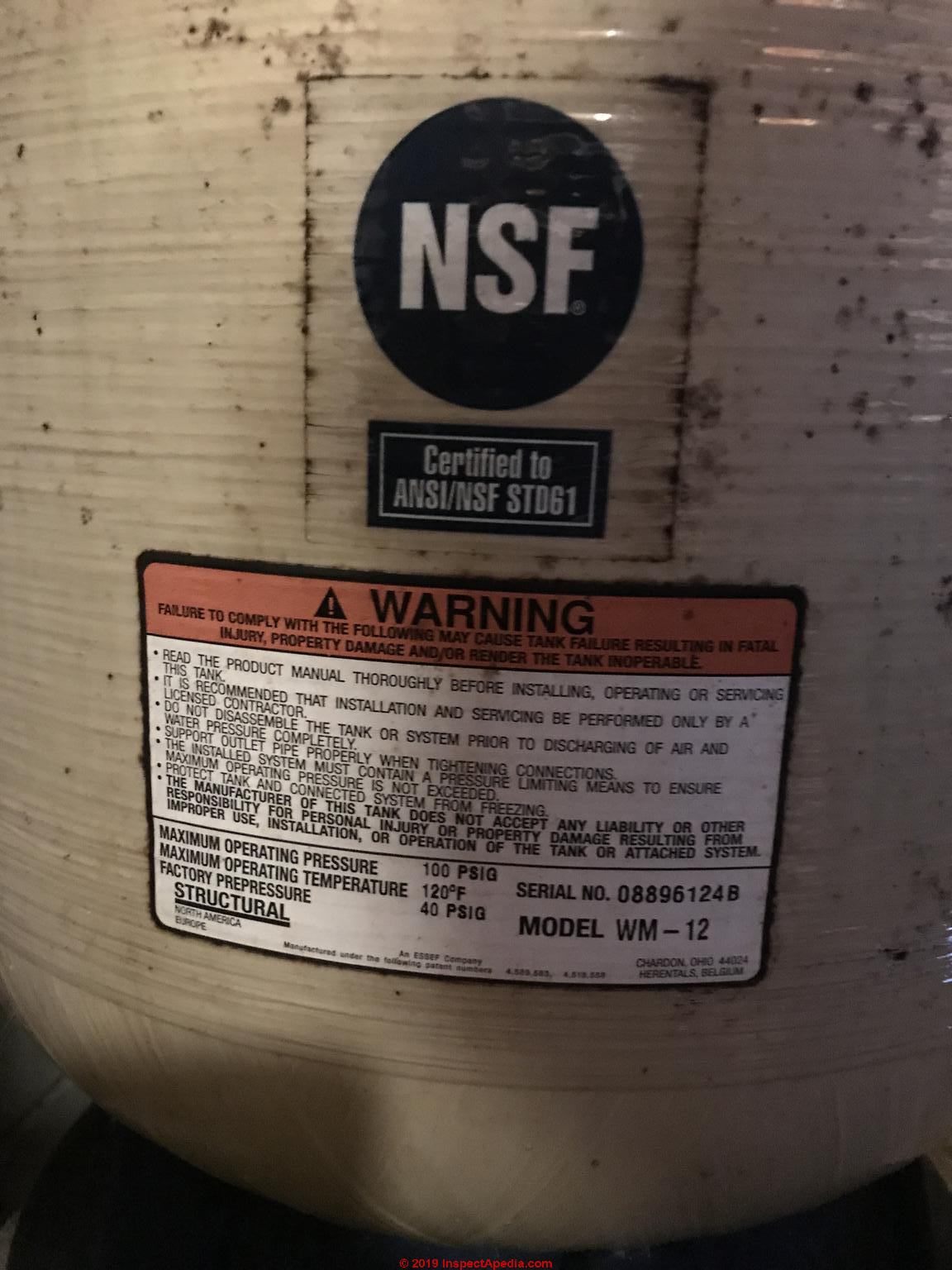
Philip the model no. tell us this is a Wellmate 40 gallon fiberglass pressure tank using an internal bladder or "air cell" as the company calls it. The air cell is replaceable. *Sometimes* an internal bladder can get stuck on itself in collapsed state and sometimes a careful brief over-pressure can pop the stuck bladder open again.
But
Watch out: take care to NEVER exceed the maximum rated pressure of the water tank or it could explode, killing you or anyone nearby.
Check the labeling on your tank; the Wellmate WM-12 current product specs give a maximum pressure of 100 psi.
So if your pump pressure control switch is operating in the 20/40 or 30/50 range (those are normal) you could force the pressure up to 70 psi without exceeding the manufacturer's safety limit.
Here is a WellMate / Pentair WATER PRESSURE TANK INSTALLATION MANUAL [PDF]
On 2020-03-19 by Philip
Not sure. It was in the house when we bought it and I don’t have the manual. Think it does have a bladder, but not 100% sure. I’m attaching a photo with the model and serial #s.
On 2020-03-19 - by (mod) -
It's possible that water isn't entering your water tank just as you suggest. Is this a bladderless tank or does it use an internal bladder?
On 2020-03-19 by Philip
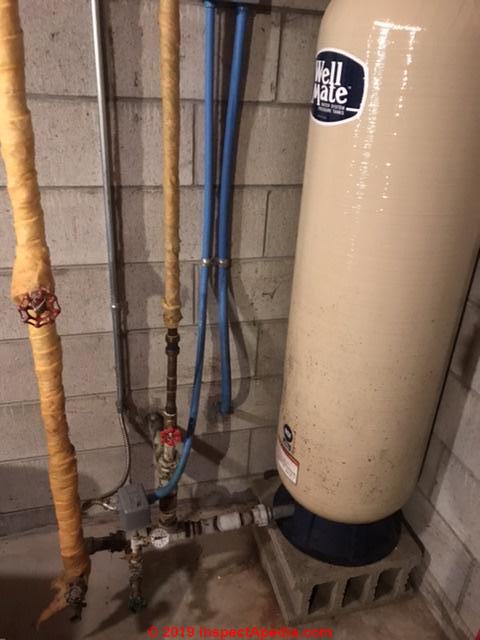
Well pump is cycling every 20 seconds when fixtures are in use. Rocked the tank as suggested and it feels empty. Think the fill line may be clogged, and we are using pressure in the lines only. What do you suggest is the best course of action?
On 2019-07-10 by Alex
My convertible pump was short cycling. Once I turned it off it would only go to 30psi when first turned on then immediately drops back to 10 or less. Thought I must have a leak. Pulled pipes from well and replaced foot valve and cleaned injector. Still no water pressure. Took the pump apart and impeller looked okay. Pressure tank is about 6 years old. Any ideas or suggestions?
On 2019-02-19 - by (mod) - water in my shower often looses pressure and eventually runs out
Max
What I do is step through the symptoms described in the diagnostic tables above, then when find a symptom in the table that matches the symptom in my home I click on the recommended diagnostic article where there are more detailed diagnosis and repair steps.
Some of those will lead to a dead end but one of them will almost always lead to the necessary repair.
From your two line description it sounds as if there may be two problems:
short cycling - that can be a water-logged pressure
and
weak water pressure when multiple fixtures are run - usually telling us that pipes are clogged or the source pressure is simply too weak -
in that situation pressure can be adequate but when a second fixture is turned on flow nearly stops; if setting up pump pressure or on a municipal system the pressure regulator is set up to say 65 or 70 psi - doesn't fix the problem then your plumber might investigate for scale-clogged or debris-clogged water pipes.
On 2019-02-19 by Max
Hi the water in my shower often looses pressure and eventually runs out. That occurs in short cycling on and off and if someone flushes the bath I have to wait for water to become available in the shower. How do I diagnose this sort of problem?
On 2018-11-21 - by (mod) - pump keeps running for a minute or more after I shut the water off
The pump is completing the re-pressurization of the water pressure tank.
Watch out: however: if the pump keeps running for a long period, more than a couple of minutes, watch the pressure gauge; if it's not rising to the CUT OFF pressure (typically 30 or 40 psi) then something's wrong: low water in the well, a damaged pump, a piping leal.
In that case try turning off the pump and leaving it off for a few hours to see if giving the well time to recover its water makes a difference.
You don't want to let a well pump run dry nor to let it run indefinitely or it may be damaged.
On 2018-10-27 by Martin
My water pump keeps running for a minute or more after I shut the water off. Why
...
Continue reading at WATER PUMP PRESSURE CONTROL SWITCH CHATTER or select a topic from the closely-related articles below, or see the complete ARTICLE INDEX.
Or see these
Recommended Articles
- WATER PRESSURE GAUGE ACCURACY
- WATER PRESSURE LOSS DIAGNOSIS & REPAIR
- WATER PUMP INTERMITTENT CYCLING - pump seems to run occasionally for no reason
- WATER PUMP REPAIR GUIDE - home
- WATER PUMP SHORT CYCLING - pump turns on & off too frequently
- WATER PUMP WIRING REPAIR
- WATER TANK AIR, HOW TO ADD
- WELL PIPE LEAKS
Suggested citation for this web page
WATER PUMP SHORT CYCLING DIAGNOSIS TABLE at InspectApedia.com - online encyclopedia of building & environmental inspection, testing, diagnosis, repair, & problem prevention advice.
Or see this
INDEX to RELATED ARTICLES: ARTICLE INDEX to WATER SUPPLY, PUMPS TANKS WELLS
Or use the SEARCH BOX found below to Ask a Question or Search InspectApedia
Ask a Question or Search InspectApedia
Try the search box just below, or if you prefer, post a question or comment in the Comments box below and we will respond promptly.
Search the InspectApedia website
Note: appearance of your Comment below may be delayed: if your comment contains an image, photograph, web link, or text that looks to the software as if it might be a web link, your posting will appear after it has been approved by a moderator. Apologies for the delay.
Only one image can be added per comment but you can post as many comments, and therefore images, as you like.
You will not receive a notification when a response to your question has been posted.
Please bookmark this page to make it easy for you to check back for our response.
Our Comment Box is provided by Countable Web Productions countable.ca
Citations & References
In addition to any citations in the article above, a full list is available on request.
- Access Water Energy, PO Box 2061, Moorabbin, VIC 3189, Australia, Tel: 1300 797 758, email: sales@accesswater.com.au Website: http://www.accesswater.com.au/
Moorabbin Office: Kingston Trade Centre, 100 Cochranes Rd, Moorabbin, VIC 3189
Australian supplier of: Greywater systems, Solar power to grid packages, Edwards solar systems, Vulcan compact solar systems, water & solar system pumps & controls, and a wide rage of above ground & under ground water storage tanks: concrete, steel, plastic, modular, and bladder storage tanks. - Grove Electric, Typical Shallow Well One Line Jet Pump Installation [PDF], Grove Electric, G&G Electric & Plumbing, 1900 NE 78th St., Suite 101, Vancouver WA 98665 www.grovelectric.com - web search -7/15/2010 original source: http://www.groverelectric.com/howto/38_Typical%20Jet%20Pump%20Installation.pdf
- Grove Electric, Typical Deep Well Two Line Jet Pump Installation [PDF], Grove Electric, G&G Electric & Plumbing, 1900 NE 78th St., Suite 101, Vancouver WA 98665 www.grovelectric.com - web search -7/15/2010 original source: http://www.groverelectric.com/howto/38_Typical%20Jet%20Pump%20Installation.pdf
- Pumptrol® Pressure Switch Adjustment, Square D, Schneider Electric Corporation, 8001 Knightdale Blvd., Knightdale< NC 27545 1-888-778-2733 - Square D Technical Library, web search 07/24/2010 original source: http://ecatalog.squared.com/techlib/docdetail.cfm?oid=09008926800a93be
- 9013 Pumptrol® Commercial Pressure Switches Type F and 9013 Commercial Pressure Switches Type G, Catalog, SquareD, Schneider Electric Industries SAS, Schneider Electric Industries SAS, web search 02/23/2011, original source:
http://ecatalog.squared.com/pubs/Machine Control/
Pressure-Float-Vacuum Switches/Pressure Switches-Water and Air/9013CT9701.pdf
Square D is a brand of Schneider Electric. - Class 9013 Square D Commercial Pressure Switches: Water Pump Pressure Control Switch Class 9013, Type F, G, Manual, Square D Company, 8001 Highway 64 East, Knightdale, NC 27545-9023, USA, (919) 266-3671, www.squared.com, web search 02/24/2011, original source: stevenengineering.com/tech_support/PDFs/45COM.pdf.
- In addition to citations & references found in this article, see the research citations given at the end of the related articles found at our suggested
CONTINUE READING or RECOMMENDED ARTICLES. - Mark Cramer Inspection Services Mark Cramer, Tampa Florida, Mr. Cramer is a past president of ASHI, the American Society of Home Inspectors and is a Florida home inspector and home inspection educator. Mr. Cramer serves on the ASHI Home Inspection Standards. Contact Mark Cramer at: 727-595-4211 mark@BestTampaInspector.com
- John Cranor [Website: /www.house-whisperer.com ] is an ASHI member and a home inspector (The House Whisperer) is located in Glen Allen, VA 23060. He is also a contributor to InspectApedia.com in several technical areas such as plumbing and appliances (dryer vents). Contact Mr. Cranor at 804-873-8534 or by Email: johncranor@verizon.net
- In addition to citations & references found in this article, see the research citations given at the end of the related articles found at our suggested
CONTINUE READING or RECOMMENDED ARTICLES.
- Carson, Dunlop & Associates Ltd., 120 Carlton Street Suite 407, Toronto ON M5A 4K2. Tel: (416) 964-9415 1-800-268-7070 Email: info@carsondunlop.com. Alan Carson is a past president of ASHI, the American Society of Home Inspectors.
Thanks to Alan Carson and Bob Dunlop, for permission for InspectAPedia to use text excerpts from The HOME REFERENCE BOOK - the Encyclopedia of Homes and to use illustrations from The ILLUSTRATED HOME .
Carson Dunlop Associates provides extensive home inspection education and report writing material. In gratitude we provide links to tsome Carson Dunlop Associates products and services.
 | HOME | ABOUT | ASK a QUESTION | CONTACT | CONTENT USE POLICY | DESCRIPTION | POLICIES | PRIVACY | |
| © 2024 - 1985 Publisher InspectApedia.com - Daniel Friedman | |||||||||